5 Great Film Genres That Have All But Died
 Since their invention, films (and other things, such as music and subcultures) have been categorised into a number of different genres - groupings based on such characteristics as content, style and presentation. The Internet Movie Database lists 22 such groupings, splitting films accordingly. Entries within a genre can be further whittled down by splitting them into sub-genres, though this can quickly become confusing, as sub-genres also overlap and it is often unclear as to whether a film includes more elements of genre a than it does of genres b and c. What is clear is that in broad terms, genres go through different phases of popularity. At the present time, superheroes are dominating the cinematic landscape, but they are just the latest in a long list of trends that have come and gone and will almost certainly be replaced 'at the top' by something else in time. Even after their fall from mainstream popularity, most genres maintain a core following of fans that ensure at least some form of continued output in cinemas. Some genres, however, like the five featured in this list, have all but vanished from our screens completely, for assorted reasons that will be looked at in due course.
5. The Creature Feature
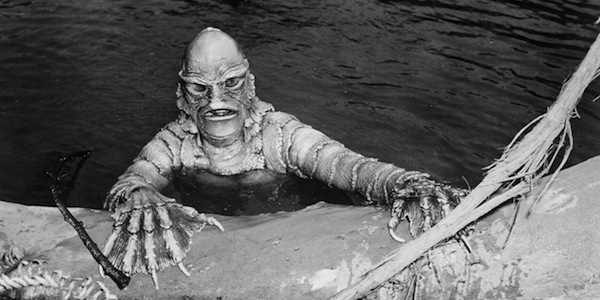 The general populace these days has become highly desensitised to violence, meaning that most contemporary horror films have to either employ psychological elements or rely on ridiculous levels of graphic violence in order to elicit a reaction from audiences. Once upon a time, however, all it took was a man in a suit to scare cinema-goers, who flocked to see the likes of Boris Karloff and Lon Chaney Jr. in assorted Universal Horror releases throughout the thirties and forties. Such films were followed in the fifties by the likes of The Creature From The Black Lagoon and nuclear monster movies such as Them! The rise of the B-movie in the fifties meant that the genre quickly became saturated with cheaply produced rubbish, which contributed to audiences moving on to different things in the sixties, particularly as the growth of technology began to make 'creature features' look cheap and tacky in comparison to the likes of sci-fi, though later films such as Jaws (which focused predominantly on a great white shark) and Alien (which focused the despicable Xenomorph) are ranked amongst the best films of all time. Today, the SyFy channel continues to churn out terrible films about monstrous beings every few weeks, but these are deliberately kitsch given that monsters are rarely capable of satisfying or scaring an audience any more, particularly now that once terrifying creatures such as vampires and werewolves have been forever ruined by things like the Twilight series.
4. The Noir
 Films about mysteries and shady individuals on both sides of the law are as old as the medium itself, but in the forties and fifties, a distinctive style of crime drama began to emerge in Hollywood. With low key visual styles, cynical antihero protagonists and melodramatic plots, noir films brought out the best of directors such as John Huston, whose Maltese Falcon, Key Largo and Asphalt Jungle, the former of two of which starred Humphrey Bogart, are amongst the genre's finest offerings. Hollywood operates in cycles, however, and by the late fifties noir was on the decline, replaced by things such as the aforementioned 'creature feature', which was replaced by things such as science fiction in the sixties and seventies, which was then in turn replaced by big budget action films in the eighties, and so on and so forth. Though the likes of sci-fi and action films will always live on because of their mass appeal, noir's reliance on suspense rather than impressive visual sequences has confined it to the fringes of contemporary cinema. Every now and again, a great film comparable in style to The Big Sleep or Hitchcock's Strangers On A Train does come along, only to quickly become forgotten due to a lack of explosions and whatnot. A distinctive style of noir has begun to emerge in Scandinavia in recent years, meanwhile, particularly in print, though it remains to be seen whether the likes of Stieg Larsson's Millennium Trilogy are simply part of another fad.
3. The All-Star War World II Epic
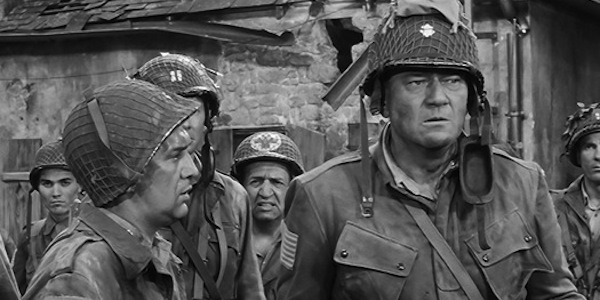 In the decades that followed World War II, a whole host of films were made about the conflict. Some were based on truth, some were pure fiction, but nearly every release had one thing in common an ensemble cast of some of cinema's finest actors teaming up to achieve a common goal, such as the completion of a dangerous battle or operation, an escape from a prisoner of war camp or even the undertaking of a heist. From The Longest Day and The Great Escape to The Guns Of Navarone and Where Eagles Dare, most epic war films achieved enormous popularity upon their release, particularly amongst the male populace. Interest in the conflict is has waned with time, however it's now been almost seventy years since it ended and the vast majority of individuals that were directly or indirectly involved in it are deceased. Most notable individuals, battles and events from the six years of bloodshed have also been exhausted on the screen, meaning that anything new has to be an original creation (and we know how much Hollywood studios hate release anything that isn't a sequel, right?). As a result, a war film in general is now something of a rarity, let alone one that incorporates a cornucopia of big international names, whose salary demands combined with the high cost of filming large scale action sequences would make a film such as A Bridge Too Far cost hundreds of millions today.
2. The Spaghetti Western
 Though traditionally an American genre, many of the most popular westerns of the sixties were made on low budgets in Europe, predominantly by Italian filmmakers. This earned them the title of 'spaghetti westerns', and it was in three such films (Sergio Leone's Dollars Trilogy, to be precise) that Clint Eastwood first came to prominence. In contrast to their American counterparts, Italian westerns such as Leone's films and Sergio Corbucci's Django were dark and violent, making them stand out amongst the 'Cowboys and Indians' style of film that the likes of John Wayne are known for. The western genre as a whole began to decline in the seventies, and though the occasional great film (such as the Coen Brothers remake of True Grit) is still made, mainstream releases are few and far between. As a result, it has long since been unviable for European filmmakers to make knockoffs, though fans such as Quentin Tarantino have tried to keep the genre alive by incorporating signature elements of it into their films. Though welcomed, such homages are not quite the same as the authentic product, which is now sadly a relic of a time gone by.
1. The Cold War Thriller
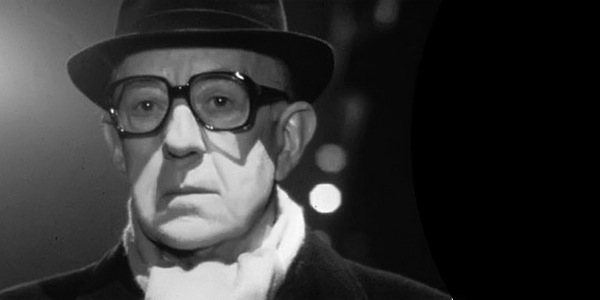 If there was one thing that defined the Cold War - the period of unease and mutually assured destruction between the Western powers and the Soviet Union, it was paranoia. In countries like Britain and the United States, people lived in fear of many things, ranging from the spread of communism to a full on nuclear holocaust. Such an atmosphere lent itself well to films. For almost half a century, representatives of the two sides squared off on the silver screen in gritty thrillers that were nailbiting from start to finish, including some of the finest Bond films and adaptations of the works of authors such as Frederick Forsyth and John Le Carre. Russians, whether sympathetic, devious or nefarious, almost always made for complex and interesting characters, but the fall of the Berlin Wall and the break-up of the Soviet motherland all but killed the genre that they were best suited to, which lives on only in period pieces such as the Gary Oldman-starring adaptation of Le Carre's Tinker Tailor Soldier Spy. Such films, though excellent, sadly lack the impact of those made during the Cold War period itself. Like this article? Let us know in the comments section below.