5 Greatest Screenwriters In Cinema History
 Screenwriting isnt quite as hard as novel writing or literary writing of any kind, but it is still a difficult thing. Forming a character and its words is a most disagreeable endeavour imagine what Tolstoy went through but there are some people who have gone a long way in making screenwriting as important as the film itself almost. The script is as we know a blueprint for what could be a great thing. There are thousands of screenwriters but only a few who have gone on to utter greatness but in my mind there is only one who has never failed, and he ranks at number 1 on this list. That persons films are so enjoyable that even the bad ones are fun to watch. Considering a small list like this means considering an awful lot of people and making it a small list 5 points makes it that much more interesting and difficult to decide upon the finalists. There are notable writers I have excluded for no other reason than the following people are better but it should be noted that they are great writers. They include Fellini, Wes Anderson, Sofia and Francis Coppola and one who I think is the most underrated screenwriters in history, the incredible Gore Vidal who is highly regarded for his novels and essays but not for his massive contributions to cinema which include great amounts of Ben-Hur which he helped write. Interesting note: as he wrote Ben-Hur, Fellini was down the hall working on La Dolce Vita. Screenwriting opens up a debate on who makes the movies? Directors? Actors? Or is it the writers? Thats a debate that Ill save for another article. For now though, immerse yourself in my choices of the people I consider to be the greatest movie writers in the history of this glorious medium which has offered up films like The Great Dictator, The Pianist, American Beauty and Movie 43 that last one was a joke, awful film, right?
5. Ingmar Bergman
 Here is a man loved and admired by Woody Allen, Coppola, Spielberg and Scorsese to name but a few but hated by the tax authorities. Bergman is highly regarded as a director for such films as The Seventh Seal and Wild Strawberries. He wrote fifty films and is one of the most accomplished writers of cinema in its history for creating masterpieces that deal with deep existential questions about life and death. Perhaps his greatest year was 1957 which saw the release of the above two films The Seventh Seal and Wild Strawberries. The first is about a man who plays a game of chess with the personification of death whilst the second film deals with a man recalling his past. Stanley Kubrick even likened it as his second favourite film behind I Vitelloni, Fellinis picture. Bergman so attractive to me because of his stark honesty, the beautiful cinematography and the absolute reality of most of his films and their dealings with the topics we all mull and fear and love: insanity, death, fear and so on and so forth. What I have mentioned so far is nothing. Meaningless. I lied when I said that perhaps his greatest year was 57 when in-fact it was 1966 which saw the release of Persona, written in nine weeks under the duress of illness. It is a strange film: only five actors appear in it and three of them for no more than a minute. One of the two main characters speaks only fourteen words and the imagery is wonderfully strange and different. This film went on to inspire many others and I am still scared to watch it, not because of the genius and because of the crazy cinematography but because one of the opening shots features a tarantula spider and I am pathologically scared of spiders of any kind and size. Best Screenplay: Persona (1966)
4. Stanley Kubrick
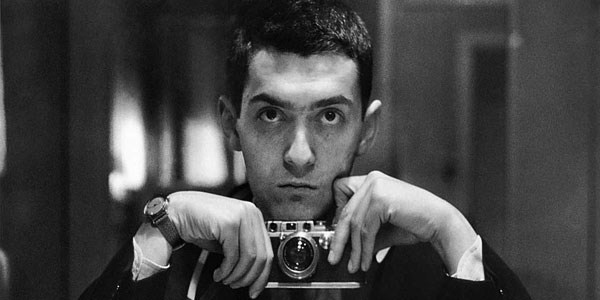 Readers of mine here at WhatCulture will know me as a great Kubrick fan and whilst he is most accomplished as a director and cinematographer he is also one of the very best screenwriters, having penned most of his films himself or with contributions from others. Kubrick made sixteen films, twelve of which are his professional films. Of those sixteen, he wrote thirteen of them he was unaccredited as a screenwriter for Lolita alongside Nabokov. On a few occasions he included others in the writing project, most notably with 2001 and The Shining. His contributions at the pen and behind the camera are among the most important in the history of cinema but his greatest disappointment is also mine, the end of Napoleon, the greatest film never made. If youve ever seen 2001, A Clockwork Orange and Dr. Strangelove youll know that he was a genius but if youve ever read the script for Napoleon youll know that he was beyond that. The research put in was awe-inspiring and Napoleon truly is the greatest script ever made and it is a crying shame it was never filmed. The awful news though is that Kubrick-devotee Steven Spielberg is developing the script into a mini-series for Television. Kubricks scripts were often adaptations of short stories or novels and that isnt to diminish what he created at all because any filmmaker will tell you that adapting is great, it is turning a good work into a great work for the screen and it can often be a hard process. But his contribution was wonderful, both on and off the screen. Best Screenplay: Napoleon
3. Paul Thomas Anderson
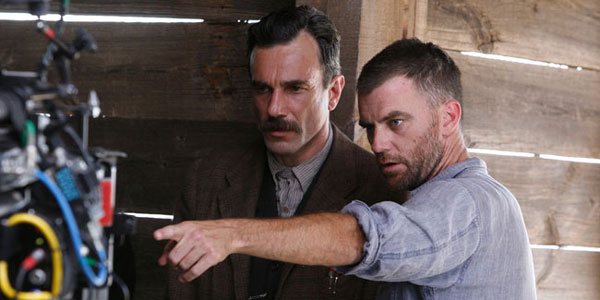 Ranked as the greatest director working today, that is a title he whole-heartedly deserves. He is the Kubrick of this generation but it is important to stress that he isnt as good as Kubrick. His dedication is wonderful with his dislike of fame ensuring the attention goes to his art. His career started years ago but took off with There Will Be Blood which was followed by the master. Most noteworthy about his scripts/films are their pace. Theyre slow and that is a purposeful technique used so that the viewer can engage with the story, they follow and become involved within it. It doesnt just pass them by in 90 quick minutes. Anderson attended film school for two days and remarked at his detest because they made films seem like homework. I can empathise entirely and its a testament to education you dont need it to be great. Anderson is a human filmmaker, much like Bergman. His films follow loneliness, desperation, greed, nihilism and the questions of alienation and family. His next film is Inherent Vice, which will star the star of The Master, the tragically wonderful Joaquin Phoenix. Best Screenplay: The Master (2012)
2. Billy Wilder
 This is the man behind some of the most loved films of all time that are loved not for cinematography but for the delightful characters he creates. He once said that films should rely on simple camera shots because complicated ones draw the attention away from whats going on; whilst I disagree slightly I see his point. Wilder created Sunset Boulevard, one of the most important films about Hollywood, alongside Inland Empire and of course, my favourite film; The Artist. The director of The Artist confirmed my speculation that the film was influenced by Sunset in his acceptance speech for Best Picture at the Oscars: I would like to thank the following three people, I would like to thank Billy Wilder, I would like to thank Billy Wilder, and I would like to thank Billy Wilder. His great contributions include Double Indemnity, Some Like It Hot, Sabrina and of course, The Apartment; one of the great feel-good films Ive ever seen, starring the ever-reliable Jack Lemmon in one of his most recognizable roles. Wilder was a foreign man from Europe who managed to capture the American sense of humor like no-other filmmaker. He is funny, honest, clear, simple and entertaining. Best Screenplay: Sunset Boulevard (1950)
1. Woody Allen
Billy Wilder is second to Woody Allen for the most Oscar nominations for screenwriting. In terms of success Allen is the most successful writer of movies and in my mind, the absolute best. His great contributions are Annie Hall, Manhattan, Midnight In Paris and Sleeper, all of them marked by great influences and great comedy and characters. Allen has the rare gift of having a mixture of talent and endurance. He has made a film a year for over forty years give a take a year or two as exceptions and he has, as Martin Scorsese said, so much to say. Thats a good thing. His films explore love, death, time travel, politics and more, all fused together by an identifiable comedy-style. For Allen the most important thing is not music or cinematography, its the dialogue. His best films are those he acts in himself but by far the greatest is Midnight In Paris, about a writer who can go back in time in Paris and hang out with Hemingway and Fitzgerald and Zelda. Allen has the rare gift of being supremely funny whilst also knowing what makes people tick, a writer/director like no other. He is a one of a kind but is also one of the filmmakers with a great talent for writing; scripts and prose. Best Screenplay: Midnight In Paris (2011)