5 Reasons Annie Is A Hard Knock Disappointment

The sun will not be coming out tomorrow!

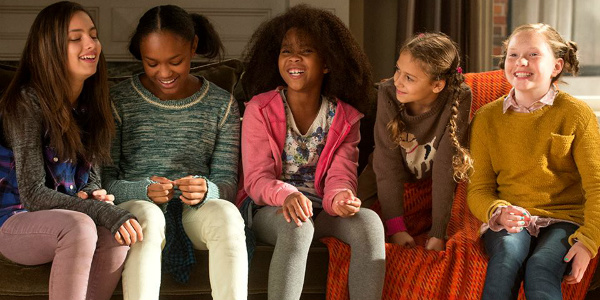
When it was first announced that Sony Pictures were going to be making an updated version of the world's second favorite orphan (after Batman) a lot of people didn't know what to think. The 1982 musical, Annie, is hardly a masterpiece, and altering it isn't necessarily a poor idea. In fact, on paper it seems like a rather brilliant idea. This time around, a foster kid who lives with her mean foster mom, sees her life change when business tycoon and New York mayoral candidate Will Stacks (an update of Daddy Warbucks from the original) makes a thinly-veiled campaign move and takes her in. Cast in the titular role was the young and infinitely talented Quvenzhané Wallis, who was fresh off an Academy Award nomination for her role in Beasts Of The Southern Wild. Directorial duties were being handled by Will Gluck, a filmmaker who has certainly made good films in the past (he also directed 2010's Easy A). Not to mention all the other talented folks involved with the project; Cameron Diaz, Rose Byrne, Will Smith, Jay-Z and Jamie Foxx in the role of Will Stacks. This updated musical extravaganza had everything going for it, what could go wrong? Well, as you probably surmised from the title of this article, quite a lot actually. To put it in a nutshell; this movie is bad, and the sun will not be coming out tomorrow! If you€™re curious as to what went wrong, continue reading. Obviously €“ a spoiler alert is in full effect.

5. It's Clumsily Self-Referential

At the very beginning of this film we see a perky, red-headed girl named Annie giving a presentation to her classmates. When she€™s finished, the entire room erupts with jeers and hisses. The teacher then calls up another girl named Annie (Quvenzhané) to give her presentation. This hip, new Annie leads her peers in a souped-up chant about Franklin D Roosevelt€™s New Deal, and they burst into applause. Within five not-so-subtle minutes, the new Annie is acknowledging the original film and defecating on its memory. And it continues this way throughout the story. This is almost like if the upcoming Batman/Superman movie started with Ben Affleck throwing Christian Bale down a flight of stairs while mocking his Batman voice. At another point, as she's being serenaded, a character asks, "Are you singing to me? Is this really happening?" For a musical to acknowledge the inherent peculiarity of spontaneous singing is to risk pulling the audience out of it. You break the spell. It suggests a lack of confidence, as if the film isn't sure if it truly wants to be a musical and wants to keep some ironic distance.

4. Cameron Diaz's Razzie Worthy Performance

In this updated version of the film, Annie is no longer in an orphanage, but rather in a foster home. There is a horrible foster house mom presiding over Annie and her unhappy pals and this woman is played - eyeball-bulgingly and without a single ounce of charm - by Cameron Diaz. It's supposed to be a comedic role, though her performance is about as funny as watching a puppy get thrown in a river. Any decent director would have taken one look at the dailies and told Diaz to take the brashness down about ten notches €” and to stop twisting up her features and shrieking her lines like a madwoman. Diaz can indeed be a wonderful comedian. If she€™d played the role in the spirit of her sexy Bad Teacher she possibly could have made it work. https://www.youtube.com/watch?v=qQ5KTJSuUrI#t=128 Also, the filmmakers inexplicably decided to beef up the role (compared to the original film). So now the obligatory (unfunny) comic foil has even more screen time in which to cause groans of despair and boredom. The urge to give her character more dimensions dilutes the comedic tension between her and the good guys. In effect, something very simple has been made needlessly complicated, lessening the end result.

3. It's Materialistic Message

Considering this musical has its roots in Depression-era America, the filmmakers contemporary take on the material is eerily lacking in observations about the current rich/poor divide. In fact, with a just a few alterations, this film could just as easily have been called Poor People Suck. Early on, there's a scene where Will Stacks goes to a soup kitchen for a publicity stunt. He€™s grossed out when he tries some of the food, so naturally, he spits it out in a homeless man€™s face. This isn't played as a setup for the character to ultimately learn about the perils of poverty. Instead, it€™s played simply for laughs. The underlying pro-materialism message of the film is laid on particularly thick during two of the film€™s original songs €” Opportunity and The City€™s Yours €” which are basically capitalistic anthems that Gordon Gekko wouldn't sound out of place singing during an office meeting. The joy of the 1982 version of Annie is that you can be happy and fulfilled regardless of your economic class. This remake seems more concerned with inspiring kids to get rich by any means necessary. It€™s like The Wolf Of Wall Street for preteens.

2. They Made Annie Illiterate

In what is probably one of the lamest twists in film history, about forty minutes into the movie the filmmakers reveal that little orphan Annie isn't able to read. Yes, despite the fact that she attends school and carries a letter from her parents wherever she goes, the filmmakers decide to make her illiterate. Why did they do this? Who knows. It€™s completely contrived and totally unnecessary. The kid is a orphan for goodness sake! The audience is already sympathetic to her plight. Worst yet, there seems to been an even deeper nuance. Despite the fact that the character isn't able to read, we constantly see her outsmarting adults. In one of the final moments of the film, after she is kidnapped, she uses her quick wits (as well as social media) to get herself out of the situation. The overreaching lesson seems to be that book smarts aren't everything. As long as you have good ole fashioned street smarts, you'll be just fine. Annie doesn't need literacy. Literacy is for chumps!

1. The New Music Is Awful

If you€™re expecting songs you know and love from the 1977 feel-good Broadway musical, or its companion film, then you will be sadly disappointed. The Martin Charnin & Charles Strouse songs that did survive remain tuneful and catchy. They stand in dark contrast to the new songs - mostly written by Gluck, and a handful of other new writers - which are uniformly forgettable, packed with lyrics that don't scan or rhyme properly. In one instance they are somehow able to rhyme "fingertips" with "wish list." With Jay-Z serving as one of the film's producers - whose career, of course, took off in the late '90s with his Annie-sampled hit, Hard Knock Life - one would expect that perhaps the updated music would have a catchy hip-hop vibe. However, what we get is incredibly lame and timid melodies that wouldn't keep a 6-year-old entertained. While Gluck has proven himself to be a nimble director of straight comedies, his first foray into musicals has been an unquestionable disaster. If you€™ve seen the new Annie remake then please share your own thoughts of the film in the comment section below.

Contributor
Contributor

Jesse Gumbarge is editor and chief blogger at JarvisCity.com - He loves old-school horror films and starting pointless debates. You can reach out at: JesseGumbarge@JarvisCity.com