5 Reasons You Can't Afford To Miss The Wind Rises

Hayao Miyazaki's final film is fantastic, and well worth shelling out on tickets for.

Very rarely is it possible to witness the end of an era in the film-making world. But through the brilliant new animation The Wind Rises, we can see the final chapter in the career of legend Hayao Miyazaki. For those unfamiliar with the name, Miyazaki is considered one of the greats of the animation world, ranked amongst Walt Disney in terms of influence and ability. The Japanese animator and director is co-founder of Studio Ghibli, the production company behind the charming My Neighbour Totoro, the haunting Grave of the Fireflies, and the Oscar-winning Spirited Away among many others. Each of Miyazaki's creations are spellbinding masterpieces of rich illustrations, engaging stories and memorable characters. However, the release of The Wind Rises sees Miyazaki call it a day as he retires from Studio Ghibli, albeit with a typical flourish of imaginative splendour. Put simply, The Wind Rises is one of Miyazaki's definitive works, a brilliant creation from a brilliant creator. Set in pre-WW2 Japan, the film follows the life and career of aircraft designer Jiro Horikoshi as he strives to succeed against the odds. Tracking Horikoshi's true story, the film is interspersed with fantastic dream sequences and a touching love story, as the protagonist produces amazing flying machines. For all intents and purposes the film is a coming-of-age tale, though it is possible to see the symbolism deeper within as Japan steers on a course towards war. Miyazaki's final film has already been released in Japan and America, and has been hailed by critics as "visually sumptuous" and labelled as "the greatest animated film ever made." Lauded as one of Miyazaki's most ambitious works, and with only a limited release in the UK, here are 5 reasons you can't afford to miss The Wind Rises...

5. Masterful Studio Ghibli Production
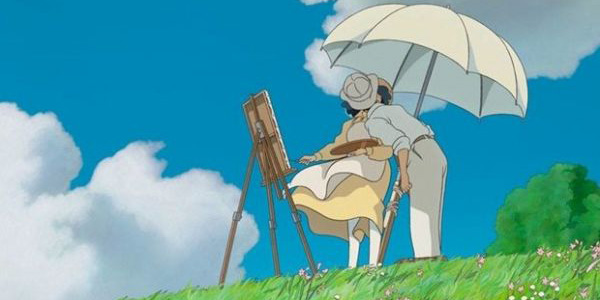
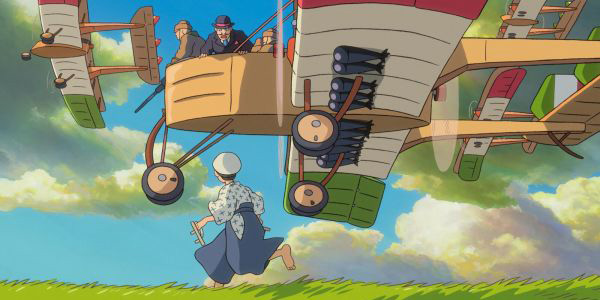
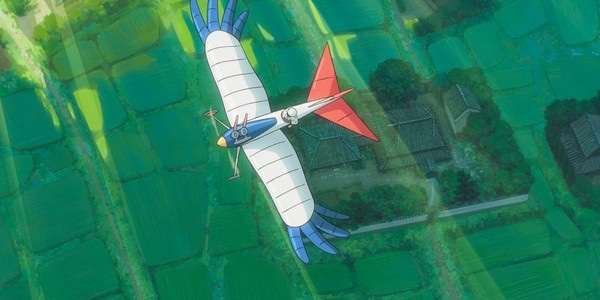
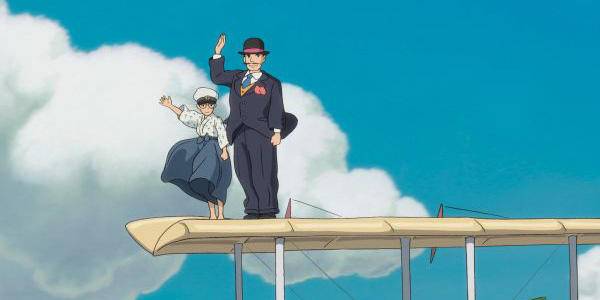
What is immediately striking about any Studio Ghibli film is the quality of the production. Looking back upon the many films produced by the Japanese animation company, there are a number of elements which combine to deliver an unparalleled viewing experience. The rich textures, vivid colours and realism of the imagery; the fluidity and charm of the hand-drawn characters; and the mellow pacing of the action. Memorable personalities, fantastic creatures and machines whizz around and are bursting with energy and life. To complement the visual cacophony, musical scores of many Ghibli films are delivered by Joe Hisaishi, who matches onscreen emotion with sweeping orchestral strings and subtle European motifs. The Wind Rises is exemplary of the high production values of Studio Ghibli. With a story based upon the notion of flight, viewers are treated to wonderful displays of animation as sleek and complex machines take to the air. The colours are vibrant, as wings of green and red soar through never ending skies of blue. In the protagonist Jiro's dreams, we see ideas come to life, as pencil drawings leap from paper into fully-imagined reality. Equally, the delicate details of the film are not forgotten; cigarette smoke swirls in the breeze, and pebbles rattle in near-silence. As Jiro crosses from Japan to Europe, we travel with him on a cultural exchange. The cold of Germany is contrasted by the warmth of Tokyo, whilst the dream sequences fall into a timeless yet welcoming sky of clouds and stars. The atmosphere of the film is almost governed by the score of Hisaishi, who brings an Italian feel throughout, despite the heavy Japanese theme. Artistically, the film can be appreciated on an aural and visual level alone, such is the quality of Studio Ghibli.

4. Compelling Story

Leaving behind the spectacle of The Wind Rises, it is important to acknowledge the story being told. Set in the pre-WW2 years of Japan, the film focuses upon the life of a young aircraft designer. Jiro Horikoshi has dreams of flying, but his poor eyesight brings him back to earth. After meeting famed Italian designer Caproni in regular dreams, Jiro is inspired to produce more daring creations. Despite numerous setbacks, Jiro eventually sets on the path to developing Japan's most successful aircraft, the Mitsubishi Zero. Running parallel to Jiro's aviation dreams is a fraught and tragic love story, in which two young lovers paths meet and diverge, though their aspirations are the same. Whilst Jiro aims to succeed in aircraft design, his partner Naoko is intent on studying medicine and becoming a doctor. Suffering from Tuberculosis, Naoko's story is inevitable and touching, as she strives to support the one she loves. Ultimately, Jiro overcomes his troubles, whilst Naoko accepts her fate. The narrative is intertwined around real events, including the Great Kanto Earthquake of 1923, the rise of Nazism in Germany, and the years preceding the Second World War. Throughout the film it appears as if a dark foreshadowing is rumbling beneath the story, as it is increasingly apparent that war is approaching. Despite this theme, the film is fairly upbeat, and the dream sequences offer an idealised and more positive outlook on an otherwise gloomy prospect. The likeable dream-character of Caproni seems to provide an almost retrospective comic-relief, as if he is laughing in the face of adversity.

3. Real Characters

An unusual aspect of The Wind Rises is its focus on the life of a real person. Many Studio Ghibli films can be considered as products of the fantasy genre, and have highly fictional stories, events and characters. In stark contrast, the story of Jiro Horikoshi is not only true, but depicted onscreen in a truthful and almost solemn tone. For Japan, Horikoshi is an influential figure who brought about success in a time defined by failure. His aircraft designs were revolutionary and took the island nation to the forefront of aviation technology. Though a key message in the film is that planes are to be used to advance mankind, Horikoshi's designs were in fact used for war - a war which Japan lost. Nevertheless, the story of Jiro is one which can inspire many, and the biographical nature of The Wind Rises shows the human factor in a dark period of Japanese history. Jiro's mentors in the film are also based upon real life characters. Giovanni Caproni, an Italian count and aircraft designer, appears throughout as a wise and humorous sage. In the dream sequences he leads Jiro towards success, whilst also offering advice and guidance. Another character, Hans Castorp, is based upon the protagonist of Thomas Mann's novel The Magic Mountain. These references and more create a sense of dynamism within the film, as if the characters are acting outside of their fictional worlds.

2. A Highlight Of 2014

Studio Ghibli films should be savoured. Their appearance in cinemas occurs fairly infrequently, though the appeal is widespread. Before The Wind Rises, the only major Ghibli film to be released was From Up On Poppy Hill in 2011. With each film we are given an accessible, moving and memorable tale, produced in a style rarely seen in the modern age of film. The Wind Rises is a fantastic film, and a highlight of 2014. For viewers unfamiliar with Ghibli or the Japanese concept of anime, the film is a good place to start. The story is engaging and the experience is unique. Subtlety and refinement should be expected, unlike the majority of current films which suffer from excess. The Wind Rises is by no means a Disney film, and by extension it is not aimed at children. Equally, its audience can be considered ageless, and the film should appeal to all. For fans of Studio Ghibli, the film is superb. The typical style and charm is ever present, and the setting and story is perfect for the Ghibli treatment. Young Jiro is as likeable as Spirited Away's Chihiro, whilst the older Jiro is relatable and sophisticated. The subject matter is always easy to understand, yet not over-simplified; whilst touches of Grave of the Fireflies and Porco Rosso reveal a story which works on many levels.

1. The Final Film From Miyazaki

It is important to stress that this is the last film of Hayao Miyazaki. Few contemporary film makers can rival the 73-year-old in terms of his creative output and his true skill. Though Studio Ghibli was co-founded by the equally talented Isao Takahata, the significance of Miyazaki's input must be acknowledged. With a Miyazaki film, viewers know they will get a sensational piece of cinema, such is his reputation. His ability to address current issues and troubling themes, whilst also entertaining and pleasing his audience, marks Miyazaki out as a master of film. His films have won critical praise and international accolades, whilst a huge fan base for Studio Ghibli has been roused by Miyazaki's skill in the field of animation. Hayao Miyazaki retired after producing The Wind Rises. He saw it achieve a nomination at this year's Academy Awards, and go on to become one of the most successful animations of all time. To say that Studio Ghibli won't be the same without him is an understatement, though the company is in safe hands for the future, in the form of Miyazaki's son. Watching The Wind Rises it is possible to see an inspirational man with great ideas being fulfilled. Whether it is Jiro Horikoshi being depicted at all times is debatable, as a certain Hayao Miyazaki is forever visible.

Contributor
Contributor

I like writing about films and hope you like reading about them too. And watching them, of course.