5 Reasons Why Licence To Kill Was Actually A Great Bond Film

Make no mistake about it, this was a groundbreaking 007 film...

Say what you want about the rarely mentioned Bond film Licence to Kill, but it was destined to be labeled a failure in the eyes of film audiences, and critics (except Roger Ebert) before its release in the summer of 1989. This was due to a poorly conceived marketing campaign, along with the fact it was released during one of the most competitive summers on record for tentpole films. In turn, it bombed at the US box office, only taking in roughly $30 million in ticket sales, and from there, years of financial litigation plagued United Artists and EON Productions, preventing another Bond film from getting off the ground until 1994. In the end, Licence to Kill was never given its due credit or respect. That, my friends, is about to change - with this article, at least. One must first give praise to the producers at the time for being willing to blow up the formula established in the Roger Moore era of Bond films. That's right: Licence to Kill had a completely different tone and feel to that of its predecessors when it was released in the late 80s. It was dark, brooding, extremely fast-paced and dared to take chances previous Bond adventures never took, even garnering a PG-13 rating in the US due to the higher level of violence throughout the picture. And even with the darker tone, this film still managed to be very funny at just the right moments... due in part to Q getting the most screen time he's ever had in a 007 film. Make no mistake about it, this was a groundbreaking 007 film, and not the disappointment many fans and critics have branded it over the last 23 years. That being said, it's high time to dive into 5 reasons why Licence to Kill was a great Bond film...

5. Michael Kamen's Unique Score

The next time you watch Licence to Kill, pay close attention to how well the late Michael Kamen's score for this film fits the visuals on screen. It's simply magnificent, and tailor made for a 007 movie set predominantly in Mexico, and the Florida Keys. This was one of the few times in Bond history that a non John Barry scored film worked. From the softer, Latin guitar chords, to the more frenetically paced beats that go hand in hand with the film's climatic truck sequence, this really is one of the most underrated soundtracks to a criminally overlooked Bond film. Even the pre-credit sequence introducing 007 offers a unique sound that hadn't been heard up until that point, i.e. a slow, dark bombastic style, letting the audience know they were in for a much different James Bond than ever before. Add to it Gladys Knight's memorable opening ballad, and you have yourself a top-notch soundtrack to complement an already wonderful Bond film...

4. A Tough Bond Girl

Enter Pam Bouvier, played by actress Carey Lowell. Dare I say she redefined what it meant to be a Bond girl in the late 1980s? Out was the damsel in distress, and in with a woman who could hold her own in a fight. She had the looks, the intelligence of a CIA operative, and the physicality to back up her job title. It doesn't get any tougher than that. From the Key West bar scene, where she protects 007 from Dario (played by Benicio Del Toro no less), and his henchmen, to her ability to seduce the opposite sex much like Bond had always used as a primary skill-set in the field, she was truly a new breed of Bond girl. Case in point: she wasn't just eye candy to James Bond, but somewhat of an equal for a change, and let's face it, change was a recurring theme within Licence to Kill's framework.

3. Spectacular Action Sequences

Quite honestly, some of the best action and stunt sequences were on display in Licence to Kill, more so than in any of the other films before it. From the relentless opening sequence where Bond teams up with Felix Leiter to catch Sanchez by using a DEA helicopter, to the breathtaking shots of 007 jet skiing while catching up to an airplane full of drug money, this film never let off the gas pedal from beginning to end. And let's not forget the film's climax, as Bond ultimately chases down Sanchez and his entire operation by hijacking a tanker truck within the Mexican mountains. Wholly original stuff on display in this film. Which brings me to my next point: The kind of action scenes within Licence to Kill weren't ever truly seen again in later Bond films. So if nothing else, there should be a bit of nostalgia factoring into your next viewing of this movie. You just don't get this level of action stunt-piece intensity done to this scale anymore in movies, let alone Bond films. This entry marked one of the last, great extravaganzas of edge of your seat visuals in this franchise, where stunt men were truly putting their lives on the line to make you believe in the characters on screen, without any egregious CGI enhancements. It was the kind of harder edged action on display here that fit the mood of a more dangerous, and unforgiving 007. Just another reason why this was truly a great James Bond film...

2. A Believable Villain

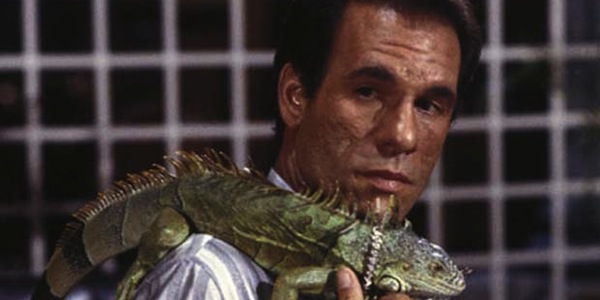
And then there was Franz Sanchez, brought to life so effectively by the great Robert Davi. Finally, the Bond films had more than just a one dimensional villain, not simply hell bent on world domination. Too often you only hear the names Blofeld, Goldfinger, Dr. No, and Stromberg as quintessential Bond villains. But in reality, Davi's role as Sanchez should without question be included in this conversation of top Bond villains from here on out. He was nothing short of brilliant in this picture. In the case of Sanchez, you had a character who was multi-layered, charismatic, commanding and only wanted to conquer the drug dealing landscape of the world. This went along with the more believable aspect of Licence to Kill. Here was a villain audiences could connect to their own reality of the times. After all, the late 80s represented a period where drug cartel violence made the news on a daily basis. In turn, Sanchez's character was a very contemporary choice for 1989. So what else made him memorable? He didn't just kill for show. If someone truly undermined their loyalty to him, then and only then would he get rid of them. Additionally, Davi brought this character to life with the delivery of many choice one liners one would expect from the lead heavy in a Bond film. In many ways Sanchez was a Bond villain you could root for, if even just a little. He practiced what he preached, and once his empire comes crumbling down from the inside job 007 puts on him and his associates, you almost feel bad for the guy. Almost.

1. An Authentic "Ian Fleming" Bond

The line "Make a sound, and you're dead!" could never have been delivered with such p*ss and vinegar as Timothy Dalton did in Licence to Kill. That line represented the antithesis of how his iteration of 007 was as compared to that of his predecessor Roger Moore, or for that matter the man who succeeded him, Pierce Brosnan. And for all the blame he's taken over the years for sinking the franchise, the irony is he was what helped make Licence to Kill a Bond film that's stood the test of time. Additionally, Dalton did as many of his own stunts as possible for this movie. So much so that it was revealed in a recent interview to Empire magazine that Dalton had suffered an "injury" while filming one of the scenes towards the end of the film, as he's dangling for dear life to avoid being chopped up by a meat-grinder type device. He admitted that Benicio Del Toro had inadvertently cut off his finger due to the sharp knife they had been using. This just underlines the sheer amount of blood, sweat, and tears that was put into making this film the most realistic adaption of Ian Fleming's British spy to date for the big screen. Needless to say, Dalton brought the role of James Bond a needed jolt of grit, and toughness that had previously only been found in the Ian Fleming novelisations of the character. Bond could now be seen as a broken, angry, dangerous and tormented soul that ultimately helped elevate Licence to Kill into the fantastic art form that it is. In the end, when a character is taken to new places mentally and physically in a series of films like the James Bond franchise, it's a testament to everyone from the actor playing 007, to that of the supporting actors, and production team involved. And that my friends represents why Licence to Kill was not just a great Bond film in 1989, but couldn't be more true and relevant in 2014. As always, thanks for reading, and feel free to comment below with your thoughts on this entry into the Bond series.

Contributor
Contributor

Articles published under the WhatCulture name denote collective efforts of a number of our writers, both past and present.