5 Reasons Why Star Wars: The Phantom Menace Is A Genuinely Brilliant Film

Come on, give it one more chance. Last time, we promise.

Not so long ago, in a galaxy not that far, far away... Star Wars: Episode I exploded onto our cinema screens, along with a familiar sweeping orchestral score and scrolling yellow title sequence. The long-awaited movie was a success worldwide, smashing box office records and bringing the popular franchise into the 21st Century. The Phantom Menace marked the beginning of a Star Wars prequel trilogy, one which would introduce, develop and conclude the greatest film series ever created. The brainchild of legendary filmmaker George Lucas, Star Wars Episode I became a global hit and was loved by all. Except, it wasn't. The Phantom Menace may boast an enormous financial success story, but critically the film was deemed a disappointment, a failure - a Death Star sized catastrophe. Fans who were devoted to Star Wars felt cheated by what appeared a dumbed-down, poorly executed and simply low-standard film. In comparison to the might of the original trilogy, with its iconic sequences, memorable characters and cinematic pedigree; The Phantom Menace felt every bit like a childish interpretation of a badly written story. You only have to look at the vast criticism of Episode I to see the film's true legacy. Red Letter Media produced perhaps the best critical evaluation of The Phantom Menace, a hilariously insulting, feature length deconstruction, available to watch online. However, despite the large scale criticism of Episode I, it is possible in hindsight to look back on the 1999 Star Wars prequel and appreciate it for what it truly is. A brilliant film. This may seem a bold statement, even an ill-informed view or misjudged approval, but after careful consideration it is time to cut The Phantom Menace some slack. We have to look past the 3 out of 5 star rating on IMDb, ignore the Rotten grading of Rotten Tomatoes and dispel the rumours that Episode I is an awful movie. Instead, we should focus on the positives and view The Phantom Menace as a much better film than it is popularly perceived as. Take the complimentary viewpoint of legendary film critic Roger Ebert who, upon first viewing, asserted that Star Wars: Episode I was "an astonishing achievement in imaginative filmmaking." With this open mindset, it is possible to explore 5 Reasons Why Star Wars: Episode I Is A Genuinely Brilliant Film...

5. Visually Spectacular

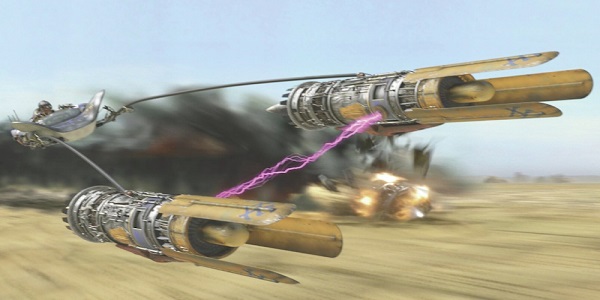
At the 72nd Academy Awards and BAFTAs of 2000, The Phantom Menace was nominated for Best Visual Effects. Though it lost out to The Matrix in both ceremonies, the nominations alone demonstrated how the creators of Episode I had managed to continue the success of the original Star Wars trilogy in regards to pushing the envelope of visual appeal. The original trilogy of Star Wars films is a visually stunning film series, and it must be acknowledged that the visuals of The Phantom Menace are worthy of the same praise and critical attention. The scale of the effects used was huge, with nearly 2000 shots in total being subject to visual effects. What is notable is that Episode I marked the first nomination in the Best Visual Effects category since the 1977 A New Hope. The most memorable visual effects of The Phantom Menace are seen in the Pod Race sequence. Actor Jake Lloyd, playing Anakin Skywalker, sat in a real-life Pod Racer cockpit in front of blue screens. The desert landscape was produced entirely out of Computer Generated Imagery, and the high speed racing between chariot-like Pods took months of perfecting in post-production. On screen, the Pod Race is fluid and realistic, and the visual effects of 1999 still hold up well today. Another memorable visual effect is the character of Jar Jar Binks. Actor Ahmed Best donned a Jar Jar suit and mask during filming and interacted with the other actors in character on set. Though Best's performance was meant to be a base for further computer generated imagery, the finished film features an entirely computer generated Jar Jar, one which blends seamlessly into the scenes. Though his character is often considered awful and unnecessary, we must at least appreciate the film-making feat of producing such a slick visual effect.

4. Compelling Story

The Phantom Menace arrived in 1999 with so much expectation because it was promising to deliver so much. For fans of Star Wars, the film was incredibly significant as it offered an origin story which essentially would explain the entire concept of the franchise. A range of important characters would be introduced, a complex story would find its roots and, as the film's tag line pointed out, a saga would have its beginning. Episode I acts as a superb introduction to Star Wars as a whole. We watch a young Obi-Wan Kenobi become a Jedi knight, we witness the rise of the Sith and the face of Palpatine. But overall we view the main antagonist of the original trilogy, Darth Vader, as an innocent child in a humble home. The origin story of Anakin Skywalker serves as the central point to a number of parallel storylines, and explains how a young slave boy from an outer rim planet left his home for the enormity of the galaxy. The coming-of-age tale is poignant as we know what destiny awaits Anakin. The last time viewers saw his face was as a dying old man in the 1983 Return of the Jedi. In the fresh youthful character of the boy Anakin, played by Jake Lloyd, we are given an illustration of humanity and childhood innocence. Equally, the tale of Obi-Wan is a moving story of a young man coming-of-age. Serving as apprentice to his Jedi master Qui-Gon Jinn, played by Liam Neeson, Obi-Wan is portrayed as an eager and energetic hero. The last time viewers saw Obi-Wan was again as an aged man, a wise elder and Jedi master. His spiritual advice to Luke in the original trilogy is symbolic of the powers of the force, and represents the deeper elements of the Star Wars concept. Seeing Obi-Wan in Episode I reaffirms his credibility and status as a Jedi Knight.

3. Great Cast

To examine more closely the characters who made such a compelling story, we have to look at the actors who played them. The Phantom Menace features a number of high profile names from the world of Hollywood, with starring roles for Liam Neeson, Ewan McGregor and Natalie Portman. Irish actor Liam Neeson delivers a strong performance as Qui-Gon Jinn, and George Lucas points out he was chosen as he was considered "a master actor, who the other actors will look up to, who has got the qualities of strength that the character demands." Neeson has a screen presence in the film unrivalled by his fellow actors, and convincingly portrays a Jedi master. He is dignified and wise, and his character is a likeable father figure to both Obi-Wan and the child Anakin. Neeson had been nominated for an Oscar for his performance in the 1993 Schindler's List, but his role in The Phantom Menace more resembles his portrayal of vengeful Highlander Rob Roy McGregor in the 1995 Rob Roy. The other notable star of The Phantom Menace is Natalie Portman, who played the role of Queen Padmé Amidala. Portman had made her feature film debut with the critically acclaimed Léon: The Professional in 1994, appearing at the age of 12. Her role in the French action thriller was one of the factors in her being cast by George Lucas, who required "a young woman who could be believable as the ruler of the planet, but at the same time be vulnerable and open." Portman has a dual role in the story, as she plays two different characters in a single role, with a twist revealing that the maid Padmé is in fact the Queen. Her appearance as a composed and elegant member of Royalty is contrasted by her real personality as a curious, naive young girl. Lucas noted that Portman produced a character along the same lines as Leia in the original trilogy, and her portrayal has to be acknowledged as being mature and sophisticated.

2. Outstanding Piece Of Science Fiction

In Naboo we are given a stunning and beautifully crafted landscape, featuring an homage to the classical European architectural styles of Venice, in the city of Theed. The green-tiled domed roofs and sandstone exterior of the buildings are aesthetically pleasing, whilst the marble hallways and statues provide a sense of high-culture and tradition. When the Trade Federation droids and tanks roll into the historical setting of Theed, the juxtaposition of new and old makes for powerful imagery. Equally, the military blockade and invasion of the peaceful planet appears to draw on the Nazi invasion of Paris, France in World War Two. In stark contrast to the calm and serenity of Naboo, we are given the overwhelming futurism of Coruscant. The high rise metallic buildings, masses of flying cars and alien figures have the essence of classic science fiction, and the portion of the film set in Coruscant has a distinct stylistic atmosphere. The democratic discussions and focus on bureaucracy has hints of George Orwell's 1984, whilst the representation of a futuristic state mired in archaic policy and corruptibility can be seen as a critique of modern day politics. The plot line of the Trade Federation may seem slow and dull, but it provides an intelligent and complex basis for the story as a whole. The final setting which Star Wars fans will be most familiar with, but which also acts as great sci-fi piece is Tatooine. In Tatooine, we see the desert planet almost forgotten by the advances in technology and democracy, with which the rest of the galaxy has seemingly prospered. The worn-down buildings and worn-out characters represent the fallibility of society, with untrustworthy and dishonest individuals profiting from exploitation. Bringing the central characters from more advanced settings into the harshness of Tatooine creates a meaningful transition. Just as the Trade Federation seems out of place on the cobbled streets of Naboo; the shining silver starship of Queen Amidala upon the desert flats of Tatooine produces an evocative juxtaposition.

1. 'Our' Star Wars: A Product Of The 90s
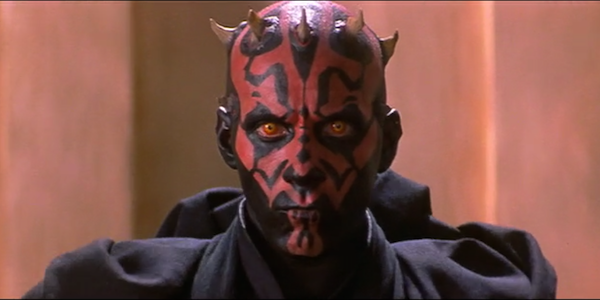
The Phantom Menace marked a fresh take on Star Wars, and can essentially be seen as the defining Episode of our generation. The production of the film spanned the 1990s, with the film being released in 1999, and to a youthful audience Episode I was as mesmerising and engaging as A New Hope was in 1977. George Lucas' producing partner Rick McCallum joined the production team in 1994, and put his experience from making The Young Indiana Jones Chronicles towards the project which began filming in 1997. Location scouting and set design were among the first stages in producing Episode I, with Tunisia being used as Mos Espa on Tatooine, and the Italian Caserta Palace portraying Theed Palace on Naboo. Elaborate costumes were also created for the characters, including Jedi robes for Qui-Gon and Obi-Wan, and an array of heavily stylised and ornate outfits for Queen Amidala. The familiar Stormtroopers of the original trilogy were replaced by a new foe in the form of Droids, whilst the central antagonist of the film, Darth Maul, was given a complex make-up and iconic double-ended lightsaber. The result of the production process was a film which had a new updated style, one which would appeal to a young audience and fresh generation of fans. Jake Lloyd portrayed a youthful character in Anakin Skywalker, at a time when the highest grossing films featured young cast members and were generally family orientated. The 1993 Jurassic Park featured two children among its characters, whilst the 1995 Toy Story was aimed at a young audience. Other franchises in the late 1990s were redefined as family films; the 1997 Batman & Robin was markedly different to the darker Batman Returns of 1992, whilst the 1995 Goldeneye featured a more upbeat and less intense James Bond than the 1989 Licence To Kill. Making The Phantom Menace a light-hearted, at times comedic, family film was only a natural transition in the context of the 90s as a whole. Foolhardy characters like Jar Jar Binks find their place within family films as comic-relief, and ultimately don't detract from the overall story. For our generation, The Phantom Menace is representative of a more innocent time in relation to our childhood, but also the film industry of the 90s, and is all the more appealing for being so. There is a lot to be said about Star Wars: Episode I - The Phantom Menace, so feel free to leave your point of view where we can see it. Like this article? Also let us know in the comments section below.

Contributor
Contributor

I like writing about films and hope you like reading about them too. And watching them, of course.