5 Reasons The Master Lost Its Oscar Buzz
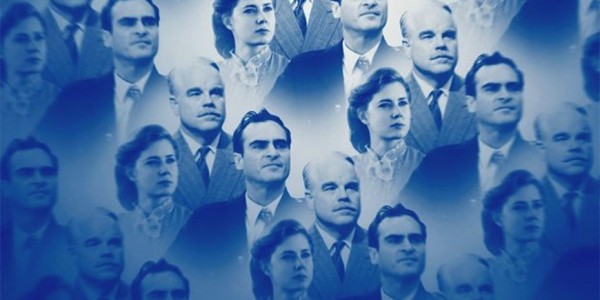 When acclaimed writer-director Paul Thomas Anderson's The Master was released back in September of 2012, it was the toast of cinephiles all over the world, and marked the official beginning of awards season. While getting us excited in seeing his first film in 5 years since his powerful There Will Be Blood, Anderson - the meticulous storyteller that he is - released a film that has since gone on to polarize audiences and critics alike. In the coming weeks before its initial release, The Master was ready to sweep into the mindset of cinema audiences. Early buzz is always prevalent with a Paul Thomas Anderson film, but The Master was getting some of the strongest energy the director had even been given. The film itself became a star. The Master was one of the first feature films to be shot on 70mm in quite some time, so there was a new resurgence in making sure this was a film not one to be missed on the big screen. Early reviews from an August screening of The Master touted it to be the one film to beat during Oscar season. Then it was released, and while some found Anderson's stripped down approach to telling the story, a tantalizing companion to the film's beautiful and haunting visual imagery a strong point, others found it to be confounding. Since The Master was released early in the Oscar season it has seen many more prominent films of equal or greater stature blaze a trail in its path, and among other reasons stated in this article is why The Master has lost its momentum and probably won't be represented at the Oscar podium on February 24th.
5. The Competition
Since being released so early in September, The Master has neatly been pushed aside by a slew of other worthy Oscar contenders. Acclaimed films like Silver Linings Playbook, Skyfall, Life Of Pi, Lincoln, Zero Dark Thirty and the current front-runner Argo were all released in The Master's wake. This has caused audiences, critics and Academy voters to move The Master down on their list, and while some still maintain it high on those lists, others have almost forgotten about Anderson's opus. Since the Academy has 10 spots on their coveted Best Picture ballot available, The Master - given its initial acclaim and pedigree of talent - will probably land a Best Picture nomination. The sometimes experimental and overly sombre film (usually a repellant Oscar theme) will be a dark horse nomination and a extremely long shot to win. If the Academy decides to go old-school and keep the nominations to the traditional 5 this year, The Master will not be on that list thanks to the competition.4. Scientology
 In The Master, Phillip Seymour Hoffman plays Lancaster Dodd. Dodd is an imposing and magnetic man, an author, a father, a teacher, a Master. There has been little allusion to the fact that Anderson based Lancaster Dodd on L Ron Hubbard, the equally imposing and magnetic science fiction author. Hubbard is more infamously known for developing the religion of Scientology, which is now practiced by millions of people worldwide. In The Master, Dodd is working on The Cause, which seems to be a belief system in life that he has created himself, and is slowly in the process of taking it to a larger scale amongst his followers. Any film that tackles religion is going to be controversial, but when the religion you tackle is an equally controversial one in its own right, this leads to problems. Although Anderson has admitted that Hubbard was the basis for Dodd, he purports he is not making a thinly veiled biography of Hubbard or Scientology, he just found Hubbard to be an interesting character to explore. However, one cannot think of The Master or read a review of it without spotlighting the comparisons in the film to the religion. This has led to people who practice Scientology upset over the film, in particular the consistent theme that Dodd is "making it up as he goes along." Religious allusions aside, Phillip Seymour Hoffman is commanding in the role of Lancaster Dodd and will probably secure a Best Supporting Actor nomination for his work. However, when actual Scientologists (and voting members of the acting branch) John Travolta and Tom Cruise among others cast their vote, you have to wonder if their beliefs may come into play in giving Hoffman the gold for his acting choices.
3. Mixed Reviews
 Upon the release of The Master, there seemed to be a consensus between critics after viewing the film. Critics that enjoyed The Master found it to be a beautifully shot, edgy, smart and engrossing film, and containing many Oscar-worthy performances. However, critics that disliked the film found it to be a beautifully shot, edgy, smart and engrossing film, and containing many Oscar-worthy performances, if not a bit confusing and... well, pointless. With the critics being put in a stalemate as to what makes this film good or bad, this leaves audiences to make up their own mind about The Master. At its heart, The Master is a film of parallel beauty and power that left audiences just as confused. A good review can help a film and a bad review can do damage. This has led to The Master being one of those rare films that can baffle even the smartest of viewer. This, of course, could hurt The Master's chances at securing Oscar gold, as the Academy only likes to bestow its coveted awards to films that are celebrated across the board.
2. Joaquin Phoenix
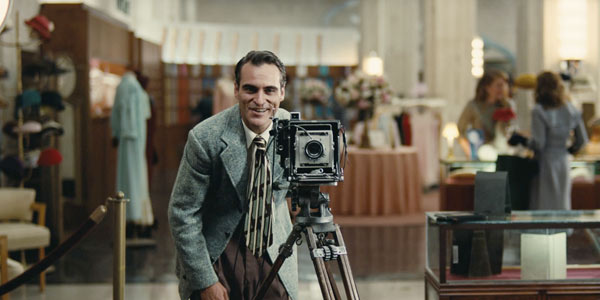 As the emotionally distant and scarred World War II vet Freddie Quell, Joaquin Phoenix is mesmerizing in The Master. He plays a man with no compass in his post-war life, and he passes through in a drunken mess, causing unwanted trouble wherever he goes. He doesn't feel he has direction until he discovers Lancaster Dodd (Phillip Seymour Hoffman), his extended family, and The Cause, Dodd's self-made belief system that is more a religion than a cult. Phoenix gives one of the best performances of his career as Quell, a slow-witted pervert with a talent for making one hell of a home-made cocktail. For any other actor, this challenging and complex performance would certainly solidify a Best Actor Oscar win. Upon the release of The Master - when asked about the film's Oscar buzz and his chances at nabbing the Best Actor award - the always outspoken Joaquin Phoenix responded by stating "I don't believe in it. It's a carrot, but it's the worst-tasting carrot I've ever tasted in my whole life. I don't want this carrot. It's totally subjective. Pitting people against each other ... It's the stupidest thing in the whole world." Although he may be correct in his observation that the Oscars are at best, Hollywood's version of the Prom, the Academy does not take comments like that easily. Phoenix, who caused a lot of heads to stir a few years ago with his "retirement" from acting to pursue a music career (which was all a clever hoax and the subject of the mock-doc I'm Not There) has always looked controversy straight ahead. The Academy, who always want a safe bet - especially during the billion viewer strong telecast - will have presumably taken Phoenix's comments to heart.
1. The Master Is Ahead Of Its Time
 If anything, writer/director Paul Thomas Anderson has made a film that will be talked about for years to come. It might just be that his latest masterpiece is not ready to be digested quite yet, at least before the Academy votes are in. The Master is a film that needs to be seen more than once to be appreciated, both to marvel at the beautiful cinematography and brilliant performances, but also to absorb what Anderson is trying to say in a complex story about the trials of war, family and loyalty. An ideal situation would be for the Academy members to watch this film once, discuss it, and then watch it again. The Master cannot be summarized in one viewing, and in their haste of trying to see every film nominated, this gem might go unappreciated. The best bet at The Master taking home an Oscar is Anderson's masterful and poetic original screenplay, the blueprint for this epic. The Best Original Screenplay award has been dubbed "The Citizen Kane Award" over the years, honoring a film for its daring and influential impact on cinema, instead of awarding it the mainstream Best Picture Oscar (Sunset Boulevard, Dog Day Afternoon, Network, Pulp Fiction and, yes, Citizen Kane are some of the winners of this award). If Anderson's screenplay is recognized (his 3rd nomination in this category), all of the lost buzz, controversy and scandal might prove to have been worth it after all. What did you make of The Master? Does it deserve more love? Let us know in the comments section below.