5 Reasons Why Blade Runner Sequel Is A Stupid Idea
 This past week the news has been skipping around the internet regarding the progress of a sequel to Blade Runner. Scott Free, a production company owned by the film's original director Ridley Scott, has hired Michael Green, one of the credited writers for the Green Lantern film, to perform rewrites on a sequel to Blade Runner that original writer Hampton Fancher has put together. This is no guarantee that Green will be the only writer to try this or that Scott will wind up directing it. At the moment, as long as the story is on paper, it's a movie that "could" happen, rather than will happen. It is unsure if any of the original cast from the film will appear or even be mentioned. In my mind, it is not the question of who is involved that is the main issue. I feel that the whole premise of doing a sequel is flawed for these five reasons that I will detail. Please note that these arguments are intended to apply to a film sequel. There have already been 3 official novel sequels to the film, written by K. W. Jeter, Blade Runner 2: The Edge of Human, Blade Runner 3: Replicant Night and Blade Runner 4: Eye and Talon.
5. It Would Be Based On Another Future That Didn't Happen
 The original film was set in 2019. We are now six years away from this and heading into a different future. This is a problem that happens with any science fiction story once they start using dates that can be reached in a generations lifetime. The question of artificial intelligence now is not focusing on creating things like humans but if and when computers can achieve that. Its becoming easier to accept humans incorporating technology within them, then making technology that looks human. The sequel has been mentioned as being set some years after the film, so the makers could use that excuse for differences. But that still could result in a lot of retroactive continuity, to cover why replicants are now being made with 3D printers. Or how they were actually humans with artificial parts and a built in self-destruct.
4. The Films Look Is Now A Cliche
 Blade Runner is seen as one of the early works of the sub-genre of cyberpunk. When watching the film on its initial release, William Gibson felt despair over its visual similarity (if not technological) to the novel he was then preparing Neuromancer. The film established a vision of the future as being set in crowed cities with the environment suffering beyond its borders. A dark metropolis with skyscrapers and moving billboards, with flying cars and constant clouds and rain. This became the default vision of the future for a while until the pendulum swung to everything having clean, stylized white look. However any attempt to revive this visual style is going to look dated even if the original film was a trend-creator and not a follower. While there is nothing to stop a sequel story happening in a completely different location, the makers may feel that it needs to have the visual style of the original, even though it has been copied to death. Also the association with cyberpunk may be seen as dating the property, as this sub-genre is less prominent then it was in the eighties.
3. Things Will Keep Blowing Up Because They Wont Want To Make It Intelligent
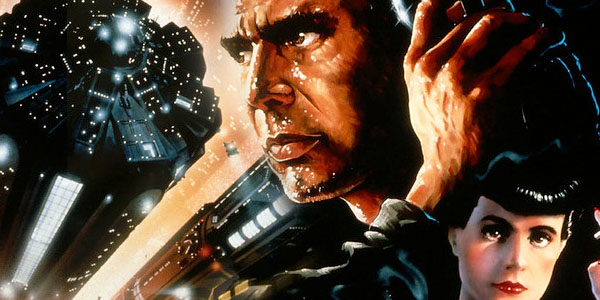 Blade Runner dealt with implanted memories, the creation of life, mortality and identity. These should be in the sequel, but this is not certain. The studio will want large numbers of people to see it and they usually take a low view of the publics intelligence. So they will want to have big action scenes to sell it and justify the budget of recreating the look of the original. If the screenplay does not have them, somebody in a script department is going to want them because they think science fiction films need them. When the film comes to be edited down, the stuff with talking will be the first to go. Despite the success of Inception, it is less risky for the studio if they dumb down. Also they may think it is easier to sell it overseas, if there is less talking. This is a problem that all major studio science fiction films have these days. The original Blade Runner cost over $20 million so the studio wanted to be sure they would get their money back This lead to the cut of the film with Harrison Fords narration and the directors cut only emerging later. As the years have gone by, Hollywood has become even less willing to take risks.
2. Does It Have A Big General Audience Who Will Pay To See It?
 The original may have become a cult and critical success in its latter years, but this is not the same as an appeal to the general public. It is easy to exaggerate the importance of things in fan circles. Blade Runner may be influential, but it has not been as directly referenced as other films from the early eighties. Yes the public may know the name of the film, but not in the context of something they loved from their childhood and can be re-packaged for a new generation. If a sequel to Blade Runner is designed to have a Happy Meals promotion, there is probably something wrong with it. However this is the sort of thinking that will happen so that the film can be given its budget. It would be easier for the sequel to just aim to be a low-budget production that would recoup its investment on the DVD sales. However it is unlikely that anybody is thinking of this.
1. It Cant Live Up To Expectations
 So even the makers cannot rely on a mass audience, they might be thinking that they can count on a devoted fan base? Well, the higher esteem the original film is held in, the harder the job of any sequel. Many fans of the film do not desperately want a follow-up. For some people, the ambiguity of the ending is something they like. They dont want a concrete statement about the fate of Deckard and Rachael. Any fans that wanted a sequel have their own ideas in their heads and one script cant please all of them. It isn't just being the follow up to Blade Runner that the sequel has against it. It is being a sequel or follow-up to a popular science fiction. This is a tradition that has a bad track record, from the Star Wars prequels to Prometheus, to the prequel to The Thing. I know that these are all prequels, but people are getting the impression that anything referring to an older science film is going to be bad. So any faults that the film has will be pulled out and explored at the expense of any good bits. So am I being too pessimistic about this? Let me know in the comments below.