5 Sci-Fi Novels That Deserve Film Adaptations (& 5 That Deserve Better)
Stop getting adaptations wrong (and give us some good new ones)...
Science fiction, much like fantasy, often gets a bad rap in literary circles. A lot of folk who don't actively engage with the genre (read: pompous, uppity idiots) are quick to disregard it as silly, over the top stories for little kids - and big kids who haven't bothered growing up.
And hey, who hasn't run afoul of this prejudice in the past? Maybe, for example, you decided to take a James Joyce course at uni instead of the sci-fi course with your best mate because you wanted to look smart and have regretted it ever since... for example, a totally random example.
Sci-fi has had a bit of a rocky road in the old movie department too. Sure, you get classic adaptations like A Scanner Darkly or Stalker, but for every Blade Runner you get a dozen Dunes, and saying that is sad because, really, David Lynch adapting Dune should have been a home run. But, as you should all know by now, Dune is getting another chance at life on the silver screen, and so far it's looking pretty promising.
So here's a little list of sci-fi novels that we all deserve to see on screen one day - and a few that, for the love of god, deserve so much better than what they got.
First, let's start with the ones that deserve adaptations...
5 Sci-Fi Novels That Deserve Film Adaptations...
5. The Space Merchants - Frederick Pohl And C. M. Kornbluth
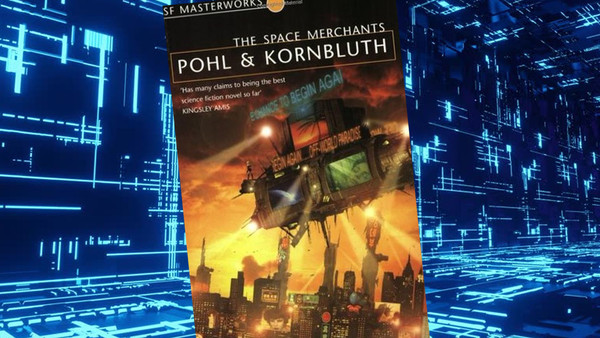
The Space Merchants is bonkers. Absolutely astoundingly off the wall brazenly unashamedly bonkers. Not only that but it is also criminally underrated and under-read amongst the general public, despite selling pretty damn well within sci-fi circles and gaining that much coveted title of 'cult classic'.
Imagine, if you will, a planet that is horribly overpopulated. Where all conventional governments have been entirely replaced by gigantic corporations who make every decision and where the most common - and most lucrative - profession is in advertising and marketing, in fact that's pretty much the only profession to be found. Imagine that, eh?! Ridiculous! That would... totally never happen.
Our protagonist Mitch works in advertising as a copywriter and at the novel's offset he lands what he thinks is an absolute killer gig...emphasis on killer. The novel is full of mystery, intrigue, backstabbing and corporate espionage. Plus it's funny as all hell. Oh, and there's also a psychotic advertising hitman.
What's not to love? The Space Merchants is a story for the ages, and one that is just so uncomfortably close to bone when you take into consideration how our world is shaping up.
4. The Dispossessed - Ursula Le Guin
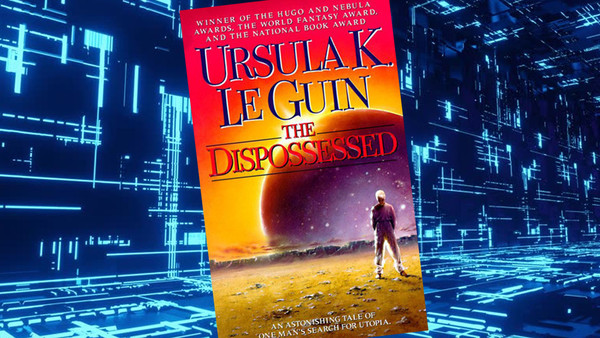
This is one of the greatest science fiction novels of all time by one of the greatest minds the genre has ever seen. In fact, scratch that, this is one of the greatest novels of all time by one of the greatest minds literature has ever seen. Full stop. Over the years it's seen one or two radio adaptations but not once has anyone tried to bring it to the big screen. Which really is a shame because it could be incredible - in the right hands that is.
Like many of Le Guin's other novels, The Dispossessed deals with some pretty heavy, dense political themes - most of which reflect LeGuin's own political views, as well has her own scorn for how this world is ran. The novel analyses themes of socialism, anarchy and the conservative capitalistic hierarchy that dominates our culture.
The bulk of the narrative is divided between two planets: Anaress and Urras. Urras is divided into numerous states, but most embrace a capitalistic patriarchal system though there are left wing dissident parties present. Meanwhile Anaress embraces an anarchistic ideology, but they're viewed by Urras as little more than a mining operation that they let believe possess freedom. Hmmmm, that sounds familiar for some reason.
The overall plot is far too dense and complex to sum up here, so we implore you to go and read this phenomenal bit of fiction. If you don't bother: then take my word for it that this novel's themes have never been more pertinent and would make for a powerful bit of cinema or television.
3. Rendezvous With Rama - Arthur C. Clarke
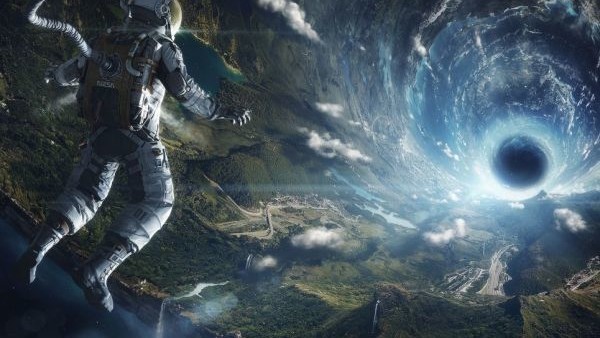
This one's for the hard sci-fi crew. Basic plot summary - and thank Christ this one is reasonably easy to sum up: one day a massive cylindrical space station appears in earth's orbit and Earth sends a crew up to a have a little look and...well, that's basically it. Oh, except for the fact that it turns out Rama is actually a goddamn synthetic planet with its own mechanical wildlife wandering about as well as its own weird physical laws too.
One of the most fascinating things about Rendezvous With Rama is that as far as a plot is concerned...well there's very little to actually speak of, but somehow it still manages to be a very engaging and, above all, a very entertaining novel. This all comes from the overarching mystery of just what the hell Rama is - and trying to imagine just what the structure would look like and how the hell it actually functions.
An adaptation has actually been stuck in development hell for years, with none other than Morgan Freeman attached to the project, but for a number of reasons it's never come to fruition. One obvious reason for this is just how difficult it would be to film this beautiful mess. Another pretty simple reason was given by Freeman himself and that's that the right script just hasn't cropped up yet.
Would this be any easy project to film? Jesusing god, no. Do don't you want want to see it?
2. Virtual Light - William Gibson
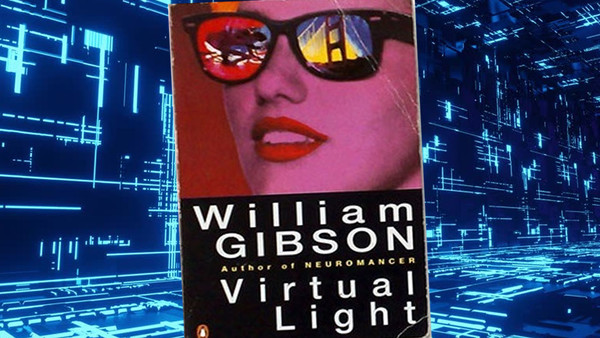
Ol' Billy Gibson is probably best known for Neuromancer and the two subsequent novels that make up The Sprawl Trilogy. Neuromancer is a killer novel too, don't get me wrong, and it's influenced not only countless other works of fiction but also our culture as a whole, however an adaptation of Neuromancer has been in the works for...Christ knows how many years now. So let's go with one of Gibson's lesser read novels.
Virtual Light is arguably Gibson's most entertaining cyberpunk romps. Set in a neon drenched San Francisco in the distant future where the lower classes have constructed a vast shanty town from shipping containers atop the disused and abandoned Golden Gate Bridge.
That alone begs to be shown on the big screen, but beyond just the setting Virtual Light boasts some of the best characters that you're likely to find in any sci-fi novel out there and it's all led by the effortlessly cool and endlessly likeable Chevette. Chevette is a courier who's street smart and possesses a wit and tongue that are both sharper than that a new kitchen knife. Oh, and she also has a bike that tells people to bugger off if they get too close.
And, of course, it wouldn't be a Gibson novel without a big techno-conspiracy at the heart of it all, and who doesn't love that, right?
1. Cryptonomicon - Neal Stephenson
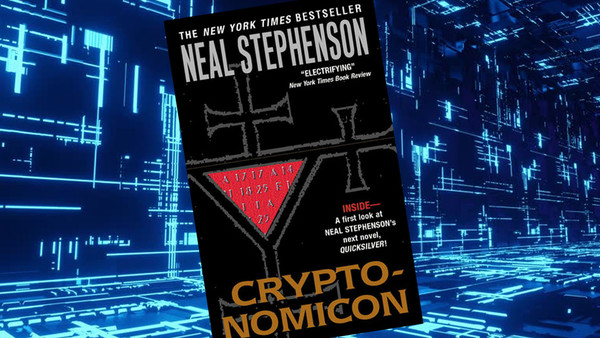
This one demands to be a TV series because there's absolutely no way you could cram this doorstop into a two hour movie. Cryptonomicon falls neatly into that category of "novels everyone pretends they've read" and that's all down to not only it's astounding length but also the dense technical language which Neal Stephenson refused to dumb down. However, it's always refreshing when a book refuses to hold your hand and demands that you put the work in to unravel just what the hell is going on.
Cryptonomicon's narrative is divided between two time periods. One centres on a group of WWII codebreakers - and, yes, that includes Alan Turing - whilst the other focuses on a group of cypherpunks in the late 90s, some of whom are related to the codebreakers from during the war. This would be incredible to see on screen not just because of the absolutely insane plot and brilliantly painted characters, but also because it's a wonderful analysis of how the past informs not only the present world of technology but also the world at large.
Also... look, it's hard to understand Cryptonomicon, but that doesn't mean it's not really good, so it'd be nice if a TV show came along one day to fill in the blanks.
And now to the ones already adapted that deserved so much better...
5 Sci-Fi Novels That Deserve Better
5. I Am Legend - Richard Matheson

I Am Legend is one of the most important novels in not only the sci-fi genre but horror as well. Not just that, but you can also thank I Am Legend for essentially single-handedly paving the way for modern vampire and zombie fiction, as well as popularising the concept of pandemics as the root cause of the apocalypse. That's a hell of a lot of medals to pin to your literary chest, which is why it's all the more disappointing that we ended up getting the hot, moist trash of an adaptation that we did.
The Will Smith led movie left a lot of us familiar with the source material...wanting, to put it politely. As often happens with Will Smith projects - stick around for entry three everyone - the movie ended up being very action oriented and the third act resembles the novel in no way at all except on a superficial level.
The novel itself is bleak and legitimately terrifying from start to finish and the overall tone is far closer to Cormac McCarthy's The Road than what we wound up with in 2007, especially the sugarcoated ending that Hollywood no doubt tacked on because they assumed no one wanted the grim, ironic ending of the source material - don't worry, no spoilers here in case you want to read it.
4. The Hitchhiker's Guide To The Galaxy - Douglas Adams
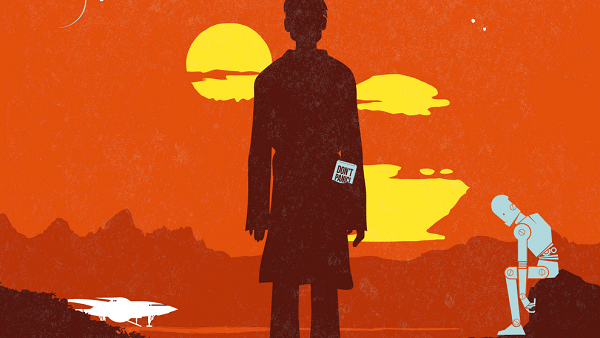
Look, if you were a fan of the 2005 adaptation of The Hitchhiker's Guide to the Galaxy then fine, nobody is saying that it was abominable. It just sort of... missed the mark. It did a fine job, sure, and the casting and performances were pretty solid for the most part, but it's tough to really capture Douglas Adams' chaotic energy and Garth Jennings just didn't quite manage.
Jennings managed to cram in plenty of the wackiness and the weirdness of the source material, but what was kind of overlooked was the darker subtext that's present in a lot of Adams' work. Not only that but it often felt like it skipped across many of the often profound - and puzzling - existential questions that are really at the heart of the Hitchhiker series.
Another issue that arose throughout the film was the fact that it really did feel like Jennings was trying to cram as many ideas onto the screen as possible which left the overall movie feeling pretty disjointed. That ain't exactly Jennings' fault though, it's just that there's so much going on in Hitchhiker's that, much like Cryptonomicon, it's tough to get it all into one two hour sitting. Hell the original was an episodic radio show, so it only makes sense for it to be given new life as TV series.
And Taika Waiti would be perfect for this but he's going to be busy with Star Wars so... maybe in 2042?
3. I, Robot - Isaac Asimov

Now, the 2004 movie was an utter atrocity exhibition for a number of goddamn reasons. First and foremost, the product placement. Oh, sweet baby Jesus the product placement. Secondly the acting was just abysmal. Finally, they turned what should have been a sombre, quiet, thoughtful rumination on technology and the human condition and turned into...uch, that.
To be fair to the folk behind this abomination, they didn't exactly have a ton of material to work with - for those of you who aren't familiar, I, Robot isn't a novel by Isaac Asimov, but actually a collection that goes by that name. The story that I, Robot is...somewhat based on is called Little Lost Robot - and only a minuscule amount of elements were actually utilised for the movie.
Before we go any further make yourself familiar with Asimov's laws of robotics, look them up because who on Eath has time to list? Plus, you know, word counts.
Little Lost Robot was actually an analysis of the redundancy and possible limitations of these rules that Asimov himself imposed. As well as that, it explored the possibility, or even likelihood, of robots breaking said rules and eventually gaining what could be perceived as free will. Go ahead and call me a little philosophy nerd if you want, but that's a story that deserves to be explored instead of just another paint by numbers robot action movie.
2. Farenheit 451 - Ray Bradbury
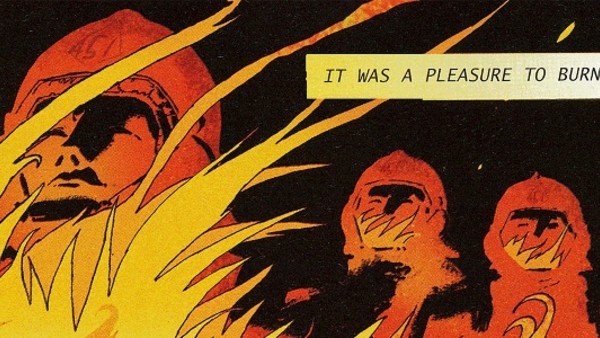
Oh, good god! Yet another classic of science fiction relegated to the action flick chopping block. Maybe 'action' is the wrong word here, but it was nonsense either way. Back in 2018, HBO adapted Farenheit 451 and they made such a phenomenal mess of it that if there was any justice they'd cancel the whole damn channel. The saddest part of it all was the fact that they got two of the OGs in the biz to play Guy Montag and Captain John Beatty, those being Michael B. Jordan and Michael Shannon respectively. Those men deserved better. The audience deserved better. And by Christ, Ray Bradbury's classic novel deserved/deserves so much better.
Farenheit 451 is a beautiful, slow burning (yes, pun intended, no apologies) meditation on the horrors we as a society might face if we willingly allow censorship to run amok, willingly allow information to be destroyed and willingly remain ignorant to not only history but also the present that we happen to occupy. Now, tell me, doesn't that sound pretty goddamn relevant to where we're at now, what with the utter goblins we have in power and those who hang on their every word?
This is a gorgeous, poignant novel that deserves to reach an even larger audience than it already has. And if you haven't read it before, do yourself a favour and get on it. Hey, it'll only take about three hours if that's any incentive
1. Frankenstein - Mary Shelley

And now we come to the MVP! The grandmother of them all! The one, the only Frankenstein by Mary Shelley. We have this novel to thank for so much, the least of them being that we most likely wouldn't even have science fiction in its current form if it weren't for Shelley penning this masterpiece when she was eighteen. Yes, you read that right, eight-goddamn-teen, feel free to be equal parts furious and impressed at that.
There have been so many adaptations of Frankenstein over the years that it's tough to keep count, but somehow the best one so far has been Young Frankenstein - that ain't a slight against Mel Brooks, okay? It's just...something really needs to be done about this.
Everything about Frankenstein is utter perfection. The prose is sparse and beautiful, the framing device works gorgeously and the entire story is gripping from start to finish. It's a wonderful analysis of the possibility that technology - the monster that is - may one day take over and deem us nothing but a monstrous creator who has no right to exist - this was a good century and a bit before the concept of the singularity would come about, by the way.
Beyond the industrial elements, the novel is also a stunning meditation on what makes us human, and, more importantly, what makes many of us monsters. There is no more moving a passage in all of literature than The Monster/Adam's isolation, rapid evolution and realisation that he shall never belong.
And, yes! I am crying! Is it not human to weep?!