5 Screenwriters That Ended Up Hating Their Own Movies

Work your ass off to complete a screenplay you love. Sell screenplay. End up hating screenplay and everybody associated with it. Ladies and gentlemen: the life of a Hollywood screenwriter.
The notion of being a screenwriter in Hollywood is tough. Unlike a novelist, your written work is bought and then rewritten, poked, prodded, etc. until you may not even recognize the final product. Most screenwriters accept these negatives aspects as part of the gig. However, there are some that attempt to fight the good fight, standing tall against the Hollywood machine who attempt to mute their artistic voices. And some screenwriters go so far as to practically disown the movies made of their work and blatantly state their hatred for these adaptations in interviews. While a screenwriter may be the low man on the totem pole in the chain of command within Hollywood's power structure, they are the ones with the strongest and loudest voices, honed from years of slaving away behind a computer, perfecting the essence of language. Here are 5 writers that hated the movies that were spawned by their scripts, then...

5. Andrew Kevin Walker - 8MM

After the breakout hit Se7en, director David Fincher and screenwriter Andrew Kevin Walker were at the top of the "to work with" lists of nearly every major Hollywood studio. Walker quickly sold a spec script called 8mm, after Se7en found box office glory, with a reported $1.75 million. The bleak and grim script was bought by Sony, and Walker was assured the dark script would not be lightened or tampered without his involvement. That is until Joel Schumacher entered as director and the studio started to unexpectedly show some worry about the film's commercial potential. Schumacher immediately began rearranging the script and then entirely rewriting whole portions of it, much to the chagrin of Walker. Walker's original script would later be published and it's shocking to note the difference in tone between page and screen. Schumacher tried to take a dark script and create something mainstream out of it. Walker says he barely recognizes the movie that got made and has since worked primarily as a script doctor in Hollywood. "It was such an inherently depressing experience that the very least I can do is protect myself from the miserable experience of actually watching it," said Walker about the film. After the film debuted, Walker (who shies away from press today) said about being a screenwriter: "One of the things I'm realizing is how inherently unsatisfying the career of screenwriter can be."

4. Quentin Tarantino - Natural Born Killers

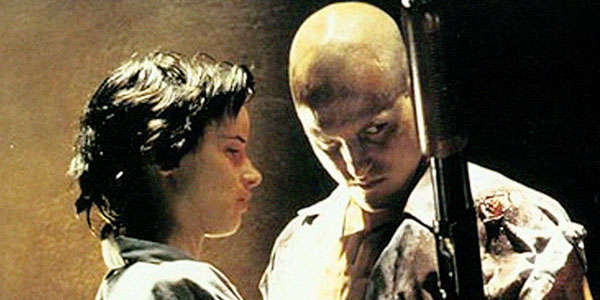
It's hard to believe Quentin Tarantino ever wrote anything he didn't direct, but he was a highly prolific writer in the 90s and he didn't have time to direct everything himself. He wrote True Romance (directed by Tony Scott), From Dusk Till Dawn (directed by Robert Rodriquez) and was rumored to be a hired script doctor on Crimson Tide. However, there is one other screenplay Tarantino sold in the 90s which he seems to shy away from talking about... or even acknowledging as his own film. JFK director Oliver Stone decided to direct the script Natural Born Killers from the young Tarantino, which lead to many of Tarantino's issues with the final product. Stone decided to heavily rewrite Tarantino's script, giving the movie a more political edge and giving the excessive violence the Stone treatment, as opposed to keeping the Tarantino style of violence which movies like Django Unchained have since made infamous. Tarantino says Stone rewrote the script and gave it a lighter tone, while only keeping bits and pieces of the original script in tact. In an interview with Opie and Anthony, Tarantino admitted to having not seeing the whole movie. He said he tried going to see it in theaters, but couldn't make it past the first scene which he described as "incredibly bad." Tarantino disliked the movie so much that he refused to get a "screenplay by" credit and opted for a "story by" credit instead, thus ceasing his chances of ever collecting any royalties.

3. Joe Eszterhas - Jade

Today, Joe Eszterhas is known as the man fighting tobacco use in films and as a victim of one of Mel Gibson's endless acts of rage, if he is known at all. However, in the 90s, Eszterhas was one of the biggest and loudest screenwriters in Hollywood. After writing hit films like Basic Instinct, Eszterhas was the talk of the town, earning top dollar for his controversial, sex-induced thriller specs. The script that perhaps earned him the most money was Jade. Paramount CEO Sherry Lansing personally met with Eszterhas to discuss the potential of buying his script. According to Eszterhas, she promised that not one word would be changed, which was good in the case of Eszterhas, because he was not shy about venting his opinions on his work being rewritten. The politics of Hollywood came into play in the case of Jade as the director's chair was handed to Lansing's husband, William Friedkin, against Eszterhas' wishes. Friedkin then did a complete rewrite of the script, changing a considerable amount of the story. According to Eszterhas' memoir, Hollywood Animal, he threatened to remove his name from the movie and lambast the film's very existence. That is until Lansing offered him a blind script deal worth $2-4 million. The joke was on Lansing and Friedkin, of course, when Jade earned under $10 million and Eszterhas refused to support the endeavor anyway, laughing all the way to the bank. However, Friedkin says to this day that Jade was his favorite film of everything he made. Eszterhas likely thinks the opposite.

2. Bret Easton Ellis - The Informers

Though more famous for being a controversial and sometimes celebrated novelist, Bret Easton Ellis has dabbled in writing screenplays, too. After having his novels American Psycho, The Rules of Attraction and Less Than Zero adapted into films with varying results, Ellis took a stab at being more directly involved with an adaptation of his book The Informers. Ellis co-wrote and co-produced the film version of his collection of short stories, which ended up ironically being the film adaptation he disliked the most out of all the movies made from his material. Ellis credits the movie going wrong with the writer's strike, as well as a bit of management shifting behind the camera which allowed the material's meaning to get somewhat lost in translation. Ellis was originally adapting his book with Nicholas Jarecki for the latter to direct, until Jarecki brought on Marco Weber to finance, who in turn fired Jarecki as director. To Ellis' dismay, Gregor Jordon was then hired to direct the movie and Jordon did not see any of the humor in the piece and decided to play the film straight, as well as cut chunks of story out. Once the 2007 Writer's Strike occurred in Hollywood, there was nothing Ellis could do, since he was banned from visiting the set or continuing to adapt his screenplay. Despite being Ellis' first official foray into scriptwriting, he repeatedly expresses disappointment with the movie when it's brought up in interviews... and he's not afraid to shell out the blame: Ellis clearly states that the problem with the movie was the fact that it had "an Australian director and a German producer."

1. Guinevere Turner - BloodRayne

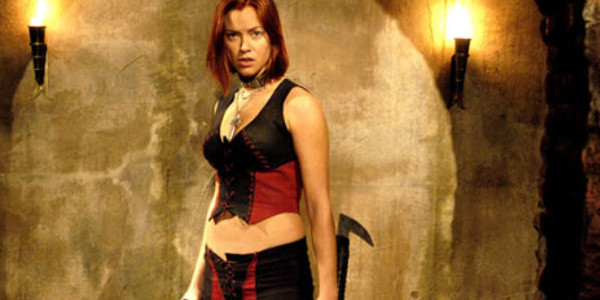
For some strange reason (money), Guinevere Turner, known best for Go Fish, took the job of writing the film BloodRayne for director Uwe Boll. According to Turner, after being two weeks late on turning in the first draft of the script, Boll called her and scolded her for daring to be late on delivery of this future masterpiece. Turner then finished a first draft a week later and was surprised to learn Boll was moving into production the next day with the rough draft. Boll then took Turner's first draft and rewrote some of it himself and offered his actors a "crack" at it. Turner says about 20% of what she wrote is in the movie and she believes the movie is so bad that it may reach Showgirls campy greatness one day. Any other screenwriters you can think of that hated their own movies? Should screenwriters have the right to be upset at the final product veering from their original vision? Sound off in the comments below!

Contributor
Contributor

Jon Manson hasn't written a bio just yet, but if they had... it would appear here.