5 Supposedly Unfilmable Novels That Became Awesome Movies
 It can be notoriously tough to predict what will capture the imagination of the general public - history is littered with crashing failures such as Sir Clive Sinclair's battery electric vehicle, the C5, and unbelievable successes such as Facebook, which started out as a university-based social network and is now the world's largest database of cat and lunch photos. If life was easy to predict, there'd be infinitely more lottery winners. Hollywood executives are no different in this respect. Every commission of a film such as Heaven's Gate or Waterworld proves this. For every sleeper hit and expensive disaster, there are films that should never have worked and hit the screen against all odds- and were undeniably terrific. Here, we take a look at 5 such films that were adapted from source material that should have ensured that the transition from page to multiplex could never have happened, whether it be from the complex narratives, the controversy of the novel's plot or the sheer lack of technology available to bring the book to life.
Honourable Mention - The Shining
I was tempted to include The Shining, as huge swathes of the book rely upon imagery such as the moving topiary hedges, which would be hard to put on film even now without looking comical, and Kubrick managed to conjure up motifs that were the equal of this, such as the cascade of blood from the lift doors. However, the novel and the film differ so dramatically in terms of plot structure and characterisation that, although The Shining worked fantastically well as a film, it would be cheating slightly to include it in this context. Besides, the King-approved TV mini-series followed the book faithfully, and was utterly dreadful.5. Ulysses
 Arguably James Joyce's finest novel, but definitely his most impenetrable. Approximately 265,000 words long, tightly structured and utilising a stream of consciousness style of narrative, the adventures of Leopold Bloom seems a Herculean task to be made into a satisfactory film, and that's even before you take into account the allusions to masturbation which saw the novel banned for a time. Not only was Ulysses successfully adapted for the screen, by Fred Haines and Joseph Strick in 1967, but it was an excellent watch in its own right. The screenplay, taken entirely from lines in the book's narrative, was nominated for an Oscar the following year, proof that high-level literature can be adapted for the screen unmolested and still have a wide appeal. Like the novel, the film wasn't without controversy. It was the first movie to feature the word "f**k", and was not granted a mainstream release in the city of its setting, Dublin, until the 21st century.
4. Life Of Pi
 An immensely popular novel upon its release in 2001, Yann Martel's fantasy adventure had been rejected by 5 publishing houses and had a relatively small number of protagonists, one of whom was a tiger. Considering the overriding themes of spirituality, myth-making and co-existence against adversity, the book was widely considered entirely unsuitable for a film adaption. Ang Lee pulled off some of the best work of his career in turning David Magee's screenplay into a 3D spectacle. Fully fleshed out characterisation, superb visual effects and an Oscar-winning score heighten all of the strongest features of the book, while managing to retain most of the ambiguity of the ending. It's very rare that a film works better than the source novel, but Lee's Life Of Pi is at least the equal of Martel's career highpoint.
3. The Lord Of The Rings Trilogy
 Laden with awards, lavished with praise and unbelievably successful at the box office, Peter Jackson's cinematic take on the Tolkien epic was a masterclass in how remain reasonably faithful to difficult and wordy source material, and still bring in the buck. The lengthy running time of the trilogy as a whole gives Jackson the opportunity to flesh out a story bursting at the seams with characters, while remaining well-paced and visually stunning. Most of the plot elements of the novel and major themes are present, and largely unaltered. Given the sheer depth and breadth of Tolkien's novels, which took a good 15 years to be written, it is remarkable that Jackson managed to do the novel such service, while providing undeniable entertainment.
2. Perfume
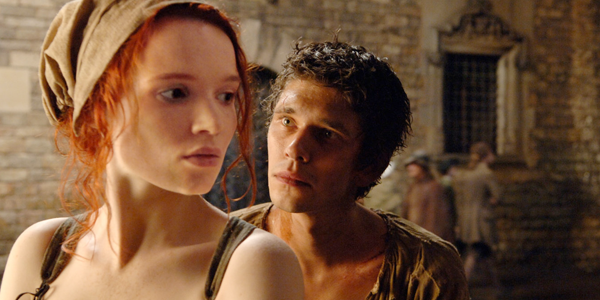 Patrick Suskind's tale of obsession and murder in 18th century France shouldn't work on any level as a film; Indeed, many high-profile directors, including Stanley Kubrick, developed the screenplays floating about in Hollywood before decrying it to be unfilmable. You can understand why after reading the novel. The whole book is based around the premise of scent, has a central protagonist who is utterly dislikable, and features scenes with little or sparse dialogue-a screenwriter and director's nightmare, one and all. The 2006 cinematic adaptation received mixed reviews, but it was, for me, one of the most under-appreciated films of that decade. Tom Tykwer did as strong a job as he could with difficult source material, while Ben Whishaw makes the murderer Grenouille appropriately surly and unappealing. That the film got made at all was a miracle, that it was as good as this even more so.
1. American Psycho
 Brett Easton Ellis' key work was famous for its astonishing brutality and scenes of horrific uber-violence. Passing some of the more stomach-churning scenes past the censors was always going to be a no-go, so how to turn American Psycho into an effective film without losing any of the power of the novel was always going to be a difficult task. Mary Harron proved herself to be up to the task. While hers is a literal take on the events of the book, with the vast majority of the screenplay coming straight from the narrative, she doesn't avoid making Patrick Bateman seem utterly monsterous, while retaining some of the inherent jet-black humour of Ellis' best work. Christian Bale proved himself to be a major league actor with this performance, paving the way to Batman with a fantastically measured bundle of tics, nuances and outright hysteria. While some of Bateman's worst excesses were never going to appear on screen, he certainly captures the creepiness and amorality that the world's deadliest Huey Lewis fan radiates. As ever, if you feel that I've missed out a favourite of yours, chip in on the comments board or let me know on Twitter, @BarryMarshall81.