5 Things X-Men: The Last Stand Got Right

There's more to like about the movie than you might remember.

It€™s become shorthand among fans to declare X-Men: The Last Stand the worst film in the X-Men franchise, and not without reason: it€™s second only to Origins: Wolverine in its blatant disregard for fanbase expectations or even remotely credible casting choices (seeing Vinnie Jones embody a half-baked Internet meme as the Juggernaut gives you an idea of this film€™s sense of flare). It makes a mockery of the Dark Phoenix Saga; people infuriatingly die off-screen or without pretense; characters are introduced for the sake of novelty and never fleshed out while others disappear for long stretches, perhaps while their actors cash their checks and seek more gainful and less humiliating employment elsewhere. The point being, it doesn€™t hold up well. Except that for all the acidity foisted upon it, The Last Stand is not a film entirely devoid of quality. In fact, it manages throughout to either introduce or reintroduce themes that were not only vital to the first two films, but to the very integrity of the X-Men as a whole. That it was buried under over two hours of mindboggling insipidity is merely unfortunate happenstance, and perhaps the most atrocious part of this is that it shows the film did indeed have outstanding potential, some of which would later be capitalized on in better films. It also bears repeating (since it is not conditioned enough) that no film is the result of one vision, and when it is presented as such, it is usually to the purpose of presenting a scapegoat for its many flaws. In this case, director Brett Ratner had to bear the brunt of fandom ire when Last Stand razed the goodwill created by Bryan Singer€™s one-two punch. Although his name can be construed as symbolic of his film niche (it sounds like Jock Rodent) Ratner is not the primary culprit of the film€™s shortcomings. The truth is, the results are often born from a hive mentality where many ideas are shot down by the brass who have their own notions of what audiences desire, and it€™s miraculous that anything indicative of quality appears on screen at all. This is a list dedicated to those small obscured miracles...

5. The Danger Room

Although prefaced with the needless caption €˜In the not too distant future,€™ the Danger Room sequence that begins the film proper is the first time we get to see mutants training within a contained environment. Although it seems the room is being used less for the students to hone their skills than for the teachers (primarily Wolverine) to show off, it nevertheless throws us into an impactful mis en scene where for a moment we do believe the X-Men are in apocalyptic turmoil, which is exactly how the students are meant to feel. We may even see enough promise in this opening to expect the filmmakers to capitalize on it, perhaps follow the students in their exploits throughout the film as they attempt to use what they learned in their Danger Room exercises to their advantage. However, this being a Brett Ratner film, that potential was squandered to make room for Big Ideas that never hit the mark, like will Ice-man cheat on Rogue with Shadowcat.

4. The Xavier Institute Is A SCHOOL

There is another early scene in which Charles Xavier is teaching biology to a class of idle youngsters, and although it may have been there primarily to set up the shocking swerve of a post-credit sequence (in which we find Charles awakening in the body of his comatose twin brother €“ what?) it also brings us further into the part of this world that most of us tend to forget: that this is a legitimate school, and not merely a sanctum for outcast evolutionary anomalies. These kids are not here simply to while away the hours shooting fireballs from their scrotums or freeze ponds to go skating at their leisure. They are there to learn, to use every possible measure of their gifts, mortal and otherwise, as can be managed. If they were there simply to be mutants doing what mutants do, that€™s what the Danger Room is for. Most fans have gotten so used to the concept of X-Men as globetrotting superheroes that their equally pertinent roles as mentors gets overshadowed. To be given as much as a glimpse into the classroom at the Xavier Institute is a respectful gesture to the roots of the team, which was espoused upon most succinctly in First Class.

3. Logan€™s Unrequited Love For Jean

A major feat of this film is that, however imperfectly it was executed, it truly gets the relationship between Jean and Logan; that is, his hopeless devotion to her is not mutual. In the previous two films we were teased with the possibility of a Logan-Jean-Scott triangle which this film instantly demolished, perhaps rightly so. The nature of Logan as a loner and reluctant obsessive strengthens him both as a character and a combative member of the team; to see that obsessive nature rewarded would compromise him. A concept later followed up on in The Wolverine is that Logan is forever haunted by the loss of Jean Grey, both in X2 and again in Last Stand at his own hands. He dreams about her in a way that feels almost discomfiting, and although things panned out quite differently in the comics for awhile, the base of their relationship has always been that though Logan is very much in love with Jean (however reluctant to admit it), her affections lie with Scott. When we see Logan with Jean in The Last Stand, it€™s constantly evident that even outside the spell of the Phoenix Force, Jean has no romantic engagement with him, but events can from Logan€™s point of view be misconstrued as such. When Jean in her moment of sanity asks Logan to kill her, he gratuitously and guiltily abides perhaps because he thought Jean felt he was the right man for the job, and in that moment felt a special bond with her in the throes of death. More likely, she was simply in so much pain she was willing to take the execution from anyone disposed enough to do it; Logan just happened to be the only guy in the room with a healing factor allowing him to get close enough to get it done. Had Scott had the same healing factor (and had he not been seriously dead), her pleas would have been equally insistent.

2. Magneto The Extremist

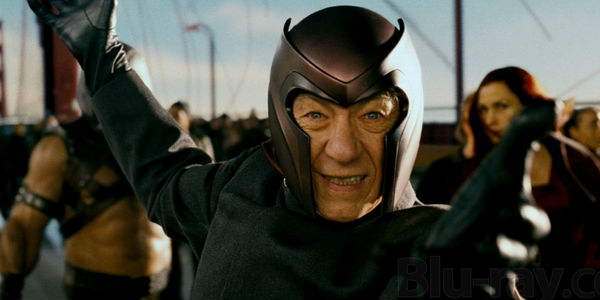
A controversy faced by Grant Morrison during his run on New X-Men was that he morphed Magneto from a well-intentioned extremist into a hardened drug-addled dictator, a decision causing such debate that it was eventually retconned in that tiresomely convoluted style only X-Men comics seem able to master. It would come as no surprise then that many complained of the same in Last Stand when Eric, a Holocaust survivor with whom audiences could commiserate even at his most villainous, became a full-blown reactionary in the face of humanity€™s attempt to €œcure€ the mutant race, hijacking a bridge from which to play out his cruel game of chess as he sacrifices countless eager disciples (€œLet the pawns go first€). Magneto has gone from trying to instill every mutant in his cause with a sense of self-worth and purpose in the face of hate to surrendering them as though they were little more than expendable, much as a fascist dictator would to further their agenda; he appeals to the same militant animosity as his oppressors. The truth is, this interpretation seems the most authentic to Magneto€™s character. A prominent conceit of political philosophy is that any rebellious faction under repression is bound to adopt that same repressive attitude in time, given the right catalyst. In the comics, that catalyst was the destruction of Magneto€™s country of Genosha; in The Last Stand, it was the threat of extinction of the mutant race. Collapsed under fear of surviving a second genocide, Magneto combats his enemy using the tactic with which he is most familiar. In truth there is not much separating Magneto from your garden variety despot: a repressed homeland, cynical world view, rousing gift for rhetoric, and barely contained megalomania, not to mention a stalwart faith that his actions are ineluctably justified. In essence, no matter how brave he is to combat it, Magneto in his heart is the very monster he has been forced to endure since his youth, and in this film we at least got a glimpse, briefly and imperfectly, of what a mutant uprising led by such a conflicted autocrat would entail.

1. Beast

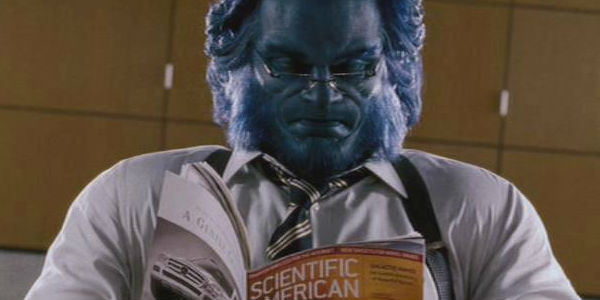
Hank McCoy is a fan favorite, a comic icon since he appeared in the first issue of X-Men in 1963. Whether he be pink and fleshy, green fur or blue, he has always stood out as the true brains of the team despite not being a telepath of any sort, an articulate agent of diplomacy between human and mutantkind, and the source of much deadpan sophisticated humor. Whoever played him would have to get across not only the restrained whimsicality of his speech and mannerisms, but also the newfound comfort of being permanently hued in a primary color (he sure stands out more than the average mutant, mutton chops or no). To get the Beast wrong on screen would have been enough to sink The Last Stand for many fans no matter how much the rest held up. Fortunately, they got him in spades. Kelsey Grammer, better known as world-champion snarker Frasier, was as inspired casting as one could get, and his scene with the mutant Leech though brief is as close as the film itself gets to a classic moment (It may be worth pointing out here that the casting of Grammer was the choice of Matthew Vaughn, the original director who would go on to make the sensationally superior and much lauded First Class). But the Beast isn€™t simply limited to a masterful performance; notice when McCoy is wearing his old uniform and how it barely fits, having outgrown it since his departure. It's even made of a more retro fabric than the current team's sleeker leather treads, evincing his seniority and more seasoned status among the young blood. Small touches like this give characters a past for audiences to draw upon, and almost feel commendable, had they only thought to treat the rest of the film with the same amount of esteem.

Contributor

I once signed into a Christian dating sight as the eponymous character from Precious and am now crowd sourcing funds to buy my way out of hell. Read my articles to help support this agenda.