5 Ways Marvel's Phase 2 Will Change Filmmaking Forever (For Better Or Worse)
 It's been several months since the first Avengers movie was released to theaters to become the third-highest grossing movie of all time. In that time, we've seen the release of the Blu-Ray as well as announcements, leaks, and rumors for half of the Marvel movies that are set to come out over the next few years. If you started to get the feeling that this machine isn't showing any signs of slowing, then you're absolutely right. While the Avengers always felt like it was the end of an era, it's actually the beginning of something much bigger. As Nick Fury said "You've become part of a bigger universe. You just don't know it yet." While none of us could comprehend it at the time, what he was referring to wasn't limited to just a few crossovers or a joint-franchise event. It's a fundamental shift in the way movies are made. So far it's already been a success. The Avengers pulled in over $1.5 biillion at the box-office. To say nothing of the cash that it will rake in on merchandising and other product tie-ins. It's an incredibly high pay out on a bet that had never been successfully won before. Five movies were made prior to this year's blockbuster that all fed directly into the plot of this new one. As if that wasn't enough, the very first shots of The Avengers were already laying the seeds for Phase 2. This next set of movies will provide new blueprints and frameworks for how major motion pictures are produced for years to come. How is that, you ask? Well, let me tell you.
5. Joss Whedon Is Finally Free To Do His Thing
 This is a big deal, not only because Joss Whedon has a devoted fanbase that has always felt Buffy the Vampire Slayer is underrated and that Firefly deserved more seasons, but because he is a talented writer with more to bring to the screen than Fox producers realize. For example, as a completely for-fun project while working on the Avengers, Whedon self-produced a modern retelling of Much Ado About Nothing. The original version was written by this little guy known as Shakespeare. Even in the Avengers, you can see that Whedon possesses a talent for writing that adds texture and substance to fleshed out characters. Arguably, it may be why the Avengers was so successful in the first place. Whedon has proven that you can do big-budget action without sacrificing on the basic elements of storytelling that push movies beyond popcorn flicks. Hopefully, alongside partner-in-crime Kevin Feige, Whedon can help set the bar for substance in superhero movies a little higher. Something the genre desperately needs.
4. Mega Franchises Will Replace Individual Franchises As King Of The Money Printers
 A popular franchise is the golden calf of any major movie studio. Harry Potter, Star Wars, Twilight. As long it's something you can make more of and keep raking in the ticket sales, producers will love it and never cease to produce them. What Marvel has done is create a new model. Iron Man is a franchise unto itself and will continue to sell tickets so long as Robert Downey Jr. dons the mask. However, The Avengers is bigger than just his little world. Somehow, reducing the percentage of screen time devoted to Tony Stark actually managed to increase revenue. The thing is, The Avengers was receiving free publicity and advertising back in 2008. A stinger here, a sly reference there, and fans would feel the tease. They all knew it was coming. It's a hype machine that's never turned off. It's product placement within the product itself. In the marketing world they call this synergy. In the rare times that this has ever been attempted in the major blockbuster movie world, though, it's failed. Marvel has proven it can succeed. You don't have to look too far to see how this might affect the landscape of studios that aren't owned by Disney. With Christopher Nolan out of the Batman game, Warner Bros. needs a new movement to latch on to. Man of Steel willthey hopeinvigorate the DC fanbase. Beyond that, though, the Justice League movie is planned to go in to production without individual new movies for all the characters. The new Batman, as well as some assortment possibly including Wonder Woman, Green Lantern, The Flash, Martian Manhunter, and even Aquaman will all be thrust on to the silver screen in 2015. Regardless of how successful that movie will be, you can bet DC and Warner Bros. will be trying to find a way to create individual franchises from each character, while retaining the occasional team-up movie to pad their wallets with an extra billion dollars or so. This modelin theory at least is fantastic not only because its enthralling, but because it requires little commitment from the viewer. Much like in comic books themselves, the stories are as immersive as you want them to be. Its not necessary to see Captain America in order to enjoy Thor. In fact, arguably, its not even entirely necessary to see any of the other Marvel movies in order to enjoy The Avengers. The ability to blanket the market with movies in a variety of styles, bait viewers with one that catches their interest, then turn and say, Well, if you like that, maybe youd like these six other movies! is, in movie studio terms, a friggin gold mine. You can bet that every production company around will be trying (with varying levels of success) to duplicate this delicate and powerful model.
3. Television Shows Will Start To Augment Movie Franchises
As if Marvel's Phase 2 wasn't loaded enough with four more movies before The Avengers 2 (and Ant-Man shortly thereafter), Whedon and the team are currently working on a television show centered around S.H.I.E.L.D. that will explore the worldwide intelligence organization and its inner workings alongside the cinematic universe. The concept will allow the writers to keep moviegoers' attention up (and thus their wallets open) during the off seasons, as well as providing more opportunities to subtly hint at the bigger movie plots (see that mega-franchise poking through again?). Of course, this could also have the potential to backfire drastically. For starters, part of the reason the Cinematic Universe idea works so well is because, while there's plenty of time to build up hype, there's comparatively little for viewers to get bored of. Very few television shows successfully make it past six seasons, and those that do usually do so at their own peril. We consumers can be a fickle bunch. If people are bombarded with ads for "Marvel's hit new show!!!" every waking hour in the months upon months between movie releases, it could saturate the market and make us hate anything superhero-related. On the other hand, it could also provide a much-needed hook to bring in extra viewers, or to make avid fans out of the casually curious. Comic book stories are notoriously obtuse and difficult to pick up on when you just start learning them. Television shows are a serial that everyone can get on board with that doesn't require much commitment. This could lay the groundwork to give the movie universe some center that the average person can latch on to.2. Competing Studios Might Actually Start Working Together
 Prior to Iron Man, most Marvel movies were licensed out to other studios. Sony has control of Spider-Man, and Fox has the Fantastic Four and X-Men. These arrangements were great to kickstart the current superhero movie business, but in terms of Avengers team-ups, it also means some of Marvels best mashup-friendly charactersSpider-Man, Wolverine, and Doctor Doomare locked behind complex copyright contracts. Or are they? It turns out Sony has already demonstrated willingness to work with Marvel to join forces. In fact, Oscorp tower very nearly had a shot at appearing in the Avengers, though the two productions didnt line up enough in time. Still, Avi Arad, producer on The Amazing Spider-Man, has implied that if the right story comes along, they might be open to the idea of working together: Everything is possible. If something like that happens, its great for Disney, its great for Sony. If the right story comes in, we are now working on Venom first. Its our first out. So our thinking is in the right direction. Avengers to me was an expected success so I never looked at it because Avengers was successful. This would be an extremely rare example of studios collaborating towards a common goal where high-value properties are shared. It would probably involve forging some new revenue sharing contracts that would allow both companies to profit, but it could also allow stories to reach viewers that would otherwise sit in some writers notebook or within the confines of the comic book world. This is only good news.
1. Plot Super Structures Will Encourage Newer, Long-Form Storytelling
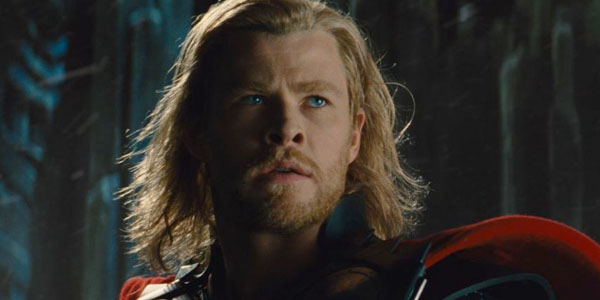 More often than not, when youre looking at overall plot lines for a movie, one of three things is true: either multiple movies have a single story to tell (i.e. Lord of the Rings), a series of movies depict separate sets of events in a group of characters lives in chronological order, with a loose overall plot connecting them (such as Harry Potter), or, most typically, a single movie has one plot and thats it. What the Marvel movies have done, and will do even more in Phase 2, is introduce the idea of completely independent movies working together towards a single plot. Without getting into too many spoilers, we already know that Thanos, the grinning intergalactic villain at the end of Avengers, will be playing a large role in the next series. From the Iron Man 3 trailer, we see that Phase 2 will pick up where Avengers left off. Nothings been the same since New York, Tony Stark says. Inevitably, well see seemingly unconnected subplots come together to reveal larger stories, just as the cosmic cube from Captain America and Loki from Thor combined to form the largest threat yet in Avengers. Its likely that well see the plot of Avengers 2 unfold more openly by the time that Thor: The Dark World and Guardians of the Galaxy surface. Weve already seen the beginnings. In fact, the very first shot of The Avengers included voiceover of a character speaking directly to the villain of Phase 2. Did you catch it? No? Well, thats just one more reason why youll have to watch it again. And that's how they get you. No matter how you slice it, Marvel is doing something entirely unprecedented here, and it doesn't hurt that there's a talented team of people on the project. The movie industry hasn't been shaken up by new models all that much in recent decades. The rise of the independent film has been good for exploring new stories and finding talent in atypical areas, but that aside, the studios tend to stick to a certain formula: find a property that has already sold welllike a book, TV show, old movie, or comic bookand make movies out of it. While this is pulling on the previous success of Marvel characters, ultimately the model for which these stories are explored is entirely new and it's catching the eyes of everyone in the industry, as well as the viewers'.