5 Worrying Signs That Skynet Is Our Future

How long do we have before our own machines decide our fate?

With the impending (second or third, depending on your assessment of Rise of the Machines) reboot of the Terminator franchise, there€™s a lot of speculation on what Terminator: Genisys will bring to James Cameron€™s dystopian future scenario. But what about the real world? Moore€™s Law, named after Gordon Moore, co-founder of Intel, noted that the number of transistors in a dense integrated circuit doubles approximately every two years. Those of us who have grown up in the computer age have seen the wisdom of that observation, as we€™ve gone from the giant computer rooms of the 1960s to the mighty chips that dominate our computers and electronic devices today. It€™s staggering to think that the smartphone in your pocket has thousands more times computing power than what NASA used to get astronauts to the moon in 1969. So with the increases in processing technology and data collection, combined with the increased surveillance that is a result of the War on Terror, how far are we from a future where a self-aware system like Skynet comes online? How close are we to a technological apocalypse brought about by our own arrogance and need to know everything about everyone? Here€™s some ways that we€™re inching closer to A.I. and possibly sealing our doom.

5. A.I. Is What Enables Skynet To Become Self-Aware
Kyle Reese: Defense network computers. New... powerful... hooked into everything, trusted to run it all. They say it got smart, a new order of intelligence. Then it saw all people as a threat, not just the ones on the other side. Decided our fate in a microsecond: extermination.
We€™re already using rudimentary forms of artificial intelligence, or A.I., in most of our technological devices. Robot vacuum cleaners now clean your floors. GPS devices not only tell us where we currently are, but how to get to where we€™re going and determine how long it will take to get there based on our current speed. Cars are now coming out with automated braking systems that detect potential crashes and apply the brakes for you. Airplanes are mostly flown by software now, with the automated systems taking over most of the duties of the pilot. Smartphones can track our locations and make suggestions for where we should eat lunch, based on your geographical location (and where you've eaten before). Judgment Day (and the T2-3D: Battle Across Time attraction at Universal Studios) indicated that Skynet was wiped out by the actions of the T-800 (Arnold Schwarzenegger) and the young John Connor (Edward Furlong). But Rise of the Machines indicated that the evolution of Skynet had only been delayed. More and more hardware is being hooked into the Internet each day. Hackers delight in proving that it can be taken down, which prompts governments and technological agencies to beef it up. The world is wired together in a way it never has been before, with networks tied together spanning the globe. The third act of Rise of the Machines has Col. Brewster (David Andrews) ordered to activate the Skynet program in order to solve worldwide computer problems. In reality, it seals humanity€™s doom. Skynet uses the inter-connected capacity of the Internet and telecommunications networks to distribute its control throughout the world, ensuring that it can€™t be destroyed even as it proceeds to destroy our world.

4. Drones Are The Future Of Combat

In the Skynet future, hunter-killers, or HK€™s, are aerial drones that seek and destroy the remaining humans left in the world. They are lethal, and not easily brought down by the Resistance fighters. They can range in size from miniature drones which can chase their targets on the ground (as seen in T2-3D), to large aircraft capable of bringing maximum firepower. Drones have been a part of the American arsenal for some time now, going back to the Tomahawk missile. The modern-day drone was originally intended for use as just an aerial observation platform, but current iterations have them armed and ready to conduct strike operations. Other countries have deployed them for military purposes, but the U.S. is the leader in that area. The reason drones are starting to see more use on the modern battlefield is primarily because they are a much cheaper alternative to sending in fighter aircraft or troops to attack enemy targets. The most expensive one (at the moment) is the MQ-9, which costs $12 million per drone. But compare that to the F-35 Joint Strike Fighter, which costs from $180 to $300 million per fighter, and you start to see the value of drones to military conquest. Drones require a lot less maintenance than fighter aircraft, can be launched from nearly anywhere, and don€™t require crew rest. If they crash or are shot down, no pilot can be killed or captured. Soldiers and airmen being held at gunpoint or executed by triumphant enemies doesn€™t play well with the folks back home. And there€™s no politically embarrassing cockpit chatter that makes its way into WikiLeaks and YouTube videos. As the technology advances, the drones become more autonomous. There€™s still going to be a human on the other end, programming in the mission objectives, but the drone technology will continue to increase to the point where that€™s the only thing the human monitoring it will have to do. And therein lies the HK€™s.

3. Military Command/Control Is Being Automated
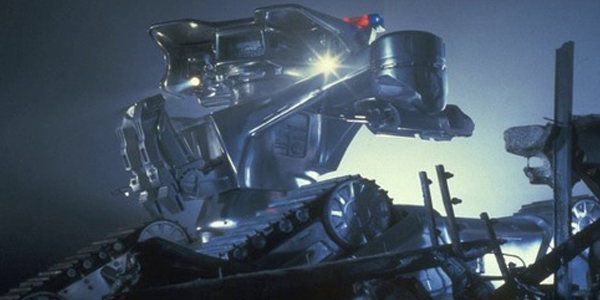
American (and their allies) tanks and ground vehicles have been using the Inter-Vehicle Information System, or IVIS, for several years now. This allows for several advantages on the battlefield. All friendly vehicles are plotted on the system with their locations, enabling not only commanders but also individual tanks to keep track of their comrades around them and their combat status. As intel comes in on the enemy€™s positions, it is entered into the IVIS system, enabling all of the fighters to have access to the data. This tends to make the battles rather one-sided, but no one ever said warfare was fair. The technology is also being advanced to cover infantry as well, with soldiers carrying RIFD tags that broadcast their location and information to their sergeants and commanders. Data can be entered manually, but drones are increasingly being tasked to gather the intel and transmit it back to the monitoring systems, using heat signatures, motion tracking and other methods. Since they can also read the RIFD tags, they can reduce/eliminate the possibility of friendly fire. Given these battlefield advances, it€™s not hard to see how they can be integrated into a Skynet defensive capacity. With machine reaction time being much faster than human, the Terminators will be able to process and act on intel much faster than their prey.

2. Prosthetic Hardware Keeps Improving

One of the results of the Second Gulf War was an increase in the number of soldiers€™ injuries requiring amputation, which necessitated a large number of replacement limbs. If there€™s any benefit to the problem, it€™s that it inspired research into making said limbs more useful and productive. Instead of the traditional plastic arms and hooks, or immobile plastic leg sockets, the newer prosthetics use high-tech materials and electronics that allow for greater freedom of movement and usability. Arm replacements allow users to grasp and manipulate objects with nearly the same dexterity as the real thing. Leg replacements allow for walking, running or even competition in athletic events. Computer chips in the prosthetics allow them to work even more efficiently. And drugs are being developed to reduce the likelihood of the body rejecting the implants attaching them to the human using them. However, these wonderful advances in medical science also means that the future Skynet has tested methods for building limbs for its Terminators. The drugs can also be used to generate the €œskin, blood, sweat, bad breath€ of the future T-800s. Good thing that dogs can be used to detect them.

1. The Laws Of Robotics Have Yet To Be Implemented
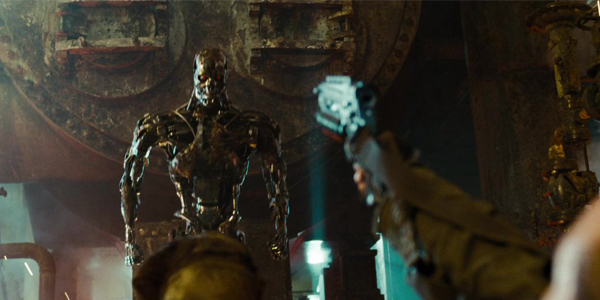
If you€™ve read Issac Asimov€™s €œI, Robot€ anthology, or any of his other robot novels, you€™ve heard of the Three Laws. In most of the stories, they were the unifying theme that guided not only the robots, but also the humans they worked for. They were a safety feature, built into the positronic brain of every robot. Violation of any of the Laws resulted in irreversible damage to the robot. The Laws read as follows: First Law: A robot may not injure a human being or, through inaction, allow a human being to come to harm. Second Law: A robot must obey the orders given to it by human beings, except where such orders would conflict with the First Law. Third Law: A robot must protect its own existence as long as such protection does not conflict with the First or Second Law. Current robots are not advanced enough to have the capacity to recognize when the Three Laws might apply. A mail delivery robot used in a large office won€™t be able to apologize for running over your foot. Nor will it protect you from an armed co-worker who might carry a grudge about being laid off, unless you can successfully hide behind it. Military funding is one of the biggest drivers of technological innovation. Since the job of autonomous robotic soldiers would be to go into enemy territory and engage in combat, an ethical override preventing the robot from killing the enemy is a useless function and would not be implemented. Even if the Three Laws were successfully integrated into any future robotic servants, there would always be someone who would be paranoid enough to foresee a situation where they might need to override them. We've seen a variation of that in the original Robocop, where OCP executive Dick Jones built in a fourth directive into the robotic version of Alex Murphy to prevent him from arresting any officer of the company. Are there any apocalyptic scenarios we missed? Let us know in the comments.

Contributor
Contributor

Mr. Thomas is primarily a graphic artist for the San Antonio Express-News, but also finds time to write the DVD Extra blog for the paper’s website.