6 Blockbusters From 2015 That Almost Had Completely Different Endings
Spider-Man joins the Avengers in the last scene? You've gotta be kidding!?
There's a common feeling with movie endings that they're set in stone from the beginning; that filmmakers know exactly where they're headed the very moment production begins. Whilst that's true of some movies, there are others in which the filmmakers have spent countless weeks - months and months on those rarer occasions - umming and ahhing with regards on how to go about the ending. Which means that the climax that you ultimately see isn't necessarily the first one they had in mind. Others were conceived, storyboarded, or even shot, only for the director to decided on something else - or the studio to intervene. 2015 was no different; some of the biggest blockbusters and highest-grossing movies were all conceived - at one time or another - with completely different endings. Some of which would have probably been better had the filmmakers had the balls to include them, whilst others were so obviously ill-judged that they could have had a disastrous effect on the movies in general. Here, then, are six blockbusters from 2015 that almost had completely different endings; some good, some bad, most of them inherently curious and interesting to ponder...
6. Mario Stands On The Washington Monument & Smiles Menacingly - Pixels

"PAN UP AND SPIN AROUND, so we face the Washington Monument, damaged but still standing. When we reach the top, we see a small figure on top, hands on hips, watching all this from high above. Mario. We zoom in on his face, and he smiles. CUT TO BLACK"Director Chris Columbus went on to explain why they opted out of using Mario: "We tried it, " he said. "There was a moment we even did a preview of it, we thought it was interesting but we wanted to kind of use him somewhere else." And they did: he's visible in the background of one scene (though in his Donkey Kong "Jumpman" incarnation). Terrible as Pixels is, you can't help but feel as though this original Mario ending would have been a little more satisfying than what they came up with.
5. Captain Marvel & Spider-Man Join The Team; Quicksilver Lives - Avengers: Age Of Ultron
It's hard to know whether Avengers: Age of Ultron was a success or not: on a financial level, it most certainly was, pulling in over a billion dollars at the box office. Everyone saw it. And yet there's something about the movie that isn't quite right. It's a strange, messy film that consistently switches between moments of awesomeness and total incomprehension. Even its ending is a curious affair: After a huge battle of Michael Bay proportions in which an entire Eastern European country is reduced to rubble by the villain, Ultron, the Avengers save the day, mutant hero Quicksilver dies, Iron Man and Hulk leave the team, and Captain America and Black Widow prepare to train a new incarnation of the Avengers. The end! There's something slightly unheroic and strange about it all - humourless, even. Still, it could have been even weirder had writer/director Joss Whedon opted to go down another route... one that would have seen both Captain Marvel and Spider-Man joining the Avengers at the end of the movie, almost out of nowhere - just like that. His idea was supposed to suggest that the other heroes were getting old ("dinosaurs") and in introducing two younger characters right off the bat, the MCU would expand in unexpected ways. Unfortunately, his idea never went through because Marvel didn't get around to casting Captain Marvel and Spider-Man in time. "I said it would be fun when we see a bunch of new people, if we see someone that we just dont explain," Whedon explained. " are like 'weve got a Captain Marvel movie coming out, and weve got Spider-Man,' but Im like my film is locked - you have failed me!'' I just thought it would be an extra kick." And that's not all: Whedon also toyed with the idea of keeping Quicksilver alive. After his "death" scene, there were apparent plans for him to just reappear again as if nothing had happened. "We did actually shoot him in the last scene, in an outfit, with his sister," Whedon said, thus proving that there was once a version of the movie in which Quicksilver lived.4. The Ending Would Have Focused Completely On Setting Up More Sequels - Furious 7

"The original ending of Furious 7 was setting up, you know, the bigger world of where the Fast and Furious franchise could go into. And thats obviously very smart of them to think so. But when the tragedy happened, all of that became irrelevant. So it did not matter anymore, all of that stuff. And to the studios credit, they did not push for that. They realized how important it was to make a movie that finishes and that just outright is a tribute to Paul Walker."Clearly the studio made the right call on this one, of course; setting up more Furious films was the least important thing to do in the situation.
3. Audiences Experience Ava's Escape Through Her "Eyes" - Ex Machina
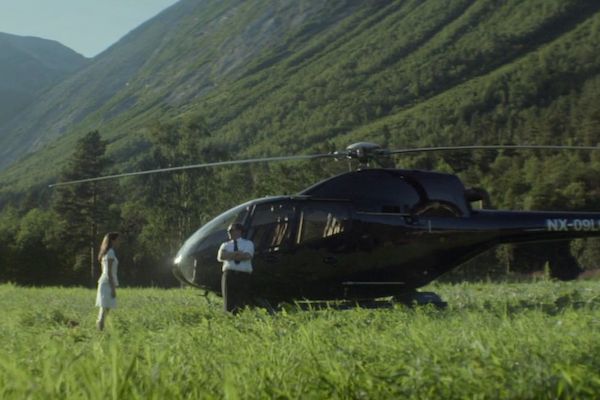
"All of a sudden it would cut to her point of view. And her point of view is completely alien to ours. Theres no actual sound; youd just see pulses and recognitions, and all sorts of crazy stuff, which conceptually is very interesting. It was that moment where you think, Oh she was lying! But maybe not, because even though she still experiences differently, it doesnt mean that its not consciousness."Alex Garland ultimately decided against going this way, though, as he preferred to settle on the ambiguous nature of Ava's conciousness. Certainly, had he opted to go with the first version of Ex Machina's ending, Ava might have been perceived as less sympathetic, and one of the best things about the movie is that audiences come away siding with her.
2. Scott Lang Faces Off Against Mitchell Carson & Secures The Particles - Ant-Man
Ant-Man - which stars comic actor Paul Rudd in what is perhaps his first action movie role - saw miniature hero Scott Lang facing off against Darren "Yellowjacket" Cross in an attempt to prevent the villain from weaponising the shrinking technology that allows him to change his size at will. Cue an epic final battle, the day is saved, and... well, you get the picture. The movie ended on a memorably giddy note, however, with Scott's friend, Luis, suggesting that The Avengers were looking for Scott to join their crew - Marvel fan service at its best. Originally, though, director Peyton Reed thought about ending the movie on a completely different note, with Scott going head to head with one Mitchell Carson, the S.H.I.E.L.D. official who also happens to be an undercover HYDRA agent (and can be seen in Ant-Man's 1980s-set scenes). Reed describes the alternate ending as follows:"At the end of the movie he gets away and has these Cross particles, and there was a sequence where Ant-Man has an encounter with him. But then for a couple reasons, it felt like maybe we should leave those particles out there. In that original thing, he took Martin Donovan out and got the particles."Reed is right: the lose-ended nature of this alternate ending doesn't seem necessary; it's far more interesting if the particles remain out there, so it's probably better that the movie didn't culminate on a fight scene with Scott and Carson battling for ownership. Overkill, much?
1. Anastasia Sends Christian A Toy Plane & A Note - Fifty Shades Of Grey
