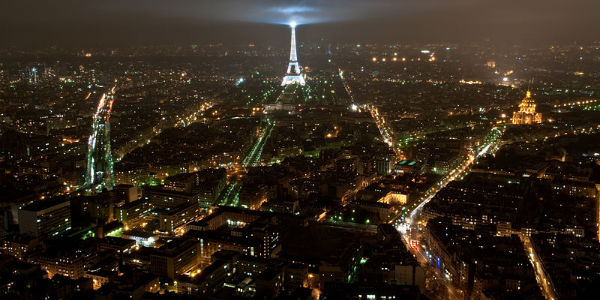
Cinema has indulged in a lengthy love affair with Paris, and who can blame it? Some places simply look gorgeous on film and Paris is certainly one of them. However, theres more to France's capital than appearances alone; beneath its good looks is a city filled with heart and soul. Whether telling tales of foreigners finding themselves (and often love) in the city, or sharing the stories of the capitals inhabitants, any filmmaker setting their movie in the City of Light cant help but cast it as one of its leading ladies. She is too big, too encompassing to simply fade into the background and act as a mere set against which a story is told. These six movies show the citys chameleonic nature - at once a beautiful tourist trap, a place of historical importance and a bustling modern metropolis, all just waiting to roll over and show its dark underbelly - through the eyes of native and foreigner filmmakers alike. In light of the recent tragic attacks on the city, lets all remember how beautiful, how inspiring, how strong Paris truly is.
6. Before Sunset (2004)
In the sequel to 1995s Before Sunrise, Richard Linklaters star-crossed lovers Jesse (Ethan Hawke) and Céline (Julie Delpy) are reunited in Paris, nine years since they last saw one another and enjoyed just one night together in Vienna. The film appears to take place in real time, following the pair over the course of one afternoon spent together as they reconnect. The film was shot mostly in-sequence and entirely on location in Paris over two weeks of the hottest summer on record - temperatures reached a scorching 100F (38°C). Through Céline, the audience is taken on a tour of the city that doesnt simply hit the expected beats - in fact, the iconic Eiffel Tower is never shown, the film preferring to focus more on the city Parisians know. It trips into the touristic occasionally, but this is always explained by the fact that the American Jesse is a visitor here; at one point, he convinces Céline to ride aboard a riverboat on the Seine with him. One mans home is always another mans tourist attraction. In showing a Parisians knowledge combined with a visitors awe of the city, Before Sunset offers a unique view of Frances capital, capturing both the mundane and the spectacular in equal measure.
5. Amélie (2001)
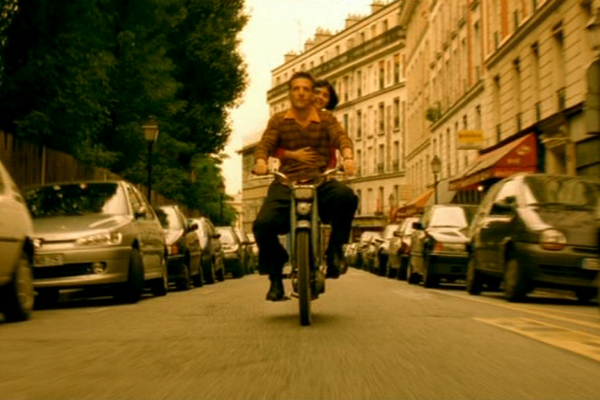
Amélie Poulain (Audrey Tautou) is a uniquely odd woman - raised in seclusion by parents who wrongly believed her to have a heart defect, she grew up to be a painfully shy Parisian waitress, content to shun romance and the every day in favour of the company she keeps in her little Montemartre coffee shop and indulging in regular flights of fancy. However, her unexpected discovery of a tin box of childhood memorabilia hidden in her apartment leads her on an adventure across the city to find its owner, meeting myriad colourful characters along the way. The film was shot in over 80 real locations in Paris (one can even visit Amélies little coffee shop, Café des 2 Moulins, for a grand crème and some people-watching) though production made liberal use of CGI and digital intermediate techniques to create the films distinctive, hyper-colourful look. Full of whimsy and charm, Amélie shows its audience a fairytale city through the eyes of its heroine, Tautous pixie-cut-wearing personification of the French idea of joie de vivre. The city is painted in bright colours, populated by eccentrics and with adventure to be found around every corner. Amélies Paris is not the real Paris - in fact, the film came under some fire on release for seemingly whitewashing the capital by showing very few ethnic minority characters - but its a magical place that many would love to visit.
4. Ratatouille (2007)
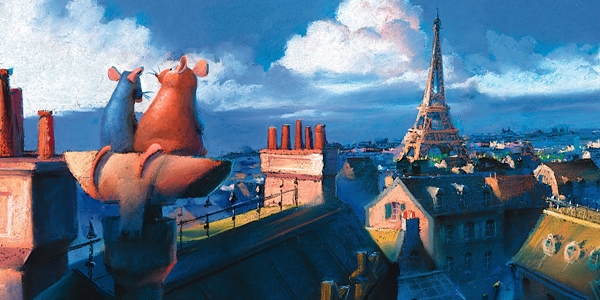
Remy the rat (Patton Oswalt) has a knack for cooking, but his chances at a culinary career are scuppered by one big thing: hes considered a terrible pest within the restaurant industry. Only by teaming up with the uncoordinated kitchen porter Alfredo Linguini (Lou Romano) can he stand a chance of making his mark on the French food scene. By all rights, a film about a rat in a kitchen shouldnt stand a chance of being charming, but in the hands of director Brad Bird, you cant help but find yourself rooting for a rodent. This one seems a strange addition to the list, perhaps, given that its status as an animation means it never once shows the real Paris. However, Pixars commitment to realism meant they sent Bird and a number of crew members to the city before work began; they took a motorcycle tour and ate at some of the best restaurants it had to offer, seeking to capture the feel of the place. Despite ostensibly telling the story of native Parisians, the film presents a tourists romanticised view of the city - which seems odd to say when you consider that it spends a fair amount of time in the sewers. However, for those who have only visited the city, the film's cityscapes perfectly capture the magic and beauty theyll remember.
3. Angela-A (2005)
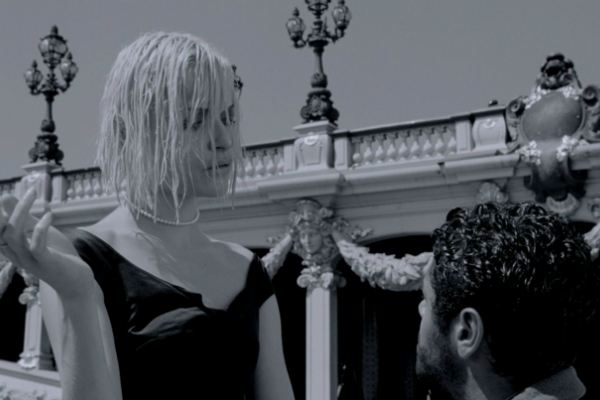
As he prepares to jump to his death in the river Seine, hapless scam artist André (Jamel Debbouze) spies a beautiful woman (Rie Rasmussen) whos seemingly had the same idea - however, when she dives in, he puts his own suicidal thoughts aside and jumps in to rescue her. She reveals that her name is Angela and tells him that, since he saved her life, she must pledge the rest of her days to helping him. Directed by Luc Besson, a native of the city, its no surprise that this film pays perfect homage to the raw beauty of Frances capital. Shot entirely in black and white, Paris looks at her most stunning in monochrome - moody, sultry and mysterious. Of course, its a cliché that any film set in Paris will simply have to include a scene set on or around the Eiffel Tower: nothing screams were in France quite as plainly as a nice clear shot of this cultural icon. In Angel-A, were mere minutes into the film before we see André being hung over the railings of the tower by three thugs demanding money owed. Its a brilliant subversion of expectations: heres something beautiful being used to menace. To these thugs, its clear the tower simply presents an opportunity to do their dirty work, rather than being any sort of spectacle. Non-natives might be stunned by the beauty of the city, but locals simply see it as their home.
2. The Dreamers (2003)
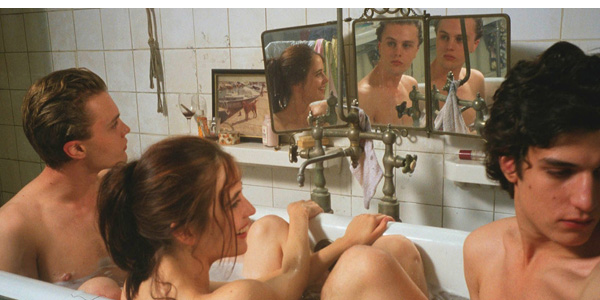
The Dreamers follows the story of Matthew (Michael Pitt), an American student studying French in Paris in 1968. At a protest, he meets twins Théo (Louis Garrel) and Isabelle (Eva Green) and, in next to no time, is sharing a house with them whilst their parents are away. The twins introduce him to their world, a place where sexual liberty and nudity is far from taboo and nothing is more important than cinema and revolution. The films first screenplay was written by Gilbert Adair as an adaptation of his own book, The Holy Innocents. Director Bernardo Bertolucci made a number of changes to this first draft, including removing the storys homosexual content by erasing sex scenes between Matthew and Théo, choosing instead to focus on the sexual relationship he shares with Isabelle. This off-beat love story is set at a time of real historical importance. In the 1960s, Paris was a hotbed of student protest - this was a time when it was fundamentally believed such action could truly make a difference in the world. Over the course of the film, we see Matthew have his eyes opened in many ways - to the idea of fighting for ones rights, to new ways of exploring and expressing his own sexuality and to the city of Paris itself. Its a small story told against the huge backdrop of an important period in recent French history, a time when Paris was seen as an epicentre for real change in the world.
1. Paris, Je T'Aime (2006)
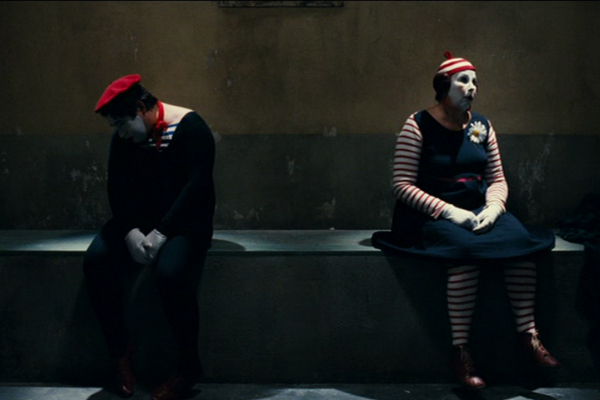
An anthology of eighteen short films created by twenty directors, Paris, Je TAime takes its audience on a whistle-stop tour of the city and its inhabitants lives, jumping between genres to tell stories of love in the capital through comedy, drama, tragedy and fantasy. Originally intended to be made up of twenty shorts set in each of the twenty arrondissements (districts) of Paris, producer Claudie Ossard wished to remove two films from the final cut for reasons of flow. The decision to make these cuts caused a rift between her and her co-producer, Emmanuel Benbihy, which ended in slanging matches and lawsuits. Ossard got her way in the end and the version screened at Cannes contained just eighteen vignettes and ran at exactly two hours long, now structured around the capitals quarters and landmarks. Paris, Je TAimes strengths lie in its portrayal of the city as a huge melting pot - a place where culture and class collides, where people fall in and out love with one another and the city itself, somewhere that is far more than a picture postcard. Paris is alive, it breathes and this anthology gives audiences the opportunity to explore this, to see the city for the big, beautiful beast it is - all in quick, five minute bursts. There have been so many other examples of beautiful Parisian cinema. Let us know your favourite in the comments below.