6 Reasons Blade Is Marvel's Most Underrated Movie

Blade was the first real Marvel movie, so where's the love?
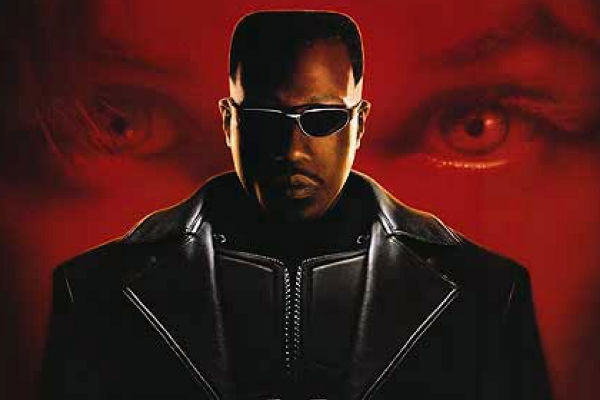
There have been rumblings lately that Marvel€™s vampire hunter extraordinaire, Blade, could be returning to screens as part of the Marvel Cinematic Universe. It€™s purely idol gossip at this stage, but the star of the original trilogy, almost-action hero and epic tax cheat Wesley Snipes, has been open to a return when asked. Some have been suggesting that Blade could return as a mentor to a new, younger vampire slayer who is less encumbered by the franchise€™s past, whilst some think that Blade might work best in Netflix€™s darker corner of the MCU alongside Daredevil, the Punisher and Jessica Jones. Regardless of how it work, there€™s no question that a return for Snipes€™ day-walker would be nothing but welcome, even after the suck-fest that was Blade Trinity seemingly derailed the franchise for good over a decade ago. If however you€™re still unsure as to why Blade€™s particular brand of vampire dicing should be brought back to the big screen then I would argue that it€™s been too long since you watched the original Blade from 1998. Blade has wrongly become a footnote in the story of comic book movies to date, so here€™s why it€™s actually the most underrated Marvel movie around.

6. Wesley Snipes Is Perfectly Cast

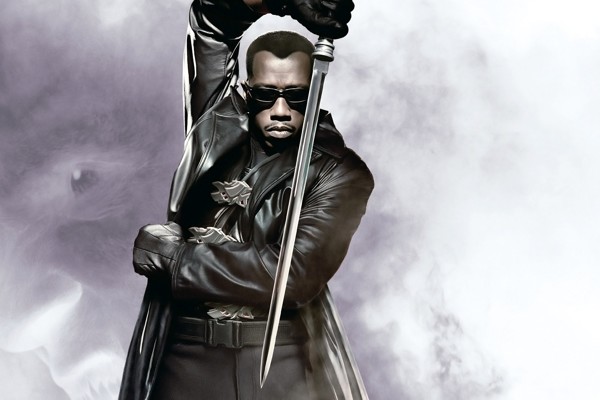
Marvel Studios has a very well-deserved reputation for casting the best actors in the roles that prop-up their films, just look at the cast of the Avengers films and Chris Pratt€™s breakthrough role in Guardians Of The Galaxy. Blade, however, shows that Marvel€™s properties were always cast with care and consideration, with Demolition Man Star Wesley Snipes slipping into Blade€™s long coat and utility belt with consummate ease. Regardless of how difficult Snipes became on the set of later Blade films (he flat out refused to talk to director David Goyer on the set of Blade Trinity and wouldn€™t take part in pick up shoots), he was the picture of confidence and ass-kicking superiority in the franchise€™s first film. He€™s an action star without the profile of a Stallone, Schwarzenegger or even Lungdren and he clearly relishes the chance to growl out threats and take down whole rooms of the undead. If Blade is to come back it would be a crying shame not to include Snipes, who€™s performance anchors the film with just enough humanity and weakness to make you believe that he's actually be risking his life when he goes out to fulfil his mission.

5. It Actually Has A Strong Villain

Blade actually managed to do something that the MCU of today has consistently struggled with, and that is to introduce a compelling villain who is a fully formed character in his own right, and who's journey is just as important as our hero's.

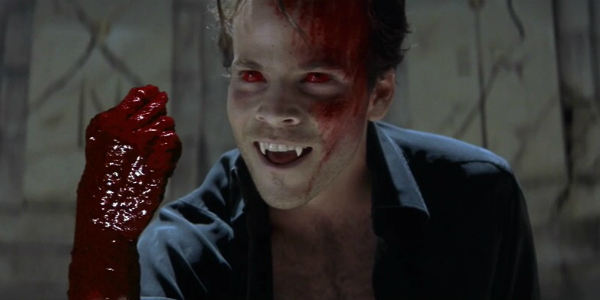
Deacon Frost is a young (or young for a vampire at any rate) upstart who wants to assert his species' dominance over the humans that they have been living peacefully alongside for so many aeons. He's essentially an extremist, leading his renegade group to murder his elders in the quest for greater power.

Stephen Dorff plays the role with a bristling, dangerous charisma. His Frost is a playboy prince with an eye on greater glory and a resentment for the roles that hold his species back, but also a character who is believably strong and vicious. Frost eventually gains the power he craves, with Dorff carrying off the transformation into a powerful demi-god without a lick of prosthetics or CGI. Plus he manages to make the line 'Look at you, you're a little bitch!' both mocking and hilarious when he's beating on our hero. He's the villain of the piece, but you can still root for him on some level, thanks to the skewed relatability that Dorff brings to his scenes. I guess everyone really does love a bad boy after all.


4. It€™s The Perfect Blend Of Cool, Gore And Fun

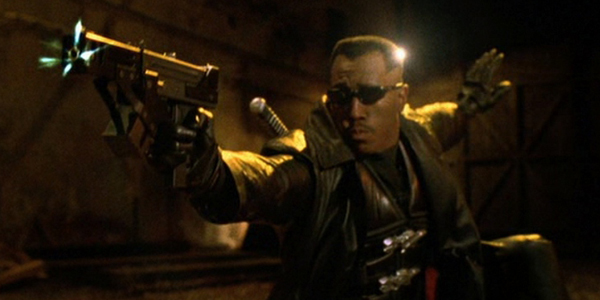
Despite all the stylised hyper-violence, Blade is not a po-faced film. In fact, Blade walks a fine line in being cool, knowing and darkly funny. In a cinematic landscape where the most recent vampire films are either defanged and neutered rom-coms (*cough* Twilight *cough*), defanged and neutered action romps (Dracula Untold) or arthouse indie horrors like A Girl Walks Home Alone At Night, Blade managed to show genuinely menacing vampires living large in our cities with action scenes that could be exciting and grin-inducing. It€™s also pretty wry, with little looks to camera and put downs such as the previously mentioned €˜look at you, you€™re a little bitch€™ delivered with a glee that€™s just short of scenery chewing. Blade himself also takes great joy in tormenting the bigger vampires he comes into contact with in macabre ways, removing the arm of one of Frost€™s henchmen at every opportunity and melting the archivist puddle of obesity, Pearl, with ultra violet light. After the empty punching and stunt work of Batman€™s Schumacher era, Blade€™s blood thirsty antics and dark alley threats shone out of the screen as an example of pre-matrix cinematic cool.

3. It's Adult Without Being Overblown

There's been something of a quiet backlash against the primary coloured heroes who make the big bucks at the cinemas. It started with the cartoonish brutality of the Kick-Ass series, then Dredd was released teeming with claustrophobic shootouts, drug use and skinnings - next year the two look set to meld into Deadpool. Marvel's merc with a mouth is surely going to be far more outrageous than either of those two films, and will definitely feature more jokes about wanking, but Blade managed to be an adult comic book movie without surrendering to either wackiness or bleakness to justify itself. Instead Blade managed to entertain as an action movie, a human story and almost as a quasi-gang warfare film. Sure there's a lot of violence in Blade (and that's mostly where it gets the R-Rating from) but it also deals with totally different adult themes, such as the loss of a parent, what it's like to be an outcast, friendship, loyalty and the balance of power at the same time. It actually makes the whole thing look pretty effortless across a two hour run time. It also progresses into a natural conclusion with a series of developments that feel earned and not rushed. Still, writer David S. Goyer did go on to work on Nolan's Batman trilogy and Man Of Steel, so the quality of the script shouldn't bee too surprising.

2. The Stakes Are High

Sorry, I couldn't resist the pun. But anyway, the point still stands and the stakes are indeed high. What truly impresses about Blade's story arc is how it grows organically from rogue vampires killing humans without permission to the summoning of an all powerful 'blood god' using an iron maiden. Blade's presumed-dead mother also pops up to fight her son, revealing that Frost is the reason he's half vampire in the first place and adding a nice, if improbable, personal dimension to proceedings in the final act. Blade's ending also works because you never see Frost's army of faceless vampire's unleashing hollow destruction on the city, as has become popular in modern superhero films. Instead Blade's final fight is all about containment, forcing Blade and Frost into a one-on-one, toe-to-toe scrap that our hero can't win with brute strength alone. If he fails though, Frost and his monsters will tear through the world leaving a path of death the likes of which has never been seen. Looking back at Blade, it's impressive to see just how well the film establishes the stakes without the need to show too much. That may be something that the current crop of destruction worshipping comic book movies could take on board.

1. It Quietly Rehabilitated The Genre
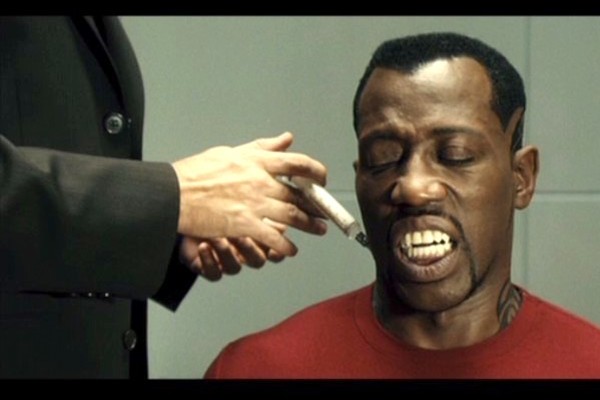
Back in 1998, the dust was only just settling on the absolute car crash that was Batman & Robin. Audiences across the world were struggling to comprehend just how awful the caped crusader€™s latest outing was, with many unable to sleep due to nightmarish flashbacks of George Clooney€™s injection moulded bat-nipples and a sheer incredulity at the amount of ice puns the writer€™s managed to crowbar into Arnold Schwarzenegger€™s. The first X-Men was two years away, the first Spider-Man four years away and the next good Batman a staggering seven years over the horizon. Things looked bleak. Thankfully the R-Rated Blade was on hand to remind everyone that movies based on mainstream comic books didn€™t have to be shoddy mixes of cartoonish characters and questionable costume choices. Instead, Blade showed that comic book movies could be fun without being ridiculous and could stay true to the original character instead of chasing action figure licenses. Bryan Singer€™s X-Men may be more widely credited with reviving the super-hero movie, but Blade rehabilitated the comic book genre on a whole, paving the way for what was to come over the next two decades with flair, story telling chops and a fiece sense of its own identity.

Contributor
Contributor

Stereotypically awkward writer, gamer and general nerd. Dislikes writing in the third person, likes tea as much as the next man but not as much as a typical blogger and has breath as fresh as a summer ham.