6 Ways Jurassic Park Is A Commentary On Hollywood
 Two decades ago, Steven Spielberg delivered a pitch-perfect tour de force of movie magic known as Jurassic Park. Becoming the highest-grossing film of all-time during its original theatrical run and earning rave reviews for its groundbreaking visual effects and sequences of suspense and terror, audiences were treated to one of the grandest spectacles in all of Hollywood. Over the past 20 years, Jurassic Park continues to astound and it has built a legacy as one of the finest summer blockbusters created. It's easy to dismiss the film and all its special effects (which still hold up today, by the way) as nothing more than just a big, fun dumb summer movie. But this is Steven Spielberg we're talking about. A smart filmmaker, Spielberg may have been trying to do something more with this dinosaur tale. Rewatching Jurassic Park as an older film buff, I've noticed some parallels between Spielberg's movie and the film industry. I might be overthinking this, but Jurassic Park provides some interesting commentary on the future of summer blockbusters and serves as a cautionary tale for Spielberg's fellow directors, with different elements of the film representing a part of Hollywood. Let's begin my crazy fan theory...
6. The Dinosaurs Represent Special Effects
 This one is very obvious, but the dinosaurs represent the future of special effects in Hollywood. Once dealing with a mechanical shark that wouldn't work, Spielberg now had the technology to combine practical models and CGI to bring a variety of dinosaur species to life without any real issues. In 1993, CGI was relatively new and was not seen as a logical method for crafting visual effects. Spielberg was showing other filmmakers that computers can in fact be used to create great things. Of course, the dinosaurs break free and wreck havoc on the island, merrily eating people along the way. This symbolizes the eventual takeover of special effects in summer blockbusters (films like Transformers and the Pirates of the Caribbean sequels come to mind) as directors sacrifice character development and compelling narratives for an endless parade of shiny visuals. Here, Spielberg is saying that yes, the technology is out there and it's great, but you need to remember to keep the human element in your movies or else they'll suffer.
5. John Hammond Represents Visionary Directors
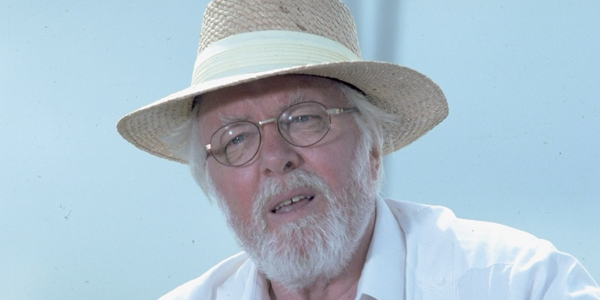 He may be a tad on the crazy side, but there's no denying John Hammond is a brilliant man. Finding the key to cloning dino DNA, he was able to make his wildest dreams become reality. Sparing no expense, he set out to give the people something truly extraordinary, no matter the cost. It's hard not to sympathize with him during the scene when he talks about the flea circus because he always meant well and had the best intentions. Hammond is basically a characterization of some of Spielberg's contemporaries like George Lucas and James Cameron. Like Hammond, Lucas and Cameron were once idealistic young men who had their unique visions limited by the technology they were forced to work with. Once that technology caught up with their ideas, Lucas and Cameron spared no expense to dowhatevertheywantedto do, no matter the cost. They got so obsessed with whether or not they could, they never stopped to think if they should. There's no way Spielberg could have known about things like the Star Wars prequels or Avatar when he made this film, but I can't help but think Hammond is purposely modeled after other ambitious filmmakers to serve the cautionary tale element of the movie. This could be you, Spielberg seems to be saying to his friends, if you're not careful.
4. Ian Malcolm Represents A Level-Headed Producer
 Sometimes, a "visionary" director becomes so huge and influential, they begin to think they can do no wrong. Surrounding themselves with a bunch of yes-men who wouldn't dare challenge their "genius," filmmakers like Lucas have seen their latter work suffer by removing the collaborative aspect of movie making. There was no one there to say, "Midichlorians, George? Are you sure you want to do this?" or, "I know these movies are for families, but don't you think Jar-Jar is taking it one step too far?" Ian Malcolm, the best character in the movie, is the Gary Kurtz to Lucas's John Hammond. Kurtz served as a producer for Star Wars and The Empire Strikes Back before leaving Return of the Jedi due to creative differences (for more on that, click here). Kurtz had a major impact during production of the first two films, building a strong relationship with the cast and crew and placing a priority on artistic quality. If you read the story I linked, you'll see that if Kurtz had his way, Jedi would be a completely different movie than the one we know and love today. The point is, no matter how inventive and creative you are as a director, it always helps to have a level-headed producing partner to reel you in and make sure you don't do anything crazy. During the lunch scene (from a screenwriting perspective, the best in the film), Malcolm's monologue is a perfect representation of a producer trying to reason with his/her director. "Before you even knew what you had, you patented it and packaged it and slapped it on a plastic lunchbox and now you're selling it. You want to sell it," Malcolm says in the tone of a jaded producer upset with the marketing and merchandising of blockbuster films in current Hollywood. Malcolm is that guy who wouldn't be afraid to call Lucas out on Gungans or mock James Cameron's decision to write the word "unobtanium" into the Avatar screenplay. Spielberg (though he too has had his less-than-stellar moments) is illustrating that it's always important to have someone like this in your corner. If Hammond had Malcolm around before all the raptors and t-rexes were cloned, maybe none of the chaotic things would have happened.
3. Donald Gennaro Represents Studio Executives
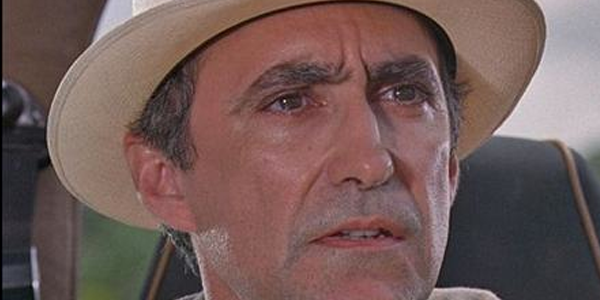 Gennaro, the "blood-sucking lawyer" is an almost too obvious depiction of a stereotypical studio executive, always looking for a way to earn a profit on an idea. Upon seeing the dinosaurs for the first time, he even utters the line, "We're gonna make a fortune on this place," giving Jurassic Park one of its more meta moments (that's probably what a Universal exec said after watching some early footage). Very weaselly throughout the film, Gennaro's focus shifts from "is the Park safe?" to "how can we make money?" once he arrives on the island. His outrageously high admission prices add to this, as he condescendingly states that Hammond could have a "coupon day... or something." He's not concerned with what the people want anymore. This is no different than a Hollywood suit remaking or rebooting some classic film despite fans' pleas for something new. Like Gennaro, studio executives are only concerned with the potential sales.
2. Alan Grant and Ellie Sattler Represent Older Moviegoers

1. Lex And Tim Represent Young Moviegoers
 Hammond calls his two grandchildren the Park's "target audience," and it's a not-so-thinly-veiled reference to how young moviegoers are the real target audience for a film like this. Unlike their older counterparts, children don't have much of a filter when it comes to determining the quality of a film. We've all been there before. We love a certain movie as a kid and then go, "What was I thinking??!!" when we see it again years later. Lex and Tim aren't concerned with the implications of bringing dinosaurs back to life and just think it's cool that their grandpa built a giant prehistoric zoo. Likewise, younger moviegoers are more likely to be impressed with heavy special effects popcorn movies. As long as there's action on the screen, they'll think just about anything is awesome. They haven't reached a point where they're worried about the plot of a film yet. They are indeed the target audience for mindless, dumb, (sometimes) fun entertainment. The two kids eventually learn the valuable lesson that technology isn't all it's cracked up to be just like young movie fans evolve into older, wiser critics, but in the beginning, they're no different than a 10-year old having his mind blown at the theater. I know I just essentially overanalyzed an escapist blockbuster, but this is an interesting and fascinating way to watch an old classic. This probably isn't what Spielberg intended to do (he's said himself he was just trying to make a decent Jaws sequel), but the parallels are hard to ignore when you look at Jurassic Park this way. What do you think? Is Jurassic Park a statement on Hollywood? Let us know in the comments!