7 Disney Movies That Were Accused Of Stealing Ideas

Be prepared... to have your childhood favourites ruined.
Although it would like to be known for its consistently family-friendly approach and ability to squeeze childlike-joy out just about anyone, Disney's reputation is mired by some less savoury elements. For years the anti-Semitic views of studio founder Walt (who is, let's not forget, currently in suspended animation) have been prevalent, while eagle eyed fans have discovered some rather raunchy, 'accidental' easter eggs; a nude woman in The Rescuers, dust spelling SEX in The Lion King and a rather phallic looking tower on King Triton's castle on the VHS cover of The Little Mermaid. And that's not even getting onto the issue of stealing ideas. Some of the animation studio's best loved films have become mired in lawsuits from authors, filmmakers and cartoonists they've been accused of flat-out ripping off. Normally the cases are dropped and if not they're settled out of court with the official compromise not made public, but it's certainly something that tarnishes the reputation of a company whose biggest crime is only releasing their classics on DVD for painfully short periods. Today we look at seven films from Disney (and its sister Pixar) that have had accusations of intellectual thefy thrown and them and evaluate how potent the arguments actually are.

Honourable Mention: Antz Stole From A Bug's Life
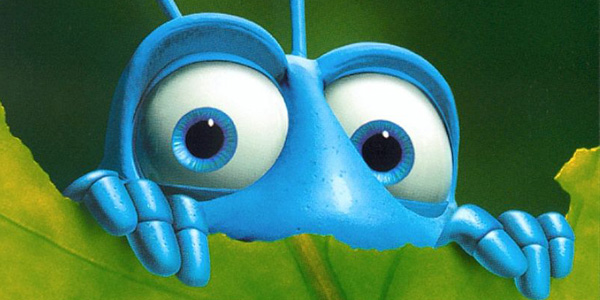
The autumn of 1998 saw two very similar films hit our screens. First came Antz, Dreamworks' debut animation that transplanted a traditional Woody Allen existential crisis into a tiny version of Starship Troopers. Then, only a month later, there was A Bug's Life, Pixar's sophomore outing about ants fighting back against oppressive grasshoppers. The dim-witted accused the latter of copying, not comprehending how long animations take to make. They were right, however, in that there was some dodgy dealings going on. But it was the other way round. Jeffrey Katzenberg had been head of Disney at the start of the nineties, but ended up leaving on rather bad terms. Forming Dreamworks and heading up the animation division, his aim was to beat the Mouse House at there own game, thus rushing Antz into production to compete with the already in progress A Bug's Life.

7. The Snowman - Frozen

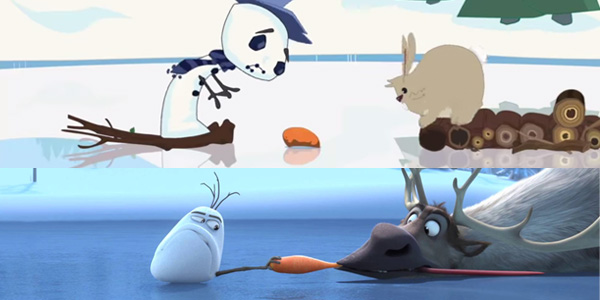
Frozen becoming the highest grossing animated film of all time was hardly a surprise; the film is an absolute joy, with quirky characters and a female independence bent even stronger than the studio's films of the nineties. Return to form for Disney and all that. Of course, it couldn't be a Disney film without the usual controversies. We all heard the claims that Let It Go is a coming-out song, but what was less covered was a heinous example of them stealing ideas. It transpires that the first trailer for Frozen (which bears little relation to the film proper) is directly lifted from 2009 short The Snowman. The quirkily animated piece sees a snowman chased by rabbits and drop its nose in the middle of a frozen over lake. What follows is a series of farcical attempts between him and the bunnies to get the carrot first, ending with the rabbits opting to kindly give it back. Not only is the plot the same in Frozen's teaser, but the shots are damn near identical (see above). The animation's creator, Kelly Wilson, took legal action, but the story didn't gain much traction. Some claimed the short was also the total inspiration for Olaf, which certainly weakens the strong argument. Was it plagiarism? Well obviously the trailer was a shameless copy, but a living snowman ain't a new idea, so we can't say Olaf wasn't totally inspired by The Snowman.

6. The Christmas Toy - Toy Story

The idea that toys come to life when the children aren't around was nothing new with Toy Story, but it's not just a similar base idea that has The Christmas Toy sometimes said to be the inspiration for Pixar's debut feature.

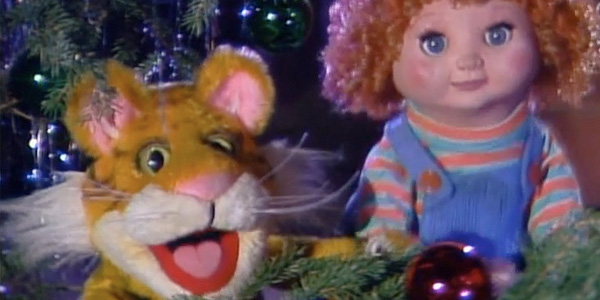
A Christmas special from Muppets creator Jim Henson, The Christmas Toy is a zany adventure that takes us to a playroom where toys live a secret life when human's aren't around. You have a protagonist who is desperate to retain their position as the favourite toy and will go to extreme measures to do so, while a new space themed figure arrives not realising they're actually a child's play-thing. Damn it Pixar, not you too.

It's there the similarities end; if a toy is found by a human not in the position they last left them then they lose their life force. Not only is that pretty dark, it leads to a rather convoluted plot.

Was it plagiarism? If you were going to make a story about toys, new ones and favourites would be an immediate thing to go for. As Toy Story first started life as an expansion of their earlier short Tin Toy it seems like to separate ideas ended up in similar places.

5. The Thief And The Cobbler - Aladdin

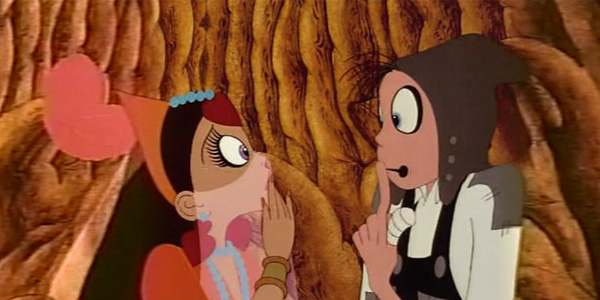
When you're in the market of adapting classic stories it's not unlikely for your version to have some similarities with other takes on the material. Aladdin, released in the middle of the Disney Renaissance, was based of the Middle Eastern tale of the pauper and his magic lamp, which had been first recorded centuries earlier. So when you look at The Thief And The Cobbler, a film with a similar plot and archetypes it's easy to initially dismiss the two as just being distant relatives. But then you notice some slight similarities; the villain in both has a bird sidekick; the princess has noticeably large eyes; the visual landscape design share many elements. And so it looks like we've got another case of Disney stealing ideas on our hands. Except the story's not as simple here. The Thief And The Cobbler had been in production since the sixties yet still hadn't been released by the time Aladdin rolled around. When the project was finally finished, to make it marketable Miramax (then a subsidiary of Disney) cut the film so it had a closing bearing to the massively popular Aladdin. The biggest similarity - Theif's villain Zig-Zag looks like Jafar and acts like Genie - in fact comes from the same animators being employed on both films. Was it plagiarism? There's a lot of shared elements and with the intertwined production it's hard to really decipher what came from where, but if there is any lifting on Aladdin's part it's quite light.

4. Little Monsters - Monsters, Inc.

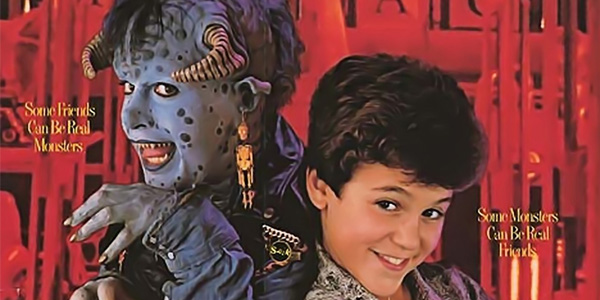
As with Toy Story and The Christmas Toy, there's not much novel about saying there's monsters living under your bed or in your cupboard; that's been around as long as kids have had beds and cupboards. But the notion of a whole other monster world with a direct connection to our own through children's bedrooms is a bit more specific. And to have two films with children being kidnapped as part of an evil plot is way too particular. That's the central argument for Monsters, Inc. being a higher quality rip off of Little Monsters, a now-forgotten late eighties kids flick. There are some vague comparisons to be had between the plot and arguably designs of the main characters (blue skin/fur, horns) but it's all a little fleeting. This wasn't the only plagiarism debate Monsters, Inc. became embroiled in. First came accusations of a publisher passing on rejected ideas to Pixar (probably just before they got Kubrick to fake the moon landings) and later artist Stanley Mouse accused the designs of Mike and Sulley were copied from concept art for film he'd tried to float in the late-nineties. Was it plagiarism? Taking a childhood idea and expanding it with sound logic was nothing new for Pixar, while to say a one-eyed monster is your idea is thinking a little big of yourself. Pete Docter and co. were clearly just tapping into a popular concept. What's next, Harvard complaining Monsters University steals the idea of further education?

3. Pierrot Le Poisson Clown - Finding Nemo
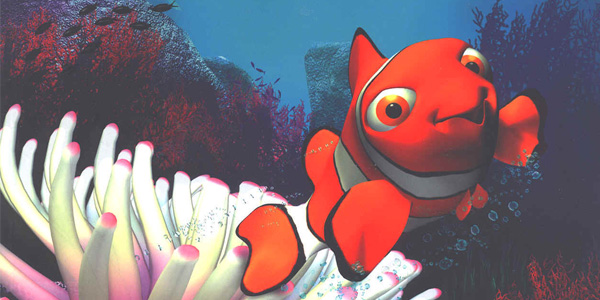
Pierrot Le Poisson Clown (which shockingly translates as Pierrot The Clown Fish) is a French book about a clown fish who swims in the sea. And... that's literally all that's out there on the internet about the story. The only thing that makes the children's book noteworthy is the suit the author filed against Pixar. You see, Franck Le Calvez thought that his story about a clown fish had been plagiarised by the animation giant for their story also about the colourful, marketable, well known fish. The designs are admittedly similar, but surely that's because they're both based off the same animal? Shockingly Le Calvez lost the case and although claiming he was going to appeal, nothing more has come of it. Was it plagiarism? Oh come off it. The book was first published in November 2002, less than six months before Finding Nemo premiered. Sounds to us like someone doesn't appreciate you can't make a film that quickly. Given that Finding Nemo was first conceived after Toy Story was released, it seems much more likely Le Calvez was simply trying to make a quick buck.

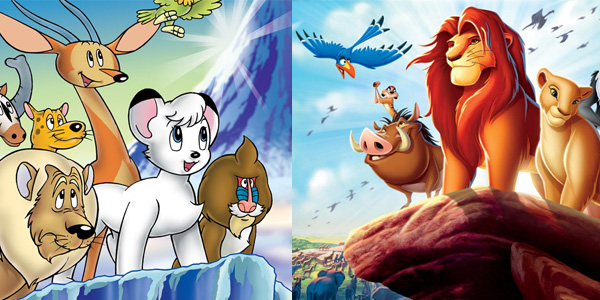
2. Kimba The White Lion - The Lion King

The most well known example of Disney being accused of stealing ideas, Kimba The White Lion has become an emblem of Disney's allegedly duplicitous nature. Originally a comic manga, Kimba grew to become a globally successful anime in the sixties. The plot deals with the threat of humans moving in on the natural habitat of Africa's animals; it's like Bambi meets Roots. Wait, that has nothing to do with The Lion King - what's the big similarity then? It's much more stylistic and sporadic - Kimba sees his dead mother in the stars and the overall message is about all creatures being part of an ecosystem - but the real clincher is in the development of The Lion King; early concept stills show Simba having white fur, while people involved in the production sometimes got Simba's name wrong. They're basic links, but it suggests there was inspiration taken from Kimba at the very start. Was it plagiarism? We bloody love The Lion King, but there's so much evidence that at the very least the inspiration for the project was indeed Kimba. Clearly Disney considered the morality of the whole thing and decided hakuna matata.

1. Their Own Back Catalogue - Robin Hood
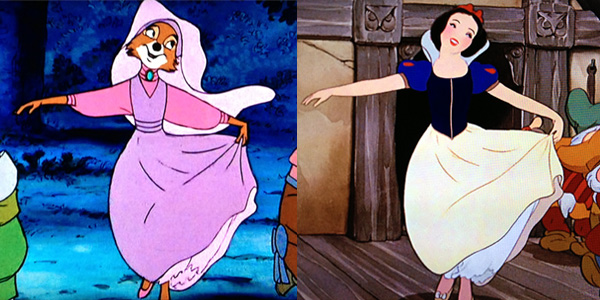
The Disney Dark Age began with Walt's death in 1966 and didn't end up The Little Mermaid came out in 1989. In those intervening two decades a mere eight films were made, most of them unremarkable fare that put the studio name in disrepute. Slap bang in the middle was Robin Hood. With a budget less than half the size of 101 Dalmatians a twelve years previously, the film did everything it could to cut corners. All the characters were recast as animals to justify the amount of time and money spent trying to get a feature version of Reynard the Fox off the ground; no need to design new characters. And worse, they simply reused the animation from previous films; dancing scenes from Snow White, The Jungle Book and The Aristocats were all lazily drawn over, making an uninteresting film all the less engaging. Other Disney films would employ this, but none as blatant as Robin Hood. Was it plagiarism? It's well documented it was done to keep the costs down, but that doesn't make it any better; all it does is make the studio look lazy. Which other Disney films have been accused of stealing ideas? Let us know down in the comments.

In this post: 
Disney
 
Posted On: 
Contributor
Contributor

Film Editor (2014-2016). Loves The Usual Suspects. Hates Transformers 2. Everything else lies somewhere in the middle. Once met the Chuckle Brothers.