7 Quentin Tarantino Movie Plots That Really Happened

Not From Dusk Till Dawn, before you get too excited...
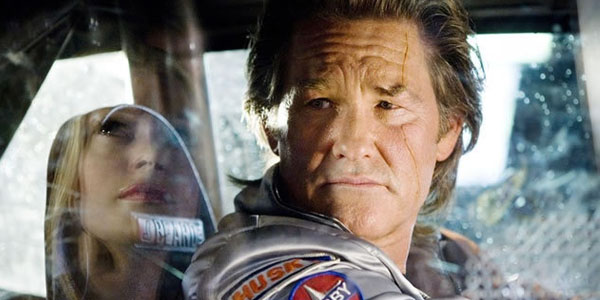
Critic Ken Dancyger, when reviewing hotshot new director Quentin Tarantino's second feature Pulp Fiction, called it "a new phenomenon, the movie whose style is created from the context of movie life rather than real life. The consequence is twofold€”the presumption of deep knowledge on the part of the audience of those forms such as the gangster films or Westerns, horror films or adventure films. And that the parody or alteration of that film creates a new form, a different experience for the audience." Tarantino himself has agreed with this assessment, splitting his films up further into the "realer than real" and "movie movies". The "realer than real" - Pulp Fiction, Reservoir Dogs, Jackie Brown - are still pretty divorced from reality, but they're still more grounded than the "movie movies" like Kill Bill and Death Proof. As over the top as his characters can be, though, and as unbelievable the scenarios they end up in (usually because, as Dancyger pointed out, they're drawn from other movies instead of real life), a surprising amount of them have a basis in reality. We're not sure how much Tarantino is aware of it, considering how much time he spends in his private cinema watching crappy blaxploitation and chop socky movies, but a load of his plot points, characters and overarching stories have actually happened in real life. Sadly there's never been a couple of criminals on the run who bump into vampires at a Mexican titty bar, or badass black slaves getting revenge on their owners (so far as we know), but here are ten Quentin Tarantino plots that did really happen.

7. Woman Gives Birth In A Coma

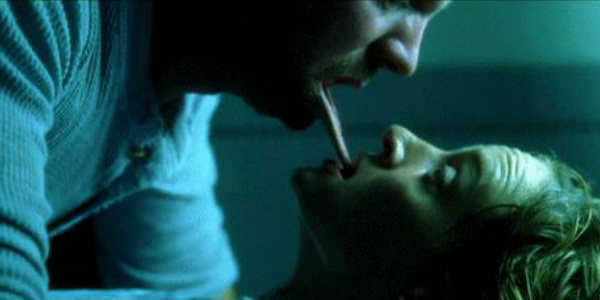
Of all his cinematic output to date, Kill Bill volumes 1 and 2 are undoubtedly Tarantino's most "movie movie" films. Where his previous works had managed to integrate his myriad influences pretty subtly, Kill Bill was his chance to go hog wild and pay obvious homage (or just straight up ripping off) his favourite films, pinching sound cues from old Shaw Brothers martial arts films, doing a de Palma split-screen scene straight out of Carrie, and even pulling in characters from films he watched during his time as a video store clerk in the eighties. Between that, the sprinkler-style blood splatters and martial arts wire work, nobody would suggest that Kill Bill is going for gritty realism. The one scene that truly horrifies on a visceral level, and is shot without the same flashy colour schemes and visual flair as the later parts, is when Uma Thurman's The Bride is still in a coma. After being shot in the head by former lover Bill, poor old Beatrix Kiddo is in a coma for four years. During that time she is almost assassinated by Daryl Hannah's Elle Driver, which gets called off at the last minute, and is routinely raped by hospital orderly Buck (he likes to fuck). The big reveal, however, is that The Bride - who was pregnant when she went into the coma - is no longer with child. Kill Bill is mostly pretty silly and tongue-in-cheek, but the scene of Thurman waking up, clutching her flat stomach and howling is truly heart-wrenching. Because the baby probably died, right? Nobody gives birth during a coma! Except people totally have. In 2010 24-year-old Chastity Cooper managed to give birth to a healthy baby girl, despite being comatose following a car accident for virtually the whole pregnancy. No word on her involvement with the Deadly Viper Assassination Squad, mind.

6. Hattori Hanz Was A Real Guy

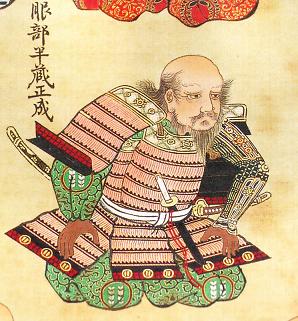
One of our all time favourite cameos in a Quentin Tarantino film was that of Sonny Chiba, badass martial artist and star of the classic Street Fighter films (nothing to do with the video games, and everything to do with ripping off a dude's testicles). Chiba turned up for a spell in Kill Bill volume 1 as Hattori Hanz, a master swordmaker whom The Bride tracks down to make a katana for her to use against the Deadly Vipers and, ultimately, Bill. This was a nice little nod to Chiba's role as another Hattori Hanz in the eighties Japanese TV show Kage no Gundan (Shadow Warriors) - the implication was the Hanz in Kill Bill was a descendant of the old one. Hattori Hanz isn't just some pop culture icon that Tarantino imported from the East for his goofy revenge epic, however. He was a real guy. He was a whole dynasty of real guys, in fact, since the character Chiba played in Kage no Gunda was himself a descendant of the original Hanz. The star of Shadow Warriors was in fact Hattori Masashige, an Edo period ninja who fought his first battle at 20 years old and was instrumental in the Siege of Osaka after his brother's death. Technically, he was Hattori Hanz III.
The first Hattori Hanz was a famous samurai and ninja of the Sengoku era, who entered folklore due to his saving the life of Tokugawa Ieyasu, and then helping the shogun to become the ruler of a united Japan. Hanz-related characters have since appeared in everything from the Samurai Shodown video games to an episode of Thundercats; the Sonny Chiba character in Kill Bill, however, is still meant to be a direct descendant of the real life guy, putting him at Hattori Hanz the XIV in the modern day.

5. People Get Buried Alive All The Time
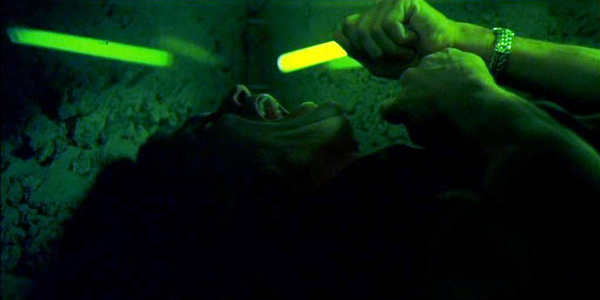
A torture so nice he used it twice, Quentin Tarantino clearly hasn't got a problem with claustrophobia since he's used the "buried alive" shtick a few times in his career. Not only was it a big part of Kill Bill Volume 2, as Michael Madsen's Budd locks The Bride in a coffin and sticks her six feet under, but it was also the plot for the two-part episode of CSI that Tarantino once helmed (which people always forget about). Both Kill Bill and Grave Danger, the CSI episode, are horrifying in their own ways. For once it's CSI that manages to be slightly more realistic, however, since instead of punching through the casket as Uma Thurman does, detective Nick Stokes has to wait for his police colleagues to track down his whereabouts and haul him out of the soil. Slightly more realistic, yes, but the idea of somebody being buried alive is surely just a film and TV trope like the boxing throwing a fight, right? It's something we've seen not only from Tarantino but in films like Buried, which saw Ryan Reynolds spending the entire running time trapped underground. In fact, people get buried alive all the time and that is bloody terrifying. There are stories of people in comas or otherwise appearing to be bereft of live being mistakenly buried, but worse than that is the confirmed history of people being stuck underground expressly as a form of torture, murder, or execution. It goes all the way back to ancient Rome and was used as recently as World War II, but the one that sounds most Tarantino-esque was the feudal Russian punishment known as "the pit", used against women who were condemned for killing their husbands.

4. Natural Born Killers Is Based On True Events (Sort Of)
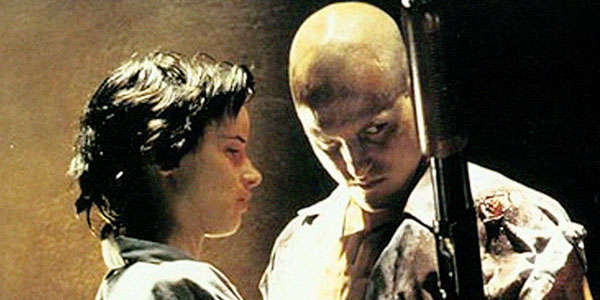
Reservoir Dogs was the first time Quentin Tarantino got to direct one of his own scripts, but he didn't just appear on the scene out of nowhere. No matter how good a screenplay you write, you're unlikely to get Harvey Keitel to star in a film that you're also gonna helm. Along with some on-and-off work punching up existing scripts and doing uncredited rewrites, Tarantino got his foot in the Hollywood door by selling his screenplays to other directors to make. These included Tony Scott's True Romance from 1993 and, the next year, Oliver Stone's Natural Born Killers. Whilst Tarantino's original script was heavily revised by Stone with writer Dave Veloz and associate producer Richard Rutowski during production, the basic shell of the story and the characters - Mickey Knox (Woody Harrelson) and his wife Mallory (Juliette Lewis) go on a killing spree across America and become media darlings - all comes from our favourite foot fetishist-cum-film obsessive, and was remarkably prescient. Because everything in the film began to happen in real life as Natural Born Killers was being made, necessitating Stone and his associates to pull from the headlines to add credibility to their controversial, political flick. https://www.youtube.com/watch?v=Slwpt4gtCNg Originally Tarantino had hoped to direct the film, but when it got into the hands of producers Jane Hamsher and Don Murphy they had other ideas - and they wanted to turn it into a dumb, Arnie-style action movie. Luckily Stone thought otherwise, noticing parallels between the characters' actions in the film and the recent OJ Simpson case and Rodney King incident. The media had played a big part in how all these crimes took place, how they were documented, and how they ended - what must've seemed like a future satire and warning in Tarantino's script had become reality by the time it was filmed.

3. Stuntman Mike, Meet Malcolm Webster
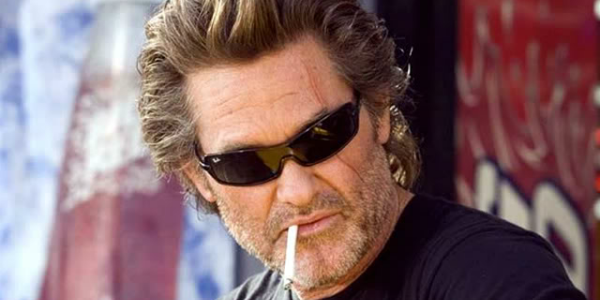
Robert Rodriguez and Tarantino's attempt to resurrect the beloved exploitation cinema of their youth in the form of Grindhouse may not have been the roaring success they were expecting, but Quentin at least succeeded in creating a great, nasty bad guy in his half of the double bill. Death Proof as a whole may not quite have lived up to the standards of his other films - a little too heavy on the dialogue, a little too light on everything else - but Kurt Russell was inspired casting as Stuntman Mike, the misogynistic serial killer who picks women up, takes them for a ride in his "death proof" car, crashes it, and escapes unscathed. It's a novel way of killing, and a neat little conceit that would be perfectly at home in the sort of grimy B-movies Grindhouse and Death Proof were supposed to evoke. It's not a particularly clean or necessarily effective way of murdering someone, and there's a decent risk the killer himself might also expire in the auto wrecks Mike uses to dispatch his victims. It's the sort of larger-than-life MO that's good for Grindhouse and firmly plants the film in the realm of "movie movies" as opposed to the ever-so-slightly more grounded "realer than real" Tarantino flicks.
Except, unique as it sounds, Stuntman Mike isn't alone in his chosen method of murder. In fact a good decade before Death Proof hit the cinemas there were news reports about Malcolm Webster, an Englishman convicted of the murder of his first wife and attempted murder of his second wife in Scotland in 1994. Webster's motive was more financial (wishing to pick up his spouses' life insurance) than purely bloodthirsty, but he went about killing off these women just like Kurt Russell's character: by deliberately crashing the car whilst they were both in it, then setting it alight so it looked like an accident.

2. The Five Point Palm Exploding Heart Technique Exists! Sort Of
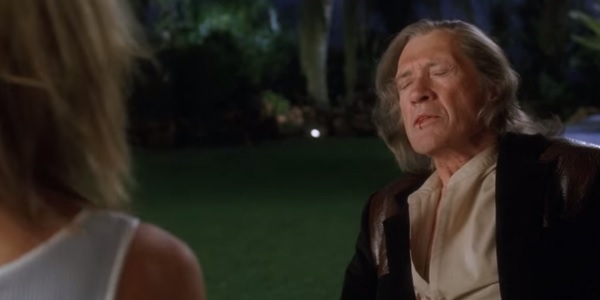
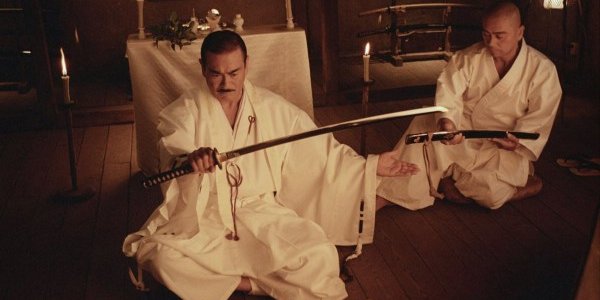
The touch of death taught to Beatrix Kiddo by the magnificently mustachioed Pai Mei in Kill Bill Volume 2 is another one of those Tarantino pulls from popular culture. The existence of a martial arts move that can cause a person to die just by doing an intricate series of hand movements on their chest has cropped up in The Simpsons, Hot Rod (although in that case it just made people crap their pants), Bloodsport and the Five Point Palm Exploding Heart Technique specifically appears in the Shaw Brothers films Clan of the White Lotus and Executioners of Shaolin. It's since become a bit of a joke because, really, as if that's a thing. Most times it's been brought up in real life, people have been rightfully skeptical. Bruce Lee's untimely death was, to some, seen as a delayed reaction to a touch of death or Dim Mak (Chinese for "press artery"), which is less of a magical technique and more something rooted in acupuncture. It began life as a plot point in ancient wuxia martial arts myths, where an attack on pressure points and meridians is said to incapacitate or kill an opponent, immediately or after a brief and dramatic pause. The latter of which is what happens to the eponymous Bill when The Bride finally catches up with him. He gets five steps before his heart literally explodes following the attack. The touch of death became a big deal during the kung fu craze of the seventies and eighties, with advertisements promising to teach you the secrets of Dim Mak appearing on the back of comic books and in the windows of less reputable martial arts teachers. There's no scientific evidence to suggest that dancing your fingertips across someone's chest super quickly will make their vital organs rupture and kill them, but mild trauma may cause disproportionately catastrophic consequences when applied to known pressure points under specific circumstances. So you could, potentially, actually kill David Carradine that way. If he hadn't already died in the worst way possible.

1. The Actual Basterds

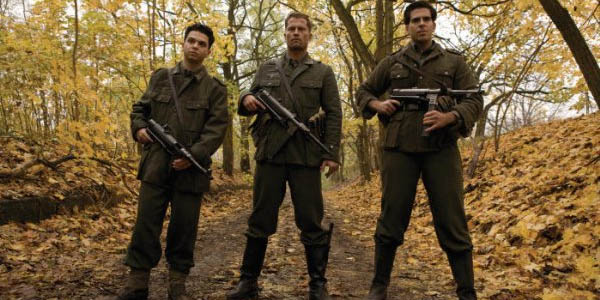
Inglourious Basterds was the second entry in Tarantino's revenge trilogy, which began with the Kill Bills and wrapped up with 2012's Django Unchained. Each of those films definitely exists within the "movie movie" reality since, whilst the latter two claim to take place in real historical periods, they tend to break from the actual events that occurred. Try as we might, we can't find any evidence of black slaves that were freed by bounty hunters, trained up to be badass cowboys and then got revenge on their former owners. We're also a little rusty on our GCSE history, but we're reasonably certain Hitler didn't get shot to death by a couple of Jewish Nazi hunters. He died in a bunker whilst complaining about the PS4 or Half Life 3 or something, right? The titular Basterds seem like a classically Tarantino creation, the Dirty Dozen taken to a new extreme, a bundle of references to other World War II movies involving a rag-tag group of soldiers going rogue on a personal mission of revenge. In fact the film lifts its title from a seventies Italian war movie by Enzo G Castellari, The Inglorious Bastards. Turns out that the Basterds - a renegade unit of American Jewish soldiers who go around killing and scalping Nazis, under the command of Brad Pitt as Lieutenant Aldo "The Apache" Raine - might not be quite as original an invention as old QT thought. The Nakam, also referred to as The Avengers or the Jewish Avengers, might not have had quite as evocative a name as the Inglourious Basterds, but what they lacked in a snazzy title they made up for in, erm, actually existing. And killing a load of Nazis. Originally formed as a Jewish militia during the war, the group rebranded themselves as Nakam (Hebrew for "revenge") following the end of the conflict and dedicated their lives to tracking down and assassinating war criminals who had been involved with the Holocaust. This was all done in secret, of course. The original Avengers, the Nokmim, would travel in British uniforms, arrest Nazis, and conduct quick "trials" and executions in the field. After the war the group expanded to sixty former Partisans as well as other Jews who survived the Holocaust. They went back to Germany, did things like poison 3000 loaves of bread for former SS guards and planned on doing more, aiming to kill 6 million Germans - the same amount of Jewish people killed in the concentration camps. Which is a rare example of real life being even more hardcore than a Quentin Tarantino film. Which is kinda scary.

Contributor
Contributor

Tom Baker is the Comics Editor at WhatCulture! He's heard all the Doctor Who jokes, but not many about Randall and Hopkirk. He also blogs at http://communibearsilostate.wordpress.com/