7 Things The Matrix Shamelessly Ripped Off

Hang your heads, Wachowskis.

Three years ago the National Film Registry chose 25 films to be preserved in the Library of Congress, something they have done every year since 1989 in an effort to highlight the need to preserve American film heritage. Under the conditions of the National Film Preservation Act, these movies are selected for inclusion based on their cultural, historical or aesthetical significance. Back in 2012, one of these films was The Matrix. The Wachowskis sci-fi thriller was released thirteen years earlier and between now and then has grossed $463 million, spawning two sequels as well as numerous video games, comics and animated short movies, all of which the original directors had a hand in. For those of you too young or too anti-Keanu Reeves to be familiar with it, the Matrix is the story of a future dystopia created by sentinel machines with the purpose of subduing humankind so that their bodies can be used as an energy source. When a computer hacker named Neo learns that the reailty he lives in isn€™t actually reailty at all, he joins the fight against his oppressors, and it€™s a pretty impressive fight to witness. With stunning action sequences and bullet ballet that popularised the use of 'bullet time' slow motion in Hollywood, this mind-boggling movie is a thrill ride from start to finish. Trouble is, it€™s a ride that€™s been done countless times before, and done in such a similar fashion that you begin to realise that The Matrix is simply a mish-mash of all the stand-out titles from the cyberpunk genre it claims to be a front runner of. It€™s one thing to pay homage to another€™s work in your own (as they do with the coloured pills that reference Lewis Carroll€™s Alice€™s Adventures in Wonderland) but taking that work and using it as part of your own without so much as bothering to change names, plots and appearances is a little below the belt. Here are 7 examples of the Wachowskis doing exactly that.

7. The Invisibles (Comic Book)

Grant Morrison€™s cult comic series The Invisibles is about a group of freedom fighters who try to take on an establishment hell bent on keeping secret the fact that the reality we all live in is an illusion, and that the real world that they keep hidden from humankind is infested by insect-like demons. The story€™s messiah is Dane McGowan, a rebellious teenager from Liverpool, England. When he is first discovered by The Invisibles, Dane wants nothing to do with their fight against the oppressive Outer Church, though, much like Neo, when they eventually talk him round they discover that he is insanely powerful and might just be the key to overthrowing their enemy. The head of The Invisibles is a bald headed bad ass who wears a pair of circular rimmed sunglasses (sound familiar yet?) and at one point he is even captured and tortured by a member of the Outer Church who has taken the form of (you guessed it) a government agent. The blatant similarities between the Wachowski€™s film and Morrison€™s story continue throughout, and the latter has openly admitted that The Matrix was lifted straight from the pages of his comic. Whilst also stating that he likes The Matrix, Morrison€™s response to the sequels was that €œthey should have kept on stealing from me.€ Morrison himself knows a thing or two about writing a story he first heard somewhere else, however €“ he has admitted that the story of the Matrix was first told to me him a group of aliens when he was abducted during a trip to Kathmandu.

6. Ghost In The Shell (Anime)

Unlike most of the sources on this list, the Wachowski€™s have openly acknowledged that elements of Ghost in the Shell were copied straight into The Matrix. They actually used Mamoru Oshii€™s 1995 anime classic to pitch the idea for The Matrix to producer Joel Silver, showing him the film on DVD and telling him that they wanted to do it with real actors - something they practically did shot for shot. Set in the year 2029 where the world is interconnected by a vast electronic network that infiltrates the lives of every citizen, the head of Public Security Section 9 is on the hunt for an elusive hacker who goes by the alias Puppet Master. The only access to this network is through cybernetic shells that possess consciousness and give the user superhuman abilities. From the digital coding Morpheus and the gang hack to get into The Matrix to the jacks situated on the back of their necks, the Wachowskis borrowed (if you can call it that) from Oshii, something the Japanese film maker does not like to discuss in detail. That didn€™t stop the Wachowskis from buddying their film with his, even going so far as to include side-by-side, scene-by-scene commentary as an extra on the DVD release.

5. Neuromancer (Novel)

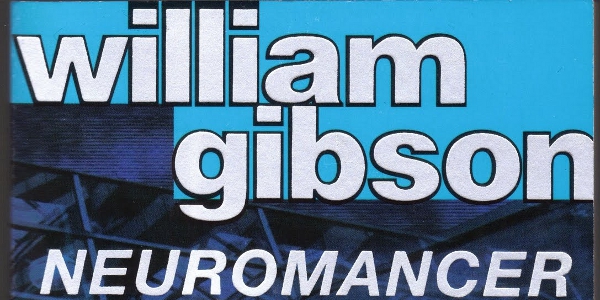
When you read a novel packed with such vivid characters and worlds, seeing it brought to live on the screen almost exactly as you imagined it to be a special feeling. The only thing that can take away that feeling is when you realise that the story you read and the story you€™re seeing are actually supposed to be two different stories entirely. William Gibson€™s brilliant 1984 novel Neuromancer is full of brilliant plots and places that The Wachowski€™s used for The Matrix, including the term Matrix itself and also its counterpart Zion, which in Gibson€™s book is a place of artificial light and zero gravity occupied by Rastas. His Neo, who goes by the name Case, is a computer hacker who jacks-in to cyberspace so he can attack big organisations, something that brings him to the attention of Molly and Armitage €“ Trinity and Morpheus. Even Case€™s appearance (tall and dark with high, narrow shoulders) is similar to that of Neo€™s, and they both live alone in seedy apartments on the wrong side of the tracks. Both are unassuming loners who come to understand their true potential once they realise they are capable of entering a digital world and altering reality, a world where Case meets Neuromancer and Neo faces off against Agent Smith. Gibson's novel is considered a seminal work in the cyberpunk genre, and was the first to win the so-called science fiction triple crown - the Philip K Dick Award, the Nebula Award and the Hugo Award.

4. Doctor Who - The Deadly Assassin (TV Serial)
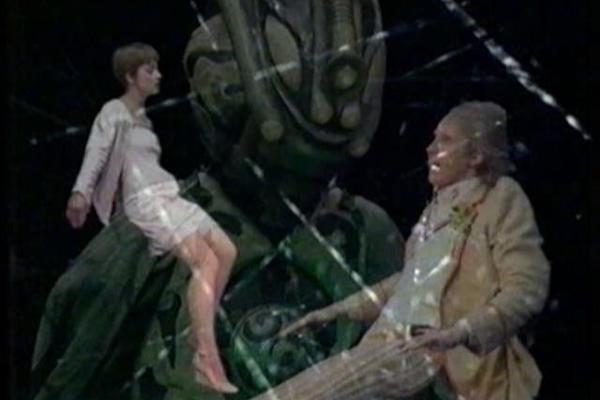
Airing in 1976, years before The Matrix was made, before William Gibson€™s novel Neuromancer was published, even before the advent of virtual reality in the 1980s, Doctor Who was doing battle inside the Matrix. Yes, the four part serial The Deadly Assassin sees the Doctor go head to head with Chancellor Goth inside a simulated reality called the Matrix that is accessed through apparatus connected to the user€™s head. The physical laws of this simulated reality can be manipulated by the more experienced users, with the most advanced able to bend and break the laws entirely. The President of the High Council of Time Lords is the only person with strictly unlimited access to the Matrix, which holds the biological imprints of every Time Lord, living or dead, and also receives data from sensors contained in the TARDIS time machines used by Time Lords to travel through time. The upshot of all this is that the Matrix is not just a record of the past, but a way of predicting the future. Similarly to the Wachowski€™s Matrix, this virtual world is neither complete nor fool-proof, and can be tampered with when accessed by someone with the right skill set. Though not originally presented as a place with an ominous purpose, a Past Doctor Adventures novel by Mike Tucker and Robert Perry reveals that a Dark Matrix actually exists, containing the evil impulses of every Time Lord from history, hidden and forgotten about. When The Valeyard manage to take control of the Dark Matrix and attempt to use it to manipulate the Doctor's timeline, it is up to him to destroy it.

3. Dark City (Film)

Alex Proyas€™ 1998 neo-noir science fiction thriller Dark City pre-dates The Matrix and is so similar from start to finish that it€™s impossible to ignore. The Neo of the story is John Murdoch, who awakens in a bath tub suffering from amnesia and gets a phone call telling him to bail before The Strangers show up. Following the advice, he gets out just before they show up to investigate. Communicating through their ear-pieces, The Strangers €“ who have names like Mister Book and Mister Wall as opposed to Agent Smith and Agent Brown and are dressed in identical black garb €“ attempt to hunt John down as he goes about discovering that the world he inhabited before he woke is not real. Before long, John learns how to manipulate this fabricated reality and the hunters have a real job on their hands. It transpires that Strangers need humans to survive and, much like reality outside of the Matrix, they are used like livestock, kept in the Dark City. It all comes to a head as Neo €“ sorry €“ John goes head to head with the top Agent €“ sorry €“ Stranger in a gravity defying, structure smashing battle. The Wachowski€™s even filmed parts of The Matrix in the same Fox studio in Sydney, using some of the same exact sets and employing some of the same exact choreography Proyas used in his movie.

2. The Third Eye (Screenplay)

Sophia Stewart€™s case is a famous one, one that has sparked viral rumours of secret court cases and $200 million pay-outs, though no such court records have ever been proven to exist. The woman that calls her The Mother of The Matrix remains adamant that she was ripped off, not only by The Wachowskis, but by James Cameron, too. Stewart claims that both The Terminator and The Matrix were part of the same story €“ her story. The screen treatment for her work The Third Eye was copyrighted in 1983 and, according to her, 20th Century Fox had been sent a six page treatment two years before in 1981. She claims she did not receive a rejection letter until 1985, by which time The Terminator had come out and made a bucket load of cash. The African-American writer opted to put it down to coincidence, until it happened again. Stewart claims to have answered a magazine advert in the late 1980s placed by none other than the Wachowskis, who were soliciting science fiction stories with the purpose of creating a new comic book. After she sent in portions of her work €“ which contains details of the last human refuge away from the oppressive machines, as well as a messianic character named The One €“ she never heard anything back. When The Matrix made it to the big screen, she recognised what she claims is part of her original story, and decided to take on Hollywood in a court of law, determined to expose their supposed plagiarism to the world. While certain elements of her work are clearly present in The Matrix (The One even has to swallow a pill to begin his journey) no damages for plagiarism have ever been awarded.

1. Fist Of Legend (Film)

Fist of Legend is a remake of 1972€™s Fist of Fury starring the late, great Bruce Lee. 1994€™s reboot Legend was produced by its star Jet Li, directed by Gordon Chan, and, crucially, choreographed by Yuen Woo-Ping. The film takes place in 1937 during the second Sino-Japanese war. A Chinese student named Chen Zhen is studying at Kyoto University when he receives word that his master has been killed by a Japanese martial artist. Distraught and royally pissed off, he sets off for his old school in Shanghai, which at the time was no longer under the control of the British Empire, but the Japanese. Things come to a head when Chen finally figures out that the shady General Fujita of the Imperial Japanese Army is the man behind his late master€™s death, and they engage in an lengthy battle that closely resembles Neo€™s epic dojo sparring match with Morpheus €“ and it should, because it€™s the same fight. The Wachowskis brought in Yuen Woo-Peng after seeing his work on Fist of Legend, and it would have been one of the easiest gigs the Chinese martial arts wizard has ever had, seeing as they seemed to simply reuse many of the exact same sequences in The Matrix. At times you could CGI a black trench coat and sunglasses combo onto Jet Li, drop a murky, dystopian city behind him good measure and you might not be able to tell the difference.

Contributor

Phil still hasn't got round to writing a profile yet, as he has an unhealthy amount of box sets on the go.