8 Best Films Directed By Their Lead Actor

Bringing out the best in themselves.
It can be hard directing actors, especially when they're a bona fide star, replete with their own neuroses and comforts. But that's nothing compared to a director having to direct themselves to a great performance in a movie, one which draws on both his skill as a filmmaker and as a performer to deliver something special. This is tougher than you might think (after all, who better to tell you what to do than yourself?), and one only needs to look at some recent examples (Joseph Gordon-Levitt's Don Jon or Ben Stiller's Zoolander 2 spring immediately to mind) to see that this directing/acting (and in many cases, writing, too) combination rarely delivers anything that amazing. But when it works, it really works, as shown in these eight films that managed to achieve greatness with their director and star as one. That at least half of the films on show here can be considered masterpieces should tell you something about how, when balanced right, this director/star duality can work wonders.

8. Annie Hall - Woody Allen

There was always going to be a Woody Allen film on this list, and it was probably always going to be this, Annie Hall, the director's best known (and probably best loved) film. Allen has often starred in his own work - to varying degrees of success, from the great of Manhattan and Hannah And Her Sisters (the former which pushed Annie Hall all the way for inclusion here, the latter which probably would've edged it out were Allen the outright lead in it) to the bad of A Midsummer Night's Sex Comedy and Small Time Crooks - and Annie Hall, as well as being the only film to win Allen an Oscar for directing, is far and away his best actual piece of acting (the film also earned him his only Oscar nomination as an actor). One of the greatest comedies ever made, Annie Hall is perfect in a way, perhaps not as polished or gorgeous to look at as Manhattan, but definitely more influential, more full of classic, memorable moments. The first hour is especially great - not least because it includes the Marshall McLuhan section, which is surely one of the most iconic moments in all of cinema - and overall Annie Hall becomes that rare thing: a rom-com every bit as rich as the greatest drama.

7. Love Streams - John Cassavetes

Not the great John Cassevetes' finest film (that would probably be A Woman Under The Influence), but certainly the best with him in it (although the only competition is his breakout feature Shadows, in which he has an uncredited role), Love Streams is a underrated gem from the great pioneer of American independent cinema. Starring opposite wife Gena Rowlands, Cassavetes actually plays her brother here, the couple electric as a pair of damaged siblings, closely bound by their own emotional wounding; their ability to communicate so well undoubtedly helped by the fact that they were devoted partners in real life. An exhausting, devastating, ultimately bleak picture, Love Streams is rarely cited as premium Cassavetes, at least not in the same way that Shadows, or Faces, or A Woman Under The Influence are. But still, this is a masterwork in its own right, and the last notable movie that Cassavetes would make as both a director and an actor (he would direct and act only once more each after Love Streams, helming the disastrous Big Trouble and starring in a forgotten TV movie respectively).

6. The Tenant - Roman Polanski

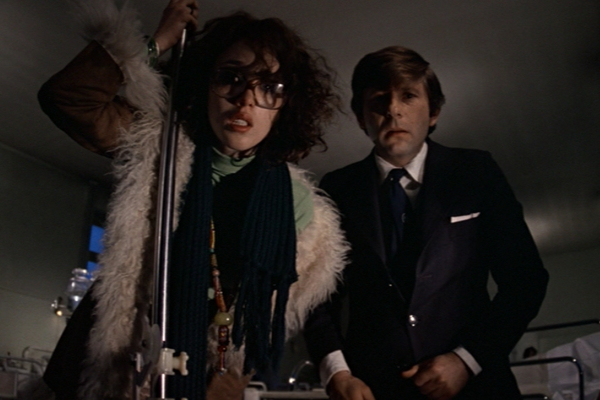
Again, not the maestro Roman Polanski's greatest film or performance (Chinatown is untouchable and his two tiny scenes in that movie are a perfect example of how to impact a film with less than three minutes of screen time), The Tenant, the third film in Polanski's Apartment Trilogy after Repulsion and Rosemary's Baby, is nevertheless a fine picture, led admirably by Polanski in his most significant acting role (he tends to stick to bit-parts, especially in his own work). Absolutely panned on release, The Tenant has since gone on to become a cult-favourite, the film continuing to climb Polanski's canon to the point where many, including me, now consider it to be one of his quintessential works - not quite up there with Chinatown or Rosemary's Baby or Knife In The Water, but certainly gaining ground. Steeped in classic Polanski tropes - urban paranoia, the slow descent into madness, Kakfaesque woe - The Tenant is too a technical achievement, with fantastic camerawork from Sven Nykvist (a regular DoP for Ingmar Bergman) and a haunting score from Philippe Sarde (a prolific composer who would later provide the music for Polanski's Tess).

5. Reds - Warren Beatty

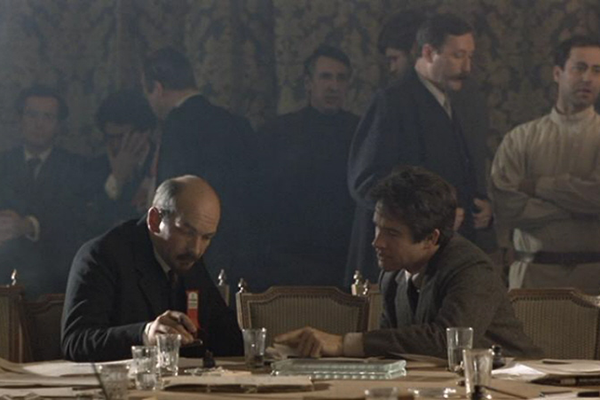
Warren Beatty was known for going all out. He didn't direct often (only six credits to his name), but, when he did, he went big, often producing, writing, directing and starring (he also didn't act as much as you might think for someone so renowned, with only 32 acting credits to his name) in his pictures. Biggest of all was this, Reds, his three-hour passion project, which was nominated for a whopping twelve Oscars back in 1982, with four (yep, four Oscar nominations all in one night) of those coming for Beatty himself (he won one, for Best Director). A huge, ambitious, epic film, Reds sees Beatty direct and star in the story of John Reed, the famed American Communist whose book, 10 Days That Shook The World, chronicled the Russian Revolution. A capital O opus if ever there was one, Beatty is the best he's ever been here - both behind the camera and in front of it - the film flying through history to show Reed progress (or is that regress?) from a charismatic young radical into a disillusioned Russian resident at odds with Bolshevism. The film, like any near 200-minute one, can be a bit of a slog, but when you add a colourful supporting cast (Jack Nicholson as playwright Eugene O'Neil, for instance) to Beatty's admirable, sterling ambition, you ultimately end up with one of the great films directed (and then some) by its lead actor.

4. Easy Rider - Dennis Hopper

A counterculture classic and one of the films (along with Bonnie and Clyde) that truly helped New Hollywood on its way, Easy Rider is a quintessential film, both for this list and just in general, with star Dennis Hopper truly announcing himself as one of the unique actors of the time, a man who just so happened to direct the goddamn thing as well - not bad for your first credit behind the camera. And though his directing career never quite took off (thanks in large part to the disaster that was The Last Movie, which Hopper directed immediately after Easy Rider), it remains that Hopper's one key contribution to the craft is a timeless, untouchable one. Sharing top-billing with co-star and friend, Peter Fonda, Hopper directs himself in what is one of the influential films, with the duo starring as a pair of counter-culture bikers who travel to New Orleans (from LA) in search of the ultimate trip: America. Brimming with classic moments - the Born to Be Wild introductory credit roll and the campfire scene, which introduced us to one Jack Nicholson, immediately jump to mind - Easy Rider's status is yet to really slip; it doubtful ever will.

3. Do The Right Thing - Spike Lee

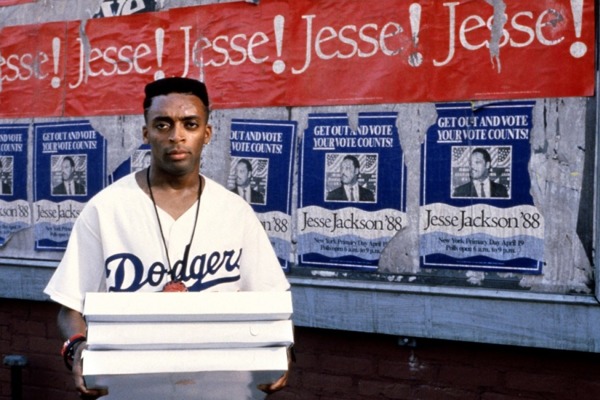
Incandescent with rage, inflammatory, searing and sweat-soaked, Spike Lee's Do The Right Thing is one of the greatest films made about race in America; part war-cry, part examination, and not to mention stylish as hell. Released in 1989, the film retains its power today, especially in an America currently undergoing one of its most significant black movements in decades. It's both brilliant and a shame that this film will never not feel prescient. One of two Lee masterpieces (25th Hour is the other), Do The Right Thing is also his most significant acting role, his Mookie the centre of the film, the character who we are tasked with deciding whether he did indeed do the Right Thing or not. That's no easy question to answer, and Lee's film is anything but simple in its quest for answers to questions about race relations on one excruciatingly hot summer's day in New York City. As a director Lee is deeply divisive, and it's true that for every Do The Right Thing there's a Clockers; however, when his undeniable talent isn't burdened by his own agenda, the results can be immaculate, a notion no better exemplified anywhere than here.

2. Citizen Kane - Orson Welles

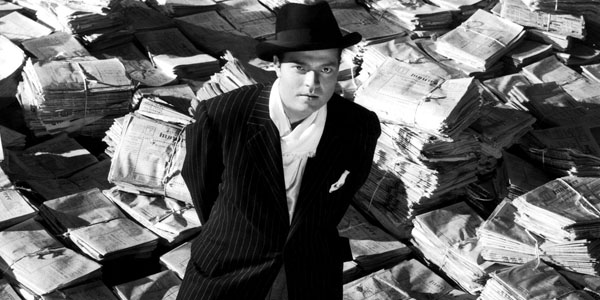
It's almost become a cliché that Citizen Kane should top any list that it features on, and certainly most people reading this article will assume that it would do so again. Undeniably one of the greatest films ever made (even if you outright don't like the film, you can't argue its capital G Greatness as a work of art) - and certainly one of the most influential, at least - Citizen Kane, no matter what anybody writes about it, is untouchable. Some things just are, and this just is. It comes second here only as a matter of personal enjoyment (nothing I write about it could ever alter its standing as a behemoth of cinema). Orson Welles' finest achievement in a film which he both directs and bills lead (otherwise his best performance is as Harry Lime in The Third Man), Citizen Kane is, as if you didn't already know, the story of Charles Foster Kane, the publishing tycoon holed up in Xanadu, his vast, lonely fortress; a man who can have anything in the world but ultimately only wants Rosebud, his childhood sled and cinema's most iconic MacGuffin. To continue with the clichés, there really isn't much you can write about Citizen Kane that hasn't been said before. It's the most studied, analysed film of all time. It is perhaps instructive, then, to tell you no more, to just let the film loom over this list like it looms over cinema; let it hang large like the oversized poster of Kane himself, which is too gargantuan for one man to ever bring down.

1. Unforgiven - Clint Eastwood

It's the great revisionist Western; a gorgeous, evocative, ultimately elegiac masterpiece; the film Clint Eastwood was born to make, both as a director and an actor, and Unforgiven, the greatest film of the 90s and many more a decade, tops this list as a consequence. Released in 1992, Unforgiven remains the pinnacle of Eastwood's career, easily his finest work behind the camera (it deservedly won him his first Oscar as Best Director), and definitely his best work in front of it, too, which is no mean feat when you consider just how many iconic characters - The Man With No Name; Dirty Harry - he's played. The story of William "Bill" Munny (Eastwood), a retired gunslinger who takes on the proverbial "one last job" with the help of an old friend (Morgan Freeman) and a young upstart (Jaimz Woolvett), Unforgiven transcends its standard synopsis to reach the upper echelons of cinema, a film that fuses the senseless violence of the Old West with something closer to an elegy. This is most obvious in the film's last phase, brilliantly described elsewhere as "Taxi Driver in Stetsons", which touches the great mystical disquiet of even Apocalypse Now's final passage to mark one of cinema's most eerily beautiful stretches of film, capping off a movie as close to perfect as you can get. What's your favourite movie directed by the lead actor? Share your pick down in the comments.

Contributor
Contributor

No-one I think is in my tree, I mean it must be high or low?