8 Cinematic Universes That Existed Before Marvel's

You weren't first, Tony.
Marvel's lists of successes is almost as long as the Avengers' of collateral damage: turning B-, C- and even D-list heroes into masthead names; showing ensemble team-ups can not only be done, but done well; making so much money even Tony Stark is jealous. But far and away the MCU's biggest success is in the masterful execution, and as a result widespread popularisation, of the cinematic universe. Everyone's getting in on the act - DC are giving their Extended Universe a jolt-start with Batman V Superman: Dawn Of Justice, Legendary are starting to build towards King Kong Vs. Godzilla, Transformers are throwing around the phrase shared universe as if people actually care about their plot and the new Star Wars saga appears to be as much about spin-off stories as it is the ongoing Episodes. The entire landscape of blockbuster cinema has changed and it's all thanks to Marvel. Well, kinda. Yes, the MCU has certainly popularised the idea of having movies take place in an interlocking continuity (something cribbed directly from the comics), but it was far from the first to do so. Not only were superhero crossovers rampant in the years and decades before Iron Man first shared a barb with Captain America, but there have been plenty of other franchises that actively built shared universes, either explicitly in homage to graphic novels or to otherwise have a bit more fun. For the sake of simplicity, let's define a "shared universe" as being a world inhabited by two or more separate sub-series, where movies exist independent of each other while still being in the same continuity.

8. Universal Monsters

One of the most "really?" of all of the MCU imitators that have risen up in recent years is Universal's attempt to create a massive shared universe for their classic monsters; Dracula Untold, the insipid Luke Evans dredge, had last minute changes made that placed the revisionist Vlad origin within a world full of bigger prophecies and convoluted mumbo jumbo intended to springboard into planned reboots of The Mummy and The Invisible Man. The thing is, it's not exactly fair to say Universal are simply stealing Marvel's idea. After all, it was these monsters who were the original big shared universe. You see, this new Universal Monsters, if it ever takes, will be a reboot of sorts. Back in the thirties and forties, Universal produced a buttload of classic horror films - Dracula, Frankenstein, The Wolf Man, The Invisible Man, The Mummy - and eventually had them cross over in several movies of mixed quality that mostly skirted on their then-novel gimmick. Due to various films sharing actors (Boris Karloff was Frankenstein's Monster, The Mummy and real life scientists Gustav Niemann; Bela Lugosi was Dracula and Frankenstein's Monster) and the sheer number of movies for each monster produced, the continuity is a mess, but in 1943, when Frankenstein Meets The Wolf Man was released, nobody was really keeping score. House Of Frankenstein, House Of Dracula and Abbott And Costello Meet Frankenstein all followed.

7. The Bongy Westphall Universe

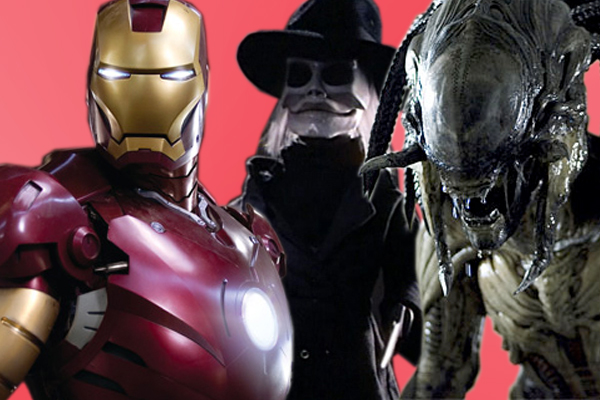
The Marvel Cinematic Universe is currently twelve movies strong, with another eleven set to be released between now and the end of the decade. That is a phenomenal number and one that, assuming the superhero train keeps its momentum, promises much more box office success in the future. However, it's far from unprecedented. In fact, at its current planned rate of three movies a year, Marvel will need to go to 2027 before they finally match The Bongy Westphall Universe. The what? OK, get ready for some "Wait, seriously?" stuff here. The Bongy Westphall Universe is a collection of several long running, direct-to-video horror C-movie franchises of varying notoriety that all exist in the same world thanks to a run of surreptitious crossovers. The main sub-series are Puppet Master (ten movies) and Trancers (seven movies), which are linked to other films through a bevy of the ususal versus showdowns. I say "are" because the last film came out as recently as 2013, meaning more adventures are certainly possible. The whole thing doesn't exactly have a strong fabric of reality, but there's something very interesting about the motivations for the series; like Marvel, the series was primarily motivated by a desire to replicate the comic continuity. It's not totally successful, with the pernickety construction led to fans likening it to another source; the umbrella series is named after Tommy Westphall, the kid revealed in the St. Elsewhere finale to have the entire show, and by nature of guest stars and shared episodes most of narrative TV, inside his head.

6. Tarantino's Multi-Layered Universe

You heard of that fan theory that all of Quentin Tarantino's movies exist in the same universe? Some of them (Reservoir Dogs, Pulp Fiction, Jackie Brown, Inglorious Basterds) are the primary universe, while others (Kill Bill, Death Proof) are movies-within-movies (where Django Unchained and The Hateful Eight fall is up to debate), but according to some they all form this alt-reality where violence and the N-word roam free. Well it ain't no poxy fan theory; the director has repeatedly stated that not only is this the case, but it has always been the intention. There's an interesting level of cohesion between the films; it's not oblique or constant, never going beyond a cheeky wink for movie obsessives, ensuring the focus is always on the movie at hand, yet there's obvious care taken to make sure things slot together, as if they're another layer to Tarantino's love of homaging his favourite movies (or, in the case of The Hateful Eight, himself). The key elements in making the shared universe explicit come from his early films - Mr. Blonde is Vincent Vega's brother and Kill Bill is the movie version of Mia Wallace's failed pilot Fox Force Five - but there's potential clues and elements hidden in the background of most (depending on how you read them).

5. View Askewniverse

While Tarantino had a bit of fun seeding clues only people like him would ever pick up on, his contemporary Kevin Smith went all in with the notion of a shared universe. A massive comic book fan, Smith was fascinated with bringing the idea of interlocking continuity across similar-yet-conventionally-unrelated titles to the big screen and with the View Askewniverse that's exactly what he did, albeit with his Gen X dramas rather than superheroes. Jumping off from his festival-storming breakout Clerks, Smith's first five films (and Clerks II) were all part of this wider world centred around New Jersey, linked primarily by Jay and Silent Bob, who appeared in all six movies. Fitting for the characters, there were several muddled connections - multiple castings and the like - which only strengthened the slacker stereotype Smith (and Silent Bob) purported to embody. The View Askewniverse is something only really held close by Smith fans, not helped by his odd change of direction in recent years, but nothing can escape the success of what he did; he managed to beat out Marvel by a whole decade (Bongy Westphall started earlier, but didn't start really leaning into the shared universe until later).

4. Blade Runner/Soldier

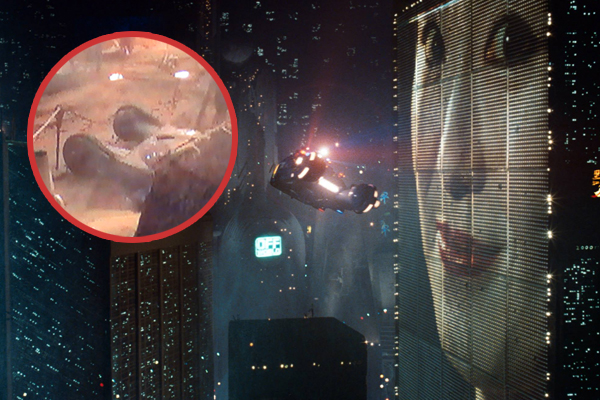
With only a few descriptive words and a suggestive Vangelis score, Blade Runner manages to make create a galactic landscape as fleshed out as any other world in sci-fi; Rutger Hauer's "Tears in Rain" soliloquy is a masterful, evocative speech that, among its many other elements of brilliance, plants in your head places like the Shoulder of Orion and the Tanhauser Gate, despite that being the only time we ever hear of them. Well, no quite. You see, Blade Runner isn't the only movie set in the universe of replicants and institutionalised origami. In 1998 Paul W. S. Anderson made a generic, incredibly forgettable sci-fi actioner starring an Escape From LA-era Kurt Russell that would be nothing more than a footnote by now if it wasn't for one key element: it features a spinner and references the Tannhauser Gate, placing it firmly in Blade Runner's world. The movies shared screenwriters (proving even masters aren't above inconsistency), and was conceived as a "spin-off sidequel", which is obscure enough a follow on to said to be building a wider world. That's not the only time Blade Runner's world has been potentially expanded. Promotional material for Prometheus also included references to the Tyrell Corporation, which would seem to displace Predator as the crossover franchise of choice for Alien, although given the timeline of those movies (Blade Runner is set in 2019), meaning this is likely just an easter egg. Although who knows what Blade Runner 2, due in 2018, will do to expand the universe.

3. Freddy Vs. Jason

One of the biggest problems with making a shared universe is continuity; in contrast to standard, linear franchises, crossovers require more thought than looking at the ending of the last one to make sure everything slots together. Unless, that is, you're bringing together two franchises that are so utterly inconsistent that their complete unsuitability ceases to matter. Each entry of the Friday The 13th seemed to regard anything previous with something approaching contempt; Jason aged decades in weeks and his deaths were habitually undone when the studio realised they wanted to make more movies (there were two more movies after The Final Friday). A Nightmare On Elm Street wasn't much better, leaving twist endings unresolved and skipping over whatever plot details made churning out increasingly-silly slashers a chore. And then there's the whole meta-busting of New Nightmare. All this meant that Freddy Vs. Jason is a bit of a mess as a crossover, as well as being a pretty cack horror movie. There's a continuation of various character threads, but the whole thing spins in whatever direction the writers felt on that day. So yeah, it's not a successful shared universe, but you have to admire the continuation of the Universal tradition. This was the last movie in these character's respective continuities, leading to incredibly po-faced reboots at the hands of Michael Bay.

2. Alien Vs. Predator

When does an easter egg become more than just an easter egg? When it becomes the basis for an entire subseries, that's when. In Predator 2, one of the skulls in the LA-ravaging Yautja's ship is from a xenomorph of Alien fame. Little more than a cool shout out to the comic that pitted the two properties against each other from a year earlier, it snowballed; with real, genuine movie endorsement the graphic novel franchise evolved into books and video games and, eventually, a full-on versus movie. Suddenly Alien (which already consisted of four tonally distinct films) and the more conventional action-sci-fi mash-up of Predator existed in the same world, with a convoluted backstory engineered that linked them and two (two!) rubbish movies pitting them together made. Perhaps the worst thing it did was torpedo what could have been an awesome Alien 5; Ridley Scott wanted to make a cerebral, quasi-origin story to Alien in the tailend of the nineties, but couldn't get it to fly due to Fox's insistence of the crossover. The whole thing amounted to a waste of time and is pretty much ignored by both now-separate franchises going forward (Scott's Alien 5 became Prometheus, which overwrote everything in the previous two movies), but there's no mistaking its importance in showing how two series could be brought together to financial success

1. X-Men

In all this excitement with Marvel and their Phases, we seem to have forgotten that they weren't the first superhero franchise to dip their toe in the notion of shared universes. That honour goes to X-Men (well, technically Superman had the Supergirl spin-off, but cohesion and purpose somewhat rule that one out), which kicked off the rise of modern superhero movies and then moved into world expanding territory, with a spin-off for Wolverine in production long before Iron Man hit. It certainly didn't have the same impact as the MCU, in part down to Origins: Wolverine being terrible, and they've still not really mastered it fully since, with Deadpool sitting neatly out of continuity and any other spin-offs shaky prospects. Heck, the only reason X-Men is still plodding forward owes a lot to the shot in the arm the MCU gave the genre, but there's no avoiding Fox were pushing in this expansive direction before Marvel were. Of course, there may be some overlap with Marvel here. The initial announcement that the comic company was moving into movies with in-house productions of their remaining comic book characters (the big names being mooted then were Captain America and Doctor Strange) that would all overlap somehow came in 2005, while the Wolverine prequel project began being talked about around the same time, meaning it could have been somewhat preempting the MCU. However, the fact X-Men was already set up means the still beat The Avengers to the punch (even if Origins came shortly after Iron Man and The Incredible Hulk). Did any other franchises crossover before the MCU got in the act? Share any we missed down in the comments.

Contributor
Contributor

Film Editor (2014-2016). Loves The Usual Suspects. Hates Transformers 2. Everything else lies somewhere in the middle. Once met the Chuckle Brothers.