8 Classic Movies That Were Released Unfinished
This film doesn't need a third act, does it?
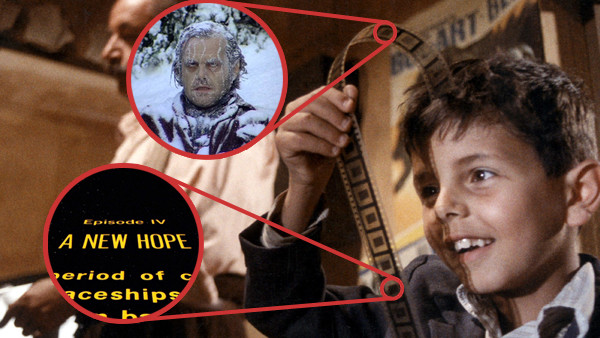
Art is never finished, only abandoned. At least, that's how it used to be; nowadays a movie is never finished simply because there's always scope to release another, indistinct version of it with a couple of added scenes or altered special effects. Yup, once the reserve of cinematic masterpieces, director's cuts are everywhere.
An R-rated version for Batman V Superman (which many for some reason hope will fix a bevy of systemic problems) was announced before the ill-fated movie hit and, while there's a lot of weight on that, it's actually common practice for a couple of violent scenes to be held back on nothing PG-13 action movies so they can have a gory, "unrated" home video release. You'd be hard pressed to find a recent release that doesn't have its own "Ultimate Version" (or whatever cack name the marketing brains have cooked up).
It's such a shame, because alternate cuts used to be so much more than that - rather than a cheap marketing tactic, they were a cinephile's holy grail; a hint at a possibly conflicted production and the promise of a completely different take on the material. In fact, there's many classic movies where the version that was first released in cinemas wasn't the finished version at all.
I'm not talking about latter-day director's cuts, where a few years down the line a filmmaker's gone back to their work just to put in some darlings they couldn't quite kill, but cases where the movie as originally made wasn't released in its proper form. Here's eight major examples.
8. Death Proof

Viewed in isolation, Death Proof is an incredibly odd movie, a mid-naughties blip in Tarantino's filmography between his name-making early works and revisionist-historical recent outings. Detailing little more than two sets of victims of Kurt Russell's Stuntman Mike, it's trashy, gory and incredibly inconsequential; it is, essentially, a B-Movie.
That's odd from ol' QT. All his movies have relished in homaging genre flicks, but they always transcended mere imitation somehow - this is just basic replication. And that's the point. Death Proof was one half of the Grindhouse double-feature experiment by Tarantino and Robert Rodriguez (who submitted Planet Terror), so was purposely trying to evoke classic low-budget action pictures.
To extend the joke, both directors purposely butchered their films to fit the double-B-feature conceit, with the proper versions only released afterwards; the full-length Death Proof wasn't seen properly until it reached international cinemas. A ballsy move, which makes it all the more a shame Grindhouse didn't really pay off on its pulp-y promise.
Which Version Is Better? The longer edit is more of a movie, but despite being mostly added dialogue, it's not the calibre you'd usually expect from Quentin The Wordsmith. Being honest, neither version of Death Proof is that remarkable.
7. The Shining

The end of The Shining is as confusing as it is haunting. Jack Torrence freezes to death after being trapped in the Overlook Hotel's maze by his quick-thinking son, then we cut to a slow zooms in on a photo of the July 4th Ball from 1921 with Jack himself front-and-centre. What? Has Jack's soul been taken by the hotel? Is it a comment on inevitability and fate? Did Kubrick even know what it meant? It's so enigmatic that WhatCulture's dissection of the final shot is still one of our most regularly-visited articles.
But that wasn't the original ending. The version of Stanley Kubrick's horror masterpiece/Stephen King bastardisation that was first released had another scene before the zoom where hotel manager Ullman visits Danny and Wendy in hospital as they recover from their ordeal, telling them Jack's body was never found and giving Danny a tennis ball identical to the one that led him in Room 237 and started (continued?) all the madness.
Which Version Is Better? We can't say as, in a highly-Kubrickian move, Kubrick had the scene physically removed from all copies of the film because test audiences were too confused - it was one weird turn too ready that destroyed much of the final shot's subtlety. That's right - Stanley Kubrick, that beacon of auteur theory, bowed to a test screening. All that remains of it now is a couple of stills (although I still hold out hope someone will find a copy in their attic one day).
6. Star Wars

When you think of claims of Star Wars being released "unfinished", you think of George Lucas' desperate attempts to justify his increasingly-ruinous alterations to his classics. Now, in his defence, part of that thinking is justified - in 1977 Star Wars' effects were pioneering, but there's plenty of flubs and a general feeling on compromise in some of the choices, so you can see why the perfectionist would want to return and fix things - although I don't buy for a second that Lucas originally intended for Greedo to shoot at all.
However, I'm not talking about the Special Editions here, because, quite simply, they don't count: Star Wars may not have been perfect, but it was finished by 1997.
Instead, I'm looking fifteen years earlier to the one key element of Star Wars the movie feels incomplete without - the Episode title. Because calling something Number 4 makes it sound like the fourth in a series (obviously), Fox were incredibly hesitant to let the director subtitle his movie Episode IV in the opening crawl (a homage to the movie's Flash Gordon serial origins). In fact, they only allowe the addition for the 1981 re-release after the franchise was already a bona fide hit and Episode V had done it to minimal financial impact.
Which Version Is Better? It's two lines of text in crawl, so doesn't really have much of an impact on the experience of the film, but in terms of the wider franchise it kinda does; called A New Hope, Star Wars fits better as an entry in a wider epic, rather than a single movie that led to a rather different franchise. You still won't catch me calling it Episode IV though.
5. The Magnificent Ambersons

Well, of course, it was going to be on here at some point. I didn't actually want to include The Magnificent Ambersons, because it is such an obvious case of this and has a rather bitter ending, but it's too interesting to not discuss.
Orson Welles follow-up to his moderately-liked Citizen Kane was a drama charting the decline of an aristocratic family in the early 20th Century that reveals a horror behind the phrase "we'll get it in the edit". The film original ran about 140 minutes, but kept getting mixed responses from test audiences. Welles kept reigning it in, but was eventually overpowered by RKO, who chopped it down to a lean 88 minutes.
That's almost a third of the film exorcised with a single snip. And it's not like it was just filler either - the entire third act is different, with the story's resolution a little less intense.
Which Version Is Better? Well, the point of it is we don't know. I'm willing to bet that Welles' complete vision was a sight to behold, although that may be the most curious thing about all this - watched in isolation from the troubled production, the cut of Ambersons we have works. The ending the studio forced isn't bad and there's still the great family dynamic and troubled subtext.
4. The Hobbit

After the success of The Lord Of The Rings, Peter Jackson famously went back to his reams of content from the New Zealand shoot and produced some arse-punishing cuts of the trilogy that are now widely regarded (at least in book-fan circles) as the definitive screen versions of the tome. I can't in all good conscience include these, because, while the Extended Editions were made from footage shot initially, they were motivated by the success of the films and thus qualify instead as post-release director's cuts. The same is not true of The Hobbit.
Knowing Middle-Earth fans were more than happy to double-dip, Peter Jackson explicitly made The Hobbit incomplete, with twenty minutes or so cut from each complete film saved for their own Extended Editions. It's not little things either - there's entire plot turns that only make sense with the added scenes. He'd have gotten away with it too, if people had given up on the prequel enterprise by the time The Battle Of The Five Armies came along.
Which Version Is Better? It sounds perverse given how stretched Tolkien's children's book already was, but making The Hobbit longer actually improves it. There's a greater sense of the world and a variance to the pacing that makes the whole thing (especially An Unexpected Journey) much more palatable - think of it as a ten-episode TV series. Still not that great though.
3. Once Upon A Time In America

Once Upon A Time In America is a masterpiece, a giant pillar of serious post-New Hollywood cinema that only improves with age, sadly overshadowed in both the gangster genre by The Godfather and the pantheon of Sergio Leone by Once Upon A Time In The West.
The defining version of the film is 229 minutes long, but because almost four hours is a hard sell, almost an hour and a half was cut for its international release, with the non-chronological story removed, a greater focus on the De Niro segments and a general loss of everything that made the meditative film so great.
However, that four hour cut was only part of it; Leone's original version had been 269 minutes long, which he himself cut (making the 229 minute version still his vision). Thanks to careful deleted scene hunters, those removed 40 minutes have been found, although haven't been put together into an officially released version yet..
Which Version Is Better? The shorted version is a mess and only really recommendable to serious cinema fans and film historians - because of the order alteration, the story is full of holes and it lacks so much of the character nuance that makes the full movie work. Don't get in between a master and his art.
2. Cinema Paradiso

A story told mostly in flashback with a modern-day epilogue, Cinema Paradiso is structured very similar to Once Upon A Time In America, and also deals with similar themes of recollecting on childhood. In less-happy parallel, they were both also heavily cut to make them more palatable.
The big difference between the two is that while Leone had to sit by as Once Upon A Time... was ruined (he didn't have a hand in the 139 minute version), director Giuseppe Tornatore oversaw Paradiso's reduction from 155 minutes to 123 for its international release (the longer one only was shown in its native Italy), meaning what was there was complete and still fit his original vision. In fact, he later revealed he preferred this second cut, a rare case of the art actively developing after it was first unveiled.
After the shorter version became an incomparable hit (and rightly so - it's one of the most evocative films ever made), this original cut was lost forever, although we can figure out what was broadly in it from a longer, more traditional director's cut released over a decade later.
Which Version Is Better? Assuming the original version was similar to the director's cut, this one's incredibly debatable. Unlike other examples on this list, an entire third act reveal has been removed, meaning we're essentially talking about two films with similar themes, but different explorations; the shorter one is all about regretful nostalgia, while the longer furthers that with a failed attempt to regain the past. I'd go with the shorter one, just because there's something more true about it.
1. Blade Runner

Blade Runner is the king of the alternate version. Officially there's seven versions of the film, although for the sake of simplicity there's only really three that are essential; the 1982 theatrical release (of which the other cuts are variations of), the 1992 Director's Cut and the 2007 Final Cut.
Because the film was very different to what contemporary audiences were used to from sci-fi - an advancement of the likes of 2001 and the early-seventies reflective ilk, rather than being in the same vein as the more visceral Star Wars and Alien - test audiences did not like it much at all, so a very kneeling version was released, with an added voice-over and tacked on happy drive ending.
Despite these poor elements, the film became a cult hit, to the point where Ridley Scott was eventually able to do away with the studio-mandated changes and, across 10th and 25th Anniversary releases, finally got his original vision realised.
Which Version Is Better? No argument here. The voiceover is dry and the various happy endings are all ridiculous, while the unicorn dream is movie-expanding. The Final Cut is the pinnacle of the sci-fi genre, so it was worth the wait.
Which other movies were released unfinished? Share any more down in the comments.