8 Common Mistakes That Spoil Every Comic Book Movie
 In case you didn't know, comic book movies are the coolest thing ever now, and if you think otherwise, well... how dare you have an opinion that's not shared by the majority of the human population! Yep, good comic book movies have been entertaining us for almost a decade, and are now Hollywood's go-to thing if they want to make a lot of money. Both The Avengers and Iron Man 3 recently become the third and fifth highest-grossing films of all-time respectively, which is a feat when you consider most people who went to see them don't really read comics. Still, it's almost as if the studios are holding back: comic book movies still seem to be making the same old mistakes, over and over again, which means that - with every new release - they risk boring us. I'm not saying today's comic book movies are in any way terrible, but the majority of them continue to cling to the same old narrative tropes. When Christopher Nolan made The Dark Knight, it felt bold. Nowadays, the output seems a little... safe. Why? Well, mainly because filmmakers are scared to step into the unknown, to stop making movies from that "template." Here are 8 common mistakes that are spoiling the majority - if not all - of today's comic books movies. And please: before you scramble for the comments section in a flurry so that you can tell me "how it really is," I'd like to say that I like most of the movies I mention in this article; it's just that, after being exposed to so many comic book flicks in such a short space of time over the past few years or so, you begin to see where they're collectively going wrong. Onwards, then...
8. Naff Love Stories

7. Uninteresting Villains
 The other day, I read an article that basically set out to say that Marvel are continually screwing up in villain department when it comes to their Cinematic Universe, and I thought: "Pah!" No way! They're doing great!" But then I actually thought about what that meant, and realised that this person was completely right. Aside from Loki, who Marvel obviously realise is their winning "villain," the bad guy line-up has been sorely lacking of late. Occasionally we get a villain with a bit of charisma, or a dilemma we can sympathise with, but it's not often enough. Iron Man 3? The Mandarin could have been great, but you know what happened with that, and we were treated to a generic bad guy in Guy Pearce's Aldrich Killian instead. Thor: The Dark World? Just about the most boring enemy ever conceived with that one. How about The Wolverine? Nothing memorable about the villain in that movie, either. Sure, there are exceptions: Bane, - no Joker, of course - is still heads and tails about the rest when it comes to being "bad," but the only real success story as of late has been Man of Steel's Zod. He had a personality, and motivations that we could identify with (even if we didn't agree with them in any way). Fact is, a lot of filmmakers seem to keep forgetting that they need to take risks with their villains - show us something fresh and new, and don't give us bad guys with the depth of a Scooby-Doo "baddie of the week" (which pretty much sums up Thor: The Dark World's Malekith down to a T). In most blockbusters and especially in superhero films, the villain usually drives the plot: it's seriously necessary that we're captivated by such characters.
6. Too Much Inter-Referencing
 I never thought I'd say this, but the Marvel Cinematic Universe stuff is beginning to struggle under its own weight and it's becoming difficult to watch movies in the canon as a result. And trust me: you won't find anybody else out there who gets quite as giddy at subtle inter-references, characters showing up in other movies, and meta-gags as I do, but the Universe is beginning to feel a little strained, caught between trying to make every moment an "individual" entity, whilst still trying to appease those who crave nods to the MCU. Case in point: Thor: The Dark World feels static and almost lifeless, because it knows it can't really be a movie in its own right - it has to play ball with the other movies in the MCU canon, which - when you think about it - is a totally bizarre way to make a film. When we first got a glimpse of Tony Stark chatting with Nick Fury about the Avengers in that post-credits sequence, it was exciting - but now there's so much emphasis on trying to build up to the next "mega movie" (i.e The Avengers 2: Age of Ultron) that the singular entries just feel like personality-less placeholders. In a weird way, pretty much all comic book movies have become about "the next one" - filmmakers (or more likely the producers) are so fixed on what they're setting up for the next billion dollar flick, that there isn't enough of an emphasis on each movie as standalone story. It used to be great fun; now it feels like added pressure.
5. Repeating Things We've Already Seen
 I'm a firm believer in: if we've seen it already, do we need to see it all over again? That's to say, how many times can we watch the same origin story told with different actors and a few varying elements? It's fine on occassion, especially if people are unfamiliar with a certain property or character, but generally speaking, if we have an origin story down in a comic book, or in another film, why can't we move into bold, new territories? When Marc Webb delivered his Spider-Man reboot last year, everyone complained that it was a re-hash of Sam Raimi's film from back in 2002: and they were right. It almost felt like: "What was the point?" And the fact that so many people came out of the theatre clinging to this opinion means that lots of us are tired of seeing the same narratives being spun over and over again. There are so many individual stories to be told (some that haven't even been written yet), and filmmakers need to be far braver about the ways in which they tackle comic book adaptations - especially those that we've seen adapted before. How many times do we need to see Spider-Man bitten by a spider, for example? Where's the fun in seeing Bruce Wayne's parents being gunned down another time? Taking their cues from Man of Steel, then, which is really shaking things up with a Batman Vs. Superman story - one we've never on the big screen, mind - filmmakers should try to approach established material in ways that are innovative and daring. When in comes to comic book movies, what's worse than feeling like you've seen it all before? Think on the best comic book movies: they all took risks.
4. Trying To Incorporate Too Much
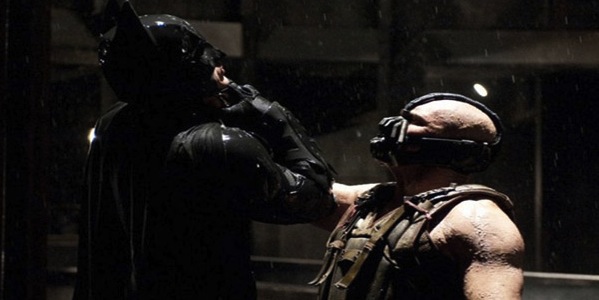 The worst thing about any "bloated" movie is that - even if the sum of its parts are rather good - you're unable to really enjoy any of them because there's not enough time spent with each part. So when a comic book attempts to ham-fist more narrative than it can manage into a single movie, the resulting feeling is like that of charging into a sweet shop, looking around in amazement at everything in sight, before slipping over, hitting your head on the floor, and coming round in an alleyway outside with the creepy manager leaning over you with his pants down. Sorry to put such a horrific image in your head, but you get my point. The recent Iron Man 3 suffered from what I would call a "plot overload" - eventually you had to stop listening to what was being said, because it started to make no sense. And then there's The Dark Knight Rises, which felt so bombastic from start to finish that it almost hurt to watch: there were way too many unnecessary scenes, characters, action scenes... everything felt like it had been thrown into the pot to try and please absolutely every type of person, and the movie just ended up feeling tepid as a result. Next year's The Amazing Spider-Man 2 is rumoured to feature three villains, which begs the question: did they learn nothing from the tragedy that was Spider-Man 3? At least they took Mary-Jane Watson out of the equation, which should free up a little space, but there's something uncomfortable about the weight hanging onto that movie anyway. As fans, we obviously understand a filmmaker's drive to include as much good stuff as possible (who knows when they might get another chance?), but there's a limit. Less it better, right? It's always the way.
3. The Godawful MacGuffins
 When I realised that the plot of Thor: The Dark World was based around another MacGuffin, I threw my head back and laughed: didn't we just go through this sh*t with the Avengers? The Tesseract, as a concept, is uninteresting enough, but to pretty much have exactly the same "world-ending, ultimate power" in The Dark Word's mysterious Aether... well, that's just a step too far. One incredibly boring MacGuffin I can take: two is almost insulting. "What's wrong with these ancient artifacts of power?" you ask. "They're just there to drive the action!" Well, precisely, but the inherent problem of using these super-powered objects as narrative guides is that they mean nothing: just colourful-looking objects that we - as human beings - have no relationship or connection to. We can't even visualise what an "ultimate power" is, let alone get behind a villain who's spending an entire movie trying to nab one. Fact is, these MacGuffins are lazy storytelling devices, which is why they feature so heavily in - yes - the comic books. With so many stories to think up, week after week, you can forgive a comic book writer for throwing in items like the Tesseract and the Aether - after a while, it doesn't matter. But at least when a villain tries to steal a nuclear weapon in a cheesy action film we know the cost: being blown up by a bomb is something we can relate it in a real world sense (more than with a box of light and a floating red vapour thing, anyway).
2. Not Setting The Ground Rules Properly
 This is a "common mistake" that is way more applicable to the movies in the Marvel Cinematic Universe, but other comic book movies aren't entirely innocent. That's to say, the Marvel Cinematic Universe, vast and impressive at it undoubtably is, doesn't really play fair with its audience: it changes the rules all the time whenever it suits the story, granting its characters with new powers and abilities from one movie to the next. And although we kind of allow the filmmakers a certain amount of poetic license to do such a thing, it can occasionally get really, really frustrating. Loki's abilities, for example, are different every time we see him - he's either more powerful, or less powerful, or he can control people entirely, then he can't, and now he has the ability to take on anybody's identity... it's all a little too casual and vague, as if the producers aren't too bothered about keeping a constant. Another example concerns Loki's brother, Thor: how powerful is Thor? How do we know what's hurting him and what's not? It's never established. And though it might seem petty to complain about that specifically, it's hard to get invested in a character if we don't know how to weigh his injuries. I literally have no idea how much damage Thor can take. Can he even get hurt? The biggest and most frustrating moment in this regard - for most of us, anyway - came in The Avengers, where Bruce Banner suddenly revealed that he was "always angry" during the climatic final battle, which was basically writer/director Joss Whedon's way of having the Hulk team-up with the rest of the gang for a while without trying to murder them all. Fine. But the simple fact remains: this wasn't really explained in enough detail, and whether or not audiences missed the point or not regarding the ins-and-outs of the Hulk's transformations, it wasn't properly explained. "If he's made angry, he'll transform by accident, but he can also become the Hulk whenever he wants, too!" was the most common explanation for all this from Marvel fans, and though that makes sense if you think about long and hard enough, you can understand how audiences might have deemed that as something of a cop-out. What I'm asking, then? That Marvel make it a little clearer, inside of being purposely vague as a way of trying to please everyone. Because that's what it ultimately comes down to: don't rock the boat too hard, and let's watch this movie make a billion dollars.
1. Uninspired Action Scenes
 This is the killer. This is something that I genuinely can't believe so many comic book movies are getting wrong, but lo and behold... it's a frequent occurrence, and one that's easy to forget about when you've finished watch the flicks, purely because... well, it's a forgettable attribute. Think about it, though: how many individual action scenes can you remember from the likes of Thor: The Dark World or The Amazing Spider-Man 2? What about The Dark Knight Rises or Captain America: The First Avenger? Man of Steel? Don't all the action scenes kind of... blend into one? Now compare that to the likes of Raiders of the Lost Ark, or Star Wars. You can remember every individual action sequence, can't you, purely on the basis that they were so different and unique and brilliantly devised? Much of the action inherent to recent comic books movie feels a lot like (and I hate to say it) filler. There was nothing special or memorable about the battles in recent Marvel venture Thor: The Dark World - they just came and went: there was no sense of awe or wonder or excitement. Same goes for Man of Steel. It probably doesn't help that these guys are superheroes, and Indy was a regular human being, but there's something wrong with set-pieces nowadays: they aren't really even set-pieces. Like this article? Agree or disagree? Let us know in the comments section below.