Sometimes, I feel as if Walt Disney and his famous studios had as much of a hand in raising me as my parents did. I'm sure many of you feel the same way. After all, Walt Disney and the production company has produced more movies for children than all the other major studios all put together. It's likely that the first movie that most of us saw was a Disney flick. Most of us have memories of our first viewings of at least one Disney film (for me, my strongest is my first experience in a movie theater, going to see The Lion King when I was four years old). When we reminisce about our favorite Disney flicks, it's usually the acknowledged classics that dominate our discussions. Said classics include such films as Cinderella, Aladdin, Pinocchio, Sleeping Beauty, Lady And The Tramp, and Beauty And The Beast, not to mention the mother of all animated films, Snow White And The Seven Dwarfs. And that's just the animated flicks; Walt Disney Pictures also produced a vast number of fondly-remembered live-action flicks, such as Old Yeller, The Parent Trap, Homeward Bound: The Incredible Journey, and so on. However, even though all those classics deserve all the attention that they get, there are many equally good Disney flicks that have been shafted. For one reason or another, they haven't gotten the attention that the aforementioned films have. It's not because they're lacking in quality; rather, it's generally because the studio didn't believe in the film. As much as we hate to admit it, studio marketing plays a huge part in how we think of a film, and Disney's sketchy marketing for these films guaranteed that they would be forgotten as years went by. This article will discuss eight Disney flicks that deserve more attention than they get.
8. Tron (1982)
Disney's 1982 flick Tron is unique in that it walks the line between "forgotten" and "beloved." It's remembered, but not for all the reasons that it should be. More on that in a moment. Tron's story revolves around Kevin Flynn (Jeff Bridges), a computer programmer who's trying to hack into the computer system of ENCOM, the company he used to work for. Flynn's searching for proof that Ed Dillinger (David Warner), the head of ENCOM, has stolen the ideas for the video games that put ENCOM on the map. Flynn's efforts are thwarted, however, by the Master Control Program that Dillinger has created. Eventually, the Master Control Program becomes tired of Flynn and beams Flynn into the computer. Master Control sends Flynn to the "Game Grid" and forces Flynn to compete in gladiatorial-style games against programs that Master Control has deemed obsolete. Flynn is at an advantage, however, having written the code for the games that Master Control uses. Flynn uses this advantage to escape the Game Grid. Flynn then teams up with Tron (Bruce Boxleitner), a security program, to bring down Master Control. Steven Lisberger, the director of Tron, had been fiddling with the idea of making a computer-animated film for a long time. In the mid-1970s, he and his animation company had put together a 30-second test reel of a backlit, computer-animated superhero. Lisberger states that he and his fellow animators felt that the character looked like he was made of electricity, so they named him Tron. Lisberger Studios eventually sold the test reel to several rock radio stations (for use as a TV commercial), but Lisberger and his animators continued to make plans to make a full-length feature film revolving around Tron. Finally, in 1980, Lisberger pitched the idea of a Tron film to Walt Disney Pictures, who accepted the project. Two years later, the finished film graced movie theater screens. As I said earlier, the film is remembered, but more as a technical achievement than anything else. Tron is acknowledged as being a (to quote the DVD case) "milestone in the history of computer animation," and it certainly is. However, it's also an entertaining film. Tron has a well-constructed plot and it's populated with characters that we care about. Tron has more merit than we tend to give it credit for.
7. The Many Adventures Of Winnie The Pooh (1977)
In the mid-1960s, Walt Disney Pictures acquired the film rights to A.A. Milne's Winnie-the-Pooh stories and their stable of characters. Disney animators went to work on said stories, taking one story at a time and producing half-hour animated featurettes. Walt lived to see only one of the featurettes (Winnie The Pooh And The Honey Tree) completed. Disney continued to produce Pooh featurettes, however, releasing two more in the eight years following Walt's death (namely, Winnie The Pooh And The Blustery Day & Winnie The Pooh And Tigger Too). By the time Winnie The Pooh & Tigger Too was released in 1974, Walt Disney Pictures was in dire straits. The studio hadn't had a big success since The Jungle Book in 1967. The animated films following The Jungle Book had made some money, but were generally considered to be lacking in "Disney magic" and weren't financially lucrative enough to keep the studio afloat. It was during this period that Disney studio execs thought about the Pooh shorts. The featurettes had been critically hailed upon release, being called some of the finest animated shorts ever produced. The studio saw a chance to cash in on the featurettes' success by tying them into one film. The execs called in the voice talent who had worked on the earlier films to do extra voice work, while the animators produced wrap-around bits to insert between the featurettes. The resulting film, The Many Adventures Of Winnie The Pooh, is one of the warmest films to ever come out of Hollywood. All of the characters are likable, the segments are well-written, and the animation is smooth and rich. The film deserved all the financial success it received (and it received quite a bit), and it deserves more attention that it has been receiving in recent years.
6. Bridge To Terabithia (2007)
There are some childhood loves that you outgrow, and then there are the ones that you carry with you forever. In my case, one of those latter loves is for melodramatic young-adult novels. Ever since my boyhood days, when I was (probably) the only boy in the world to devour Judy Blume novels, I've loved YA novels that revolve around young tweens and/or teenagers dealing with huge emotional events. Given that background, it shouldn't be a surprise that Katherine Paterson's 1977 novel Bridge To Terabithia is one of my favorite books. At first glance, the book tells a simple story: that of a friendship between a young boy (Jess Aarons) and a young girl (Leslie Burke), how said friendship grew as they created the imaginary world of Terabithia together, and how the friendship came to a tragic end. However, through that simple story, Katherine Paterson discusses many themes, including friendship, relationships with parents, the power of the imagination, and mortality. On top of that, the whole book is pervaded with a melancholy atmosphere that is distinctly '70s, something that all good YA fiction of the decade boasts. I have no idea why it took Disney so long to make a film adaptation of Bridge To Terabithia. Reading the book, one can see it fitting into the mold of the '70s-era live-action Disney flicks. At any rate, Disney eventually made a film version of the book in 2007, starring Josh Hutcherson, AnnaSophia Robb, and Zooey Deschanel. The film version of Bridge To Terabithia is a rarity among film adaptations: it's just as good as the book. The film captures the same melancholy atmosphere that characterizes the book. The book never specifies the setting, but the filmmakers provided us with a lush farmland-and-forest backdrop, the only sort of setting that the story could play out against. Every actor delivers a stellar performance, and the screenplay does a fine job of adapting the book; the script stays true to the essence of the story, while making the changes needed to make the story cinematic. While Bridge To Terabithia does have a strong cult following, it hasn't gotten the attention it deserves. If you like a good, afterschool- special-esque story ("afterschool-special-esque" is meant as a compliment), this flick is for you.
5. The Rescuers (1977)
As we've mentioned before, Walt Disney Pictures' financial and creative quality took a nosedive after Walt's death. This was particularly true when it came to animation; the work had become shoddy and cliched (look at the dance sequences in The Aristocats and Robin Hood and you'll find that they're exactly the same). Critics and audiences took notice, and graced the film with lukewarm reviews and diminishing returns. The Disney animators bounced out of their slump with 1977's The Rescuers. In 1973, Disney executives discovered that Walt had acquired the film options to Margery Sharp's Rescuers novels. Said novels revolved around the Rescue Aid Society, an organization, made up of mice, who took on missions to rescue people in distress. The Disney execs took characters from the first novel, combined them with the plot of the second, and they had their screenplay. The execs turned the script over to the animators and told them to make something of it. The group of animators included both the surviving members of Walt's original animation team (affectionately known as the "Nine Old Men") and a group of recently-hired young animators. This team's work is an example of animation at its best. The colors are rich, the drawings are intricately detailed, and, above all, they all contain that magic that comes with watching hand-drawn animation. Said magic is a hard thing to define, but the roughness that's inherent in even the best hand-drawn animation lends films like The Rescuers a charm that's lost in computer-animation. But I digress. Anyway, The Rescuers boasts both a strong script and beautiful animation. The story unfolds in an intelligent way; indeed, one of the things that keeps the film entertaining, even as we grow older, is the fact that the screenwriters didn't dumb down the plot. Rather, the plot unfolds in a standard mystery form, as Bernard (Bob Newhart) and Miss Bianca (Eve Arden) track down clues and uncover the mystery behind the disappearance of young Penny (Michelle Stacy) piece by piece. The film is a landmark of post-Walt Disney-studio animation. Audiences and critics noticed the increase in quality and gifted the film with shining reviews and the best financial returns that Disney studios had seen in over a decade. It deserves a lot more attention than it's been getting.
4. Escape To Witch Mountain (1975)
Although Disney animation was floundering in the early-t0-mid 1970s, Disney studios' live-action films were enjoying a fair amount of success. Disney's live-action department were enjoying a fruitful collaboration with young Kurt Russell, releasing such films as The Computer Wore Tennis Shoes and The Barefoot Executive. All of the Russell films were successful, which gave Disney the means to make other live-action films. The best film of Disney's '70s live-action period is Escape To Witch Mountain, director John Hough's adaptation of Alexander Key's 1968 novel. The movie's plot revolves around Tony Malone (Ike Eisenmann) and his sister, Tia (Kim Richards), who are placed in an orphanage after their parents die in an accident. Tony and Tia have trouble fitting in with their peers, due primarily to the fact that the two possess psionic powers (Tia is telepathic, mildly telekinetic, and has the power of precognition, while Tony can move stuff with his harmonica music). Tia is troubled by fragmented visions of a boating accident that took place when they were very young. Tia discovers that the man that she sees in her visions is her and Tony's uncle Bene (pronounced Ben-ay). This realization coincides with Tia opening a mysterious box that she's had since childhood, finding a map inside. The map leads to a large mountain, known as "Witch Mountain" to the locals. The children set off on a quest to Witch Mountain. However, Aristotle Bolt (Ray Milland), the occult-obsessed millionaire who has "adopted" the children, gives chase, assisted by his henchmen Ubermann (Lawrence Montaigne) and Deranian (Donald Pleasance). During the course of their quest, Tony & Tia hide in the RV of Jason O'Day (Eddie Albert), a widowed man who's been roaming the country. O'Day's heart is warmed by Tony and Tia, and he eventually agrees to help Tony & Tia reach Witch Mountain. Escape To Witch Mountain's plot sounds silly when it's written down, but it works on-screen. The quality of the film is due to two elements: the special effects and the acting. The special effects are pretty shoddy by today's standards, but that's to be expected from a film made in the mid-1970s. The effects in the film work well enough, however, that it's possible to suspend one's disbelief. In fact, the best special-effects scenes look like they could have been done yesterday. The element that really saves Escape From Witch Mountain from oblivion, however, is the acting. Eddie Albert does a fantastic job as Jason O'Day. Albert perfectly balances the two sides of O'Day, said sides being "embittered widower" and "kind-hearted do-gooder," saving the character from becoming a one-note "good guy." Ray Milland does a lot of scenery-chewing during his portrayal of Aristotle Bolt, but scenery-chewing is the only effective way to play a Disney villain. The two kids do as well as any child actor could do with the cardboard characters the script gave them. Donald Pleasance is wonderful as Deranian, but he's always wonderful. Escape To Witch Mountain gets a little bit of attention today, but not as much as it deserves. I imagine that it's because most people like to think that Walt Disney Pictures churns out nothing but syrupy-sweet family flicks and doesn't think about making anything that even touches on darker subjects. Such a stigma has ensured that Escape To Witch Mountain will never get the attention it deserves. However, it doesn't diminish the quality the film.
3. The Great Mouse Detective (1986)
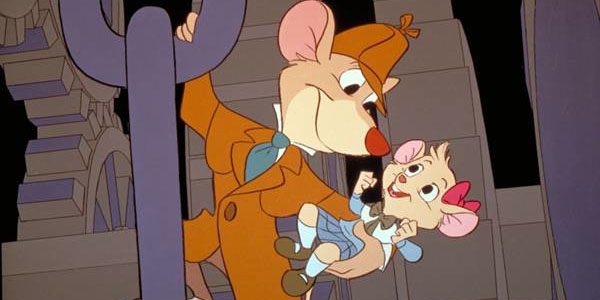
As we've discussed earlier in this article, The Rescuers was a lifesaver for Walt Disney Animation after almost a decade of not-so-great films. The success of The Rescuers, however, brought a lot of attention from rival companies. Said attention led to a series of attempted corporate takeovers. Sid Bass & Roy E. Disney, the chief shareholders at the studio, decided that they needed some fresh power in the front office to hold off these takeover attempts. With this goal in mind, Bass & Disney created a new executive crew to head up Walt Disney Pictures. This crew consisted of Michael Eisner & Jeffrey Katzenberg, who had just come off of a successful streak of films at Paramount Pictures (a streak that included 48 Hrs., Terms Of Endearment, Grease, and Airplane!). Frank Wells was lured from his cushy position at Warner Bros. to join the Disney crew. Eisner, Katzenberg, and Wells had no real interest in the animation program, but something had to be done with it. The three new executives decided that the only way that animated films would remain profitable would be if they turned to edgier material. The first animated film under the new regime was The Black Cauldron, one of the biggest flops in film history. After the failure of The Black Cauldron, Eisner, Katzenberg, and Wells turned to their team of animators to see if they had any ideas for their next film. This film would have a lot riding on it; if the next Disney animated film flopped, the new executives would dissolve Walt Disney Animation. It was during this time that John Musker and Ron Clements stepped up with the idea of adapting Eve Titus' book Basil Of Baker Street. Fortunately for Disney Animation, The Great Mouse Detective is a wonderful film. The film is the second animated film to use computer technology to enhance its animation (particularly during the climactic fight among the gears of Big Ben; the computer-assisted animation lends the sequence a slick feel that works well). The performances are all serviceable, but Vincent Price (as villain Professor Ratigan) rises above all the rest; he chews the scenery so enthusiastically that it's easy to tell that Price had a good time with the part. The screenplay, however, is where The Great Mouse Detective really shines. The film doesn't attempt to "dumb down" the mystery aspects of the plot; rather, it builds suspense by introducing us to each clue ambiguously. As a result, we're on the edge of our seats as Basil reveals the importance of each clue. We're equally enthralled as Basil and his partner Dawson follow each clue's lead, eventually arriving at the final duel with Ratigan. The film was a critical success and made a profit at the box office, saving Walt Disney Animation from oblivion. However, the film has descended into relative obscurity despite its critical and financial success. That's really a shame, because The Great Mouse Detective is a very well-made animated film, the one that paved the way for such hits as The Little Mermaid, Beauty And The Beast, and Aladdin.
2. Something Wicked This Way Comes (1983)
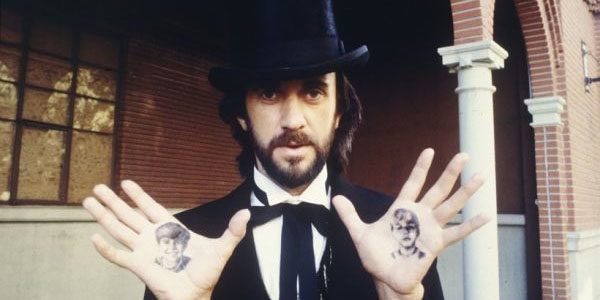
Eisner, Katzenberg, & Wells get the lion's share of the credit for making Disney into the juggernaut it is today. They deserve all the credit they get; they changed Walt Disney Pictures in so many ways. However, I think it's safe to assume that Walt Disney Pictures would have evolved and survived without Eisner, Katzenberg, & Wells' assistance. The proof? They were already starting to do so when the trio of executives showed up. The strongest example of Disney's attempted evolution is their dabblings in the horror genre. In 1980, Disney released The Watcher In The Woods, the studio's first venture into horror. The film was a source of contention in the studio, due to re-editing that muddled the storyline and a rushed release that left the special effects unfinished. The Watcher In The Woods disappeared from theaters quickly, having failed to recoup its costs. Disney, however, wasn't about to give up on horror; soon after The Watcher In The Woods was released, the studio bought the film rights to Ray Bradbury's 1962 novel Something Wicked This Way Comes, a book considered to be one of the finest horror novels of the twentieth century. Ray Bradbury had been trying to get a film version of Something Wicked This Way Comes going for some time. Famed dancer/actor/director Gene Kelly had planned to make the film, but eventually backed out of the project. Bradbury and Sam Peckinpah had written an adaptation for Peckinpah to direct, but Peckinpah wasn't able to get funding for the project. Finally, Bradbury and director Jack Clayton came together and wrote another adaptation. The latter adaptation was the one that Disney accepted. The film's plot revolves around Jim Nightshade (Shawn Carson) and Will Halloway (Vidal Peterson), two young boys growing up in Green Town, Illinois, in the 1930s. When Mr. Dark's Pandemonium Carnival arrives in town and sets up shop over the course of one night, Jim and Will go to investigate, along with the rest of the town. Jim and Will soon discover the carnival's dark secret: Mr. Dark (Jonathan Pryce) grants carnival-goers their deepest desires, in exchange for their souls and an eternal life as sideshow attractions in the carnival. Jim & Will team up with Will's father Charles (Jason Robards) in a battle with Mr. Dark for the souls of Green Town's residents. Jack Clayton's adaptation of Something Wicked This Way Comes, like Bridge To Terabithia, is one of the few film adaptations that manages to entirely capture the feel of the novel. Clayton depicts Green Town in an idealized way, giving the film the sense of nostalgia that Bradbury evoked in the novel. All of the film's characters speak in poetic soliloquies that we rarely hear in real life but read all the time in Bradbury novels. Even the horrific elements have a sense of wonder that only Bradbury could evoke. The film is admittedly flawed: the first half of the movie moves at an extremely slow pace. The film is occasionally too poetic for its own good (as Bradbury's novels and stories sometimes are). However, the second half of the film is about as good as a horror movie can get. The film's best scene, a verbal duel between Mr. Dark and Charles Halloway in the town library, is one of the most amazing arguments ever filmed. Both Pryce and Robards are at the top of their form in the scene, going at each other with understated fury. The moment when Mr. Dark tears Charles' grandfather's book to pieces is particularly suspenseful. Such scenes as the library scene are typical of the second half of the film, making up for the flaws of the first half. Something Wicked This Way Comes flopped upon its initial release, only recouping eight million dollars of its twenty-four-million-dollar budget. The film has never recovered from its initial failure; it can now only be seen on a bare-bones DVD. The film is a real gem, however; it's definitely worth the search for the DVD.
1. The Fox And The Hound (1981)
If we movie lovers have learned anything from our documentary-watching and commentary-listening, it's that filmmaking is a chaotic business. Unforeseen problems can crop up at any point during a film's production. As a result, filmmakers are often forced to make lemonade out of lemons. The Fox And The Hound is a prime example of such lemonade-making.
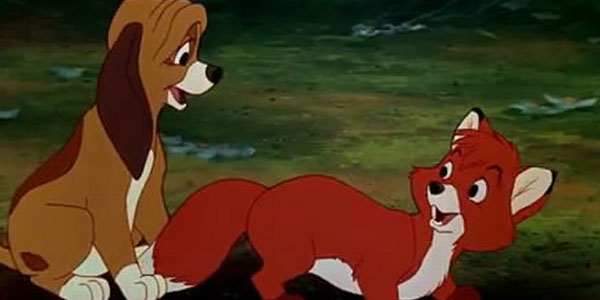
The Rescuers had marked a new era in Disney animation; while Ollie Johnston, Frank Thomas, and Wolfgang Reitherman (members of Walt's original "Nine Old Men") worked on some of the animation, most of the duties were handed over to the new crop of animators that had just been recruited from the fertile field of college art students. The new animators included such future movers-and-shakers as Tim Burton, Brad Bird, and Don Bluth (more on him in a moment). After The Rescuers, the animators immediately set to work on their next project: an adaptation of Daniel P. Mannix's 1967 novel The Fox And The Hound. Johnston, Thomas, and Reitherman did some preliminary character sketches before retiring. The sketches were turned over to the new animators, who immediately got to work. Unfortunately, dissension was beginning to rise in the ranks of the new employees. Don Bluth became incensed when every decision he made was second-guessed by studio execs. Bluth also became convinced that Disney Pictures had drifted away from Walt's original vision, focusing on producing sickly-sweet, slapped-together films. Bluth announced his intention to leave Disney and start his own studio, inviting his fellow animators to join him. Several animators accepted the invitation. Add to that the fact that two other animators, Tim Burton and Brad Bird, were making plans to leave Disney and pursue their own projects, and Disney Animation had a potential disaster on their hands. Instead of admitting defeat, however, Disney's remaining animators made the most of a bad situation. Rather than try to fully take on the load that the departed animators left, they changed the look of the film. As a result, The Fox And The Hound is populated with lovely, simple backgrounds, rather than the detailed backdrops seen in most Disney flicks. The simple backgrounds, combined with a beautiful mix of autumnal oranges and reds and earthy colors, gave the film a great-looking palette to play out against. In fact, the quality of the artwork elevates the movie above its simplistic, cliched storyline, making the film one of the best of the pre-Eisner era. The story takes its plot from pieces of prior Disney flicks, but it works well enough. The real attraction of the film, however, is how good the film looks. The animators who stuck it out for the long run were obviously talented, and they did a great job of salvaging a tough situation. Unfortunately, the pedestrian plot keeps many from viewing the film. Don't let the film's flaws keep you from seeing this flick; it's really beautiful to behold. Well, there you have it: nine Disney flicks that don't get the attention they deserve. Which movies have we missed? Let us know below!
Alan Howell is a native of Southern California. He loves movies of any and all kinds, Hollywood, indie, and everywhere in between. He loves pizza, sitcoms, rock and pop music, surfing, baseball, reading, and girls (not necessarily in that order).