8 Film Franchises That Became Victims Of Their Own Popularity
People like Jack Sparrow. Let's give them twelve of him.
8. A Nightmare On Elm Street Turned From Horror With Comedy To Comedy With Occasional Horror

7. Pirates Of The Caribbean Became An Over-The-Top Mess
It's incredibly easy to forget, but 2003's Pirates Of The Caribbean: The Curse Of The Black Pearl was good. Really good. The film was a traditional adventure story with tons of jokes and some fantastic performances (particularly Johnny Depp and Geoffrey Rush). The music was epic, the locations were lavish and the whole thing was just great fun. This is largely due to the fact it was based in part on a Disneyland theme park ride, so there was a strong focus on creating over-the-top yet light-hearted thrills.
But that which was great about the franchise is ultimately what destroyed it. Everyone loved the random and quirky Jack Sparrow, so 2006's Dead Man's Chest turned his ridiculousness up to eleven, like the scene that sees him caught in a giant waterwheel like a frightened hamster. 2007's At World's End literally contains a scene with a dozen Jacks, which shows how devoid of ideas the writers must have been (if fans like something, why not multiply it?). Then there's the crazy action set pieces. The first fight between Sparrow and Will Turner at the blacksmith's, while exaggerated, is well choreographed and somewhat believable, but this devolved into scenes like Jack repeatedly falling off a cliff in Dead Man's Chest and the ridiculous maelstrom wedding which caps At World's End. Pirates Of The Caribbean was once a whimsical, affectionate homage to the pirate genre, but the franchise turned the intensity of everything up so much that it lost what was special in the first place.6. The Matrix Tried To Be Deeply Profound And Ludicrously Over-The-Top At The Same Time

5. Paranormal Activity Stuck To The Exact Same Formula For Seven Films
When it comes to sequels, there are many examples of film-makers deciding to stick squarely with what works. For almost nine years now, the Paranormal Activity franchise has been playing up to the 2007 movie's fans. It's understandable Paranormal Activity is ridiculously successful, literally the most profitable film ever made.
Yet its popularity has starved the franchise of innovation across five subsequent entries. What did fans love? The stationary cameras at night! Banging doors! Doors creaking open! Prolonged periods of silence and then LOUD NOISES. The whole thing is a shame, too, because the first film was genuinely unsettling, and introduced a strong cast of characters. The most the franchise has done is play around with the chronology of events, and create a fairly elaborate (yet extremely repetitive) singular narrative. These days, it's so infatuated with jump scares that they're actually part of the marketing strategy, with "audience reaction" trailers and TV spots becoming wildly popular. What many fans hoped would continue to push the boundaries of modern horror stagnated almost immediately.4. Leprechaun Devolved From Twisted Humour To Cringeworthy Attempts To Be Funny

If you thought Freddy Krueger was bad, think again. Leprechaun is a 1993 cult film starring Warwick Davis and directed by Mark Jones. Like A Nightmare On Elm Street, the film is gruesome horror with elements of dark comedy, but fans loved the moments of humour so much that it completely coloured the writers' judgement.
While by no means a work of art, the original Leprechaun is a serviceable movie with a passionate fan base. You've only to take a look at the titles of the latter films in the franchise, though, to see just how far the whole thing strays. There's Leprechaun 4: In Space and Leprechaun: In The Hood and of course, who could forget Leprechaun: Back 2 Tha Hood? It's a fairly standard case of a franchise not having a strong enough central idea to sustain prolongation. The gag of the first entry is just how tongue-in-cheek it all is, but strong gore and a dark tone lends it some credibility. Unfortunately, the writers ditched that tone to hone in on the ludicrousness, losing what was interesting to begin with. One of the worst examples occurs in 2000's In The Hood, in which our titular Leprechaun literally raps about how he hasn't been laid in a long time. It's the sort of thing that for all its twisted insanity would never have appeared in the the first move, which was much more concerned with attempting to be unsettling.3. Alien Traded A Compelling Story For Continued Existence
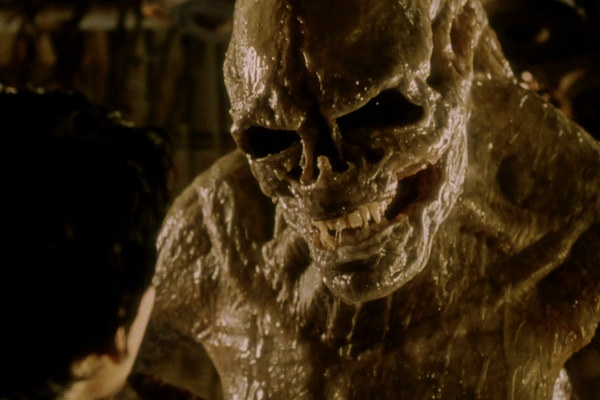
Ridley Scott's 1979 Alien is an absolute triumph of film-making, blending horror and sci-fi in a way never quite mastered before. The sequel, James Cameron's Aliens, managed to take the setting, characters and eponymous alien species and make a completely different kind of movie, yet one that was equally as good in other ways. But, after that, the franchise was consumed by itself and its rabid popularity.
The problem (if you can call it that) is that the first two entries in the franchise had absolutely fantastic stories. Though both were very distinct, they each crafted a narrative that suited the horror or action genre respectively, something that couldn't just be rushed out production line style. But boy did Fox try. For a start, Alien 3 was unsure which genre exactly it wanted to stick to, at times flicking back and forth between the tone of both its predecessors. On top of that, the film mistook the moments of shock in the previous films (the chest-burster or stowaway Xenomorph in Alien, the huge queen in Aliens) as primarily important, opting to alienate fans by killing off Bishop, Newt and Hicks (as well as Ripley herself) in order to try and recreate something similar. When it came to Alien: Resurrection, then, the film's fate was already sealed. Some incredibly baffling decisions in Alien 3 stripped the franchise of many fan favourite characters, thus forcing a cloning narrative. The story had become a convoluted mess, resulting in the studio eventually ditching plot altogether for the Alien Vs. Predator disasters.2. Saw Got Trapped In Twist Expectation (And Escalating Gore)
It's a tale as old as time - audiences love something the first time, so film-makers make it again. And again. And again...
In the case of the Saw franchise, the film-makers made it seven times in total. Which sucks, because the films actually started out as pretty good (at the very least they were interesting). The first entry was fairly low budget, so it had to work hard to be unsettling. Though the vast majority of people associate the franchise with extreme gore, Saw doesn't actually have a whole lot of gruesomeness in it. Much of the torture is implied, or we merely witness the aftermath of it through flashback. What this meant was that the writers could focus on constructing interesting mysteries, characters, and a fairly compelling hostage narrative. In the end, though, there were two incredibly popular elements that damned the franchise. The first was the traps, which gradually became so elaborate that they crossed from horrifying into hilarious, and took up so much of the writers' time that the story suffered. The second was the twist ending, which shifted the course of all subsequent sequel narratives entirely. Every sequel had to finish with a convoluted "surprise", which shaped the overall plot of subsequent films rather than the plot leading to a natural conclusion. After the Saw and Saw II, the franchise was lost forever.1. Star Wars Turned What Was Once Simple Needlessly Complex

For all its immense popularity, the original Star Wars trilogy is remarkably simple. It's a very bare-bones tale of good versus evil. There's the Empire, who are the bad guys, and the Rebels, who are the good guys. It really doesn't get a whole lot more complicated than that. When the original trilogy first released, many labelled it as a space western because it dealt with the sorts of basic, territorial and black/white themes that many popular westerns did.
It was this simplicity which made the franchise so widely accessible, allowing people from all over the world to relate to the universal struggle against evil. Yet it seems that George Lucas misinterpreted the incredible success of the first three films as being the product of a world hungry for intricate sci-fi. It didn't help that one of the more complex moments in the trilogy became extremely talked about and iconic, the reveal that big bad Darth Vader was once Luke Skywalker's father. When it came to the prequels, then, Lucas strived to push everything further, compromising straightforwardness in the process. What this resulted in was a bunch of intricate yet dull and fairly redundant material, including midi-chlorians and far too much time spent on the Galactic Senate. And that's just the narrative the special effects were more complicated and the weighty action scenes became closer to insanely choreographed dance numbers. Of course, this complexity also spawned from the sheer popularity of Star Wars merchandise, of which Lucas stood to gain a massive amount of profit. The easiest way to sell more merch is to create new characters, and so the plot had to accommodate as many diverse characters as possible, even at the cost of focus. Which other franchises got lost in their own popularity. Share any more not included down in the comments.