8 Films From 2015 That Will Be Viewed As Classics In Years To Come

This year's 'Vintage Selection'.

There are suggestions that 2015 has been a 'weak' year for cinema, and while it's true that it hasn't quite been the year that, say, 2014 was (Boyhood, The Grand Budapest Hotel, Nightcrawler, Citizenfour et al), it remains that 2015 has been a fine year for film. And, in this fine year, in amongst the big-budget blockbusters and the nearly-but-not-quites, have been some bona fide great movies; a selection of pictures that, down the line, will almost certainly be looked upon as classics, even if they're a little underseen right now. Featuring classics of their genres and some outright classics in general, here are eight great movies that refute anybody who believes that 2015 has been a let down. Note: A few of these films, released last year Stateside, will feel more like 2014 releases. However, their early 2015 release in the UK renders them eligible for inclusion.

8. Slow West

Because: It's a Coens-esque parable about the futility of the Old West, a treatise on the senseless violence of it all. A gorgeous debut film with a set-piece ending for the ages. The best western since The Assassination Of Jesse James By The Coward Robert Ford, Slow West is an immaculate piece of revisionism. At under 90 minutes it should feel light and brisk. It is anything but, instead manifesting itself as a statement on America's long, bloody history of senseless violence. This is a fatalistic picture, a road movie of sorts where all paths lead to life's only other inevitable after taxes. A painterly picture, there are enough stunning tableaux to fill three movies, the film awash with star-littered skies and lone figures placed against arid, sprawling vistas and storms which rattle between two distant mountains while the weather where we see them remains calm. There are blood marks that streak across impeccable pine as a wounded gunslinger slumps against and down it; phalanxes of outlaw gangs creeping into the horizon as they crest a hill; aqueous blue eyes at odds with the straw and trees and grass that they look upon. Then there's the ending, an assault on a small wooden house which sees bounty hunters pop up out of the tall-crop to take alternating shots, like deadly whack-a-moles firing across a perfectly clear afternoon sky. Stunning.

7. Inherent Vice

Because: It's an ode to the poetry of cinema, to the idea that great art doesn't make you THINK, it makes you FEEL. One of Paul Thomas Anderson€™s most polarising films, Inherent Vice split the vote on whether it was a masterwork or a mess. I€™m firmly in the former camp. The things commonly suggested as problems within the film €“ its convoluted plot, its lackadaisical tone, its refusal to provide any concrete resolutions €“ are actually what make it a classic. Inherent Vice adheres to the idea of cinematic poetry, a free-flowing film that goes where it goes and does what it does without feeling the need to provide answers, content with just luxuriating in a time and place and its textures and its people. The film€™s dense narrative, itself derived from the even denser one in Thomas Pynchon€™s source novel of the same name, is noir opacity passed off as confused stoner logic, a brilliant subversion that places Inherent Vice alongside Robert Altman€™s Long Goodbye in the canon of great Californian surf-noir. Modern movie audiences are obsessed with finding the answers to films, to €˜solving€™ them. Inherent Vice does away with all that because it understands that most of the great questions in life are unanswerable, that the beauty is not in the answer, but in the trip to find it. The best films are not concerned with what they are about, but rather how they are about it, and Inherent Vice is testament to that. Imbued with the slow-drip death of the 60s (which filtered out into 70s anxiety), the film is a rumination on the effect a certain time had on a certain place and how it affected a certain psyche. It€™s a decade-long detective story with no answers to the ethereal questions it asks.

6. Whiplash

Because: It presents the artistic struggle and the strive for greatness in a way which will make you question its very nature. One of the best depictions of the artistic struggle ever seen on screen, Whiplash is an intense experience, a kind-of two man play that boasts one of the great film endings of the decade. Bolstered by two absolute powerhouse performances from Miles Teller and J.K. Simmons (the latter of whom won an Oscar for his work here), the film presents Andrew€™s (Teller) self-destructive mission to become a great jazz drummer, pushed all the way by Simmons€™ Fletcher, one of the most brutal, borderline psychopathic teachers in recent memory. The notion of this strive for greatness - of the sacrifice of everything for the perfection of your art - is difficult and abstract, and it remains that €˜Genius€™ is a hard thing to capture on film. Whiplash succeeds because it presents Andrew€™s progression as exactly that: a progression: a slow, unrelenting, soul destroying journey. There is no spark, no eureka moment, and Andrew€™s stunning performance at the end of the film is born more out of practice and hatred than it is inspiration or love. Most films in the 'Genius' genre present the struggle as ultimately worth it because at the end something beautiful or transcendent or innovative has been created, and Whiplash doesn€™t drift too far from this narrative - indeed, Andrew€™s end-product is a spectacular culmination of his hard work. But what sets it apart is its utter refusal to present the work as fulfilling or even satisfying. This is genius as you€™ve never seen it before; this is genius which is primarily ugly.

5. Mississippi Grind

Because: It's a throwback to a different kind of cinema, a time when filmmakers were allowed to make pictures purely about people. It€™s not getting anywhere near the amount of exposure as some of its flashier counterparts of 2015, but Mississippi Grind deserves it. Ostensibly a road movie, the film sees two lonely, troubled American gamblers take a trip to, well, nowhere really. They have a destination, they kind of have a goal, but the film is more concerned with showing how our two protagonists connect with each other, how they share their loneliness and come to rely on each other as they traverse the delta. Featuring career-best performances from both Ryan Reynolds and Ben Mendelsohn, Mississippi Grind feels ripped straight from the 70s, a long-lost Bob Rafleson or Hal Ashby picture starring Jack Nicholson and Warren Beatty. Reynolds, every bit Ryan Gosling€™s equal, is electric in a role which will hopefully return him from the rom-com hinterlands, whereas Mendelsohn delivers a best-performance-of-the-decade contender with his work as Gerry. Together they create an impression of two American characters rarely seen on screen anymore: not heroes and not villains; just some people with some problems who aren't quite sure how to solve them.

4. John Wick

Because: It reinvigorates a genre ruined by CGI by delivering slick, stylised, expertly choreographed action. A Michael Mann (in pre-digital mode) film not directed by Michael Mann, John Wick breathes life into an action genre now seemingly reliant on CGI. Yes, it can still be effective and brilliant, but John Wick proves that there€™s no better alternative to the slick, choreographed style of a stunt team (there is CGI present in the film, but it is minimal). Directed by first time directors Chad Stahelski and David Leitch (uncredited), John Wick takes advantage of their former profession (both were prolific stuntman) to deliver a dizzying exercise in style, one more concerned with shooting and editing the footage into understandable, logical action than any film in recent memory (Mad Max: Fury Road is another obvious example). Add to that a career-best anti-hero turn from Keanu Reeves, and you have what might just be the action picture of the decade (again, Mad Max: Fury Road is a contender, but in the end I opted for John Wick on the basis that it has had less exposure).

3. Carol

Because: It's one of cinema's great love stories. An utterly meticulous, aching, melancholy rumination on forbidden passion. Told with furtive glances and framed through windows and doors, Carol is surely one of the great love films of the decade. Not content with grand displays of emotion or declarative outbreaks, Todd Haynes€™ masterful picture instead keeps the angst primarily internal, conveying it mainly through slight touches and surreptitious glimpses. From the moment Carol€™s (Cate Blanchett) eyes meet Therese€™s (Rooney Mara) across the floor of a 1950s New York department store, Haynes sends the pair on a clandestine journey, one which mushrooms until the love is too hard to handle or hold back. Set against a lovingly rendered NYC backdrop (meticulous in its design), Carol is a true romantic classic, shunning the whole will-they-won€™t-they-and-eventually-they-do approach for something deeper, something a little more ephemeral. The last shot, of Carol staring at Therese across the crowded party, is one of the great closing frames of the decade. Expertly performed by Blanchett and Mara, Carol and Therese are one of cinema€™s great gay love affairs, and the film itself would make a sublime double feature with Ang Lee€™s equally stunning, Brokeback Mountain.

2. Listen To Me Marlon

Because: It creates an astonishing portrait of the best to ever do it, masterfully put together with existing material from the actor's life and career. Comprised entirely of film footage, interviews, and the thousands of hours of audio recordings Marlon Brando made in his life, Listen To Me Marlon presents the actor€™s life in the form of a memory, one which jumps back and forth throughout his career to create a haunting, dreamlike picture. Deftly handled by writer, director, and editor, Steven Riley, this documentary breaks formal convention to show Brando as a difficult, troubled genius, one burdened by his childhood and his family and his increasingly fragile state of mind. It seems strange to call a film about the greatest actor of all time a tragedy, but that€™s exactly what Listen To Me Marlon is, and it€™s made clear by Riley€™s expert compilation of material that Brando€™s greatest roles were all born out of sorrow. Soundtracked by Brando€™s distinctive, melancholy voice, the film attains a deeper sense of sadness than most standard biographical documentaries ever could, and by the end-credits the film becomes something closer to a delicate, rhythmic elegy.

1. Ex Machina

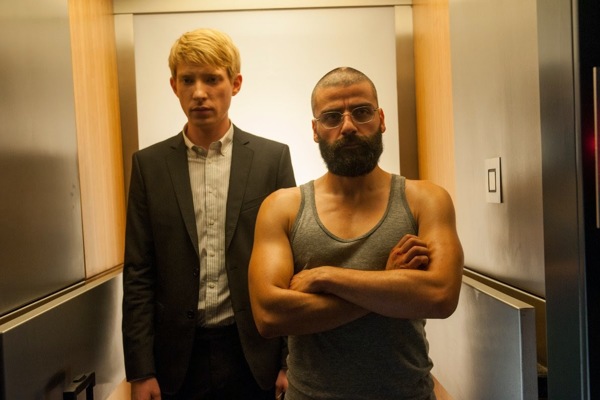
Because: It's one of the great sci-fi films. A fully realised examination of the limits of control; of technology, of sex, of how the pleasures of the flesh are being manipulated for a digital age; of lust, of loneliness, of genius, of jealousy. It's Kubrickian, it's Promethean, it's a masterpiece. A film with only four real characters, Alex Garland's Ex Machina is a chilling, austere picture, played out entirely in the confines of a maverick inventor's luxury remote kingdom. It's a claustrophobic masterwork, a picture which builds and builds to its devastating ending by way of mythology and art, technology and sex. A multi-facted film, Ex Machina is many great things at once: part film noir, part straight-up sci-fi, part game of sexual politicking. It takes the classic idea of a genius who creates life (or at least something akin to it) and turns it into a study of millennial hubris, using sex as a motivation. Here the genius is not a geek, but a frat-bro, a beer-swilling asshole who invents the greatest thing "in the history of the Gods" so he can essentially f*ck it. It's a distillation of modern society's technology-plus-sex complex, a power play steeped in the traditional iconography of science fiction. Expertly designed and performed, Ex Machina is a disquieting film, all immaculate surfaces and lonely corridors and advanced but serious gadgetry. There's an unease that grows, a tension that finally snaps. But it's entertaining, too, even touching in parts, especially so when Ava (Alicia Vikander), the AI Nathan (Oscar Isaac) has created, tries on a dress or contemplates Caleb's (Domhnall Gleeson) wondrous face. Throughout it all, though, sounds a sorrowful lament, an eerie atonal noise which will end life as a scream. It is saying watch out, we can build anything we want, but what we want isn't advancement, it's something baser, something more primal, something deeply ingrained in Man. It is saying that we want sex and we want it now and we no longer care how manufactures itself. Which other great 2015 movies will become known as classics in years to come? Shout out your favourites down in the comments.

In this post: 
Ex Machina
 
Posted On: 
Contributor
Contributor

No-one I think is in my tree, I mean it must be high or low?