8 Films That Would Have Worked Much Better As TV Shows

Because sometimes, there's too much goodness for a film alone.

With the release of every new HBO hit the question of whether TV has finally eclipsed cinema rears its familiar head. What shows like True Detective suggest, however, is that while TV and film are in competition for audience€™s attention, they€™re really offering completely different things (or should be). On the silver screen, True Detective wouldn€™t have broken any new ground. In our living rooms, with four times as long for us to spend with Cohle and Hart, each episode was a weekly highlight. Movie-level production, like the much discussed six-minute tracking shot, certainly helped, but the biggie was simply the time we got to understand every facet of the detective's lives. It's long been known TV has a distinct advantage for slow developing character stories, but it's only recently that networks have been capitalising on it. George R. R. Martin shook things up recently by suggesting Game Of Thrones, a key force in the rise of quality television, should make the leap to the big screen as the effects required to bring the show to life will become ever more extensive. Really though, a run in a multiplex shouldn't be the aim of any series and Thrones would do right to stick to its home on the small screen. Just like these eight films, which should have been brought to life as a TV series.

Honourable Mention - The Shining

Who would even think of suggesting that Stanley Kubrick€™s obsessively constructed The Shining could be improved upon? Well, as he€™s publicly made known countless times, Stephen King himself. Feeling Kubrick missed the point of his book, King eventually got a version closer to his own vision in the form of a three-part mini-series. And it was a slow, meandering mess. Worth watching for super-fans of the Kubrick film, it forfeits the advantage of being more faithful by not being scary. Clearly not everything can be made better by TV.

8. The Hobbit

As a prequel to one of the most unmistakably cinematic series of the twenty-first century, The Hobbit really should be a big screen affair. But with the direction Peter Jackson has taken, creating a long, slow-building story, it€™s becoming increasingly clear this story would work much better if treated like the other big water-cooler fantasy of the moment. The Desolation Of Smaug ended in a way that wasn€™t totally dissimilar to what you€™d expect from an episode of Game Of Thrones; massive cliffhanger, audience groans, come back next week/year. The difference is that whereas we buy incompleteness as par for the course with HBO, it€™s not what we€™re used to with films. Even though the original Lord Of The Rings work best as part of the bigger story, there was a sense of localised character development and a clear end point to each chapter. Taking Jackson€™s Hobbit as it stands (we€™re so distanced from what Tolkien intended that going all the way back to the source is a fool€™s errand), making the three three hour films into nine one hour episodes of a mini-series is not only simple (the trilogy's already pretty fragmented), but it€™d make the slower moments more enjoyable. An Unexpected Journey was improved no end by an Extended Edition that gave much-needed development to the dwarves and a run time that was a lot more palatable from a sofa than a cinema chair. Sadly, as Jackson€™s The Lord Of The Rings has become the definitive adaptation (sorry Bakshi), The Hobbit will be treated the same, for better or worse, meaning any hope of a subsequent version is unlikely.

7. Watchmen

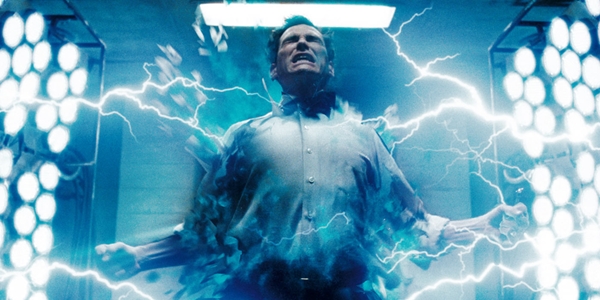
Watchmen is ready made to be a twelve-part mini-series. Each issue of Alan Moore€™s medium-defining graphic novel has its own story focus and visual call-signs (thanks to artist Dave Gibbons), making each stage in the story of retired superheroes in an alternate, on-the-brink-of-war eighties feel distinct. Audiences are generally unsure about Zack Snyder€™s 2009 adaptation. Coming in three different cuts that embellish the wider alternate world to varying degrees, it did a good job at telling the story in broad strokes. Sadly much of the book€™s subtlety has been lost in translation, coming mainly from the approach to structure. Spending about half an hour on the first issue, then cutting down others to five minutes, certain key sub-plots are either turned into montages or axed completely. Imagine what more time would have allowed. Straight adaptation from print to screen is a risky business - masterpieces are often masterpieces because of their suiting of material to medium - but with Watchmen there€™s a precedent for success; in 2008 a Motion Comic bringing each issue to life in thirty minute chunks with simplistic animation proved a hit with fans. Thanks to Snyder we know it€™s possible to visually create Moore and Gibbons' style on screen, so why not take the Motion Comic€™s approach and add the substance as well?

6. Cars

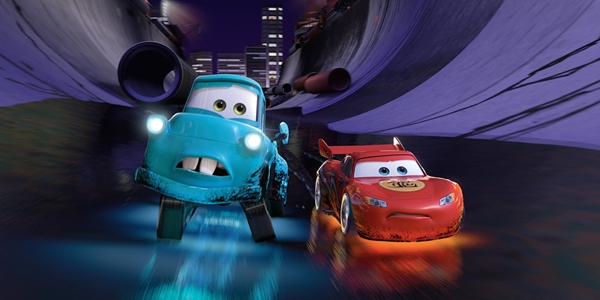
It may have taken ten years, but confirmation of a sequel to Pixar€™s much-loved The Incredibles (itself a show of how to bring Watchmen€™s themes to the big screen) has finally arrived. Sadly the announcement was marred slightly with the simultaneous reveal that Cars 3 is also in production. Clearly a decision made with more than a finger in the merchandising pie, many had assumed Cars was done with after the lazily plotted Cars 2 made way for cheap rip-off Planes (which itself has a sequel coming later this year). Maybe Lasseter and co. have given up trying to win adults over to a franchise maligned since the concept was first revealed and are happy to do something just for the little ones. The first Cars doesn€™t deserve the criticism it so often receives; take out Mater and it€™s an enjoyable film that is, importantly, quite creative. There€™s nothing really insidious about the message or characters; the problem is it€™s just not quite as novel as what Pixar had delivered thus far. And there was no clear distinction that this wasn't going to be a zone maybe not suitable for parents. Maybe it€™s wishful thinking from someone who actually liked the first film, but had the franchise been Pixar€™s first foray into TV, its numerous issues would have felt a little less prevalent; as a kid's series it would be met with the same kind eyes that led to The Clone Wars' success. The (bad pun alert) Cars Toons, while repetitive, are fun little chunks of Pixar and hint at the simple potential of the idea of world of Cars when freed from the restrictive plots of the films.

5. A Series Of Unfortunate Events

Lemony Snicket's A Series Of Unfortunate Events initially capitalised on the surge in children€™s reading brought on by Harry Potter, then threw it away when the first six of the thirteen books ended up being pretty much the same plot regurgitated in a different setting. Yet those who stuck with the series beyond the initial entries (which garnered individual importance as the story progressed) found an interesting and often genuinely surprising tale. Brad Silberling clearly was one who gave up on the series early, because his big screen adaptation €“ which brought the first three books to €˜life€™ €“ touched on none of the overarching plots or themes that were present in Snicket€™s later novels. Judging from the production interviews and their correlation with the final product, it seems like things were rushed to capitalise on the series€™ popularity. Each book essentially gets half an hour of screen time in the film, leading to each instalment feeling unexplored and not entirely essential. In the confines of a feature film, it is almost justified. A single tome couldn't sustain a full film; what other option was there? You know where things are going here. As with Watchmen, it feels like Unfortunate Events would be much more at home on TV, where enough time could be given to flesh out the frankly labyrinthine plot.

4. Mandela: Long Walk To Freedom

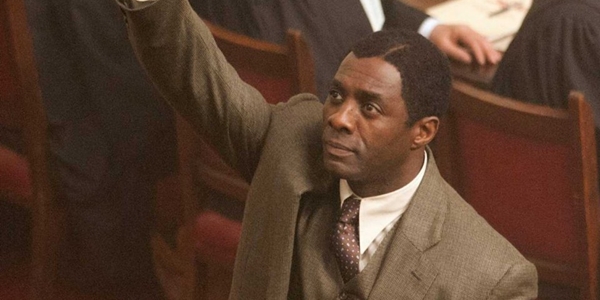
The producers of the long-gestating Nelson Mandela biopic have claimed they hoped the adaptation of his autobiography would prove to be the definitive take on his life. No doubt a claim intended to push this film€™s legitimacy ahead of Invictus €“ which was released just as Long Walk moved into production €“ for the sake of the great man's legacy let€™s hope it isn't. The Idris Elba-fronted film pulls all the typical biopic tricks - rousing score, recurring returning to the focus€™ roots, archive footage of the real man - but in manner that feels like it just wants to give the audience a short cut to an emotional response. You could say that€™s to be expected with the area, but what Mandela doesn€™t have that Gandhi has is a focus. Taking a whole life and putting it on screen is a hard task and is best done by selecting moments. Citizen Kane is the touchstone here (where isn€™t it), dramatising the life of William Randolph Kane with snapshots of a life that, although brief, give us a rounded view of what mattered to him. If something more linearly cohesive is wanted, which is what Long Walk To Freedom attempts, more time is needed. Then there€™s the activist issue. Without going too far down a path well trodden since Mandela€™s death, his radicalisation of the ANC is touched on, but only to build up to his time on Robben Island. There€™s no moral debate and although switching to the small screen is no way to guarantee this would be looked at, greater scope would allow it to be explored without coming to dominate the story.

3. Man Of Steel

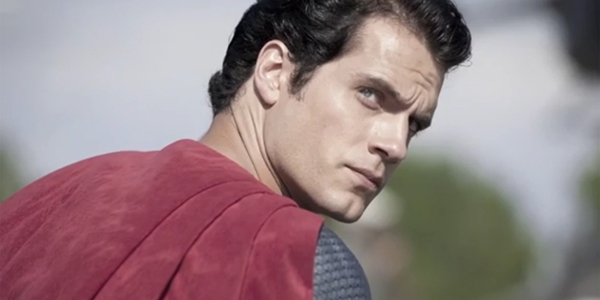
Like a broadsheet sidestepping political agenda following the death of key public figure, let€™s settle by saying Man Of Steel was divisive. For every person who find the remoulding of Superman€™s backstory novel, there was someone beaten into submission by the city-levelling action scenes. Now the dust has well and truly settled, it isn€™t the immediate talking points that provide a big problem for Zack Snyder€™s second entry on this list. With Batman Vs. Superman (or whatever name is currently being thrown around) promising a reboot of the Dark Knight only four years after his last big screen appearance and the introduction of Wonder Woman, Man Of Steel has unwittingly become the first step in building DC€™s cinematic world. The issue, however, is that it makes no effort to build anything. Despite it not having any Norse Gods blasting in, the world and characters we met in Iron Man are conceivably the same as those who€™ve been dominating the global box office in recent years. The difference between setting up Tony Stark and Clark Kent is that Steel Man had much more to do; on top of plot and world building, there's a major reinvention of character going on here. It€™s a time issue that could have been dealt with by either having more films before the big team up or moving the development of TV. We know Superman can work on the small screen and following the success of Arrow it would have been adventurous (and not as financially ruining given Man Of Steel€™s not-Iron-Man-Three box office) to take their screen universe there. And the action would have been forced to be toned down.

2. Any Remake Ever

The sad fact with remakes is that even though we can all ridicule their very existence, they almost without fail find an audience. I guess it'd be OK, if any of them were actually any good. Although wait... There have been some pretty good remakes recently. Norman Bates re-imagined with an iPhone is flawed but enjoyable, Mads Mikkelsen is gives Anthony Hopkins a run for his money as Hannibal and fans of the Coen€™s Fargo eagerly await what Martin Freeman and Billy Bob Thornton will do in the snow. The difference between these and the likes of Robocop or Carrie is that these intriguing remakes are all television-based. Fargo may still turn out to be a dud, but the fact there€™s any anticipation at all around a project that is using an idea already done perfectly is emblematic of how remakes are entirely different beasts when done as TV shows. Given time to flesh out new ideas which are often stifled by a studio€™s insistence to homage the original (Hannibal, technically a re-adaptation of Thomas Harris€™ novels, has references to Silence Of The Lambs but they€™re far enough apart to work), the same people who would probably be forced to produce a hack job film remake have the freedom with TV to let their love of the source flourish. So next time a studio thinks of taking a classic (nostalgic or otherwise), maybe it€™d be creatively advantageous to not immediately run to the box office. We€™re looking at you Michael Bay€™s The Birds.

1. Harry Potter

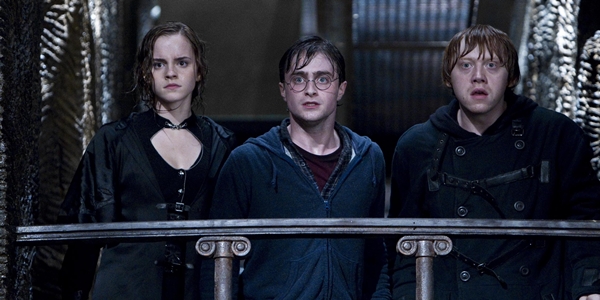
But before hating goes too far, it€™s worth recognising that the fact that Harry Potter series made it all the way to the final film is pretty impressive. When the initial plan of a film a year fell through there was a genuine risk the trio of leads, who were the correct age for the characters at the start, would end up growing too old, too fast. Although the notion of a reboot is far from the front of Warner Bros. mind, if it ever does come around the puberty issue the only real barrier to doing it right. Get over that (plus the near impossible task of recasting Alan Rickman, who essentially defined Snape) and there€™s a very simple way to do the story justice; do a Game Of Thrones. The world of Harry Potter is certainly more whimsical than Westeros, but its story has a story beyond the books to be plundered. Mix in that this time around the actual ending would be known to all involved from the start (so the bigger picture can actually be, gasp, planned out) and we could end up with a proper, developing story that regular fans would actually want to return for. Which films do you wish had been made instead as a TV series? Let us know your ideas in the comments.

Contributor
Contributor

Film Editor (2014-2016). Loves The Usual Suspects. Hates Transformers 2. Everything else lies somewhere in the middle. Once met the Chuckle Brothers.