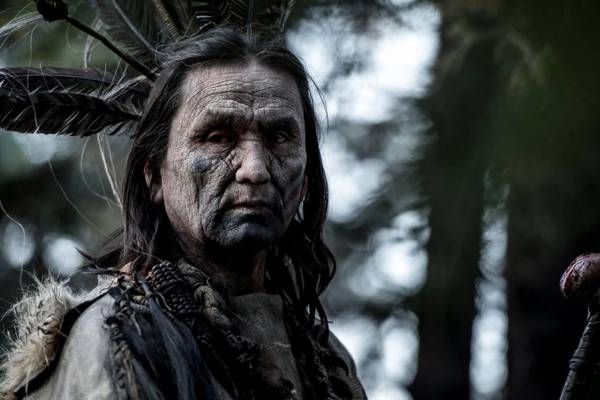
8 Glaring Problems With The Revenant

Sometimes it's easy to get blinded by all of the hype...

The Revenant is an overwhelming cinematic experience, and it's impossible not to have some sort of strong reaction while watching it, whether that be horror, disgust, frustration or awe. Saying something is a cinematic experience, however, isn't always a compliment, and in this instance it contributes to some of the film's biggest problems. Making viewers react isn't a particularly difficult feat of film-making: enough suffering and graphic violence will illicit a response from most anybody. What's tough is getting audiences to feel; to care about what they're seeing on-screen. A visceral experience alone doesn't make a great film; the fact is, it's something that inevitably diminishes after the first viewing. And not only that, but The Revenant falls down in several other crucial areas, preventing it from ascending to the status of masterpiece that it likely could have. Despite all of the acclaim and Oscar buzz, Leonardo DiCaprio's possible Oscar winner has several glaring issues...


8. There Isn't Enough Story...

There's nothing wrong with very little plot in theory. Over the years there have been plenty of movies that manage to pull off something special with a story that can be summed up in a sentence or two. Richard Linklater's Dazed & Confused, for example, is about a group of teenagers hanging out on the first day of summer vacation. Sofia Coppola's Lost In Translation is about an ageing movie star who meets a young college graduate in Tokyo and repeatedly hangs out with her at a bar. In this way, The Revenant is about an injured frontiersman who survives a vicious bear attack and attempts to make his way back to the central trading post Fort Kiowa. The problem is, it just isn't enough... especially not for a film that's two and a half hours long. Looking at the source material, it's easy to understand why this is the case. The movie is based in part on American author Michael Punke's The Revenant, which in turn is based on the true story of Hugh Glass. In the book (and in reality) Glass doesn't have a son, nor does he find Fitzgerald when he makes it back to the Fort. The film adds the son as motivation and throws in the final pursuit of Fitzgerald for narrative satisfaction, but the middle of the film is largely devoid of any actual story. This is particularly egregious when viewers are teased with an interesting back story involving Glass's wife and his time living with the Native Americans, but it's left frustratingly ambiguous.

7. ...And The Story It Does Tell Is The Wrong One
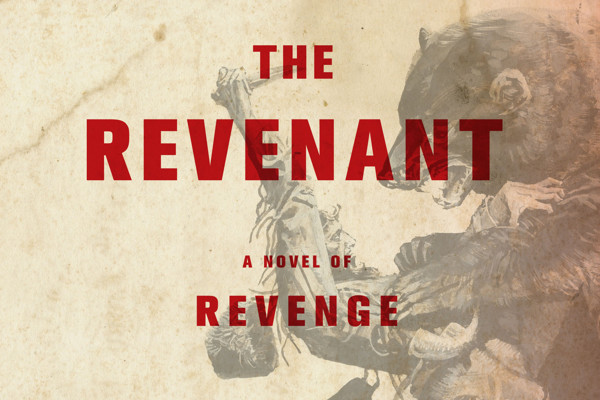
It's already been established that The Revenant spreads too little story over too long a film, choosing to omit points of interest. But what's even worse is that it's arguably telling the wrong story. The real account of Hugh Glass is potentially a better narrative. It retains all of the exciting bits like the bear attack, his abandonment and his personal vendetta against Fitzgerald, but it extends the story into more fascinating territory. During Glass's journey, for example, he fashioned a raft and floated down the river, drove away wolves and wild animals and was actually gifted the bear hide on his back by friendly Native Americans. Upon finally making it back to Fort Kiowa, he found that Fitzgerald had left to join the United States army. Glass then travelled the whole way to Nebraska in order to confront Fitzgerald and retrieve a rifle that had been stolen from him, ultimately choosing to spare Fitzgerald's life. Not only that, but Glass then went on to marry a Pawnee woman and travel with Pawnee delegates to meet with US authorities, an act which many believed was due to his positive experiences with the tribe while struggling to survive. A little less focus on endless cruelty and ambiguity and The Revenant could have told a more complete and fulfilling tale.

6. It's Difficult To Understand Much Of The Dialogue
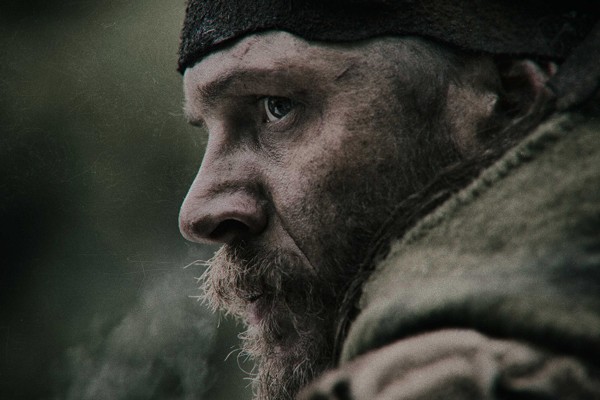
Narrative and artistic criticisms are one thing, but technical issues are something else entirely. There seems to be a bit of an adage developing in the world of cinema: wherever Tom Hardy looms, dialogue incoherency will surely not be far away. Nevertheless the truth still stands: many audience members have reported extreme difficulty when it comes to understanding everything that The Revenant's characters are saying. This is fairly understandable in some scenes, like the opening battle, which is so frantic and loud that inaudibility is realistic and potentially intentionally disorientating. But it continues throughout the film: Tom Hardy's monologue about his father finding god in a squirrel, for example, is a struggle to make out at best. That the movie has a relatively uncomplicated narrative helps prevent this from becoming a ruinous issue, but in a project so character-driven, clarity of dialogue is essential.

5. It's Bleak To The Point Of Absurdity...

The relentless suffering experienced by not only the character of Hugh Glass but Leonardo DiCaprio and the rest of the cast and crew is extremely well documented, and is a massive aspect of The Revenant's marketing campaign. It hasn't been exaggerated, either €“ from the moment the film starts to the very last scene, it's just horrifying experience after horrifying experience with very little in the way of relief. From the Native American ambush to the famous grizzly bear scene to the murder of Glass's son, all you can do is stare wide-eyed in terror at what DiCaprio's character suffers. But somewhere along the way it all begins to get a bit absurd, as if crossing from poignant struggle to light torture porn. Not only that, but the film attempts to up the shock value of each subsequent emotional beating, culminating in several sequences it's difficult to take seriously. A prime example takes place when Glass finds his friendly Native American companion Hikuc hanged by French pelt hunters. That's bad enough, but stacking a rape scene on top followed by the horseback chase and ending with Glass careening off a cliff catapults the po-faced €œlook at all this misfortune, isn't it something else€ tone into almost laughable territory.

4. ...And It Fails To Find Profundity In That Bleakness

Cathartic suffering has been ample territory for film-makers since the beginning of the form. Notable great examples over the years include The Shawshank Redemption, My Left Foot, 127 Hours and Into The Wild. You could argue that none of these films are as overtly horrifying as The Revenant, but you could also argue that all of them have much more to say about what it means to be human, and what it means to be a human that's suffering. There are several reasons for this. For a start, The Revenant is obsessed with surface artistry. None can deny the sheer, overwhelming beauty of Emmanuel Lubezki's cinematography, for which he was rightly nominated for an Academy Award. But gorgeous scenery alone is not a statement; it's supposed to complement or emphasize one. A dozen wide shots of snowy mountains and dense forests doesn't equate to intellectual commentary. Then there's the disjointed dream sequences and visions: every so often Hugh Glass will dream of his dead son or see the spectre of his deceased wife. It's understandable the director Alejandro Inarritu needed narrative material since DiCaprio spends so much screen time alone, but they're so frequent and so overtly symbolic that they quickly display their hollowness. One particularly bad example sees DiCaprio wander up to a church (the film is about suffering not just physically but spiritually, get it?), see his son Hawk and then wind up hugging a tree. There's nothing particularly profound in any of this, and it's so unsubtle that it comes across as superficial.

3. It's Bursting With Filler

Two and a half hours is far too much time to follow a character who crawls and stumbles their way through the wilderness without saying very much. To his credit, Alejandro Inarritu knows this, and so he added plenty of other material in order to try and keep the film interesting and well-paced. The issue with this material is that it's mostly only there to prop up the movie until it can return to Hugh Glass. Take all of the stuff about the Native American Elk Dog's search for his daughter Powaqa. Scenes of there search are interspersed throughout the movie, but they're incredibly two-dimensional, and don't really amount to anything more than the same €œwe must find my daughter!€ over and over again. On top of that, the two end up reuniting off-screen, so it's clear the audience's emotional focus isn't supposed to be on their relationship. As if this isn't already clear enough, it transpires at the close of the film that Powaqa is only really there so that Glass doesn't have to kill Fitzgerald himself. There's also the extensive scenes of the main party of trappers travelling back to Fort Kiowa, which don't provide any additional information and largely feature a nameless cast of characters who the film doesn't really touch upon again in any significant way. And as mentioned in the previous entry, the flashbacks and dream sequences withhold coherent back story in exchange for giving audiences something new to look it. So much material is expendable, padding out the movie until the next DiCaprio scene.

2. It's Tough To Get Invested In The Characters
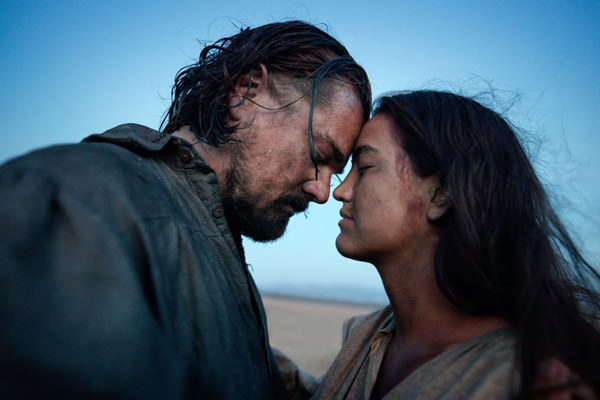
This problem is somewhat similar to the profundity issue, and is another symptom of Alejandro Innarritu's belief in the intrinsic narrative value of Glass's suffering. Watching The Revenant, the most frequent feeling is a mix of terror and alarm, prompted primarily by the acts of violence occurring on-screen. If there is any genuine empathy and sympathy to be felt, it's buried under gut reactions and stifled by the refusal to give audiences much time to genuinely get invested. At the beginning of the film we witness the violent deaths of dozens of characters, none of whom we know anything about, which sort of sets the emotional tone. We're presented with Leonardo DiCaprio and a boy who is described as his son, but we aren't entirely sure whether or not that's biological or adoptive. By the time we learn the truth it's of very little consequence. The fact of the matter is that audiences don't see enough of the relationship between Glass and his son to truly care. What little they do witness is basically Glass telling Hawk to shut his mouth or someone will murder him. When Hawk is killed by Fitzgerald, then, there's a certain numbness of feeling that has nothing to do with the cold setting. Glass is given Insta-Motivation (just add child homicide!) and Hawk is quickly forgotten about. The same goes for Glass's wife. There is no time spared on any sort of coherent relationship establishment €“ instead we're provided with ghostly apparitions and fleeting flashbacks, which while giving us information provide nothing in the way of actual emotion.

1. It's Far From DiCaprio's Best Performance
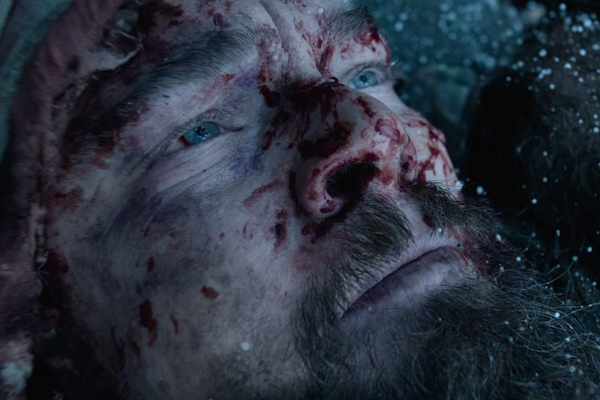
This in itself isn't a bad thing, but given the insane amount of hype and Oscar buzz it's generated it has become relevant to the discussion. Since The Revenant released in cinemas, audiences, critics and the media haven't stopped talking about DiCaprio's performance. Yes, the performance is good. Yes, Leo will almost certainly win the 2016 Academy Award for Best Actor. But this is more to do with timing than anything else (there are no other obvious frontrunners). There's a weight and heft to Hugh Glass's movement that is laudable, and it's no secret how physical DiCaprio got during the shoot, eating wild berries and raw meat and dragging himself through frozen lakes...but it's a more a victory for the make-up and prop department than anything else. DiCaprio's constant gurgling, grimacing, panting and wailing would be nothing if not for the how the character actually looks: the deep, festering wounds that trace his body, the dirt on his skin and in his hair, his torn clothes and heavy bear pelt. Take all of this away and there isn't a massive amount of nuance to the role; we don't actually see much range. Yes, the physicality is captivating, but it's so visual that it's hard not to feel bad for the artists who tore DiCaprio apart and gradually stitched him back together. Leo's Best Actor nomination would be nothing without them. Did you love The Revenant? Share your reactions below in the comments thread.

Contributor
Contributor

Commonly found reading, sitting firmly in a seat at the cinema (bottle of water and a Freddo bar, please) or listening to the Mountain Goats.