8 Good Films One Crippling Flaw Away From Being Awesome

Because shooting yourself in the foot is all too easy, and tragic when it happens.

A film is only as good as the sum of its parts. That may seem like an obvious statement to make but all too often a promising premise or idea turns into a mediocre film thanks to one of the cogs in the movie-making machine not doing its job properly. Whether it's the acting, the script, the direction or the editing the result is usually the same €“ with the audience's immersion in the world of that particular film broken, the film fails as a cinematic experience and is consigned to the bad movie bin in the annals of cinema history. But this is not always the case. Occasionally a film comes along that looks and feels as if it is going to become a modern classic. It has all the right machine parts in all the right places and film fans and critics alike gear themselves up for what promises to be 2 hours of fantastic cinema. But then, something still goes wrong. For some reason one element of the film doesn't quite work or doesn't quite fit in with the rest of the perfect picture. The result is a movie that in no way can be considered terrible, or even a failure, but at the same time can in no way be considered a masterpiece of modern cinema. It is possible to desperately cling to everything the film did well in an attempt to forget the one crushing flaw that stopped it from being awarded the title of 'awesome'. But the problem still remains, at the back of your mind, like the embarrassing, unwanted memory from an otherwise brilliant night out. So, in some semblance of order, let's meet 8 of the worst Almost Awesome offenders. Please note this list contains major SPOILERS so if you haven't seen the film it's probably best to skip it.

8. Iron Man 3

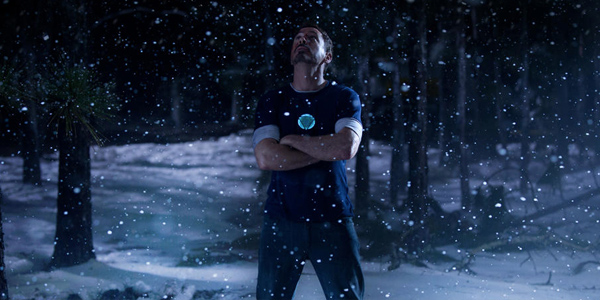
The Flaw: No Iron Man Iron Man 3 was a commercial success, plundering the box office to the tune of $1.2bn, but many fans were left feeling as empty as a remote controlled suit by the time the credits rolled. The film lacked something and that something was its titular character. It could have been mind-blowingly good, and the trailer promised us as much. Vendettas, The Mandarin, revenge, an angry Tony Stark and 30 Iron Men kicking some serious behind in the climatic showdown. What we got instead was 135 minutes of Tony Stark pretty much not being Iron Man even a little bit. Shane Black's film attempts to lift the iron visor on Stark as a character and for this he should be lauded: it is totally acceptable to try and develop a character further, to delve into their subconscious to try and find out what makes them tick. The problem is Tony Stark is not Bruce Wayne. There is no real darkness in Stark's past that we can relate to or that is interesting enough to be developed for over two hours. As watchable as Downey Jnr is, Tony Stark is at his best when he is inside the suit flying around, quipping and saving the day. You fell out of a giant space hole. So what? The Hulk caught you. Now stop moping about in small town America, get your suit on and shoot a rocket into molten Guy Pearce's face. No? Ok, we'll just let a supernova Paltrow save the day instead...

7. Sinister

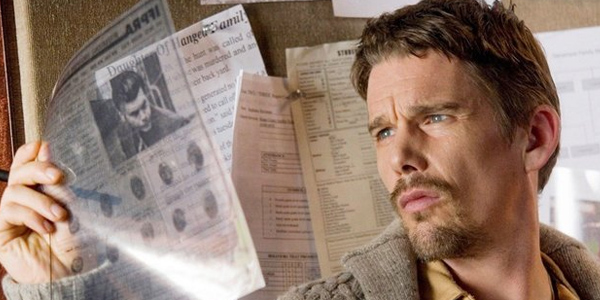
The Flaw: The Third Act Of all the James Wan led 'low budget - high yield' genre of horror movies, Sinister had the greatest shot at being deemed 'awesome'. The set up is simple enough: Ellison Oswalt (Ethan Hawke), a struggling true-crime novelist, moves his family into a house that had previously played host to a family's horrific demise. So far, so run-of-the-mill. The opening hour of the film is well-paced, unsettling and a cut above most of Hollywood's recent efforts thanks to the introduction of a cache of 8mm films which capture the barbaric and brutal deaths of five families on celluloid. As Oswalt watches the films the casual viewer is turned into a snuff voyeur, as these truly terrible scenes - accompanied by the obtrusive and abrasive rattle of the projector €“ unfold before our very eyes. Brilliantly the film hides as much as it displays, allowing our minds to fill in the gaps €“ which is always more fear inducing than bathing the screen in claret. Then, as the film nears its climax and the character of 'Mr Boogie' becomes more prevalent, things start to unravel. For some reason the filmmakers decided to instantly undo the slow-burn setup of the previous hour by allowing the movies most 'sinister' character to cavort around the set like a drunk children's entertainer, hiding in the attic and jumping out at the camera in a bid to get a cheap scare. This reliance on older more clichéd methods of spooking the audience has the reverse affect, dispersing the tension and unsettling atmosphere as the horror tropes mount up. Sinister could have been a genuinely nasty, well-acted and unsettling diamond in the rough. Instead it missed out on greatness by allowing its final act to conform to genre stereotypes. In future, if you want the audience to jump just play Kris Kross €“ though that too may ruin the movie.

6. Django Unchained

The Flaw: Quentin Tarantino Tarantino is somewhat of a troublesome enigma. There is no doubting his talent - Reservoir Dogs is brilliant, Pulp Fiction a masterpiece and Jackie Brown an underrated gem - but recently his self-indulgence has undone his visual flair, his scorching dialogue and natural disposition as a great storyteller and filmmaker. Like Inglorious Basterds before it Django Unchained was almost perfect; as far as slavery-based blaxploitation films go, anyhow. For the first hour and 20 minutes this was up there with the best of the western genre. Visceral, violent and undeniably cool, the film romped along revelling in its own extremity. The well-documented problem with Tarantino's most recent efforts are that they are too flabby; there is just too much fat on the cut and that ruins the enjoyment of the delicious red meat. Django is no exception. There is simply not enough character development and narrative expansion to justify its 180 minute running time. This story of redemption could easily be condensed into two hours, which would serve to maintain the first act's swagger and bravado throughout the whole film. As responsible as he is for the moments of triumph, Tarantino is equally as responsible for the film wandering off into the wilderness half way through the second act, like some gunslinger after too many Bourbons. His brilliant track-record has perhaps allowed him too much freedom and what he now needs is a producer that is willing to tell Hollywood's Wunderkind, "No." And if Harvey Weinstein can't do it, I don't know who can. Django is 45 minutes too long for the title of 'Awesome'... and don't get me started on that ludicrous cameo.

5. Prometheus

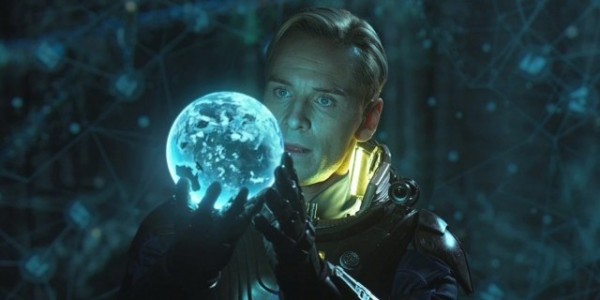
The Flaw: Damon Lindelof Arguably the most eagerly anticipated film of the last ten years, Prometheus had all the ingredients it needed to become a modern classic: director of the franchise starter? Check. Great cast? Check. A budget that can handle the demands of the genre? Check. This Prometheus cake was going to be fantastic, but then someone poured in a whole bottle of Lindelof sauce and totally ruined the mixture. There are moments in Prometheus that are still great and upon watching the open 30 minutes one is filled with the kind of hope that the rest of the film wouldn't unfold into the confused, coincidence-riddled mess that it ultimately does. Is this all Lindlelof's fault? In a word, yes. For one of Hollywood's most lauded screenwriters, Lindlelof has somehow managed to fool everyone into thinking he knows what he is doing by looking exactly like a writer, while seemingly ignoring the first and most important rule of writing a script. Everything must happen for a reason, but not according to our Damon it doesn't. Why does David infect Holloway's drink with the 'black liquid'?! Why, when exposed to the aforementioned black goo, does Fifield mutate into a ginormo-headed monster instead of just getting a bit sick like Holloway?! Where did that f***ing van go?! How on earth did that squid get so big so quickly?! And why is Guy Pearce dressed up like an old man?!* The answer to all of the above is, no reason whatsoever. The explanation and motivation for all of these actions/events is non-existent. The only reason for them is that Lindelof wanted 'The Alien' €“ or an early incarnation of the Xenomorph €“ to come out of The Engineer's chest at the end. It doesn't matter that the majority of the film made no sense whatsoever, as Damon got where he wanted to go, leaving behind him a trail of destruction that confined the origin of one of the greatest creatures ever committed to a celluloid to that of a coincidence. Game over, man. Game over. Oh what I would give to see Jon Spaihts original script be made into the movie this should have been. *Obviously we now know there was a more age-appropriate scene involving Guy that was cut, and admittedly, his viral video speaking about the eponymous Titan at TED 2023 was awesome.

4. I Am Legend

The Flaw: The CGI 'Darkseekers' Disregarding the mutilation of the source material, I am Legend was shaping up to be a pretty amazing film. The empty dystopian city populated only by the charismatic Will Smith (as Robert Neville), his dog Sam and a very loud car was eerie and awe-inspiring in equal measure. The routine of Neville's daily life twinned with Smith's pitch-perfect performance connoted the isolation and desperation of the planet's last surviving human perfectly. So far, so awesome. Then the creatures turn up. Oh dear Lord, the creatures. It doesn't matter that they are no longer vampiric, like in the book; it doesn't matter that the film has seemingly named them after a Christian rock band, and it doesn't even matter that these 'Darkseekers' are moronic individuals who communicate by shouting like a deaf metaller. What does matter is that these supposed harbingers of doom, these 'terrifying' creatures of the night look like they've been crudely fashioned out of plasticine. Consequently any believability or credibility the film had disappears as soon as the lumbering idiots appear on screen. It really is a crying shame, as the rest of the film deserved so much better than this mess of CGI hooligans.

3. The Prestige

The Flaw: Beards And Moustaches The Prestige has the dubious honour of being the only film to miss out on greatness thanks to a number of increasingly ridiculous beards and top-lip adornments. Fans of the film, of which I was one, will argue that this is a mere triviality and overall it is still a fine addition to the Nolan's unblemished oeuvre. I am afraid I can no longer agree. As clever and as intriguing as The Prestige is, the film hinges on the central vendetta between both Robert Angier (Hugh Jackman) and Alfred Borden (Christian Bale). This vendetta, in turn, hinges on their relentless pursuit of perfection in relation to the trick 'The Disappearing Man'. In a bid to outdo one another and exact ever-escalating acts of revenge, both Borden and Angier attend one another's shows in 'disguise'. Now when the word 'disguise' is used people immediately think of a false nose, glasses, maybe even a whole face mask. But not for these two expert undercover operatives and master magicians, who decide to conceal their identity behind the most ludicrous facial hair ever to adorn a face or the cinema screen. Needless to say both men are clearly recognisable and as the film rattles along the beards get increasingly more elaborate. Bales's ginger number is so wonderfully over the top you can't help but laugh, and at one point it appears that Hugh Jackman has stuck a mirkin to his face. So what? Well three very important parts of the plot centre round these two men unknowingly picking each other out of a crowd: when Angier shoots Borden's fingers off, when Borden moves the mattress to break Angier's leg, and the first time Borden does the disappearing man. All integral, all illustrating the depth of their rivalry, all totally unbelievable once you start actually playing attention to the 'disguises'. Still not convinced? Ok. Well, if the Borden twins can pull the wool over everyone's eyes by taking it in turns to dress as Fallon €“ complete with face mask €“ why couldn't they sort out a better disguise to attend Angier's shows than a beard that looks like it was made out of a brush?! A hairs breadth from awesome.

2. Pacific Rim

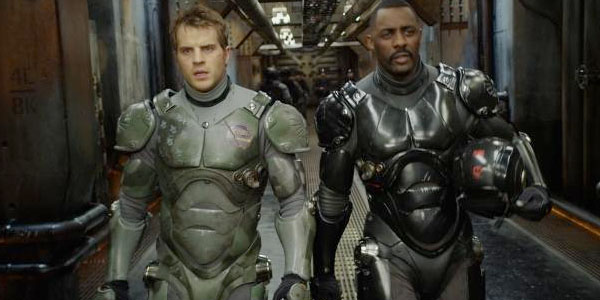
The Flaw: The Human Cast, And Their Accents SMASH! A Jaegar hits a Kaiju in the mouth amidst the giant swells of the Pacific. The gigantic robot looks awesome, the monster looks formidable and the action is as captivating as it is spectacular. As Ramin Djawadi's earth shuddering score kicks in my inner ten year-old is doing somersaults. This film is going to be all sorts of awesome... and then one of the cast opens their mouth. Suddenly, the battle for humanity is lost and the war on acting has begun. Obviously disregarding the titan of acting that is Idris 'Big Dris' Elba, I am hard pressed to remember a film that was so clearly destined for greatness being let down so completely by mechanical acting and an amazing array of appalling accents. Charlie Hunnam - who has done some good work in Sons of Anarchy, delivers his - admittedly clunky - dialogue like a news anchor reading from a teleprompter. His accent also veers from American to English and back again, which begs the question, were there no American actors available? The chemistry between Hunnam's Raleigh Becket and Mako Kikuchi's Mako is non-existent and scenes in which their character's unspoken love 'develops' are more painful than a rocket-powered punch to the pecans. Then Sean Slater (Robert Kazinksy) from British soap opera Eastenders turns up wearing a bomber jacket and speaking in an 'Australian' accent. Really Guillermo? Cockney 'badboy' Sean Slater is Australian? What's next? Eastenders' Phil and Grant Mitchell making an appearance as a couple of 'French' brothers in their undefeated Jaegar 'Le Peggy Peril'?! Perhaps we will have to wait for Atlantic Rim for that little treat. It may be argued that in a film in which 300ft robots beat seven bells out of building-sized monsters the acting becomes slightly irrelevant. However if you don't believe in the characters, care about their story or their fate the action, however incredible, carries less emotional weight and the films storyline suffers as a result. So close.

1. Sunshine

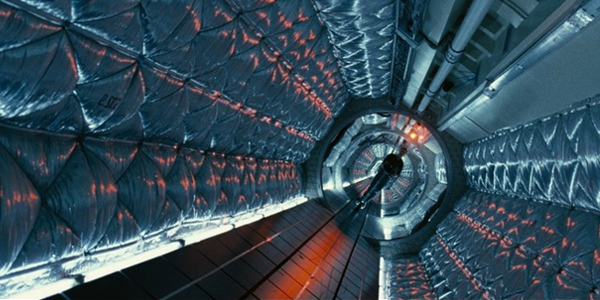
The Flaw: Lacking The Courage Of Its Convictions Few films have managed to obliterate such a wonderful thought-provoking promise in one awful final reel as completely and utterly as Sunshine. Written by Alex Garland and directed by Danny Boyle, Sunshine's narrative centres around the crew of the spaceship Icarus II and their mission to re-ignite our dying sun with an atomic payload, "equal in mass to Manhattan Island." The voyage begins as routinely as all cinematic space journeys, but the mission soon takes a turn for the worse when the crew pick up the haunting space echo of Icarus I's distress beacon €“ the first ship to attempt to kick start the fading star. The film is undeniably beautiful, capturing the wonder of space travel and the awe-inspiring nature of our solar systems' life-giver in breathtaking glory. The look and feel of the film is reminiscent of Kubrick's 2001 whereas the narrative has more in common with Tarkovsky's Solaris €“ and it is here that the film really excels. As the ship journeys closer to the sun the mission's psychologist Searle (Cliff Curtis), becomes increasingly obsessed with staring into the stars ferocious core, which sparks concern amongst his fellow crew members. Soon Capa (Cillian Murphy) becomes equally fixated with the gigantic ball of flame and the existential questions this poses are up there with the bravest tackled by the films of the 'grown-up' sci-fi genre. What do we see when we look into the sun? Can humans handle looking into the face of God? Did their proximity to this burning colossus - that predates religion and myth - tear the crew of the Icarus I apart mentally, physically and spiritually? Unfortunately, the film soon veers off course as the crew decide to investigate the floating hull of Icarus I. Before long Mark Strong's Captain Pinbacker is rampaging around the ship like some naked, burnt Jason Voorhees, offing crew members left right and centre as the film descends into the realms of cheap horror. If only Garland and Boyle had had the courage of their convictions to see the psychologically thrilling ideas of the first two acts through to the closing credits, film fans may have held Sunshine up as the genre's shining light instead of the life-less black hole it became. Do you agree? Which other films just missed out on awesomeness by a hair's bredth? Share your picks below in the comments thread.

Contributor
Contributor

I look like Sue Perkins. I have a beard. I write and make films but not necessarily in that order.