8 Historical Scandals Which NEED To Be Made Into Films
Move over Bridgerton, here are some of history's most salacious real-life scandals.

With the recent success of Bridgerton, Netflix's uncharacteristically raunchy period drama, it's clear that critics and audiences alike love a bit of historical debauchery, scandal, and drama. Set in eighteenth-century England, the series charts the intertwined lives (and deaths) of various monarchs, duchesses, and aristocrats as they navigate marriages, debts, and rivalries.
While the historical accuracy of the show is up for debate, the overriding consensus is that it's endlessly entertaining, filled to the brim with juicy subplots, ridiculous characters, and ostentatious costumes.
Bridgerton clearly follows in the footsteps of other popular (and equally salacious) period dramas such as Dangerous Liaisons and The Favourite. However, while these films are either entirely fictional or based on fictionalized accounts of real history, we think that fact is often stranger (and far better TV) than fiction.
In fact, there are plenty more historical scandals which we would love to see on the big screen. From bribery to adultery, and from murder to piracy, here are eight historical scandals which need to be made into films.
8. John Stonehouse: British Politician (Unsuccessfully) Fakes His Suicide

John Stonehouse was a British politician for the UK Labour and Co-Operative Party, working as an MP and junior minister throughout the 1950s and 1960s. However, in the late 1970s, it was revealed that Stonehouse had actually been working as a Czech spy during his time in British politics, selling governmental secrets, plans, and information.
While undoubtedly shocking and scandalous, the most interesting part of Stonehouse's life was his attempt to fake his own death/suicide in 1974. Arriving at a beach in Miami, Stonehouse undressed, left his clothes on the shore, and ostensibly disappeared into the choppy waters.
Multiple theories soon cropped up: was the former politician killed by a shark? Did he simply drown at sea? Or did Stonehouse deliberately set out to die in the waters that day?
The truth, however, was (somehow) far more intriguing: Stonehouse had faked his death and set off to Australia to live with his mistress (and former secretary), Sheila Buckley. Utilising a series of forged documents and fake identities, Stonehouse managed to evade capture until he was ultimately found in Australia.
Eventually, Stonehouse was arrested and spent five years in prison. This bewildering tale of adultery, forgery, and espionage would make for one gripping film!
7. The Zinoviev Letter: The Daily Mail Publishes A Fakery

Prior to the 1924 General Election, the Daily Mail published a fake letter which alleged connections between the UK Labour Party and Russian communists. The letter, which was seemingly an order from Grigory Zinoviev, an influential Russian politician and Old Bolshevik, addressed to the British Communist Party.
The letter noted that, if Labour were to win the General Election, the party would attempt to re-establish diplomatic relations between the UK and Russia. Consequently, the British working class would be radicalised and the country may face a proletariat uprising similar to the Russian Revolution.
The Daily Mail, the infamous Conservative newspaper, published the letter in the days leading up to the election, hoping to dampen the chances of a Labour victory. Indeed, the plan worked: many voters became highly sceptical and critical of Prime Minister Ramsay MacDonald and the Labour Party.
Ultimately, the Conservatives won the election by a landslide and MacDonald's party were sorely embarrassed. While, at the time, the letter was ostensibly confirmed as genuine by some, this scandalous document has since been derided as a forgery.
A film which charts the letter's (alleged) origins, publication, and impacts would be undoubtedly fascinating, providing insights into 1920s British politics and journalism.
6. The Crédit Mobilier Scandal: Fraud, Bribery, and the Union Pacific

During the 1860s, the Union Pacific Railroad Company and the Crédit Mobilier of America implemented a complex, wide-scale, two-part fraud which implicated multiple politicians and nearly brought ruin to Union Pacific.
Union Pacific specifically created Crédit Mobilier in order to carry out their fraudulent activities, utilising the company in order to severely inflate construction costs. While Union Pacific were building part of the First Transcontinental Railroad, they claimed that Credit Mobilier had charged around $94 million for their services.
In fact, that portion had only cost the company around $50 million, and corrupt executives claimed the excess amount for themselves. Worse still, they used some of these profits to bribe top-ranking politicians.
When this ruse was discovered several years later, nine politicians were identified as complicit, including senators, representatives, and the Vice President. Their careers were in tatters, and the American people began to distrust their elected officials. Union Pacific was nearly bankrupted by the scandal, taking many years to recover from the fallout of this scandal.
Corruption, bribery, and fraud typically make for fascinating (and aggravating) cinema, and we would love to see a film which investigates the web of lies which facilitated this heinous scheme.
5. Edmund Kean: Famed Actor and Adulterer

Although widely forgotten today, Edmund Kean was an acclaimed British actor during the eighteenth and nineteenth centuries. Kean was particular well-known for his stirring performances within Shakespearean dramas, and traveled across the globe to perform for huge audiences.
However, Kean was just as (in)famous for his off-stage scandals as he was for this acting chops. Kean enjoyed a debauched and indulgent lifestyle, one which was ultimately fatal to his blossoming career.
In 1825, the talented thesp was actually sued by Mr Cox, an alderman whose wife had been participating in a salacious affair with Kean.
Kean was ultimately taken to court and Cox successfully won around £800 in damages. The well-publicised court case also led to the end of Kean's marriage to his first wife, and public opinion turned against him. Indeed, Kean was once attacked with rotten fruit as he left the courtroom.
Kean's previously stellar career began to falter: audiences booed him, worked dried up, and the actor began to live in solitude. Kean also continued to drink copiously, and his health began to decline severely: the actor perished at the age of forty-five.
A biopic which examines this toxic mix of incomparable talent, debauchery, and indulgence would be endlessly engaging and entertaining.
4. Captain William Kidd: Socialite and Pirate

Captain William Kidd was a Scottish sailor and socialite who settled in New York city in the late seventeenth century. Initially, Kidd was the toast of the town, quickly becoming friends with prominent persons within politics and society.
However, Kidd also had a history of piracy, and had once enjoyed a successful career as a pirate. Unfortunately for Kidd, however, piracy became outlawed during his lifetime, and he soon had to switch sides.
During the 1690s, Kidd set out to hunt pirates - however, Kidd's skill set was rather limited in this regard and things soon turned ugly. Kidd's crew began to resent their captain and threatened mutiny.
Forced by crew grumblings and money shortages to return to piracy, Kidd once more brought terror to the seven seas. While Kidd was a far more efficient pirate than he was pirate hunter, the law did eventually catch up with the socialite-turned-privateer.
Kidd's trial, which historians now understand to have been rigged, lasted only one day. Merely a fortnight later, Kidd was hanged for piracy and murder. Worse still, his rotting dead boy was left near the Thames in order to deter other pirates.
We would love to see a cinematic adaptation of Kidd's life: a film which traced his early days as influential Scot in colonial New York, his attempts to follow law, and then his eventual return to piracy would be a fascinating (and likely gory) hit.
3. George IV: Divorce And Adultery

The eldest son of George III, King George IV remained on the British throne for ten short years, spending his later life in ill-health. Much of the monarch's decaying physical health can be attributed to his decadent and indulgent lifestyle.
During his tenure as Prince of Wales, George was a notorious drinker and foodie, and, as King, he suffered from various ailments such as gout. More interesting, however, were the monarch's more risqué pastimes.
While George did marry Princess Caroline of Brunswick in 1795, he nonetheless acquired several mistresses throughout his lifetime, including actresses, noblewomen, and courtiers, hopping from woman to woman due to his dissatisfaction with his wife.
Much of George and Charlotte's marriage was marked by bitterness, unhappiness, and contempt. George unsuccessfully attempted to divorce his wife on multiple occasions. In order to do so, George attempted to prove that Caroline was the one who had committed adultery and that their marriage should thus be annulled.
The public took Caroline's side despite George's ardent attempts to discredit his wife, and he ultimately had to present alleged evidence of her affairs to the House of Lords. A cinematic look at this crumbling marriage, and the saucy affairs which defined their tense relationship, would be rife with royal raunchiness.
2. Mary Queen Of Scots: Queen-turned-Murderer?
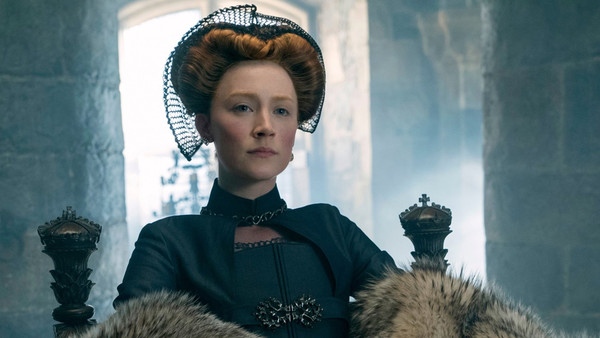
Admittedly, there are a number of films which depict the life and untimely death of this famous Scottish monarch. Most recently, Josie Rourke's Mary Queen of Scots (2018) charted the rivalry between the ill-fated queen and her English counterpart, Queen Elizabeth.
The film, which received mixed reviews from critics and audiences alike, did make reference to the explosive fate of Henry Stuart (aka Lord Darnley), Mary's first husband, this scandalous subplot should have really taken centre-stage.
The pair married in July 1565 and Mary gave birth to their son around a year later. While the couple's child would later become King James VI of Scotland, the monarch who ultimately united the Scottish and English thrones, Mary and Darnley's marriage was undeniably tumultuous. Known for his arrogance and vanity, Darnley was widely disliked.
In 1566, David Rizzio, one of Mary's most treasured courtiers, was murdered by Darnley and his companions. This heinous act, which the pregnant queen was forced to witness, catalysed the downfall of Darnley. In less than a year Darnley was dead too, and his death was as scandalous as it was mysterious.
While it was two barrels of gunpowder which laid to waste the house in which Darnley was staying, it was later revealed that the king-consort had actually been smothered to death. Many assumed that Mary herself had organised his murder in retaliation for the death of Rizzio and due to Darnley's increasing unpopularity.
We need a film which specifically charts the violent, tumultuous, and explosive marriage of Mary and Darnley. While a film might not be able to solve the mystery of who killed Darnley, we would still love to see this Scottish scandal on the big screen.
1. The Petticoat Affair: The Downfall of Andrew Jackson
John Eaton was the Secretary for War under President Andrew Jackson. However, a salacious scandal involving Eaton's wife would eventually catalyse Jackson's downfall.
Peggy Eaton (nee O'Neill) was rumoured to have cheated on John Timberlake, her first husband, with Eaton, and their adultery had (again, allegedly) caused Timberlake to commit suicide.
Once married, the rumours surrounding Peggy's behaviour, nature, and purported promiscuity continued to spread. In fact, once Eaton was appointed Secretary of War, other cabinet wives pointedly turned on Peggy and continued to gossip and criticise the young woman. Their ardent attempts to discredit, exclude, and ignore Peggy became known as the Petticoat Affair.
Eventually, the President himself stepped in to defend Peggy against such salacious and scandalous rumours, personally vouching for her honour and character. Several of his cabinet ministers (many of whom had wives who ferverently attacked Peggy) consequently designed, and his administration was severly shaken.
In retrospect, many historians now believe that Peggy was attacked due to her comparatively modern values. Intelligent and vivacious, Peggy spoke her mind on social and political issues which her contemporaries believed to be reserved for male politicians. A biopic which charts the tumultuous and difficult life of this charming, well-educated, and confident woman would make for a fascinating watch.