8 Hollywood Stars Who Didn't Accept Their Oscars
The big Hollywood celebrities who snubbed the Academy – and why!

The Academy Awards are considered by many to be the absolute platinum standard of recognition for mainstream cinematic greatness, so it may come as some surprise to learn that no less than eight stars have outright rejected their Oscars.
Fondly nicknamed 'Oscars', either after Academy Awards librarian Margaret Herrick remarked that the trophy resembled her own uncle Oscar in 1931, or as a derogative term coined by columnist Sidney Skolsky in 1934 (depending on whose story you believe), the golden statue has been a symbol of achievement and something for some of the best talent in the business to aspire to for generations.
Though many stars have professed not to care whose hands the little gold guy lands in, few of them have followed such statements up with actions. Those who have actually shunned the Awards, however, tend to have done so for a variety of reasons -- from the political to the merely lackadaisical -- and have gone down in the Academy's history books as a result.
Nevertheless, everyone in this article was already a well-established star in their own right by the time they snubbed the statue, and their legacies still live on today, whether bathed in that golden glory or not. Now let's take a look at why they didn't want their awards.
8. Katharine Hepburn Was Nominated 12 Times & Won 4... But Didn't Turn Up Once

One of the leading stars of the Golden Age of Hollywood, and known for an expansive body of work that spanned six decades, Katharine Hepburn was an American actress whose performances attracted awards from all quarters.
It should come as no surprise then that Hepburn received 12 Best Actress Academy Award nominations throughout her career and won four of them, for her roles in Morning Glory (1933), Guess Who's Coming To Dinner (1967), The Lion In Winter (1968) and On Golden Pond (1981); the all-time record for a performer.
What may be surprising, however, is the fact that she shunned the majority of them, refusing to make an appearance at any of the ceremonies. In fact, the very first Academy Awards Hepburn ever attended was the 46th, in 1974, where she was a presenter, not a nominee, and conferred the Irving G Thalberg Memorial Award on her friend Lawrence Weingarten.
Hepburn held no ill will towards the Academy, she just believed that the work itself was her prize. Not what we might expect from one of the most glamourous stars of the silver screen, but then celebrity vanity wasn't always what it is today.
7. Dudley Nichols Refused To Even Accept His Golden Statue In The Mail!

Screenwriter and director Dudley Nichols was the very first person ever to decline an Academy Award.
A contemporary of Katharine Hepburn's (he wrote the screenplays for Bringing Up Baby and Mary of Scotland), Nichols turned down his Best Screenplay award for 1935's The Informer, showing solidarity with the Screenwriters Guild (of which he was a founder) in a power struggle between the Hollywood guilds, studios and company unions (of which the Academy was one of the big cheeses), and boycotted the ceremony.
Persistent as they are, the Academy sent the golden statue to his house several times, only for it to be returned on every attempt.
Following the settlement of the dispute, however, once Nichols was president of the rechristened Writers Guild of America, he collected his Oscar at the 10th Academy Awards ceremony in 1938. This was recognised as more of an effort to seal the peace between the guild and studios as much as reneging on his original stand -- something that was recognised and applauded throughout the American movie business.
6. Paul Newman Gave Up Hope (And Then Won)

By the time Paul Newman was actually granted an Academy Award, he had given up hoping. As a result, Newman wasn't at the 59th Academy Awards ceremony when his number finally came up.
Ironically, the film that won him Best Actor was Martin Scorsese's The Color Of Money (1986), in which Newman mentored Tom Cruise's young pool hustler, reprising his role of Fast Eddie Felson from The Hustler (1961). He was also nominated for the original, which ultimately lost to Maximilian Schell for his performance in Judgment At Nuremberg.
Some controversy surrounded this conferral, as many believed that there were other parts far more deserving of the prize that year, and that the Fast Eddie character was merely a hollow recreation of an originally great role.
While each year has its naysayers (just look at Spike Lee's reaction to Green Book's Best Picture win at the 91st Awards), the furore around this award primarily stemmed from the belief that the Academy were conferring it on Newman out of necessity, in self-awareness of their failure to recognise his talent with an award in competition before.
5. Woody Allen Had A Standing Engagement To Play Clarinet
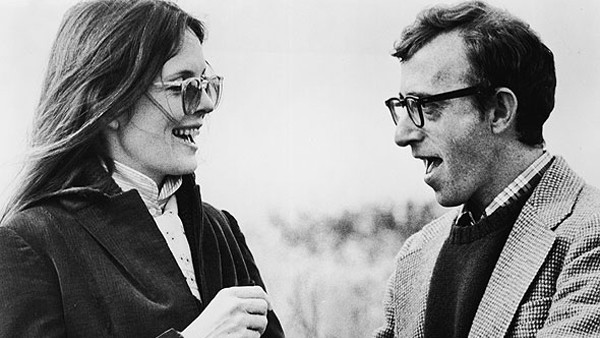
While Woody Allen's acting may not have won him many awards, he has received twenty-four nods from the Academy over the course of his 55-year career, spanning from 1977's Annie Hall (his seventh film) through to 2014's Streetcar Named Desire reimagining Blue Jasmine.
This run has resulted in four wins in the Best Director and Best Original Screenplay categories, with two for Annie Hall, and one each for Hannah and Her Sisters (1986) and Midnight in Paris (2011), the latter of which also made him the oldest winner of this award at the age of 76.
Though Allen has never shown any animosity towards the Academy, he has consistently refused to attend all but one of their ceremonies and never accepted his Oscar wins; much like several of his contemporaries in this article, Allen takes umbrage with the very concept of awards. His oft-thumbed excuse for not appearing is that he has a standing engagement to play clarinet in a Monday night ensemble (and, believe it or not, he does actually play).
The single occasion he did put in an appearance was the 2002 ceremony, at which he held forth on the importance of continuing to film movies in New York following the September the 11th terror attacks.
However, with allegations of sexual abuse levelled at Allen resurfacing in the years since, it's unlikely the filmmaker will be asked to attend any future awards ceremonies.
4. George C Scott Thought Award Shows Were "A Two-Hour Meat Parade"

A face many of us know best from Stanley Kubrick's classic Cold War satire, Dr Strangelove (1964), George C Scott was a powerhouse of an actor, with a dominating presence and signature gravelly voice.
Scott's name was no stranger to the Academy's roster, and he received nominations as Best Supporting Actor for Anatomy of a Murder (1959) and Paul Newman classic The Hustler (1961), as well as for Best Actor in Patton (1970) and The Hospital (1971).
To say Scott had a turbulent relationship with the Academy, however, might be an understatement. He not only rejected his awards, but rejected the very premise of awards in the first place, believing that his performance in one movie could simply not be compared to a different actor's performance in a different movie.
In this vein, he asked the Academy to remove his name from their nominations list for The Hustler, and they took the hint and kept their distance -- at least until his undeniably award-worthy turn in Patton. Nonetheless, when Scott won for Patton, nobody was shocked when he turned down the golden statue. But it did make him the first ever Best Actor awardee to refuse it.
3. Peter O'Toole Didn't Want A Lazy Handout

Times have moved on and Hollywood is no longer wedded to the need to cast hetero white men as the heroic saviour in every foreign-set film. That said, the problematic aspects of Lawrence of Arabia don't negate the fact that Peter O'Toole's turn in the film is one of the cinematic canon's cornerstone performances -- and still worthy of its Oscar nomination today.
Though nominated eight times, for films including The Lion In Winter (1968) and My Favorite Year (1982), O'Toole never managed to win an Academy Award in competition. Appreciating the need to recognise his talent though, the Academy conferred an Academy Honorary Award on him.
O'Toole initially rejected this olive branch and declined the invitation to accept it, believing he was still in the running to win the award competitively (and rightly so, given his nomination for 2007's Venus). All's well that ends well, however, and his children admonished him for this slight, wore him down, and persuaded him to appear at the 75th Awards in 2003.
Curiously, an Oscar is not the highest accolade O'Toole has ever turned down. In 1987 he was offered a knighthood (you know, that thing presented by the Queen) but rejected it, ostensibly as a protest against the policies of Conservative Prime Minister Margaret Thatcher, who had working class Britain in a stranglehold.
2. Elizabeth Taylor Was Duped By Her Husband

Equally as problematic as some of Peter O'Toole's roles, and equally as canonised, Elizabeth Taylor found one of her career-defining parts as the titular Egyptian queen in Cleopatra (1963), written and directed by Joseph Mankiewicz (brother of Herman/'Mank') and co-starring Richard Burton. But not before Burton and Taylor had burned their marriages on the altar of stardom, embarking on a scandalous affair.
And it was Richard Burton (now her husband), who also co-starred with Taylor in 1966's Who's Afraid Of Virginia Woolf? who ultimately caused the actress not to accept her Oscar. Amongst the film's 13 other nominations, Burton and Taylor were up for Best Actor and Best Actress, and at least one of them was a shoe-in for the win.
Burton had lost out on the award four times before, including the previous year's The Spy Who Came In From The Cold, and, afraid of turning up for another dud, convinced Taylor to join him in boycotting the ceremony. Lucky for him, it was indeed another loss; unfortunately for her, this wound up being Taylor's second and final win in the category.
Nonetheless, she went on to receive the Jean Hersholt Humanitarian Award in 1993, by which point she had divorced Burton twice over.
1. Marlon Brando Dropped Out To Protest Native American Mistreatment

The big kahuna of Oscar rejections is, of course, Marlon Brando. Never has an actor more publicly or more scathingly rejected an Academy Award.
Brando won his second Best Actor Oscar (after 1954's On The Waterfront) for his role in The Godfather at the 45th Academy Awards and, rather than just sit this one out like other other stars who have turned down the award, Brando sent a Native American by the name of Sacheen Littlefeather in his stead.
The voiceover at the ceremony told viewers she was there to accept the award on his behalf, but this couldn't have been farther from the truth. Brando sent Littlefeather to protest the mistreatment of Native Americans by the film industry, referencing events at Wounded Knee, South Dakota, where there was an occupation situation occurring between the government and the Oglala Sioux.
The award's presenter Roger Moore seemed baffled by her refusal to take the golden statue, and some of the audience booed, but Littlefeather and Brando's point was made. And while the pair were criticised by everyone from Clint Eastwood to John Wayne, this stunt garnered the desired attention, casting light on the issue and proving that celebrity activism is actually worth something after all.