8 Horror Movies With Creepy Urban Legends
The scary stories behind the scary stories...
The scariest thing about most horror movies is precisely how not scary they are. Being wet-your-pants frightening is literally their raison d'être, and yet there are films being hyped as horror out there that couldnt get fear in Hangman if you gave them three letters and made the Scream face. That's why it's heartwarming to see that filmmakers are still promoting their fright flicks using the tried and tested trick of lying through their teeth.
Scary stories on set, fictional 'this happened to me in real life' tales in the media, sombre based-on-a-true-story taglines - we've seen 'em all, but it's good to see people earnestly making the effort. And yet are all of them promotional gimmicks? There are some Chinese whispers about the stories behind horror movies that have the ring of truth to them.
Whether they're based on real tragedies, or just have creative marketing campaigns behind them, some urban myths just feel real. How about you - can you tell the difference between the story and the myth?
8. The Dybbuk Box Is Real

Ole Bornedal's sadly inferior possession tale The Possession (2012) lacks scares but makes up for it with some classy performances and direction. The likely explanation for both is that Bornedal didn't feel that he was making a true fright flick, but more of an allegory for divorce.
Of course, those excellent performances could easily have been influenced by something else: scuttlebutt from the set says that the cast were genuinely scared of the dybbuk box that formed the centre of the narrative. Stories circulated around the set about lights blowing out and unexplained fires in prop storage.
In interviews, Natasha Calis (who played the possessed kid) seems firmly convinced that theres such a thing in real life as a dybbuk box: a wooden prison said to contain an ancient demon of Jewish legend. Jeffrey Dean Morgan went further, telling io9: "'Don't mock the box,' was sort of the mantra that we lived by while we were filming this... There was an LA Times article about a box that was bought on eBay. And then the people who owned the box some scary stuff started happening to them. No, I didn't want to. It might have freaked me out a little bit too much. Somebody wanted to bring the box to the set, the real box. I was adamantly against it. If you go and you look at what has happened to people that have had contact with an actual dybbuk box, it's not good stuff. It's not like demons flying around but it's like trees crushing your house, weird rashes. Why risk that?"
Paranormal stories have been told about the dybbuk box for centur oh, who are we kidding? Writer Kevin Mannis, who also owned an antique furniture restoration business in Portland, Oregon, first conceived the idea a little over a decade ago, presumably while polishing a wine cabinet. One quick backstory later - about unsettling things happening around the box's previous owners (nightmares about a terrifying old woman, an unexplained smell of jasmine, lights burning out, you know the sort of thing) - and the idea began spreading around the internet like chickenpox from a kids birthday party. Mannis is even a credited consultant on The Possession, presumably because you can't base a movie on a work of fiction without a kickback to the author.
7. The Blair Witch Project Was A Real Documentary

Arguably the most creative and interesting thing about The Blair Witch Project is the marketing campaign that grew up around it, with the film's creative team going to some lengths to invent a plausible backstory for the supposedly true events of the film, which included laying the groundwork for an urban legend, persisting to this day, that claims that the footage itself is genuine.
The website for the film went further into the mythology behind the story how a woman accused of witchcraft was exiled from her village of Blair, Maryland; how half the town ended up going missing over the next year, causing the area to be abandoned; how, even after a new town, Burkittsville, was founded on the same spot decades later, unexplained murders and abductions continued to take place for the next 150 years.
The story concludes with the note that, in 1994, three students decided to travel to Burkittsville, Maryland to film interviews with locals about the legend as part of a class project. They then vanished in the woods nearby, and despite a massive search from local authorities, not hide nor hair of them was ever seen again until their video recorder was found beneath an old building in the area months later. The footage they found forms the basis of the film. Of course, it's a brilliant fake.
The rare book that the students apparently read about the Blair Witch legend doesn't exist. Nor does the hermit who allegedly ritualistically tortured and killed seven children in the 1940s on behalf of the ghost of an old woman. The manhunt for those missing students in 1994? Apocryphal. The film was marketed as being genuine footage (in one of the last instances of such a thing being possible, with the advent of the internet) - but it wasn't so, all of the actors being hired to roleplay their characters in the woods improvising their parts based on notes and an outline of the story. This lent credibility to the supposedly real-life footage, but none of the stories were true.
6. Ringu Actually Happened To Someone I Know

When Ringu was first released in 1998, stories flooded the internet (such as it was back then) that the videotape was real. They'd heard of someone who'd watched it, or owned it but wouldnt watch it, or someone who'd received a mysterious call and died. It's completely untrue, of course, and in this day and age the impact of the original, terrifying Japanese flick has been diluted a little.
Based on a novel by horror writer Kouji Suzuki, the events described do have a basis in reality, however. Ringu's premise concerns a famous psychic, Shizuko, who, accused of faking her powers, committed suicide in shame at the slander. Her even more powerful daughter, Sadako, was murdered by her own father but returned as a vengeful spirit, an onry. In real life, a century or so ago a psychic lived in Kumamoto prefecture in Japan, and was said to have the power of ESP (extra-sensory perception).
Just as in Suzuki's story, the similarly-named Chizuko Mifune volunteered to have her abilities tested by a scientist - the real-life Tomokichi Fukurai, from the University of Tokyo. When Fukurai, convinced, organised a public demonstration of her talents, just as Shizuko's husband did in the film, everyone present denounced her as a fraud. Chizuko retired from public life, falling into a deep depression, and killed herself only a short time later. Even closer to the bone, only a year before Chizuko died, another famous Japanese psychic was born. Takahashi Sadako would later be notorious for apparently having the ability to transfer images from her mind to someone elses or to burn them onto film.
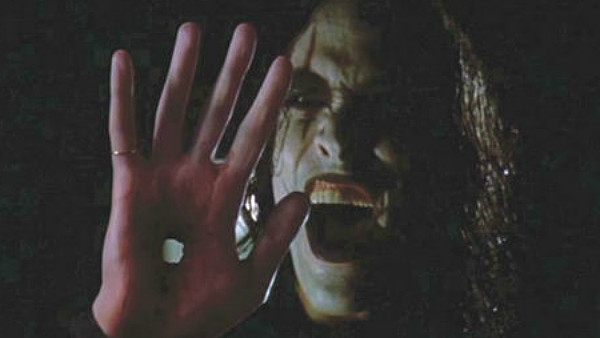
5. Brandon Lee's Death Is In The Crow

Like his even more famous father, a number of odd rumours circulate to this day about Brandon Lee's tragic death in 1993. Some have said that the same secret society that killed Bruce (allegedly, for exposing their secrets in his kung fu movies), then killed his son twenty years later.
Sadly, Lee the younger was killed by a horrible accident on set. While filming the death of the character he played in the film, Eric Draven, a fragment of a dummy bullet remained lodged in the barrel of the gun that was used, filled with blanks, to shoot at Lee. The bullet fragment was propelled with the force of a real bullet into Lee's side by the blank charge, and Lee would later die in hospital.
Of course, the film of the incident was destroyed, and never made it into the final cut of The Crow - a movie which was completed without its star using effects trickery, and has since gone on to become a cult classic. That's not stopped people from blathering about it ever since. It's certainly possible that copies of the footage survived - local police were bound to have confiscated some as evidence, for example. But the scenes showing Eric Draven's murder at the hands of the psychotic Devil's Night thugs was completely reshot, and that's the scene we see in the finished version of the film. If any footage of Brandon Lee's shooting does exist, it's in a Wilmington police evidence lock-up.
4. The Texas Chain Saw Massacre Is A True Story

One of the first, and certainly the greatest incident of producers of a horror movie using the based on a true story gimmick, the original Texas Chain Saw Massacre film, released in 1974, is one of the best examples of cunning misdirection in cinema. The poster frantically emoted: "Can you survive THE TEXAS CHAINSAW MASSACRE",while the back of the subsequent video cassette cover advised potential viewers that "the film is an account of a tragedy which befell a group of young youths this video cassette is based upon a true incident and is definitely not for the squeamish or the nervous."
Director Tobe Hooper and writer Kim Henkel had simply heard the Ed Gein story, about a Wisconsin man who had been convicted in the late 50s of killing his neighbour, and whose story had inspired several fictional stories already - most famously, Robert Bloch's novel Psycho, and decided that it had legs.
Gein was only ever been found to have killed two people. He claimed that he simply stole the other body parts that littered his house from graves and mortuaries. However, just as in the film, his house was found to contain furniture made from human bone and skin, masks and clothing taken from corpses, body parts in fridges, boxes, tubs and littering the rest of the house and the decapitated body of a young woman out in his shed, hung upside down and dressed like a deer carcass.
The mask of human skin that Leatherface wore was based upon Gein's own, as were the depictions of the inside of the house in the film. But the family of psychopaths killing travellers, hitchhikers, and other missing people? The chainsaws themselves? All created specifically for the film. Still, the legend persists to this day. The actor that played Leatherface himself, Gunnar Hansen, has said that he's been told stories personally by people who claimed to know people whod met the original Leatherface, that he was a convict in a state prison in Texas, and who refuse to believe him when he explains the movie's true provenance to them.
3. The Cast Of The Poltergeist Movies Were Doomed

Rumours started to fly around about a curse on the films when, not long after the release of the first in the series, Dominique Dunne (the actress who played the eldest of the children in the film) was murdered. Only months before the release of Poltergeist II: The Other Side, Julian Beck, the actor who played the insane preacher who haunts young Carol Anne in the film, died of stomach cancer. The year after the release of the film, Will Sampson, who played the Native American shaman who was Beck's nemesis in the film, died following a heart and lung transplant operation.
The fourth death was Carol Anne herself, Heather O'Rourke, the young heroine of all three of the films. Aged only twelve, poor Heather died during surgery on her bowel in 1988, only a few months before the release of the third and final film. It seems callous to say it, but deaths happen. In the case of Beck and Sampson, neither was a young man.
Beck's cancer was diagnosed before he accepted the role to play the evil spirit, and Sampson was frail and weak before he had the surgery, and was well aware of the risks going into the operation. Meanwhile, Dunne's boyfriend, an abusive and violent man, was responsible for her death, strangling her and being convicted of manslaughter. The timing is certainly coincidental, but there's no more to it than that.
2. The Set Of The Exorcist Was Possessed By The Devil

Like the Poltergeist movies, mysterious and terrifying deaths have apparently occurred in and around the completion of 1973s blockbuster horror classic The Exorcist, and in the days before widespread internet use, tales and legends of the film grew and grew.
In the end, stories of the demonic events that surrounded the film were exaggerated by the barefaced lies told in the promotion of the film by the producers and director William Friedkin at the time of release, and the Chinese whispers that grew up around the movie in the years following. Depending on whose story you hear, nine people died during the making of the film and shortly afterwards, and sinister happenings plagued the set, including a fire when (apparently) no one was present.
Friedkin, in a moment of brilliance, requested that a local priest conduct an exorcism of the set after the fire, which added fuel to the whispers surrounding the production. Of course, the Catholic church doesn't like people taking the piss and refused, instead allowing a blessing of the set to take place. Subsequently, stories began flying around that unexplained spooky phenomena had occurred during the writing of William Peter Blatty's original novel too. The audience reaction to the film helped the legend grow, with people being offered sick bags to people feeling unwell in theatres, and others apparently passing out during the film all of which helped the movie become the second highest grossing movie of 1973.
1. Cannibal Holocaust Is A Snuff Movie

The most famous horror film to successfully convince audiences that what was occurring was actually real, Ruggero Deodato's Cannibal Holocaust was ahead of its time for a variety of reasons. It's a very early Italian-American example of the found footage subgenre, with the production design intended to mimic the real feel of a documentary in the heart of darkness of the Amazon rainforests gone horribly wrong. The four principle actors in the cast had it written into their contracts that they had to stay out of the media and the limelight for a year so that the aura of realism that the film generated could stay intact.
Unfortunately, the cinéma vérité style and the use of real native people as actors led some members of initial audiences to believe that the gruesome mutilations, rapes and deaths occurring onscreen were genuine footage. Ten days after the premiere of the film, Deodato was arrested and charged, first under obscenity laws, and later with murder. The film, believed to be a genuine snuff movie, was confiscated and all further distribution was cancelled. Cast and crew were required to appear before court in Italy to prove that all of the footage had been faked using special effects.
In fact, the murder charges against Deodato were only officially dropped once hed taken the cast onto a national television show to explain that they were still alive, and to demonstrate how the horrendous impalement effect had been created. The makers of Cannibal Holocaust wouldnt get away unscathed, however. The film was found to have contained genuine footage of animals being killed specifically for the film, and the producers, the writer, the director and the studio executive in charge of the production were convicted of obscenity and animal cruelty, and each given a suspended sentence.
Do you have any other examples of horror flicks with spooky urban legends attached to them? Tell us all about them in the comments!