8 Incredible Movie Scenes Shot In A Single Take
And you thought remembering a bunch of lines was complicated...

The amount of work that goes into shooting a single scene in a movie - let alone the entire finished product - is incredible. There are all sorts of considerations to be made, including keeping framing consistent and correct, making sure timing is absolutely perfect, and enabling actors to do the very best job they can do.
The longer a scene goes on, the more likely it is that something will go wrong. The smallest of mistakes can render a whole scene unusable, and this is one of the reasons why scenes tend to last about ten seconds between cuts (even less during action sequences).
Which makes attempting to shoot a scene in one take an incredibly arduous and ambitious task. The ability to co-ordinate such a complex feat is what separates a good, competent director from a great one. It also singles out certain actors as being extremely capable, too.
Here's 8 of the very best...
8. Children Of Men - The Car Ambush
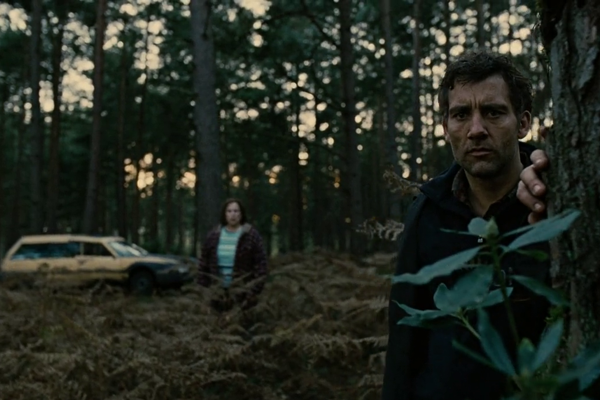
Though both of Alfonso Cuaron's more recent movies (and Gravity and Roma) could feasibly have made this list, Children Of Men is arguably a vastly more astonishing piece of work, detailing a future in which two decades of human infertility have left society on the absolute brink of collapse.
The film is known for its raw, visceral portrayal of society in its death throes, and contains a bunch of long, unedited scenes. But undoubtedly the most memorable and most emotionally affecting is the ambush scene. The scene switches from light-hearted and playful to terrifying and deeply distressing, as various characters including those played by Clive Owen, Julianne Moore, and Chiwetel Ejiofor are attacked by an armed gang.
The scene itself is incredibly complicated, requiring amazing co-ordination. For a start, there's the burning car that blocks their path, then there's the motorcycle chase, the bullet which strikes Julianne Moore's character and the violent encounter with the police. Supposedly, Cuaron actually thought filming of the scene had been spoiled when some blood splattered against the camera lens, but he was convinced by cinematographer Emmanuel Lubezki to leave it in, and the single take was saved.
7. Oldboy - The Hallway Fight

This particular scene from South Korean mystery thriller Oldboy is one of the most frantic action sequences ever recorded on film. Oldboy was released in 2003 and is part of the Vengeance Trilogy, which contains Sympathy For Mr. Vengeance and Sympathy For Lady Vengeance, all of which are directed by Park Chan-wook.
The scene in question sees businessman Oh Dae-su overwhelmed by literally dozens of attackers brandishing sticks, fighting his way down a long corridor wielding nothing but a hammer for defence.
Though only a couple minutes long, the scene is incredibly tangible, and the lack of cuts makes the whole thing significantly more tense. An incredible amount of preparation went into perfecting this scene, with seventeen practices taking place over a staggering three days. In the end, though, they managed to nail the long take, and cinematic history was made.
6. Hunger - The Fifteen Minute Conversation
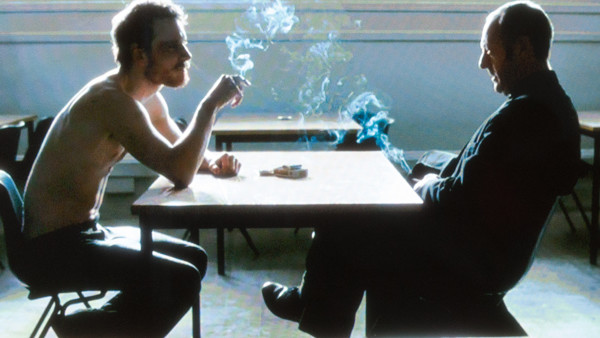
Though the scene from Oldboy was short and massively complicated, this scene is basically the opposite. It's incredibly long - clocking in at over fifteen minutes - and contains nothing more than two characters sitting at a table talking.
The characters in question are hunger striker Bobby Sands (played by Michael Fassbender) and Father Dom (played by Liam Cunningham), discussing the purpose and inevitable outcome of Sand's strike. The camera lingers on the two for an incredible amount of time, not moving at all, merely framing the actors.
So...how on earth do you perfect a fifteen minute take? Supposedly Liam Cunningham moved into Michael Fassbender's apartment in order to rehearse and perfect the exchange. In fact, it's believed that the two actors rehearsed the scene between twelve and fifteen times per day over the course of several weeks just so they could get it right.
What this ultimately amounted to was a stark, emotional conversation, and it's made all the more captivating by the fact it takes place in a single take.
5. Boogie Nights - The Opening Shot

Paul Thomas Anderson is regarded as one of the finest film-makers currently living, so it makes sense that his 1997 feature debut Boogie Nights would show off some incredible talent. Like 1999's Magnolia, Boogie Nights tells the story of a huge number of different characters, expertly weaving their narratives together throughout the course of the film. In particular, the film follows Eddie Adams played by Mark Wahlberg, who winds up becoming a popular porn star in the 70s only to fall into obscurity during the 80s.
The film's opening shot, then, goes from establishing the title of the film to setting the context and introducing many of the main characters, like Julianne Moore's Maggie, Burt Reynold's Jack Horner, and Luis Guzman's Maurice Rodriguez. The shot follows these characters into an incredibly vibrant and popular nightclub, circling and tracking throughout the location.
Once in the club, there are all kinds of framing and lighting complications, and the introduction of even more characters played by Don Cheadle, John C. Riley, and Nicole Ari Parker. Getting the timing of the characters' conversations correct was also a massive concern.
When it came to making Boogie Nights, Anderson was incredibly particular, repeatedly pushing for the film to last over three hours long and be R-rated. The extremely dense, complex long shot is something that Anderson continues to perfect to this day, with notable examples showing up in Magnolia and 2012's The Master.
4. Touch Of Evil - The Opening Shot
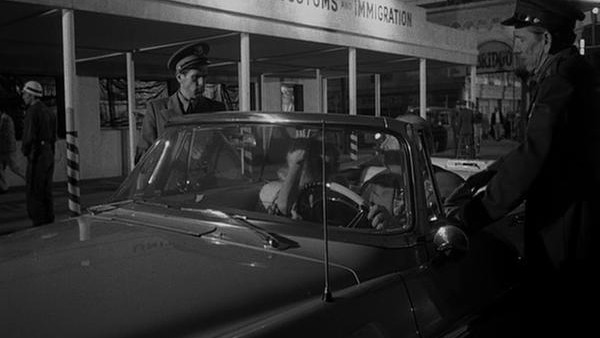
It seems like elaborate single takes are incredibly effective when placed at the front of movies. It makes sense, really: the beginning of a film is when the audience is guaranteed to be most alert, paying attention to everything going on on-screen. It's a well-known fact that excessive cuts in films are used in order to try and retain the audience's attention, and though this makes it much easier for actors to get things right (they only have to focus on perfecting very short performances at a time) they're nowhere near as striking or inventive.
It's no surprise, then, to find an amazing scene shot in a single take show up in one of Orson Welles' films. His 1958 film Touch Of Evil is one of the last examples of film noir in the genre's classic era, and begins with an incredibly striking opening shot.
The shot sees a bomb planted in a car by a mysterious man, only for the car to be entered by a man and woman who drive out of the car park and into the city. The camera then attaches itself to a different couple, the film's main characters played by Charlton Heston and Janet Leight, who walk past the rigged car at various points on their journey, only to share a kiss right before it explodes.
The shot is incredibly ambitious for the time, making use of a massive crane to sweep from sky to street level. And if that isn't impressive enough, the time bomb which is set to around three minutes is timed incredibly realistically, as the scene itself lasts about three minutes (compare that to the one-minute countdowns that last more than five minutes in most action films). It must have been absolute nightmare to co-ordinate, but the end result is something very special.
3. Paths Of Glory - Through The Trenches

This particular scene may not be incredibly long or theoretically complicated, but it's an absolutely incredible example of how a single take can be used to set a certain tone and portray a certain message.
The scene sees General Paul Mireau (played by George Macready) take a trip through the trenches during World War I, speaking to various soldiers along the way (and noting the various explosions taking place increasingly close to their location). The climax of the scene sees Mireau reach one particular soldier who is completely incoherent, failing to engage with the questions the general asks and confessing to being a coward. The general is told that the soldier is experiencing shell shock, which the general staunchly refutes, causing him to beat the soldier in question.
As mentioned, the take isn't an incredible example of technical prowess, but it completely captures the spirit of the movie, which Kubrick meant as a great anti-war statement. The General Mireau's inability to understand the plight of his soldiers, then, coupled with the deep, chaotic view of life in the trenches achieves this aim perfectly, culminating in the general's violent display of ignorance.
The take also makes use of extensive tracking and most notably practical effects in the form of explosives. Getting this scene right, then, required not just the actors to be on form (they could easily start another take if a performance was off) but for the explosives to be timed precisely and framed immaculately.
2. Goodfellas - The Bar Scene

The number of times this scene has been poorly imitated is quite staggering. Masterfully directed by Martin Scorsese, Goodfellas (released in 1990) is a massively influential crime film that narrates the rise and fall of Lucchese crime family member Henry Hill and his companions. It was so successful that it scooped up six Academy Award nominations, including Best Picture and Best Director.
But onto the scene in question. What's amazing about this scene is that it's vastly complex while coming across as seamless and natural. It follows two characters as they enter a club, from skipping the queue and entering via a secret entrance to navigating the shadier corners of the location.
The timing required was rather astounding, as the intensely dynamic quality of the scene means nothing is static and everyone is constantly moving, including those not currently on screen. As the camera follows Hill (played by Ray Liotta), relationships are established, power is established and the setting is established, proving this single take to be an essential piece of film-making.
1. Russian Ark - The Whole Movie
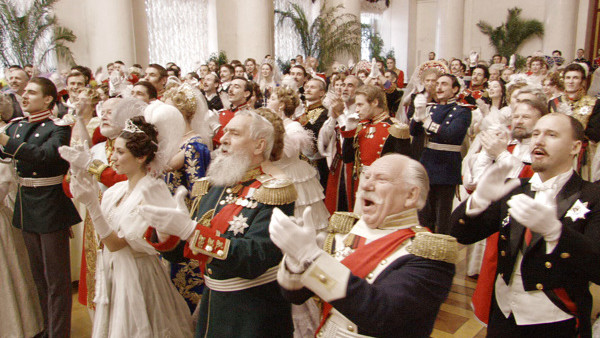
Yeah...you read that right. Russian Ark - the 2002 historical drama directed by Alexander Sokurov - was shot in a single take. The whole movie. One take. The film sees a 19th Century French aristocrat exploring the Russian State Hermitage Museum, encountering various historical figures from the last few centuries.
Is it brilliant? Or it madness? Regardless of opinion, it's an absolutely astonishing feat. The film clocks in at ninety-six minutes, and displays an amazing thirty-three rooms of the museum, containing over two thousand actors and three orchestras. Yeah, and in case you've forgotten, it was all shot in one take.
The shooting of the film was so elaborate that (understandably) an entire documentary was made about its creation, called In One Breath. Supposedly, four attempts were made to film the movie. Eventually, the film-makers were left with just enough battery power in the camera (there was only one!) that they could attempt it a final time.
Of course, it goes without saying that timing, tracking and everything else was maddeningly intricate. The director recorded much of the sound separately, not using the microphone in the camera, because he would commonly swear when something went wrong, a piece of timing wasn't exact or any other issues arose.
Though the film itself wasn't a massive commercial success, it will surely go down in history as one of the most mind-blowing examples of films that utilize the single take.
What other movie long takes deserve celebrating? Share your favourites down in the comments.