8 Mental Illnesses That Only Exist In Movies
8. Amnesia That Also Happens To Change A Characters Personality
 Or Retrograde Amnesia if were going to going to go down the clinical route. Granted the loss of part or all of your memories will have a debilitating effect. If you have an accident and forget who or what you are, sure youre going to make some decisions you may not have considered before. That being said, the chances are, you wont have a complete personality wipe in the process. Take the Bourne films. Just because he cant remember his old life, that doesnt make Matt Damons Jason Bourne any less cunning or deadly. Those honed skills are still there, even if he cant remember how he got them. But in The Long Kiss Goodnight, Samantha Caine (Geena Davies) was a top secret agent with lethal skills who had an accident and then spends eight years asa perfect suburban Krispie-treat soccer mum? Every fighting skill is suppressed, until a car accident reactivates them? Thats a complete change of personality brought about by amnesia. Shes not a cop. Or a stuntwoman. Or in private security. Because somehow she has a new personality and wouldnt know how to do any of these roles. No, shes a teacher. And not a Nazi-like PE teacher either. Now go back to Jason Bourne. Perhaps he wakes up, settles down in a nice town in Midwest America, has a couple of kids, joins a local amateur dramatic society and opens a kitten sanctuary? No. Because, despite his amnesia, hes still Jason Bourne
7. Convenient Amnesia For The Sake Of the Plot
 Yes, its a bit of a theme, but amnesia is the guilty pleasure of Hollywood. In this instance, Im talking about that that accident that just happens to wipe the memory of a pivotal moment in a characters life that just happens to come back at the best or worst possible moment (depending on what is required of the plot). I wouldnt state for a moment that this couldnt happen in real life, but in film (or television think Teris dragged out amnesia storyline in season 1 of 24), it happens an awful lot. Here are some examples of how amnesia is used to forced, or even insidious effect, in the movies. Spider-Man 3: Harry Osborn is the Green Goblin 2! Except he is injured and forgets everything that led him to that path, until the moment the plot requires him to remember, forgive Peter Parker and join him in the desperate fight against the Sandman and Venom. Overboard starring Goldie Hawn. A bump on the head results in socialite Joanna loosing her memory, which allows Kurt Russells Dean to exploit her by pretending she is his wife, just to allow her to looks after his kids and gain financial revenge on her for the lack of payment on the yacht she hired him to build. Really, this is a nasty, twisted revenge story, where a woman is exploited as the result of an accident, masking as a rom-com. Regarding Henry has Harrison Fords Henry Turner being shot in the head during an armed robbery, conveniently allowing for a complete change in personality (that old chestnut again) from a narcissistic workaholic to a loving family man. Convenient. Of course, movies do get it right to. Memento and Finding Nemo being two examples that nail the depiction of amnesia on film. Its just a shame so many other films go so far off track
6. Cute Obsessive Personality
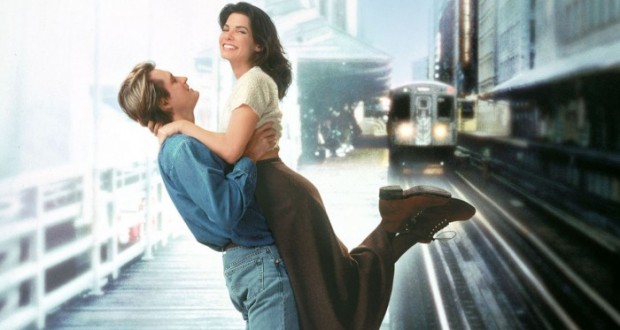 By cute, I mean, what an adorable / funny / light-hearted / romantic situation we find these characters in. Only in film could extreme hoarding or OCD be played for laughs. And only in film could stalking be portrayed as cute, and yet audiences fall for it every time. A prime example of this? The disturbing plot of Why You Were Sleeping. Sandra Bullock playing Sandra Bullock watches the very cute guy a station platform fall off the track and into a coma. Thats where it should have ended. But no, she brings flowers to his bedside and sits with him, even though he is a COMPLETE STRANGER. But hes a good-looking stranger and its a Sandra Bullock rom-com so the audience plays along. And then his family turns up, all distraught and what does she tell them? Im the creepy stranger who watches him while he lay unconscious? No, she tells them shes his FIANCEE! The one they conveniently didnt meet. But its okay. Perhaps they have convenient amnesia. Have I discussed those rare occasions where amnesia is used as a plot device in film. And then what does Sandra Bullock with her cute obsessiveness do? She becomes part of the STRANGERS FAMILY. Too far? Not for Sandra Bullock. She still has to fall in love with the STRANGERS brother. Yes, lets add some complexity to this insidious plot. Of course, when the good-looking stranger finally wakes up he does what everyone, the audience included, should have done immediately. He reacts badly to Sandra Bullock, this cute obsessive woman who has wormed her way into his life and the hearts of his family. But, because its a Sandra Bullock rom-com, all is forgiven and she lives happily ever after with the strangers brother. Over reaction perhaps? Okay, lets make this a gritty drama. Lets put the very talented but severe looking Tilda Swinton with her menacing eyes in the female role. Lets play it again. Tilda Swinton observes a man for whom she shares an attraction, almost die. Obsessed with mortality she comes to his bedside and watches him while he is unconscious. With cold calculation, she tells the strangers family that she is his fiancee and worms her way into this new life so that she may better understand the man in the coma she has spent hours studying. Not so cute now, is it?
5. Accident Induced Evil
 This tends to happen in approximately 87.65% of all superhero movies. Someone good, or at least only somewhat dodgy endures such a terrible event they turn to a life of crime. A good helping of PTSD with a dash of psychopathy. The trouble is, while trauma can do terrible things to a persons psyche, can it really transform someone into an evil monster? Take Harvey Dent in The Dark Knight Rises. The White Knight, played with noble gravitas by Aaron Eckhart, is the epitome of the good in humanity. A man who has made it his goal to rid his city of crime, fight for injustice. And then an (admittedly horrific) accident turns him into a monster, both physically and mentally speaking. I get that theres trauma involved here. And certainly it made for a dramatic, compelling final act, but suddenly hes threatening to kill a child? This would suggest that this evil trait was always there, only unleashed by the horror Harvey Dent has incurred. The trouble is, thats a bit hard to reconcile against the man we saw before.
4. My Wife Is Dead, Now I Will Become An Evil Scientist Bent On Destruction
 Doctor Octavius or Doc Ock from Spider-Man 2 follows a similar and somewhat unconvincing path to evil as Two Face. It happens across numerous films, but the central villain of this brilliant Spider-Man sequel epitomizes this odd characterisation that a genius suffering the loss of a loved one will turn him mind to chaos and destruction. Like Two Face, Doc Ock is another memorable and engaging villain, with Alfred Molina bringing believability to what could have easily been a hammy role. But like Two Face, this character has such a sudden shift in personality and behaviour that it doesn't make it believable that the villain threatening to derail a train full of people is the same man encouraging Peter Parker in his scientific pursuits at the start of the film. Trauma can severely impact people livesbut can it make good people do this? Though at least theres an element of creativity with the brilliant, raptor-like, artificial intelligence-enhanced arms striving to control Doc Ocks actions. And he does get a redemptive arc at the end, saving New York from ultimate destruction. So maybe he wasnt so evil after all
3. Crazy People Cure Patients With Mental Illness Better Than Any Mental Health Professional Ever Could
One Flew Over The Cuckoos Next is a brilliant film, theres no denying that. It brings Ken Keseys novel to life and won 5 deserved Oscars as a result. The trouble is, this indicates a worrying trend in movies that suggest mental illness can be cured by dynamic personalities, despite all efforts made by trained, experienced mental health professionals. The aforementioned film suggests: a) The crazy McMurphy, played by Jack Nicholson is able to plead insanity to escape a stint prison and convince healthcare professionals that he needs to be admitted to a ward for the mentally instance. b) McMurphys rebel nature is able to unlock hidden secrets in the mental patients (Chief Bromden can speak) and discover innovative solutions to help his fellow inmates. c) That mental health professionals are not only unable to spot the difference between real and faked mental illness, but that they are ineffective in helping to treat these conditions. Sure this results in a brilliant villain in Louise Fletchers Nurse Ratched (for an equally intriguing performance watch her many years as Kai Winn in Star Trek: Deep Space Nine) I can understand that mental healthcare has taken years to develop, but it takes elements of the profession back to the Victorian Age of Bedlam, and that is not a great thing. Films like Girl Interrupted continue this tradition. Why it might make good drama, it does nothing to support the years of hard work and training that go into the mental health care profession.2. No Fuss, No Mess Eating Disorders!
 More specifically, bulimia. Its not something that someone with this illness can easily hide. Its not something that can be handled with a quick trip to the loo and then back to the party. And yet, in movies, for all the secrecy and drama that comes with a character with an eating disorder, its rare that there is an accurate depiction on screen. Because we as the audience are already moving on to the next scene. Why should we bother with the mess that came before it? And is it just me, or are eating disorders there in movies to add depth to a character? Or show that a certain character is troubled? Take Heathers. Shannon Dohertys Heather (Duke) is a bulimic. The trouble is, you never see the real scene where she spends ages cleaning the toilet afterwards and leaves with her face all splashed with water and puffy eyed. Movies would have you believe that audience would not be able to tell the character had bulimia, unless they admit to it. Two seconds after the act the rest of the cast are none the wiser as they greet the bulimic character and her perfectly made up face. The truth is, its far messier. But are we really going to spend five minutes form a bottle of toilet duck? Probably not.
1. Anti-PTSD
 At the other end of the spectrum, we have those characters who should, after the events of several films / television series, be locked up in a paddled cell, drooling and rocking back and forth. Characters who should be so crippled by the trauma of the events they faced that they are both a danger to themselves and everyone around them. And yet, these characters dont seem to show any sign of PTSD. They might be a bit aggressive, a bit anti-social, but they function in society. They have lives. People to love. Families to care for. Nothing will break them. Take John McClane of Die Hard and its many sequels. Let me count the traumatic events in his life. Armed terrorists kidnapped his wife and he single handedly took them out barefoot. Score one for the hero. Then his wife was on a plane targeted by terrorists. Despite all his efforts, he failed to save the crashing of one plane and the deaths of all onboard, despite his wife living to survive another day (off screen at this point) Forced into a twisted, explosive game of Simon says across New York at the hands of a villain wanting revenge for the death of his terrorist brother from the first film. Then his daughter is kidnapped. And finally he must attempt a rescue attempt of his son from Russia, where they become engaged in a nuclear threat. And you know what, they delve a little is alcoholism and failed relationships, but John McClane still battles on, quips and all. And we love him for that. Even if we do begin to wonder how isnt a dribbling wreck by now! And then theres Jack Bauer. Okay, I know its television, but the hero of 24, due to return to our screens nest year for another day of trauma, is John McClane x 10. Trauma? McClane has nothing on Jack. His daughter was kidnapped (many timesincluding by a cougar?!) His ex-lover murdered his wife. He was forced to become a drug addict. Nearly every one of his friends, loves and allies were murdered, except his friend Tony who came back from the dead as a quasi villain. He was kidnapped and tortured by the Chinese for months and then saw the same thing happen to his latest love (who was a dribbling wreck after ONE TRAUMATIC EVENT) Was forced to fake his death / go on the run for the authorities he had served for years (currently hes a fugitive) Oh and his father was a villain. Okay, he might be a little rough around the edgesand okay he did shed a tear at the end of season 3, but you know what? Jack Bauer will be back next year, kicking ass. And very much alive. I cant wait. Even if he should have jumped off a cliff by now. So what are your thoughts? How well do movies depict mental illness? Are there enough that get it right? Are rom-coms all sick and insidious? How unrealistic are the central characters of traumatic, action franchises? Does it matter if the acting is phenomenal? Let me know in your comments below