8 Moments That Made You Hate The Marvel Cinematic Universe

Who knew such a beloved franchise could cause so much anger and resentment?

On the whole, the endlessly expanding entity that is the Marvel Cinematic Universe is a great - and beloved - source of entertainment. There's no denying that Marvel Studios have done a rather terrific job when it comes to conjuring what is essentially cinema's first proper cinematic universe - a big screen rendering of what the company spent decades perfecting in comic book form; thousands of iconic characters existing in one, interconnected world with widespread repercussions. But there have been dark times, too - times when fans of the Marvel Cinematic Universe have been forced to subject themselves to the tyranny of bad narrative decisions, ill-judged character moments and questionable lapses in logic that have slowly, one by one, inspired varying levels of resentment, disillusionment and - at their worst - outright hatred. Which brings us to the following article - one which attempts to highlight those key instances at which the Marvel Cinematic Universe took things too far; those plainly dire moments when even the most loyal fan had no choice but to throw their hands up in the air and say something along the lines of: "Screw this." Everybody will have their own versions of this list, of course, but these are the ones that hurt the collective fanbase on the whole...


8. The Resurrection Of Agent Coulson - Agents Of S.H.I.E.L.D.

It was arguably the most tear-inducing Marvel Cinematic Universe moment to date; one that came out of nowhere and shocked everyone. Who knew that the death of Agent of Phil Coulson, the very definition of a "secondary character," could cause so much pain? Yes, Agent Coulson was murdered at the hands of the mischievous Loki - a defining event that shook the very foundations of the MCU. But it was not to last; a year later, Coulson was back without explanation as part of a new TV series: Agents of S.H.I.E.L.D.. What's worse is that his mysterious resurrection never really got a particularly believable explanation. Even Joss Whedon was peeved with Marvel's decision to bring back a character that he killed off. "Watching Coulson die but , 'Yeah, but I know that he kind of isn€™t' - it did take some of the punch out of it for me," he said when discussing the matter, and that kind of sums up the general feeling towards this moment in retrospect. All of the weight has been drained from what was otherwise perceived to be a very brave and very emotional moment, because - even if you don't watch Agents of S.H.I.E.L.D. - you know that Coulson is alive somewhere. It was a creative decision that ruined some of the integrity, and thus cemented MCU as a franchise that was happy to toy with its fanbase.

7. Not Working Out Their Creative Differences With Edgar Wright - Ant-Man

Given that it is perhaps the defining aspect of the MCU on the whole, maintaining a sense of continuity between films is top priority for the studio. Which means that - generally speaking - directors must abide by the "house style" in terms of each film's aesthetic look and feel. This is done to ensure that all the movies appear to be set in the same universe. As a result, many of the MCU flicks emerge feeling somewhat factory-like. As if they're being secretly directed by a surrogate filmmaker named.... oh, Kevin Feige. That's why the studio have placed an emphasis on hiring directors who made their name in television, where directors are groomed and nudged into shooting episodes in a particular way. Which is presumably the reason why Ant-Man lost Edgar Wright due to "creative differences," and - under the direction of Peyton Reed - the film felt a bit bland. Nobody knows the real reason why Wright left the project, of course, but it's not hard to guess: Wright wanted to make the film more personal, and Marvel restricted his vision. Marvel presumably wouldn't budge on their own terms, and Wright was forced to leave. But the studio's unwilling to compromise resulted in what is arguably the weakest MCU flick since Iron Man 2, albeit with flashes of inspiration scattered throughout - tiny residuals of Edgar Wright's Ant-Man. Although continuity is important, surely there could have been a way to make this work? You can't help but hate on Marvel for their position on this front somewhat, because they let one of the most talented directors on the planet walk away.

6. The Mandarin Drop - Iron Man 3

This one hurt, didn't it? This one really hurt because it felt personal - like Marvel were willing to compromise the integrity of a great, long-standing character for the sake of a joke. Who the heck over at Marvel H.Q. really thought that this twist would go down well? That the fans would come together in the streets with banners and fireworks and cakes and funny hats in order to proclaim that the Mandarin reveal was "the greatest twist ever?" Chances are that they didn't, but opted for it anyway. But it still leaves a sour taste in the mouth whenever you watch the film, as if the self-awareness and the meta aspects that tends to define the MCU in its current stage had gone too far. There is, admittedly, certain joy to be found in the revelation that Ben Kingsley's villainous Mandarin - Iron Man's arch-nemesis - is actually a stage actor from Croydon, England, but it's fleeting. Once the reveal actually sets in - that Guy Pearce's far less interesting Aldrich Killian is the true Mandarin - it's hard not to feel totally bummed out and annoyed at Marvel for wasting a great and iconic character. Years later, it's still hard not to resent the decision.

5. That Time Jane Stumbled Upon An Infinity Stone By Total Coincidence - Thor: The Dark World

Thor: The Dark World is the dumb little brother of MCU outings. It is, without question, the most inconsequential film of the lot; the only chapter that genuinely feels pointless, as if nothing of worth ever happens. That doesn't mean it isn't mildly amusing and mostly watchable, just that it strives to be nothing more than a placeholder film - a wait station between more important entries, like the Avengers films. One of the more insufferable things about Thor: The Dark World is its flippant attitude towards plot, which is a nice way of saying that it doesn't have one. Everything that happens in the movie happens by accident, and the worst example of this occurs when Jane Foster - girlfriend to an Avenger - accidentally stumbles upon an Infinity Stone in London. Of all the people in all the world, Jane was the one that found the Aether. Are you kidding us, Marvel? How this plot point made it through the development stages, who knows? It's almost as if the writers said: "Okay, at one time Jane finds the Aether - we'll go back and make up a reason why later," and then they just forgot to do it. This half-assed approach to the discovery essentially felt like Marvel losing focus on what mattered, which was the story. It was easy to grow resentful - and disillusioned - realising that they were taking shortcuts.

4. Nick Fury's Bait And Switch "Death" - Captain America: The Winter Soldier

There's an unexpected moment in Captain America: The Winter Soldier where it almost seemed like the MCU was about to grow up; that - from now on - it was going to be bold and brave and take risks, and then... less than an hour later we were back to square one. That's to say, the sequel to Captain America contains a scene in which S.H.I.E.L.D. director Nick Fury - the guy responsible for The Avengers - is shot by Bucky Barnes ("The Winter Solider" of the title) and killed. The movie tries to make you believe that he's actually dead, of course, because that's the point of the bait and switch - lo and behold, it's soon revealed that Nick Fury faked his own death in order to disappear deep underground. Yawn. Finding out that Fury was still alive after his "death" wasn't so much a relief as a bonafide disappointment - just when you felt like things were changing in the MCU, that there were going to be consequences and unexpected twists, Captain America: The Winter Soldier essentially made you feel stupid for getting emotionally involved in the narrative. Nick Fury didn't need to die for the movie to be good or anything - it was just that bringing him back after he died before our very eyes felt cheap. Not to mention that the moment in question has since made it hard to buy into any similar occurrences in more recent ventures. Where are your balls, Marvel? We all want to see them.

3. Tony Stark's Chinese Miracle Cure - Iron Man 3

Iron Man 3 is a very entertaining and highly watchable film for the most part, but it might also be the MCU entry packed with the most hate-inducing moments. Because here's another one to get you grinding your teeth together. For the sum of Iron Man and Iron Man 2, Marvel continually pushed the idea that it was impossible for Tony Stark to get that shrapnel out of his chest, thus the arc reactor - with its magnet - were created. It was drummed into the minds of the audience that there was no way for Tony to remove those metal shards of doom without him being killed. In Iron Man 2, you'll remember, they even began to poison him - and yet he still couldn't get them out. Which is fine, up until a totally unnecessary scene that takes place towards the end of Iron Man 3; all of a sudden Tony is in China with a bunch of surgeons and it's somehow possible for him to remove the shrapnel? If it was that easy all along, why were we - the audience - invested in this situation for the sum of two previous movies? Basically, Tony removing the shrapnel in such a quick and simple fix felt like a slap in the face; not only did it compromise one of Tony Stark's defining features, it cast a shadow of doubt over previous chapters. It's a moment of random flippancy that made you question Marvel's ability to keep up the pretences of the world they were trying to establish. It just didn't make any sense.

2. Black Widow Falls In Love With Bruce Banner, Just 'Cause - Avengers: Age Of Ultron

The Marvel Cinematic Universe has never been particularly good at establishing that thing we call "romance." We're often told that characters are into one another, but you wouldn't always know it from the chemistry they share with on-screen. Thor and Jane have so little chemistry, for instance, that it's almost as if their actors were forced to record their shared scenes on different sound stages. Marvel fans have had to put up with these unsatisfactory romances for years now, but the most irksome moment occurred towards the beginning of Avengers: Age of Ultron, when Black Widow suddenly revealed that she like not Hawkeye, not Captain America, but Bruce "The Hulk" Banner. Not only did this moment not ring true at all (previous Marvel films looked like they were trying to set up Black Widow with Hawkeye and then Captain America), it just happens totally out of nowhere - Black Widow has a sudden, unexplained affection for Banner just because Age of Ultron needed to have a romance. But the studio could have at least gone down the Hawkeye or Captain America routes; at least those kind of made sense. Watching Black Widow and the Hulk acting like kindred spirits plainly felt like an annoying, ham-fisted inclusion - the kind that made you wonder who up in Marvel H.Q. was calling the shots when this ill-judged decision was made. There was no lead-up or backstory; we weren't told why Black Widow had fallen for Banner. In terms of arbitrary romance plots, this one really felt akin to "the last straw." Another case of Marvel skipping on the details...

1. The Sheer Lack Of Clarification On Everything - All The Movies
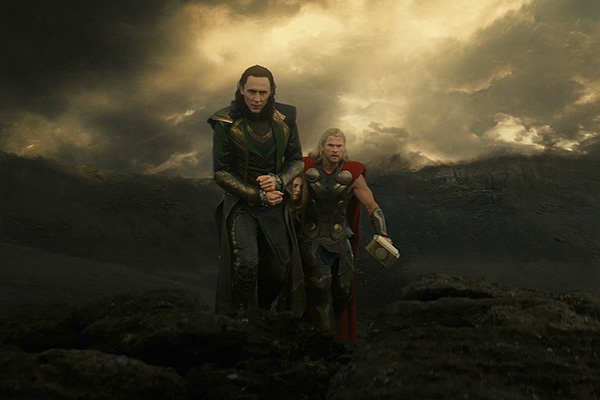
The biggest lie that the MCU purports to its fanbase on a frequent basis is that it's super dense and detailed and seriously tight on the continuity front. How else could it have all those interconnecting moments and shared characters spread between so many films? And yet that couldn't be further from the truth, because approximately 30% percent of what makes up the Marvel Cinematic Universe is totally ambiguous, vague and unclear. Important things happen off-screen all the time, to the point where it's actually frustrating to sit through an MCU instalment as a viewer - not to mention totally and utterly unfair. The studio presumably thinks that it doesn't matter whether or not they explain how Thor managed to get back to Earth in time for The Avengers, or how characters happen to know stuff about objects that are from completely different planets, or how Bruce Banner manages to stay in control when he transforms into the Hulk for some reason? Then we have questions like: How powerful are Thor and Loki? What hurts them? Can they "die?" So many major events happen in the dark without ever being expanded on properly that Marvel's official approach to explanations seems to be: "just hope everyone forgets when we distract them with this cool fight scene." And whilst that works to a degree, there are just too many narrative lapses scattered across the canon. When you stack them all up against one another, it feels - quite frankly - like Marvel are kind of taking the p*ss. If there's any reason to hate the Marvel Cinematic Universe, it's this one; their frustrating and lackluster approach to explaining and expanding on things that really need to be explained and expanded on. Ignoring stuff just results in fans asking more questions!

Contributor

Sam Hill is an ardent cinephile and has been writing about film professionally since 2008. He harbours a particular fondness for western and sci-fi movies.