8 More Movie Plot Twists So Subtle You Totally Missed Them
But wait, there's ANOTHER twist.

Everybody loves a good plot twist, and the best ones tend to sneak up on audiences totally out of nowhere, subverting expectations and making the movie fascinating on repeat viewings.
But not all twists are made for epic, grand-standing moments, and sometimes writers like to keep their clever reveals a little more low-key.
That's certainly the case with these 8 subtle twists, which scarcely even announced themselves to viewers, and perhaps only years or even decades later have they finally been unearthed.
But each reveal and rug-pull nevertheless lends crucial context - be it grim, hilarious or simply eyebrow-raising - to their respective film, ensuring you'll never think about them quite the same way again.
With their devastating logic and even occasional confirmation from the filmmakers themselves, these low-key jaw-droppers will let you watch these 8 classic movies in a whole new light.
So the next time you think you've got a movie totally pegged, maybe take a second look and consider whether you've really covered all the angles...
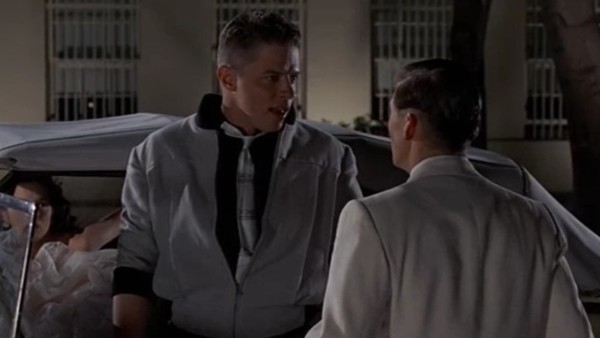
8. Biff Accidentally Gave George The "Dutch Courage" To Hit Him - Back To The Future
The Movie
Robert Zemeckis' legendary time travel classic, revolving around teenager Marty McFly (Michael J. Fox), who inadvertantly travels back in time to 1955, where he must play matchmaker to his future parents (Crispin Glover and Lea Thompson) to ensure his own existence.
Back to the Future is just a perfect storm of first-rate writing, direction, acting and special effects colliding together, allowing it to effortlessly endure over almost 35 years.
The Twist You Didn't Notice
Pretty much every time travel movie in existence boasts a plot twist or two, but the first two Back to the Future movies feature one hilariously ironic reverse-setup-and-payoff pertaining to George McFly (Glover) eventually knocking douchebag bully Biff Tannen (Thomas F. Wilson) out.
In isolation, the first film suggests that George simply mustered up the courage to take on Biff the old fashioned way, but Back to the Future II quite blatantly implies that he had a little liquid encouragement.
You see, the sequel shows Biff spiking the punch at the high school dance, and the first film showed George drinking said punch before he, uh, landed his punch. There's no fudging needed here - the cause-and-effect is pretty much iron-clad.
After all, what's more beautifully ironic than Biff himself literally giving George the necessary "courage" to beat him up?
Granted, series co-writer Bob Gale denied that he ever intentionally wrote George being drunk into the original script, but we're gonna invoke a little Death of the Author here and say that the logic is tight enough to win out.
7. Chief Is Secretly A Demi-God - Wonder Woman

The Movie
Just when you thought the DCEU was out for the count, along came Patty Jenkins' Wonder Woman, a lighter-than-usual affair that nevertheless refused to downplay its well-drawn characters in favour of CGI bombast (until the third reel, anyway).
The Twist You Didn't Notice
This extremely sly twist refers not to Diana (Gal Gadot), Steve Trevor (Chris Pine) or any major character in the movie, but Chief (Eugene Brave Rock), one of the members of Diana's newly-formed team.
When he first introduces himself to her, they converse in the Native American Blackfoot language (which is left unsubtitled), where he refers to himself as "Napi."
To 99.8% of the audience this would likely fly over their heads, but Napi is actually the Native American God of Creation. When asked on social media if this was simply a cutesy gag, Brave Rock confirmed that Chief is, indeed, a demigod.
Though it doesn't change the overarching narrative in a major way, it certainly adds an interesting wrinkle to one of the movie's more mysterious supporting players.
6. Charlie Was Always Possessed By Paimon - Hereditary

The Movie
Ari Aster's recent horror film is one of the most startling directorial debuts of the last few years, and a rarest of genre effors to truly get under the skin.
Fantastically acted, technically amazing and lending characters as much import as the gnarly scares, Hereditary is a horror film practically in a class of its own.
The Twist You Didn't Notice
Aster's film is such an assault on the senses - and the psyche - that it's virtually impossible to take everything in on a first sit.
Moreover, Aster has densely packed his film with subtle hints at the plot's direction which make second, third and fourth viewings enormously satisfying.
And with that in mind, repeat watches make it far easier to deduce the twist hiding in front of the viewer the whole time, that poor, young Charlie (Milly Shapiro) was actually possessed by King Paimon from birth.
A surface-level reading of the film basically just depicts Charlie as a bit of a weirdo before she has her unfortunate run-in with a telephone pole, but once we have time to ponder all the facts, it becomes clear that Charlie was merely a holding vessel of sorts for Paimon.
Firstly, there's the numerous references to Annie's (Toni Collette) mother Ellen's bizarre fascination with Charlie - even breastfeeding her as a baby and presumably grooming her from birth to "accept" Paimon. Secondly, Annie notes that Ellen wanted a grandson, reflecting Paimon's own desire for a male host rather than a female one.
And best of all, Aster himself even confirmed it: "I mean, there’s a girl that was displaced, but she was displaced from the very beginning."
Basically, if you thought Charlie's thousand-yard stare, incessant clucking and psychopathic method for eating chocolate were all signs something was really wrong with her, then you were absolutely right.
Rather than being a mere misfit, though, the girl before you is nothing more than a blank slate, a bottle to hold Paimon until, at the end of the film, he can enter her brother Peter (Alex Wolff).
5. Butch Keyed Vincent's Car - Pulp Fiction

The Movie
What more needs to be said about Quentin Tarantino's masterful mystery drama? Between its innovative narrative structure, unforgettable dialogue, brilliant performances and superb music, it's an indellible all-timer for many, many reasons, and still the best film of QT's entire career.
The Twist You Didn't Notice
Fairly early on in Pulp Fiction, Vincent Vega (John Travolta) pays a visit to his drug dealer Lance (Eric Stoltz) to pick up some new merch, and comments that someone keyed his car, memorably noting that it would've been worth it happening if he could catch the person doing it.
A popular fan theory did the rounds for years that the perpetrator of the keying was actually none other than Butch Coolidge (Bruce Willis), after him and Vincent have a rather unpleasant stare-down at a bar.
Tarantino later confirmed this to be true, a fact that makes their fateful final run-in - with Vincent literally caught with his pants down on the business-end of a machine gun-totting Butch - all the more blackly hilarious.
It's not a reveal that fundamentally re-shapes the film, but it is nevertheless an important character beat which adds another layer of inter-connectedness to Tarantino's already-labyrinthine tableau.
4. Cole Knew Malcolm Was A Ghost The Whole Time - The Sixth Sense

The Movie
Destined to be remembered as M. Night Shyamalan's crowning achievement, The Sixth Sense is one of the most fondly-remembered horror films of the last 20 years.
Nominated for six Oscars including Best Picture, Best Director and Best Original Screenplay, it's a tightly-wound, often quietly suspenseful film that, of course, is best known for its jaw-dropping final plot twist, that protagonist Malcolm Crowe (Bruce Willis) was actually dead the entire time.
The Twist You Didn't Notice
While the climactic rug-pull is spelled out to the audience at the end of the movie with no ambiguity whatsoever, there's another twist hiding in plain sight, one which started out as a fan theory but was later confirmed by Shyamalan to be true.
As it turns out, Cole Sear (Haley Joel Osment), a young boy with the ability to see dead people, knew that Malcolm was dead from the first moment he saw him.
The evidence is as follows. Firstly, Cole is terrified of Malcolm the first time he sees him yet doesn't ask his mother (Toni Collette) who he is, because he knows she can't see him.
Secondly, given that the film makes it clear that Cole sees dead people in whatever their final deathly state was - as with the dead cyclist - it's a pretty fair assumption that he's been spending the entire movie looking at Malcolm with a giant gaping gunshot wound emanating from his stomach.
He even tells Malcolm that the ghosts "see what they want to see", while peering at Malcolm's stomach, and Malcolm obviously sees himself as not-wounded until he makes the climactic revelation.
As for why Cole never just told Malcolm the truth? He never told the other ghosts either, and given the likelihood that they wouldn't react so well, you can hardly blame him.
But again, if all this isn't enough, Shyamalan himself confirmed it in a Q&A a few years ago, so there you have it. You'll never watch the movie the same way again.
3. Stan Lee Is The Watcher Informant - Guardians Of The Galaxy Vol. 2

The Movie
James Gunn's mega-successful sequel to one of the MCU's biggest creative gambles, Guardians of the Galaxy.
Though the 2017 sequel perhaps didn't quite reach the same heights as its predecessor, it was nevertheless another dementedly funny, ultra-charming and visually stunning thrill-ride.
The Twist You Didn't Notice
Now, nobody missed Stan Lee's dual-cameo in the movie, but not everybody quite knew the full extent of their meaning.
Lee's first cameo occurs mid-way through the film as Rocket (Bradley Cooper), Groot (Vin Diesel), Yondu (Michael Rooker) and Kraglin (Sean Gunn) are travelling towards Ego's (Kurt Russell) planet.
As their ship flies overhead, we see Lee talking to the Watchers, explaining that he was once a Federal Express man. In the film's post-credits scene, he's again seen talking to the Watchers as they appear to abandon him on the planet.
While even fairly casual MCU viewers probably clocked that Lee's dialogue referenced his cameo as a FedEx delivery man in Captain America: Civil War, it also confirmed a long-held fan theory, that Lee's various MCU cameos are all experienced by the same entity.
Though the theories largely suggested that Lee was the comic book character Uatu the Watcher, an extra-terrestrial tasked with observing Earth, Lee is ultimately credited as the "Watcher Informant."
Gunn later said that he conceived the scene as a direct reaction to the fan theory, and also to pay tribute to Lee, who initialy created the Watchers and was ridiculed by other writers who felt they were stupid.
To the layman, it might just seem like a cute meta joke, but for the hardcore crowd, it's a joyous addendum to one of the most imaginative and beloved running gags in pop-culture history.
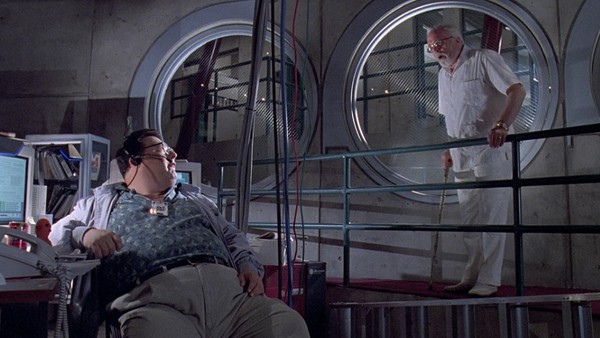
2. John Hammond Caused The Incident By...Sparing Expense - Jurassic Park
The Movie
Steven Spielberg's 1993 thriller Jurassic Park needs no introduction - it's another groundbreaking blockbuster from a filmmaker at the top of their game.
Tightly wound, smart, fantastically acted and visually stunning, it's also aged like a fine wine and continues to shame all four (!) of its current sequels.
The Twist You Didn't Notice
When your movie is centered on genetically engineered dinosaurs wreaking havoc, you don't really need a particularly intricate or twist-laden narrative.
And for the most part, despite its fancy window-dressing, Jurassic Park is a ruthlessly simple and efficient survival story with Spielberg's usual focus on unconventional family dynamics.
In fact, the closest thing the film has to an out-and-out "gotcha!" twist is the revelation that the park's failure is caused by Dennis Nedry (Wayne Knight), a disgruntled computer programmer who shut down the park's security system in an attempt to sneak some dinosaur embryos off the island.
And though the responsibility of the consequent carnage ultimately falls to Nedry, the chain of causation actually goes back to industrialist John Hammond (Richard Attenborough).
Despite Hammond's claim that he "spared no expense" with the park, it's clearly implied that Nedry is over-worked and underpaid, a fact that's even more obvious in Michael Crichton's book (where Nedry's workload increases without sufficient compensation).
This isn't to ignore the film's mention of Nedry having debts, but had Hammond not been such a cheapskate with his personnel - after clearly spending a princely sum building the park - then Nedry likely never would've felt motivated to sneak the embryos out.
The delicious irony is that, if Hammond truly had spared no expense, then the disaster never would've happened.
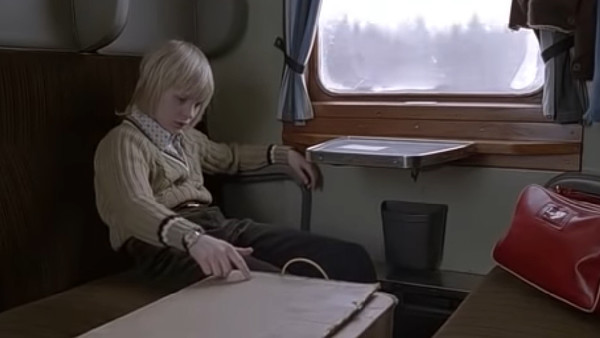
1. Oskar Is Doomed To A Terrible Fate - Let The Right One In
The Movie
Tomas Alfredson's masterful Swedish horror classic, following the friendship and burgeoning romance between an outcast 12-year-old boy, Oskar (Kåre Hedebrant), and an adrogynous vampire child, Eli (Lina Leandersson).
Between this and Matt Reeves' surprisingly great 2010 remake, there's no reason not to see it.
The Twist You Didn't Notice
The film ends with Oskar almost being drowned in a swimming pool by bullies, before Eli arrives and murders the majority of their number in a stunningly executed sequence.
The final scene sees Oskar onboard a train with a person-sized box accompanying him, within which Eli resides. Eli then taps the word "kiss" to Oskar in morse code, to which he taps "small kiss" back, and we cut to black.
Though a generous and optimistic reading of the film appears to suggest a happy ending for Oskar and Eli, if you've really been paying attention to the movie, that's not at all the fate awaiting Oskar.
The overt implication is that Eli is effectively grooming Oskar to become her new "handler", to seek out victims for her to feast on until he's an old man, just as Hakan (Per Ragnar) did before his death. The remake, Let Me In, more implicitly suggests that the caretaker character grew up with the vampire as a child before transitioning into that role.
And while it seems that Eli does truly care for Oskar, Oskar's still going to be used, coaxed into murdering people and likely end up suffering a grim fate due to his infautation with Eli.
Though the novel's author John Ajvide Lindqvist did in fact write a short story where Eli turns Oskar into a vampire and their relationship isn't at all predatory, his film script deviates enough from his novel that this doesn't need to be taken at face value.
After all, Lindqvist's book depicted Hakan as a pedophile exploited by Eli, a subplot completely stripped away from the film.
Put your romantic tendencies aside and the truth is plainly clear - Oskar had a whole lot of murder, anguish and confused feelings ahead of him.