8 Movie Plot Twists So Subtle You Totally Missed Them
Gotcha (if you think about it a bit, that is)!

The Planet Of The Apes is Earth, Darth Vader is Luke Skywalker's father, Bruce Willis is a ghost; plot twists don't just shock you, they manage to redefine the entire movie. They're narrative A-bombs that arrive with the impact of Mjolnir and the relative destructive force of a Noisy Cricket. Heck, The Usual Suspects is a masterclass in tight screenwriting, but all everybody chooses to remember is that cup-drop of a final five minutes.
And why wouldn't a director want to make a big deal out their trickery? If you're going to yank the rug from under an audience's feet, you want them to go flying head over heels and not just knock over a rickety coffee table.
But sometimes a filmmaker doesn't want to offer up narrative unrest on a platter - they want the audience to work for it. And so it is that some of cinema's greatest twists can go by completely unnoticed until people come back to the the film a second, third or fourteenth time. There's something advantageous to a subtle reveal, making rewatch and evaluation that much more rewarding, as you'll see to today.
Here are eight such twists that you didn't even realised happened until you watched the film a second time.
8. The Ending Reveals The Artist's Real Issue - The Artist

The Movie: Otherwise known as "That Silent Film That Won The Oscar", The Artist is a joyous celebration of cinema as a classical art form, but also a pleasant message that the industry should never be afraid to embrace change.
Jean Dujardin plays George Valentin, a silent movie star who sees his world crumble as sound enters the movies and he fails to catch up. It's a pretty standard fall from grace narrative, given emotional poignancy through director Michel Hazanavicius' direction - perfectly invoking a late-20s silent film through cinematography music and performance, the film beautifully parallels Valentin's journey.
The Twist You Didn't Notice: Throughout the film, Valentine is shown to be incapable of making a Talkie hit. Quite why is never embellished, but the general thinking is that the star's ego is just too great that he's lost all objective filmmaking ability. The final scene, which has the film snap into sound, however, reveals the truth - he's French.
It's a funny moment that manages to give Jean Dujardin a line, honour the film's French origins and end the movie on a high note. But it's also revealing that, while it wasn't an issue in the silent days, his accent now doesn't fit the new Hollywood sound.
This, coincidentally, makes the fact it became the first French production to win Best Picture all the more delightful.
7. The Monster's An Alien/From The Bottom Of The Sea - Cloverfield

The Movie: Ostensibly Godzilla meets Blair Witch by way of 9/11 archive footage, Cloverfield is a masterclass in mystery (it was produced by J.J. Abrams, after all). The whole film was marketed on how little it showed (for a long time it was just known by its American release date, 1-18-08) and it remains a thrilling watch thanks that much rumoured sequel never materialising.
Confined to the point of view of a single group of twenty-somethings, there's not really much hope of finding out any of the facts about the beast that's rampaging through NYC. And even though the movie does eventually give a proper money shot of the monster, it leaves any vague explanation up to the incredibly complex Alternate Reality Game that accompanied its release.
The Twist You Didn't Notice: Well, almost. The final scene shows a recording that the rest of the movie has been taping over - hero Rob and love interest Beth at Coney Island a couple of months before the disaster - which contains a big, but hidden, piece of info; when looking out to the sea something can be seen crashing down into the ocean.
Either the monster itself or the satellite that woke it from its deep-sea slumber (depends on what origin theory you subscribe to), this turns the film from simple on-the-ground footage of a disaster into a key clue to where the horror came from.
6. Bruce Can Control His Anger (Ahead Of The Avengers) - The Incredible Hulk

The Movie: Not as god-awful as the Ang Lee version, but neither boasting a performance quite as brilliant as Mark Ruffalo's, The Incredible Hulk is a comic book movie that just sort of sits there, ready to be rewatched by MCU completionists and ignored by everyone else. The film itself raises some interesting ideas, exploring the difficulties of actually living with the Hulk always looming over your shoulder, although that can be lost in all the 'big thing hitting other big things' fight sequences.
The Twist You Didn't Notice: There's a distinct disconnect between this film and the later Avengers movies that goes just beyond the casting - entire plot points are dropped. However, there is one moment that is leading into the team-up, it's just hard to notice without the pay-off. The film ends with Bruce once again on the run, although this time not from his alter ego; the final scene shows him meditating, leading to one final transformation.
There's an ambiguity to this scene, mainly because Marvel hadn't decided if Hulk was going to be the villain in The Avengers or not. Following the reveal that he's "always angry", however, the true meaning is clear; this is Bruce stepping out of his alter-ego's shadow and taking control.
5. Amy Kept Nick's Sperm - Gone Girl

The Movie: Gone Girl is a movie so twisty that no amount of shouting from Ferris Bueller could ever balance it out. The premise - Amy Dunne goes missing and the finger of blame quickly falls on husband Nick - is clear set-up for a shocking reveal, meaning the audience can't help but pour over every detail David Fincher methodically lays out.
The big rug-pull comes at the exact mid-point, where it's revealed Amy is framing Nick for her disappearance as punishment for his infidelity, but that's not the end of Gone Girl's twisting; there's demented exes and throat slitting to get through before the end credits.
The Twist You Didn't Notice: Despite the horrors he's been through, the film leaves Nick playing happy families with a returned Amy, who's using their unborn child as a bargaining chip. It's the sickest part of a film that, and sorry for bringing this up again, has a throat-slitting scene, which means you don't really question how Amy got pregnant by an understandably uninterested Nick.
A rewatch (or just reading the book) sheds some light on it - the sperm samples that Nick presumed destroyed early on in the film were actually kept by Amy for use in just such a situation. Now that's forward planning.
4. Deckard's A Replicant - Blade Runner

The Movie: The greatest sci-fi film ever made, Blade Runner took the baton from Star Wars and redefined the visual landscape of the whole genre, as well as allowing Harrison Ford to go subtly against type as Deckard, one of the titular cops tasked with hunting down renegade replicants (fake humans).
There's numerous different cuts of the film, but all of what makes Ridley Scott's masterpiece work - Vangelis' score, Syd Mead's visuals and the Phillip K. Dick-inspired narrative - are pretty consistent throughout the lot. The main distinction between the much lauded versions, in fact, is the prominence of a major, but on-the-face of it subtle, plot twist.
The Twist You Didn't Notice: Deckard is in fact a replicant. There's various clues, but the most prominent are his eyes flashing a recognisable replicant red and the last minute discovery of an origami unicorn, which matches up to an earlier dream he had (from the Director's and Final Cut).
Decades of reinforcement (and explicit confirmation from the director) have removed much of the subtlety from this reveal - despite being quite clearly a minor undercurrent to the story, many now treat it like a major narrative drive - but that doesn't hide the fact that upon first viewing (particularly if you're watching a version that doesn't have the clarifying unicorn scene) it's delightfully under the surface.
3. Indy's Real Name Makes The Film The End Of His Journey - Indiana Jones And The Last Crusade
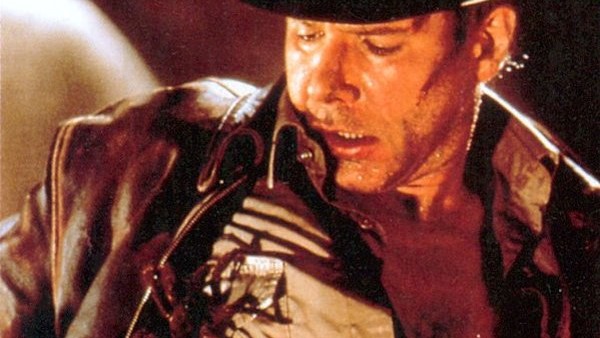
The Movie: The Last Crusade repeats many of the tricks from Raiders Of The Lost Ark - Nazi villains, Christian-inspired MacGuffin, a nefarious, power-driven rival - but throws in enough new concepts that it doesn't feel like a total rehash. The biggie of these is the introduction of Henry Jones, Snr., Indy's Holy Grail-obsessed father, played in some meta-casting by James Bond himself, Sean Connery.
The Twist You Didn't Notice: At the end of the film, Henry reveals why he calls his son Junior all the time - that's his real name. Henry Jones Jr. only adopted his much cooler moniker from the family dog, a funny reveal that nods to the development of the character - George Lucas' own pooch was called Indiana.
But there's more to it than that. In the previous scene, when Indy almost lets the allure of the Grail overcome him, Henry snaps him out of him by using his chosen name, an ultimate show of fatherly acceptance - something the prologue shows the son had been pining for since childhood. Then things go back to normal because families just love to bicker.
2. The Fake Investigation Actually Worked - Shutter Island

The Movie: You wait for one movie where Leonardo DiCaprio has to challenge his reality in a convoluted, yet semi-logical manner and then two come along at once. Typical. A few months before Inception, Martin Scorsese delivered Shutter Island, a '50s noir thriller throwback in which Leo played Teddy, a U.S. Marshall investigating the disappearance of inmate from an island mental asylum, only to discover it's all a game put on by the hospital; he's one of the deluded patients and they're merely indulging his fantasy in the hope that seeing it through to fruition will snap him out of it (ah, post-war America). In the end it looks like it's failed and Teddy's taken off to be lobotomised.
The Twist You Didn't Notice: All of that's where Dennis Lehane's book goes up to, but Scorsese, ever the genius, throws a second, more subtle twist into the final scene. Before being taken away, Teddy muses to his doctor (masquerading as his Deputy Marshall), "Which would be worse - to live as a monster? Or to die as a good man?" First time round, it's a nice coda to the film, but on rewatch it paints the ending in an even more depressing light than it already was - Teddy's aware of the situation.
He's still a disturbed individual for sure, but the whole exercise has worked; he's gained clarity on his past and seen his true self, something he actively decides to destroy. Coupled with all the Holocaust imagery seen in the fictitious backstory, the film develops from just a pulpy thriller into a strong morality tale.
1. It's... Complicated - Enemy
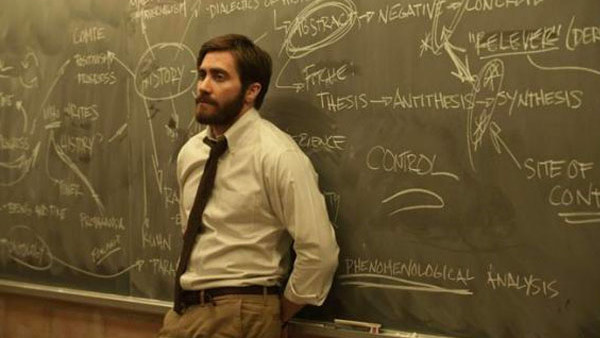
The Movie: Jake Gyllenhaal plays a loner history professor and his actor doppelgänger in the film that suggests Denis Villeneuve may just be able to do Blade Runner 2 justice. A lot of crazy sh*t goes down and the film ends with Actor Jake killed in a car crash and Teacher Jake taking up his look-a-like's life, including going to this weird sex club where women step on spiders. And then his new girlfriend turns into a scared spider. What?
The Twist You Didn't Notice: It's less that you don't recognise the twist, it's more that the rug-pull is so metaphysical that it's almost impossible to see the bigger picture without spending some real time analysing the film in-depth. You see, Enemy isn't your usual doppelgänger story - the entire film is actually taking place in some internal realm of consciousness, with the two Jakes conflicting elements of the same, presumably real-world, person.
So while that's a reading of the film, what's the twist? Well, at the end, the brutish Actor Jake is dead (a personality trait quashed), but Teacher Jake, originally the more timid, social awkward fragment, decides to visit the weird spider-fetish dungeon thing, meaning that while the positive side has literally won out, it's become corrupted by the negative, personified by the last-minute recoiling spider.
What other films have twists you have to work for? Share any we missed down in the comments.