8 Movie Plots That Could Have Been Solved If The Main Character Just Stood Still

Things would've been better if these guys had just stayed home.

Though we all certainly appreciate the efforts of those movie characters who take it upon themselves to "save the day" for our unbridled entertainment, you have to ask yourself; is it always necessary? Of course, there are a zillion movies out there where it was totally necessary for the heroes to act - that's a given. But there are also a fair few movies out there, too, in which the hero actually made things a whole lot more complicated than they needed to be. Who'd have thought that - in some cases - standing still would have been just as productive an effort? It goes without saying that movies about people not doing anything but lingering in the same spot for two and a quarter hours wouldn't be worth much to anyone, but it's genuinely interesting to approach a film from the "standing still perspective" - what would the outcome have been if the hero had refused to act, either at the very beginning of the movie, or at a critical point in the story? Sometimes you'll find that, often to a surprising degree, getting involved was the absolute worth thing that a movie protagonist could have done when it seemed to matter most. Here are eight examples of such an instance occurring in famous flicks...

8. Bane Could Have Been Caught After The Stock Exchange - The Dark Knight Rises
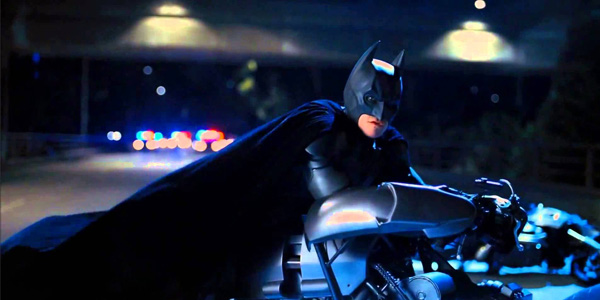
The Plot... It's been eight years since the rampages of Joker and Two-Face. Bruce Wayne is a recluse and Batman has disappeared (how suspiciously coincidental), but thanks to the Dent act (essentially a law that takes away prisoner's rights) crime is at an all time low. Although with another two and half hours of the film to go odds are something bad'll happen. Sure enough up pops Bane, a masked man with a plan to literally destroy Gotham. Ra's al Ghul was all about metaphorical destruction through fear, but his daughter and hulking protégé plan to get into the 21st Century and nuke the city. After half a year of mental torture of Gotham's protector at the expense of its citizens, of course. There's one problem with the plan; Batman. From both a practicality and torturing standpoint Bane's plot hinges on Bruce Wayne being incapacitated and out of Gotham. So it's kinda handy Batman's just got back in the game as things amp up; a quick use of the deceptive Selina Kyle and the Bat is broken. Things eventually return to normal with the help of a ridiculous number of extras and an undetermined moment when Batman escapes a nuclear blast. Ah realism. Why The Main Character Should Have Just Stood Still... It's commented that of all the nights he could return, Batman chooses the one where a key part of Bane's plan is being enacted (an assault on the stock exchange that will leave Wayne Enterprises ripe for the taking). It's then pointed out that he's pulling the cops off Bane. Which is a really good point; Foley puts all focus in getting the vigilante and completely ignores the robbers, allowing Bane to get away. If Batman hadn't turned up, Bane could have been caught, or at very least had his plan delayed. Why didn't you wait one more day Bruce?

7. Quirrell Couldn't Get The Stone Without Harry - Harry Potter And The Philosopher's Stone

The Plot... The first movie in the cheery-cum-moody series of fantasy movies, Harry Potter and the Philosopher's Stone, takes place when Harry is just eleven years old, and for the most part, he has a bloody good year. That's until Harry realises that his Defense Against the Dark Arts teacher, Professor Quirrell, is growing Dark Lord Voldemort on the back of his head and is trying to steal the Philosopher's Stone (which has the power to make people immortal). Naturally, Harry and friends set about trying to thwart him, navigating a series of horrific challenges in order to do so. When Harry finally confronts Quirrell/Voldemort in the dungeons of Hogwarts, though, he finds him having trouble locating the stone. You see, Professor Dumbledore has set-up a rather ingenious plan to avoid the Philosopher's Stone being stolen; it will only reveal itself by way of a magical mirror to those who don't actually want to use it. But then Quirrell forces Harry in front of the mirror, which shows the Philosopher's Stone being put into Harry's pocket. This, in turn, causes Quirrell to attack Harry angrily in an attempt to nab the stone, and everything ends with searing flesh, and Harry getting knocked out because - c'mon - this kid is eleven years old. Why The Main Character Should Have Just Stood Still... Harry didn't need to move from the Gryffindor Common Room. At all. In fact, it was impossible for Quirrell to even get anywhere near the stone until Harry showed up and got himself shoved in front of the mirror. Dumbledore's plan was pretty flawless. The fact that Harry tried to save the day was the biggest no-no here - sure, he managed to destroy that Quirrell/Voldemort hybrid, but he also very nearly gave that same Quirrell/Voldemort hybrid a chance at immortality. He would have been better off just not trying to do anything: "Harry Potter and the Nice School Year."

6. Peter Parker Creates All Of His Problems - Spider-Man

The Plot... It's almost a cliché to state that sometimes superheroes cause as more damage than they stop thanks to all those supervillains they inspire. Nowhere is this more potent than in Sam Raimi's Spider-Man Trilogy, where his actions aren't totally positive for the citizens of New York. Think about it; after killing the board of directors the Green Goblin becomes all about hunting down Spider-Man; Doctor Octopus becomes obsessed with redoing his experiment because Spider-Man got in the way; Harry wrongly thinks Spider-Man killed his Dad so becomes the second Goblin; Eddie Brock is purely motivated by his hatred of a successful Peter Parker. The only one who would exist even without Peter Parker's involvement is Sandman and even then he's directly tied into Spidey's origins. So not only is the death of Uncle Ben a focal point in Peter's life, but it completely shapes the crime of New York City. The same isn't true of The Amazing Spider-Man series, where Oscorp are so all out evil that they've been meddling and scheming from when Peter was a kid. Why The Main Character Should Have Just Stood Still... We mean literally stood still exactly where he was. In Raimi's version at least, Peter has the opportunity to stop Uncle Ben's killer when he robs the wrestling game, but stubbornly lets him escape. This directly lead's into Ben's death, which is the main motivation for the creation of Spider-Man; without this event he'd be a more balanced person and the big baddies wouldn't have been motivated to be so evil. And, of course, this also would mean Sandman never shot Ben (urgh, retcon) and thus the final villain is tied to this one point. This is a defining part of the character in the comics, with Peter's guilt over the death of his Uncle providing the ensuing motivation of the character, but in the first set of film's it clearly has a bigger effect.

5. Sam Does Nothing But Stammer - Transformers: Revenge Of The Fallen

The Plot... Transformers 2 is, without compare, the worst film ever made. In a way that is satisfying; cinema can only get better from here (although Age Of Extinction showed it hasn't by much). On a base level Revenge Of The Fallen completely misunderstands what it is, taking a throwaway B-Movie that should have a ninety minute run-time and turning it into a three hour epic. And although much of that time is spent watching indistinguishable robots whack each other on the head and seeing the camera pan over Megan Fox's curves in slo-mo, there's a surprisingly convoluted plot. The human character's are as one-dimensional as ever, with Shia LaBeouf's Sam still suffering with basic relationship issues. But when you get into the Autobot-Decepticon battle things get crazy. The plot spans millenia (Earth was once to site of big Transformer war apparently) and introduces a big evil force behind the original's big bad, a weapon hidden in the pyramids and more macguffins that the entire filmography of Alfred Hitchcock. The broad strokes are that Optimus Prime is killed, which is bad because only a Prime can beat ultimate evil The Fallen, so Sam and co. get a plane to teleport them to Egypt to try and resurrect him. To get there requires stoner jokes, the final nail in the coffin of John Turturro's career and enough action to bore a five year old high on Fanta. Why The Main Character Should Have Just Stood Still... There's always a sense of obsoleteness to the human characters in these film, but at least in the others they kinda do something. Here Sam is nothing more than narrative padding; the two big plot elements are bringing Optimus back and stopping the detonation of a sun-destroying weapon. The first happens thanks to another Transformer sacrificing themselves and the latter is blown up by the military because JOIN THE ARMY. It's contrived to have a kid solve problems ancient machines couldn't, sure, but if you can't think of any reason for him to be relevant at all can't you just leave him at home?

4. Hiring Bilbo As A Burglar Is Pointless - The Hobbit: The Desolation Of Smaug

The Plot... The Hobbit is the story of an ordinary guy who goes on an epic adventure through a wondrous land. He discovers something gold on this journey and years later becomes corrupted by it. Poor Peter Jackson; even he couldn't resist the allure of money. Zing. OK, ignoring the trilogy expansion for now, The Hobbit sees Bilbo Baggins recruited by a company of dwarves to come on their adventure to reclaim their homeland from a dragon (although if you're up with fantasy he's technically a wyvern). What follows is a series of adventures seemingly unrelated that all tie together come the end. We'll see how it all works out on film later this year with the bluntly titled The Battle Of The Five Armies, but for now let's look where we left things in The Desolation Of Smaug. Bilbo's role in all this was to sneak into Erebor without being detected by the fire-breathing Smaug and find the Arkenstone, a gem that symbolises the right to rule The Lonely Mountain, which Thorin intends to use to rally the other dwarve armies to front an offensive against the wyvern/dragon/monster. Things go awry when Smaug becomes angered by Bilbo and believes the people of the near-by Laketown have betrayed him. In the cinematic take on things he is only made more angry when the dwarves turn up and start fighting him. Why The Main Character Should Have Just Stood Still... Bilbo did help save the day a couple of times during the journey - he stalled the trolls, fought the spiders and freed the dwarves from the elves - but his primary purpose as the burglar proved completely moot. He goes in and (maybe) gets the Arkenstone, but then the dwarves charge in, ruining the plan to get armies to help them. This is entirely fabricated for the big screen to give the second movie an action finale, but it ruins the whole narrative and renders Bilbo useless; why get a burglar when you're going to go in attacking any way?

3. He's The Only Reason The Villains Have An Army - Hercules

The Plot... Hercules is very keen to get across that this isn't the story about the demi-God you think you know. Oh no, all the character's love to wink to the audience about how self-promoted the myth actually is. Those labour-y things he did that one time? Gross exaggeration his team helped with. That whole son of Zeus bit? Maybe that's all made up or maybe it's not. Ever heard he doesn't look like The Rock? Oh, he totally looks like The Rock. It'd work if there was a popular existing myth of Hercules in modern culture beyond a clearly non-definitive, Vegas-themed cartoon, but we can't knock Brett Ratner for trying something other than flat-out destroying a franchise. The plot is that rarest of beasts in modern Hollywood; a story in which the hero isn't the centre of the universe. Just as Dirty Harry gave us everything we needed to know about Inspector Callahan through his hunting of Scorpio, Hercules tells us everything about the hero by putting him as part of a bigger story. Looking to retire, Hercules takes one last job, saving the land of Thrace from a warlord, which he does with relative ease. But just as everything's going perfectly Hercules realises he's been played;. It turns out that he's been fighting for the wrong side all along; John Hurt's King of Thrace is planning to take over all of Greece, leading to a final battle that sees a four time BAFTA winner hilariously killed by the head of a giant statue. Why The Main Character Should Have Just Stood Still... The only reason Cotys, King of Thrace became powerful enough to take over the whole country was because Hercules built him an army and helped him beat the militarily superior Rhesus. Had Hercules realised John Hurt has entered that stage of his career where he can exclusively be villain or mentor he could have turned around and left him to his own crazed devices. Given that your entire life has (sigh, allegedly) been dogged by resentful and deceiving Gods surely you'd not just take whatever your employer says at face value.

2. Marty Doesn't Need To Travel To The Future - Back to the Future Part II

The Plot... Back to the Future Part II is the follow-up to the brilliant, time-travel romantic adventure extravaganza Back to the Future, which told the story of teenager Marty McFly, who accidentally ends up stopping his parents from meeting in 1955 and has a limited window of time to ensure that they sleep with one another and give birth to him in the future. The time machine thing comes courtesy of "Doc" Emmet L. Brown, of course, who successfully invented the world's greatest scientific marvel and put it into a DeLorean. Hey, what can you say? The guy has taste. The sequel has Doc Brown returning from a vacation to the future, where he immediately arrives in the present to tell Marty that something has happened with his kids in 2015, and that they need to go and prevent it from happening. Marty (not to the brightest kid around), alongside his girlfriend Jennifer (also not so bright) decide to jump into the DeLorean without a moment's notice, desperate to ensure that whatever catastrophe is going to occur is avoided. We then spend the next two movies travelling back and forth in time in an attempt to clean up the massive mess this causes. Why The Main Character Should Have Just Stood Still... Think about it for just a second; why would Marty need to go to the future to prevent something from happening, if his plan was to live in the present anyway? All the guy needed to do was say to Doc Brown, "Okay, tell me what happens with my kids, and when I naturally reach that point in the future from now, I'll make sure to avoid it." It makes absolutely no sense to travel to the future to change something if you're coming back to the present - the thing you changed would have already changed anyway the moment you learned about it in the present - the travelling part was unnecessary. Marty literally didn't need to move an inch to solve the entire second movie.

1. The Nazis Would Have Died Anyway - Raiders Of The Lost Ark

The Plot... Indiana Jones is so freaking cool. His Dad is James Bond. He once rode a German submarine on the outside without drowning. He shot a ninja because he couldn't be bothered to fight/had the runs. He only used a fridge to escape a nuclear blast the once. So. cool. He's so cool his first film doesn't even have his name in the title. Raiders Of The Lost Ark sees Indy take on the Nazis who are searching for the Ark of the Covenant, the container where the remains of Moses' Ten Commandments tablets are held (does that made the upcoming Exodus: Gods And Kings an unofficial prequel?). Travelling by map Indy collects the air miles, going from America to Egypt by way of Nepal in one of the most relentlessly fun films ever made. How fun things are for Indy himself, however, varies; one minute he's got the Ark, the next he's sealed in a tomb full of snakes; one minute he's having sex, the next he's getting hit in the face by a mirror. Ultimately he finds himself a prisoner at the Nazi's ceremonial opening of the Ark where things take a ghostly turn. Ever seen what happens to an action figure in microwave? It's kinda like that. Why The Main Character Should Have Just Stood Still... This is the biggie. Pointed out by Amy in The Big Bang Theory, Indy plays no importance in the outcome of the story. Whether he tries relentlessly to reclaim the Ark or immediately gives up and has whatever he calls a quiet night in, the ending is the same; Nazis open the Ark, their faces melt, we get a disappointing fourth film. That's the problem when you're big twist ending is "God comes down and saves the day"; even the best of characters can look a little superfluous. Quite how this affects Indy's cool rating we haven't been able to figure out yet. Don't worry though, we have top men working on it right now. Top. Men.

Contributor
Contributor

Articles published under the WhatCulture name denote collective efforts of a number of our writers, both past and present.