8 Movies Almost Ruined By Dumb Endings

"What's in the box?" Literally nothing.
The ending to a film should be pretty much the easiest bit to sort out, right? I mean, all you€™ve got to do is get the protagonist out of danger, possibly just after saying a phrase which calls back to something which happened in the first act, then either hook them up with the guy/gal of their dreams or break their heart and send them into the sunset. Bish bash bosh, job€™s a good €˜un. Well, clearly it€™s a lot more difficult than that - there are loads of instances of movies which very, very nearly made a complete hash of their endings. Whether it€™s because of overlong moralising (Rocky IV), heavy-handed sentiment (Rocky Balboa), a total lack of any satisfying resolution (Rocky III), or a combination of all three (Rocky V), there is a seemingly infinite smorgasbord of mistakes one can make. Anyway, here are six times when cherished movies narrowly dodged being lumbered with awful, awful endings.

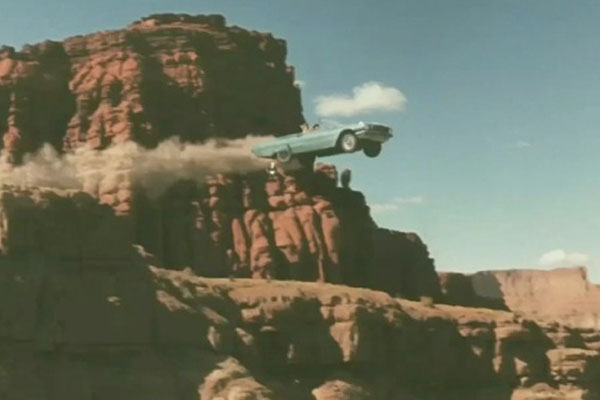
8. Thelma And Louise

If you€™ve not seen Thelma and Louise (and why wouldn€™t you have seen it you idiot) then you€™ll know its final shot: the two friends commit to their adventure, kiss, and floor it toward the Grand Canyon and near-certain oblivion rather than give in to the police. It€™s romantic and daring and has been parodied endlessly. However, the plan was to have the two friends launch themselves off into the unknown, but to also show that they actually lost their brief tussle with gravity, and that they subsequently suffered fiery, explosive deaths. It€™s not quite the same hopeful, noble, sisterly road trip movie when you get to see Gina Davis and Susan Sarandon€™s charred corpses at the bottom of the Grand Canyon. All that said, Roger Ebert wasn€™t a great fan of the white-out fade of the ending that was eventually used in the theatrical release, describing it as €œunsettling to get involved in a movie that takes 128 minutes to bring you to a payoff that the filmmakers seem to fear.€ Somewhat confusingly, though, the uncut ending features the two friends driving off into the sunset together anyway, so quite whether we€™re meant to assume that Thelma and Louise survived an impact with the bottom of a canyon from about half a mile up in the air or if it€™s purely a bit of wish-fulfilment on director Ridley Scott€™s part. As it is, you can make up your own mind as to whether they make it or not. I mean, they probably don't, but one can dream.

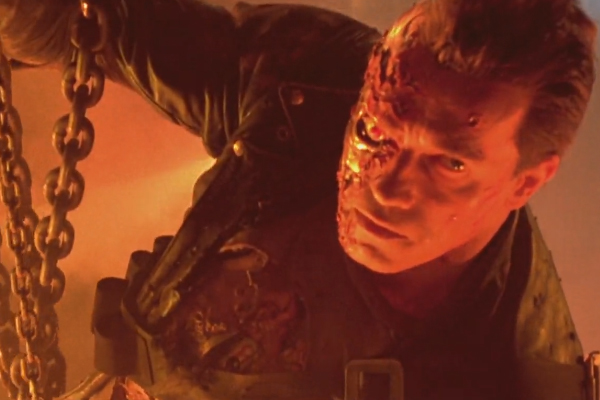
7. Terminator 2: Judgment Day

The pay-off at the end of T2 is beautifully played piece of understatement after all the chaos and destruction of the preceding two hours: the T-800 getting smelted with a lone thumb-up, thus ending his emotional expansion and development over the two films, followed by a suitably pensive and moody little shot of a road zipping by at night as Sarah Connor muses on how emotions work. It's neat, it's tidy, there's no flab. In James Cameron€™s director€™s cut of T2, we get an extra scene in which to revisit all the kids who got comprehensively obliterated in Sarah Connor€™s rather bleak dream-vision of the future in which Skynet€™s gone crackers and started nuking LA, causing a fair amount of upset and hundreds of dollars€™ worth of improvements to the city€™s architecture. Fortunately, it got nixed: it€™s weirdly schlocky, with a plangent Spanish guitar soundtrack that gives the scene the air of a low-grade European daytime TV drama. Rather than sounding like some bruised, reflective musings in the aftermath of all that trauma, that final line - €œIf a machine can learn the value of human life, maybe we can too€ - is surrounded by the sounds of children laughing, and ends up feeling like it was written by a particularly melodramatic teenager in an A level drama class.

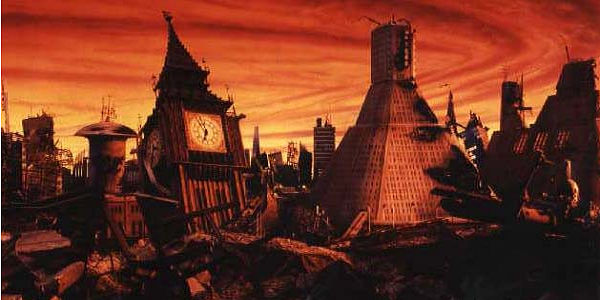
6. Army Of Darkness

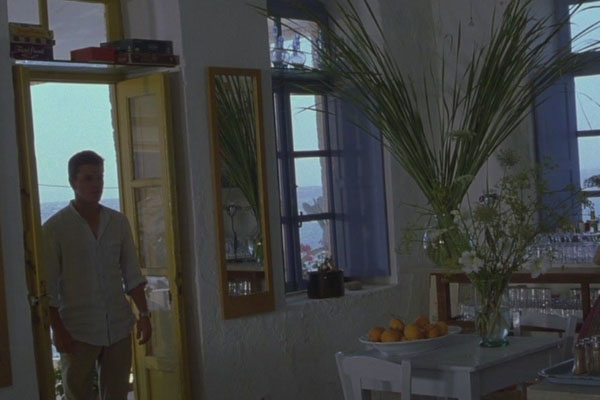
After fighting back the undead hordes, Ash does eventually manage to get back to his own time and his old job at S-Mart. There's still time to fit in an interlude in which Ash kills another Deadite and gets the girl, naturally, but he's basically all sorted out. However, in Sam Raimi€™s original ending, Ash was meant to be settling into a six-century kip when he gets distracted by some tumbling rocks and accidentally overdoses, waking up 100 years in the future among classic signifiers of a collapsed civilisation: a collapsing Big Ben, a brown sky, and some rusty bedsteads. Now, I know Raimi rather likes this ending as it€™s consistent with the governing principle of putting Ash through absolute hell which guides Evil Dead, Evil Dead II and Army of Darkness, but surely the poor bloke deserves a bit of a break. Aside from anything else, it just feels so abrupt and flippant. After all, what€™s the point in taking Ash on this journey from screaming idiot to unbelievably cool and sexy hero for the ages if you€™re going to then sacrifice all of that character development for a quick gag? As facile as the S-Mart ending is (Ash flaunts distinctly superior gunplay skills and gets babe), it€™s a bit more narratively satisfying. There€™s enough pathos in this conquerer of the undead having to go back to his job at a supermarket without throwing him into a dystopian future which looks a bit like an attempt at begging for another sequel.

5. Wallace & Gromit In The Curse Of The Were-Rabbit
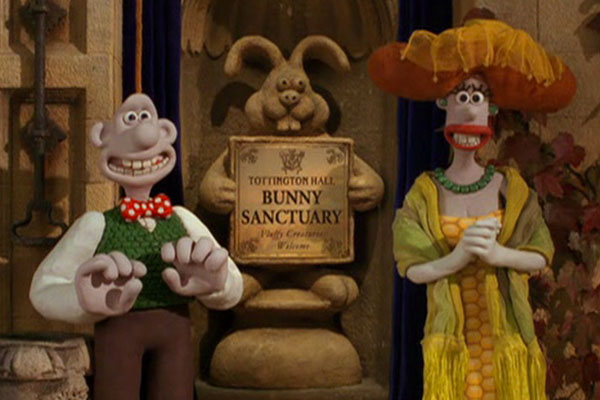
The claymation duo's feature-length adventure ends with a denouement in which romantic tension between Wallace and the bunny-loving toff Lady Tottington was dissolved and reconstituted into a platonic friendship based around looking after all the rabbits which Wallace and Gromit had prevented from devastating East Lancashire's finest organic produce. It was a lovely, well-rounded ending. Everyone enjoyed it. It was fine. Christ knows why, but it was mooted at one point that Lady Tottington was going to get together with the incredibly minor character PC Mackintosh. I don€™t know how, I don€™t know why. PC Mackintosh is in the film for four reasons: firstly, the PC/Mac gag; secondly, so he can make the €˜arson€™/€˜arsing€™ gag; thirdly, to accidentally tell everyone that the beast€™s not actually dead; and fourthly, because Peter Kay has a magnet in his head which draws him toward any creative venture which mentions the north of England in any form, and as such Aardman had to sort him out with a part or face the prospect of him turning up to the studio every day for the next four years shouting €œGARLIC BREAD€ and reminiscing about things which happened in the 1970s. What PC Mackintosh is not in this film for is to make amorous advances to Lady Tottington. His head€™s like an enormous big toe with eyes and a moustache. Common sense eventually prevailed.

4. Se7en

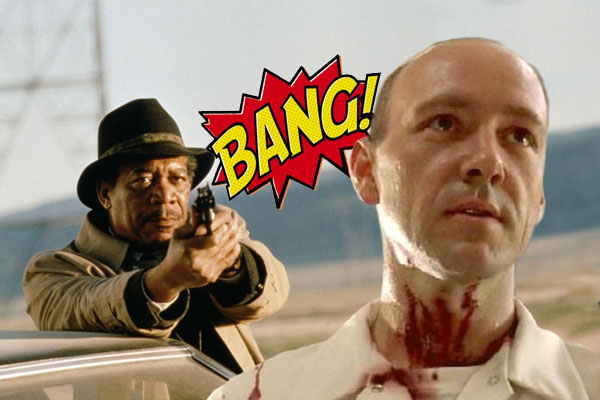
We've all screamed, "WHAT'S IN THE GOD DAMN BOOOOOOX" at one time or another, be it at a birthday, on Christmas, or at a particularly confusing funeral, but we were all very close to never having the opportunity to reference Seven while doing so. The original ending features Gwyneth Paltrow's head in a box and Brad Pitt's Mills shooting the murderer John Doe thereby completing the set of seven sins Doe had originally set out, with Mills filling the role of 'wrath'. Mystifyingly, New Line weren€™t too hot on the original oh-my-god-it€™s-Gwyneth-Paltrow€™s-head-in-a-god-damn-box, seeing it as just un petit peu de trop and attempted to shovel the action down a slightly more down-the-line police procedural sort of alleyway. This involved having Somerset shoot Doe rather than Mills, thus saving the younger partner from prison and, more importantly, from completing Doe€™s set of deadly sins. Luckily, they accidentally sent David Fincher the non-tinkered script and it managed to tickled his fancy, Fincher having not bothered reading any scripts for about 18 months because he€™d hated making Alien 3 so much. It all got a bit messy when New Line tried desperately to row back on the head-in-a-box ending - in fact, for a while it seemed like Gwyneth Paltrow€™s head seemed to be both in the box and not in the box, like Schrodinger€™s Gwyneth Paltrow€™s head - but once Brad Pitt backed Fincher up the head stayed firmly in the box.

3. The Bourne Identity

One of the great things about the Bourne films was the way they€™d routinely sidestep and pivot around your average cliches, bringing a more muscular, sinewy, downcast sensibility to action flicks which we€™re still wading through a good thirteen years later. A great example of this is the suitably low-key ending: after he's got bored of punching all sorts of bad idiots and sorted out the mystery of who he is and what exactly he's meant to be doing with himself, Bourne tracks down his lady-love to the Greek island of Mykonos, where she€™s renting out scooters to stag parties from Watford and trying to suppress the urge to punt them into the Ionian Sea. Then Bourne turns up, they have a bit of a cuddle, and that€™s it. If you watch the full, uncut version, though you get rather a different impression. Bourne and Marie really go to town, ramping up from a clinch to a snog and on to some light frottage by the time the camera starts to pan out. It€™s more like something from One Tree Hill than the most influential thriller of the last twenty years.

2. Pretty In Pink

At the end of Pretty In Pink, Duckie, the badly-hatted loudmouth, accepts that that the long-term object of his frustrated desires isn't going to fall for him, and that in clinging on he's hurting both of them. In swoops Blane to take Andie for his own and Duckie immediately spots someone else he fancies. Everyone's happy. Originally though, Duckie was meant to get together with Andie. That€™d be fine, wouldn€™t it? Everyone loves Duckie, right? That cheeky little scamp! The problem is that Duckie is a massive idiot who thinks that just because he€™s hung out with Andie forever that he deserves to have her fall in love with him. His outlook seems to be that because he€™s done the legwork, he has earned the right to a disappointing tryst behind the bike sheds. It€™s a really pernicious, entitled attitude that basically treats women as little more than big, fleshy fruit machines, a complicated set of buttons to be pressed in the right order before - BINGO! Paydirt! It don€™t work like that pal, sorry. It really hits a low when Duckie admits that he€™s, €œ€not particularly concerned with whether or not you like me, because I live to like you and... and I can't like you anymore€ now Blane€™s on the scene. Wah, wah, wah. Blaine is a pretty tedious guy with some very unfortunate jackets and a sub-Simon Le Bon blow-dry €˜do, but he is at least someone Andie genuinely fancies rather than just being a bit of a creep who rides his bike around girls€™ houses over and over and over again, staring in at their windows and grunting occasionally. What exactly is the idea with the bicycle thing anyway? Is he hoping they€™ll eventually just wilt and let him have sex with them so that he€™ll go away? That€™s no way to live, Duckie.

1. Back To The Future

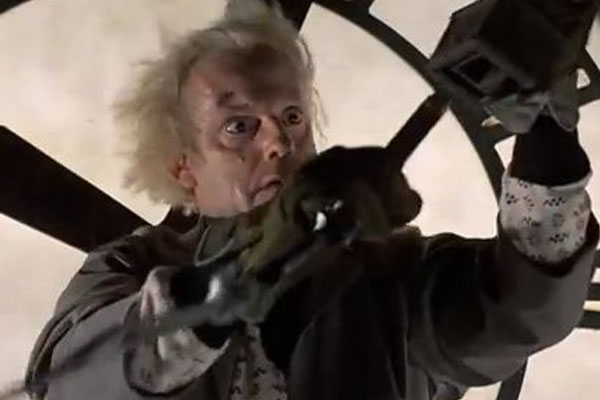
Originally, there was no lightning, no clock tower, no €˜weather testing equipment€™. Marty was meant to get blown back into 1985 using the radiation and energy unleashed during a nuclear test, originally in a fridge, and then later on in the Delorean. Then, much later on, Marty became Indiana Jones, the Delorean became a fridge again, and a beloved franchise became a bit of a laughing stock. Let's not dwell on that though. The thing with this one is that it€™s not just the ending which would€™ve been ruined; it€™s the entirety of the last two thirds of the film. How, pray tell, is Marty meant to invent rock €™n€™ roll when he€™s stuck in the middle of the Nevada desert? With a different antagonist in the shape of a non-specific military guy called Lanza (who looks a bit like an evil version of Jay from Modern Family in the storyboards), where would Biff fit in? Would Marty not just have been incinerated by the bomb€™s heat-flash before he got to 88mph anyway? That€™d be a pretty downbeat way to leave things, and would have nobbled the idea of having a trilogy pretty comprehensively. All the iconography of Back To The Future would have been completely different, and probably a lot less charming; after all, atomic bombs are quite scary, and in 1985 people were still fairly worried about them. Frankie Goes To Hollywood€™s Two Tribes had been number one for nine straight weeks the previous year; nuclear war was high up on everyone€™s list of terrors. However, the whole point of 1955 in Back To The Future is that nothing that bad happens there except Marty's impending erasure from existence. It€™s a conservative, kitschy, chocolate box interpretation of the past; you€™ll notice that none of the radical, turbulent bits of the 60s and 70s (women€™s liberation, Vietnam, Watergate, the Cuban missile crisis, etc) are foreshadowed or referenced. It€™s a safe time and place, and throwing an atomic bomb in there would have made everything just a bit too real. Which other terrible original endings do you think belong on this list? Share your thoughts below in the comments thread.

In this post: 
Se7en
 
Posted On: 
Contributor
Contributor

Holding midfielder; can get forward. Decent engine.