8 Movies You Won't Believe Are Set In The Same Universe

Daredevil in the same world as Teenage Mutant Ninja Turtles? We're not kidding.

Daredevil Ninja Turtle The idea of a movie crossover is not exactly groundbreaking anymore, thanks to a widespread understanding that any big franchise can simply go nuts with the amount of sequels they can give to the characters in each movie. For example, the Marvel Universe has more or less free license to use hundreds of different comic book characters in the Avengers series, with the only notable exceptions being Spider-Man and the X-Men, so none of us should be surprised to see even the most obscure of Marvel creations turn up in the next Avengers movie. However, what does stand out as being a little more intriguing is when movies that you did not expect to have any obvious connection are bridged by a common link... or at least a linking conspiracy theory. For example, writer Jon Negroni has received a lot of attention recently thanks to his Pixar Universe Theory, wherein not only do all the Pixar movies take place in the same universe, but they're in fact in a timeline, beginning with Brave and culminating in Monsters, Inc. - with a good few human extinctions along the way. The proof for this theory comes from all of the little nods and easter eggs the Pixar staff are so fond of leaving in each of their movies, such as the same caravan being visible in both A Bug's Life and Monsters, Inc., or Carl and Ellie's (from Up) postcard to Andy in Toy Story 3. So with the powers of deduction, or a great deal of spare time on his hands, Negroni has deciphered that the Pixar universe is tracking the rise and fall of the human race upon discovering magic and the damage caused by our pollution, which ultimately causes animals and machines to talk, before everyone becomes mutated into Mikes and Sullys. And yes, before we begin, technically every movie takes place in the same universe, but this is an exploration into the unexpected connections between movies that wouldn't have previously been linked. So get your conspiracy theory tin foil hats on as we delve into the realms of uncertainty...

8. Machete & Spy Kids
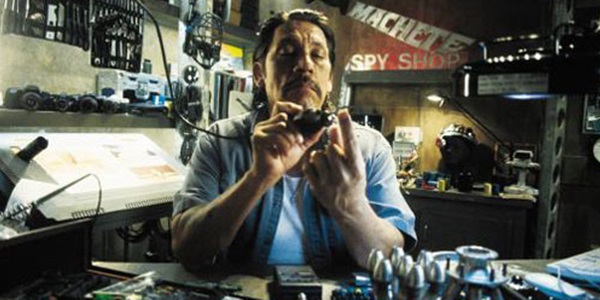
Machete is essentially what Danny Trejo gets up to on his days off; not only are there likely to be an enormous amount of sequels in the Machete series, but you just need to look at the behemoth of cragged Mexican manliness to figure out that he probably doesn't have to try too hard to put on the Machete facade. The character first showed up in the 2001 one family espionage flick, Spy Kids, as the estranged uncle of the eponymous heroes, and brother to their father, Antonio Banderas' character. In the movie, he is largely a subplot character and is scarcely seen, though it is revealed that he runs a spy gadget shop, and feels bitter and disenchanted (or Trejoed) towards his brother due to a tumultuous past. His role in the two sequels which followed is even less prominent than in the first, and was thought by many to have been little more than a throwaway character. That was, however, until the fake trailer by Robert Rodriguez turned up in the Grindhouse project in 2007. The trailer depicted Danny Trejo as a Mexican federale, training for a revenge mission against the man who tried to have him killed... by raising an army of machete-wielding Mexicans. Rodriguez liked his project so much that he went ahead and made a full on film of the thing in 2010, in true Grindhouse style, and it was beautifully violent and ridiculous. Thanks to the cult popularity it received, it was immediately granted a sequel, and people enjoyed that one to the point where we all temporarily forgot that we don't talk about Mel Gibson anymore, because he was pretty good in it too. So what's the link? Rodriguez was also the director of Spy Kids, and not only was the character always intended to be portrayed by Trejo, but that he wanted to turn him into the "Mexican Jean-Claude Van Damme," putting him in a movie of his own every year, but simply had not gotten round to it. So the first project in which Machete could be included was as a bit-part in Spy Kids. So there you have it, the tough loner of an uncle the kids have in the Spy Kids movies is in fact the very same ruthless killing machine seen in the Machete franchise.

7. Conan & Cthulhu

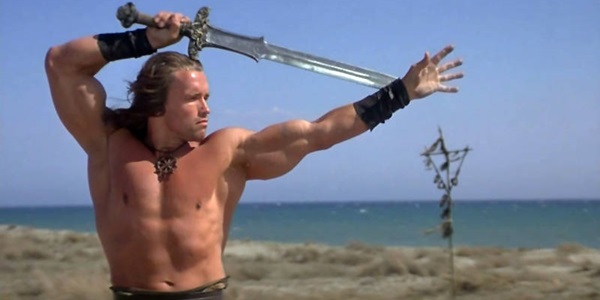
Forgive a slight bending of the rules here, as technically speaking, Cthulhu, the gigantic demon-squid of H.P. Lovecraft's writing, does not appear in any of the various Conan films, but there is a definite connection there. Conan The Barbarian is a franchise which originated in the 1930s, in the form of novellas written by Robert E. Howard, and is most easily recognised in live action form through the 1982 movie of the same title, which starred Arnold Schwarzenegger in his break-through role. The series is very much in the fantasy genre, and made for some spectacularly cheesy movies, so surely there was no place for Lovecraft and his brand of dark and twisted Old Ones, right? Thanks to Lovecraft and Howard becoming close friends at the beginning of their publishing career, the pair began putting references to the work of the other in their stories. As such, not only are several Lovecraftian monsters found in the Conan universe, but The Old Ones are mentioned by name in The Queen Of The Black Coast. Cthulhu was, of course, the most memorable of Lovecraft's Great Old Ones, so could have perhaps been one of the few things which may have saved the recent reboot of the Conan franchise, because deep down, we all want to see an absurdly muscled man take on a tentacled god of evil, armed with nothing but a sword and a debatable haircut.

6. Coming To America & Trading Places
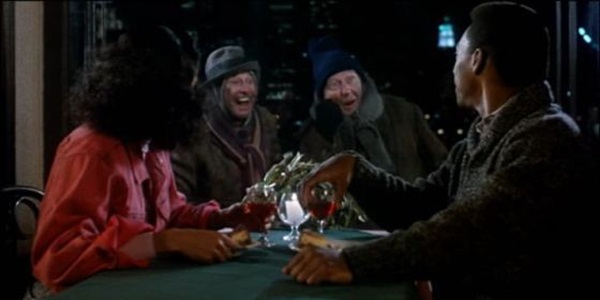
In the late seventies and eighties, the king of the comedy movie, in terms of directing, was John Landis. His CV boasted the likes of Animal House, The Blues Brothers and Three Amigos, as well as a comedy-horror turn with the cult classic, An American Werewolf In London. In short, if you wanted a comedy done correctly, you probably wanted Landis to direct it. One of Landis' early eighties success was the Eddie Murphy and Dan Aykroyd-driven prince to pauper comedy Trading Places, wherein our heroes have their lives switched for the amusement of the extremely wealthy Duke brothers. Murphy, a homeless man is bailed out of jail after an altercation with the rich Aykroyd, who eventually attempts suicide. Upon learning of the Dukes' scheme, Murphy and Aykroyd unite to bring down the brothers in a fraud set-up which ultimately costs the Dukes $394 million, ruining them. Jump ahead then to Landis' 1988 movie, Coming To America, also starring Eddie Murphy, although this time as an African prince who has journeyed to America in order to experience a more genuine lifestyle, rather than the royal life at home. A key plot piece in the movie is that Prince Akeem (Murphy) gives away the enormous amount of spending money issued to him by his father, in the name of living like a normal person. Akeem gives his money to two homeless men he encounters, and quickly leaves with little thought given to the act. However, once Akeem leaves, one of the men looks up and exclaims: "Mortimer...we're back!" Of Course, the two men are Randolph and Mortimer Duke, with the roles reprised by Don Ameche and Ralph Bellamy, suggesting that the Duke brothers had been homeless for the previous six years. Whilst we only see the two men once more, briefly thanking Akeem, it would have been amazing to have seen another movie following the antics of the pair as they attempted to get themselves back to the pinnacle of their wealthy hay days.

5. Ghostbusters & Caddyshack

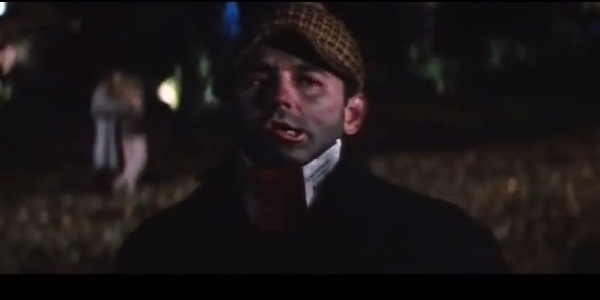
Thanks to the wonder that is the internet, we have access to reels upon reels of unused and deleted scenes from pretty much every movie you could ever wish to view. Admittedly, the majority of them were deleted with good reason, as they add nothing to the movie, but there is a gem which was removed from everybody's favourite supernatural comedy caper, Ghostbusters. In the scene where Louis Tully (Rick Moranis) is fleeing through the park from one of the demon dogs, a skit involving Bill Murray and Dan Aykroyd as bums was cut from the final picture, whilst it doesn't add much to the film itself, it was definitely something fans of Harold Ramis movies would have loved to have kept. The bit consists of Murray speaking with an extremely recognisable drawl and comically exaggerated facial expression, debating the deep, philosophical avenues of whether a heavyweight boxer would beat a "good karate guy." The bum is so familiar because he is Carl Spackler, the iconic greenkeeper character portrayed by Murray in comedy classic Caddyshack, made four years earlier. Caddyshack was not a film particularly well-based in reality, as a gopher would probably not be quite a swarthy a dancer as Ramis would have us believe, and as such, it's not wholly ridiculous to accept that ghostly apparitions could take place in the same world. So whilst it's not a shocking revelation to consider, particularly given that the only link between the two takes places in a scene deleted from the movie, the appetite of Ramis/Murray fans will have been whetted immeasurably at the thought of more screentime dedicated to one of the most bizarre comedy characters in cinema history in a totally separate comedy classic.

4. Django Unchained & Kill Bill (Also Pulp Fiction)
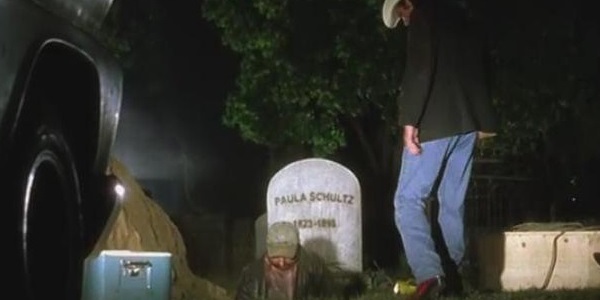
It's not exactly a widely kept secret that pretty much all of the Tarantino movies set in the 20th and 21st century take place in the same universe, with several links being made between the likes of Pulp Fiction and Reservoir Dogs. For example, Michael Madsen's character in the latter, Mr. Blonde, is in fact the brother of John Travolta's Vincent Vega from the former, with a movie having been planned at one point to follow the two on their own ground. However, there are also connections between the more modern offerings from Tarantino and the movie set earliest chronologically, Django Unchained. The name of Christoph Waltz' character in the movie is Dr. King Schultz, a former dentist who gave up the trade under mysterious circumstances and began to trawl America as a bounty hunter. It has been theorised that Schultz was driven to this change in profession due to his wife leaving him, only to feel remorseful and keep his surname upon his death in the events followed by Django Unchained. Now flash forward to the events of Kill Bill, Vol. 2, and the grave Beatrix Kiddo was buried alive in: it is none other than that of Paula Schultz. Even the dates on the gravestone match up with the estimated time Dr. King's wife would have lived. It's a minimal link between the two, but the fact that they are set so far apart makes it a fascinating one, even more so due to Kill Bill being filmed nearly a decade before Django Unchained. Furthermore, there is a minute connection between Django and Pulp Fiction, or, more specifically, Christopher Walken's character, Captain Koons. As Django and Schultz are searching a wanted posted, a brief article referencing Crazy Craig Koons can been seen. Minuscule, yes, but you can never fully rule out Tarantino including any little nod to his previous works, even if it is the great grandfather of a character barely given more than five minutes of screentime.

3. Daredevil & Teenage Mutant Ninja Turtles
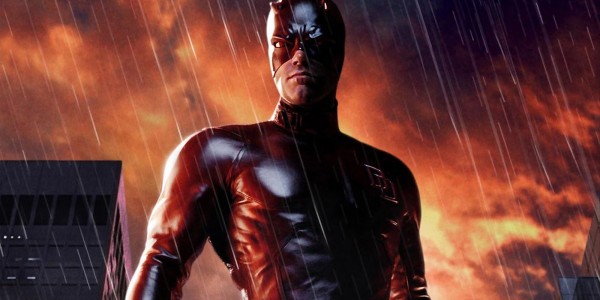
Whilst acknowledging that none of the previous Teenage Mutant Ninja Turtles movies have made reference to this event, and that the abomination that was the Daredevil effort decided to re-write the origin story of the hero, there is a planned reboot of the former to be released later this year, so you never know, this link could suddenly be more apparent. The same bizarre accident which blinded and gave birth to Daredevil was also responsible for the creation of your favourite pizza chomping be-shelled turtles. Daredevil initially received his superpowers thanks to being hit in the face with a big ol' canister of mysterious radioactive goo. Nothing glamorous - literally just being smashed in the money maker with a big tin of nuclear fun. But what Stan Lee forgot to do was tell us what happened to that canister of goo after the accident, which allowed Teenage Mutant Ninja Turtle creators Peter Laird and Kevin Eastman, both huge Daredevil fans, to take liberties. Splinter, the turtles' mentor actually witnesses the boy that would become Daredevil being struck by the canister, and observes it landing in the sewer after smashing a case containing four baby turtles. And thus, Leonardo, Michelangelo, Donatello and Raphael were born... right out of a copyright loophole. Granted, Daredevil is not one of the main household names of the Marvel comics, but it is admirably ballsy that someone managed to create a franchise of their own from the very same origin story of a character that had already been an established success for twenty years at that point. More to the point, the phenomenal success of the Ninja Turtles in the decade that followed must surely push Daredevil close, if not surpass it in terms of commercial success, so serious points for innovation there. I sincerely hope the new movie uses this origin story - if nothing else but to give new hope to a Daredevil movie done correctly.

2. Star Wars & E.T.: The Extra Terrestrial
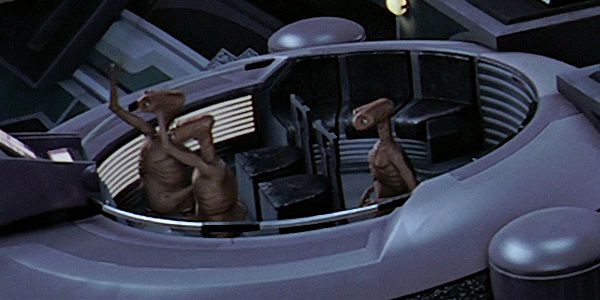
Like Tarantino, Steven Spielberg and George Lucas are well known for dropping subtle tips of the hat towards their previous films into other projects. The best example would be the multiple Star Wars references made in the Indiana Jones series, such as C-3PO and R2-D2 appearing on the Ark of the Covenant, or Club Obi Wan in Temple of Doom. But it is a pair of movies the two did individually which provides the most intriguing link, as there appears to be a parallel between Spielberg's classic E.T. the Extra-Terrestrial and Lucas' first Star Wars prequel, The Phantom Menace. First, in E.T., the scene wherein Elliott attempts to smuggle the eponymous alien through the trick or treater-filled Halloween streets, E.T. pauses and begins to chant "home" at a child dressed as Yoda. This suggests that E.T. has previously encountered Yoda's species, and may even live within close proximity to his kind. However, this was likely to be a tongue in cheek gag left by Spielberg to give everyone a quick chuckle. However, in The Phantom Menace, we get a glimpse of a platform of suspiciously familiar-looking aliens in the Galactic Senate. They aren't given lines, and you can't tell whether you specifically hear them or just the crowd in general, but there is most certainly a representative panel of E.T.'s species taking part in the debate on how Liam Neeson is due to be killed off as a tragic father figure for the 17th time that week. It's a rare piece of genuine subtly by Lucas, and it works brilliantly, keeping the sci-fi nerd in all of us content, without overdoing it and making E.T. ask Padme to produce Reece's Pieces.

1. Blade Runner & Alien

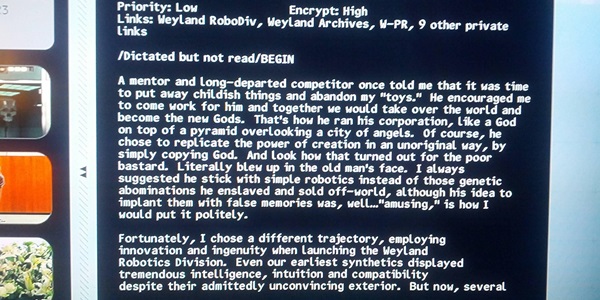
When it comes to heavyweights of the science-fiction genre, they don't come much bigger than Blade Runner and the Alien franchise, both of which were the product of director Ridley Scott. In recent years, we had to put up with substandard Alien sequels and the spectacularly underwhelming and trashy Alien Vs. Predator series, but then Scott reappeared in the sci-fi game to release Prometheus. In the build up to the movie, we were all asking whether this would be a true Alien film - almost an origin story for the xenomorph. Of course it was. No matter how strongly Scott protests that it's a separate story, you basically see how his most famous creature came into being. But this was a link which was more expected than not. What took us off guard slightly was the hidden inclusion of a connection between the Alien universe and Blade Runner. Whilst it is clear that Scott has a fascination with robotics, due to his attention to the Replicants in Blade Runner, and the androids (Bishop) in Alien, we had previously been led to believe that these were merely coincidences in an interest of a theme, not a directly-related issue. That view was changed thanks to an easter egg found on the Prometheus DVD, which displays a message from Peter Weyland, CEO of the Weyland Corp., producers of human-like robots who are still built to serve human needs, such as David, the robot charged with assisting the journey of the ship's crew in Prometheus. The message tells of communication between Weyland and a mentor/competitor who offers to join forces in order to perfect their quest for robotic perfection. It describes a man with a God complex, watching over his creations from his tower, but that it "blew up in his face" - a fate more or less identical to that of Dr. Eldon Tyrell, head of the Tyrell Corporation, who was killed by one of his own Replicants. This not only suggests that Prometheus is taking place before the Alien franchise took off, but also after Blade Runner, and could provide the unexpected set-up to the rumoured sequel of the latter. Whilst it doesn't necessarily change our outlook on either film, it does provide a fascinating look at the parallel of two previously unlinked competitors toiling away in their quest to upgrade humanity. Do you think any other movies are tied to the same universe? Let us know in the comments below.

Contributor
Contributor

English MA Graduate, passionate about film, Sunderland A.F.C., tv and music with guitars found somewhere in it.