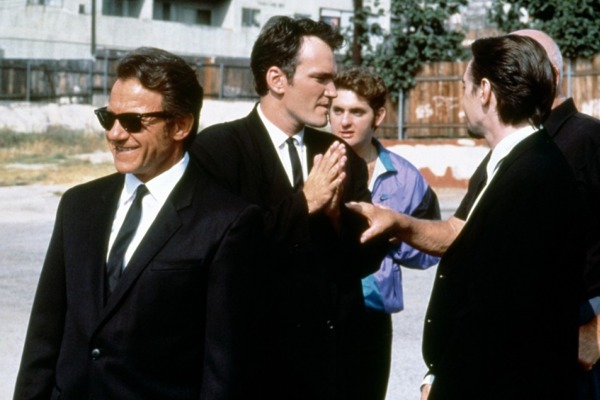
8 Problems With Reservoir Dogs Nobody Wants To Admit

All these years later, is Tarantino's debut flick all it's cracked up to be?

There's no denying that Reservoir Dogs is a hugely important and influential film; after hitting the big time when it was first released back in '92 by a then-unknown filmmaker by the name of Quentin Tarantino, it paved the way for a new era of independent films and changed Hollywood forever. One critic, Jami Bernard, even compared it to the iconic 1895 picture Arrival of the Mail Train, claiming that "people just weren't ready for it." Filmmakers started making different kinds of motion pictures after Reservoir Dogs came onto the scene; low-budget, auteur-driven flicks began to spring up everywhere, not to mention countless copycat pictures packed with irreverent dialogue, scenes of people talking about nothing, non-linear narratives and sudden moments of unexpected ultra violence - not least of all in Tarantino's epic follow-up, Pulp Fiction, in 1994. Often hailed as the "greatest independent film of all-time," Reservoir Dogs cannot be underestimated as an important cinematic milestone. That said (and despite what its most passionate fans might have you believe), it's not perfect. In fact, one could certainly argue that there's a fair amount wrong with Tarantino's debut - even if folk are afraid to admit it...


8. It's Pretty Much A City On Fire Rip-Off

"An undercover cop infiltrates a gang of thieves who plan to rob a jewellery store." That's the plot synopsis taken from the IMDb for Reservoir Dogs. Oh, wait, no, it's not. It's actually the synopsis for another movie named City on Fire, made in Hong Kong and released in 1987 - one that Tarantino is admittedly a big fan of. Reservoir Dogs could also use that synopsis on its own IMDb page and it'd make perfect sense, of course. Okay, so Tarantino's "thing" stems from the way in which he takes bits and pieces from other movies and brings them together to create something new and original. And in doing that, he's kind of unrivalled. Reservoir Dogs, however, is the one movie in his filmography that skims a little too close to that of outright plagiarism, because the "plot" isn't the only thing that Reservoir Dogs shares with City on Fire. Whole scenes and segments of Ringo Lam's movie are "stolen" - not to mention that a lot of the shots from City on Fire seem to have been transposed into Reservoir Dogs. Call it "homage," sure, but how many homages can you make to one move without it being an outright rip-off? The biggest difference is that in Tarantino's film, we never see the robbery, but Reservoir Dogs still shares a large portion of its DNA with City on Fire. Thing is, because Reservoir Dogs is ultimately a better film than City on Fire, it gets a pass as far as movie fans are concerned. Still, it's important to remember just how much of Lam's movie Tarantino took and put into his own.

7. It's The Tarantino Film With The Least To Say

Not that every film ever made has to have a "point" in the traditional sense, of course, but Dogs is very much an exercise in style over substance - more so, perhaps, than any other picture that Tarantino has ever made. There's also a sense that with this picture, Tarantino has to the least to say. Narratively and thematically, it's the director's shallowest work. Even Kill Bill, Tarantino's most childish filmmaking venture, was an exercise in female empowerment. The Hateful Eight didn't offer anything in the way of emotional cues of course, but even that film - a gory state of affairs packed with violence and obscenities - had something to say about race relations in America. Hell, even Death Proof, his worst movie, was a clever deconstruction of female gender roles in cinema. Reservoir Dogs is only about what is happening in the moment and nothing else. There's nothing wrong with that, except for the fact that - fundamentally - it renders the picture as Tarantino's least progressive and intelligent (and therefore less interesting) movie.

6. Tarantino Sticks Out Like A Sore Thumb

Back before anyone knew what Quentin Tarantino actually looked like, his being in the movie wasn't all that much of an issue. Audiences probably just saw him, thought that the director had cast a bad actor as Mr. Brown or something, and that was that. Now that everyone knows what Tarantino looks and sounds like (people definitely know what he sounds like), having him play one of he Dogs of the title is wholly distracting - and kind of weird. Whenever he pops up in one of his films nowadays, it's always cringe-worthy; spotting him in Reservoir Dogs all these years and it jogs you out of the film. Worst still, he's the only member of the team who genuinely feels inauthentic. You don't get the sense that he's a hardened criminal, or the sort of person who would carry off a robbery. Tarantino clearly thought of himself as a bit of a badass at the time and felt he'd fit in with the Michael Madsens and Harvey Keitels of the group, but he doesn't. Though, to be fair to the guy, who else was gonna deliver that motormouthed "Like a Virgin" speech?

5. It's Incredibly Self-Indulgent

Yes, it's mostly brilliant and yes, the dialogue really sings, but Reservoir Dogs is also an exercise in its director's own ego: Tarantino literally opens his debut movie with a scene in which he himself is talking. Tarantino talking? You could say that said intro to the filmmakers' world was a sign of things to come as far as his career is concerned, huh? Tarantino didn't open the movie was somebody else, though, and then opt to squeeze himself in at a later point in a tiny cameo, à la Alfred Hitchcock or Martin Scorsese; he's the first person we hear talking. The man has Tim Roth and Michael Madsen and Harvey freakin' Keitel at his disposal, and he opts to open the film with Mr. Brown delivering a monologue that, for all intents and purposes, has nothing to do with the film. Indulgence is and always will be a part of a Tarantino film, and sometimes it works in his favour. But there's no pretending that the his debut flick isn't the acclaimed filmmaker showering in his own words. It's a fantastic script; the big problem is, Quentin knows it.

4. All The Characters Sound The Same

It's a problem that has plagued Woody Allen for the sum of his career; no matter which character it is who's talking in a Woody Allen movie, they all sound like Woody Allen. Whilst one could definitely make a case for the fact that all Tarantino movies suffer from a similar flaw, his characters have tended to find their own unique (but still Tarantino-esque) voices as his career has move forwards. Reservoir Dogs, however, is the one Tarantino movie where he doesn't quite get away with it: everybody sounds the same. Granted, the filmmaker was yet to "perfect" his skills at this stage in the game; he was just 27-years-old when Reservoir Dogs went into production, so you can cut the guy some slack. Thing is, the characters here all talk in the same voice; no character has an individual style of communication that feels unique to them. They're all carved from exactly the same aggressive, pop cultural-addled, racially-questionable tree. It's not so much of a problem the first time you watch the movie, but repeat viewings reveal a picture built from characters who express themselves in the same voice.

3. The Movie Is Never Better Than Its Opening Scene

How do you beat something as brilliantly original and breathtaking as Reservoir Dogs' iconic opening scene? Quite simply, you don't. That's to say, for all its narrative shifts and unexpected plot twists, Quentin Tarantino's debut never produces a scene as good as its first for the length of its runtime. A few come close, of course, like when Mr. Blonde dances to Stealers Wheel or when Mr. White, Joe and Nice Guy Eddie face off at the end of the movie, but that first scene is amazing. There's so much to take in during the opening; the awesome camera work that glides around the table, highlighting our characters as they shoot the sh*t before taking on the job; the hilarious and somewhat awkward debate over tipping, courtesy of the fantastic Steve Buscemi; the little moment where Mr. Blonde pretends to shoot Mr. White. Yes, there's lots to savour and enjoy during the opening 10 minutes of Reservoir Dogs - not to mention that it's layered with little nods and allusions to things that happen later in the picture. Essentially, the opening diner scene is the key to the rest of the movie. And so, despite its efforts, the rest of Reservoir Dogs simply can't compete.

2. The Use Of The N-Word Feels Entirely Unjustified
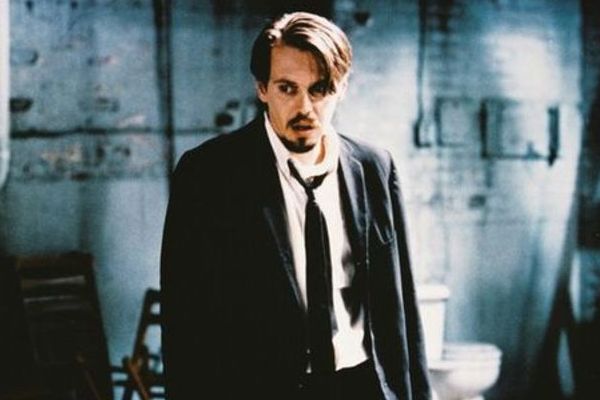
Tarantino frequently comes under fire for his perceived obsession and continued use of the "n-word" - to the point where it's considered to be a trademark aspect of his pictures. For anyone who thinks that Pulp Fiction marked the beginning of Tarantino's obsession with the word, what with that awkward "dead n*gger storage" conversation that takes place towards the end of the film (a speech that he himself delivers), one needs only to look back at Reservoir Dogs to realise that the director's debut favoured the slur also. In one particularly memorable scene (though not necessarily "memorable" for a good reason), Mr. Pink addresses two of his fellow gangsters and says: "You guys act like a bunch of fuckin€™ n*ggers! You wanna be n*ggers, huh? They€™re just like you two, always fightin€™ and always sayin€™ their gonna kill each other!" "Okay, so maybe Mr. Pink is a racist," you say. "Maybe he's just a racist character and his use of the word doesn't reflect Tarantino." Still, there's something undeniably awkward and jarring about the sudden - and rather unnecessary - use of the word in this particular context (and the four of five other uses of the word in the film). Tarantino could have taken all uses of the word out, after all, and the movie really wouldn't have been any different.

1. The Final Shootout Makes No Sense (And Is Kind Of A Cop-Out)

Everybody knows the story regarding the final shootout in Reservoir Dogs, which sees Nice Guy Eddie (Chris Penn), Big Joe Cabot (Lawrence Tierney) and Mr. White (Harvey Keitel) facing off against one another in a Mexican stand-off. Mr. White points his gun at Joe; Joe points his gun at Mr. White; Nice Guy Eddie also points his Mr. White. When the scene reaches breaking point, everybody's guns go off, but - somehow - all three characters winds up getting shot. And that's including Nice Guy Eddie, by the way, who nobody actually had their gun pointed at. Most people don't notice this on their first or even second viewings, because they're too caught up in the movie, but it's odd. Now, according to Tarantino, Chris Penn's squib went off before it was supposed to, but he left the shot in the movie so that "it gave people something to talk about." If you slow down the movie, you can also see Mr. White's gun going off for a second time as he falls to the ground... the problem is that it's facing in the wrong direction, bent towards Joe. Thing is, Tarantino's decision to leave the "Who shot Eddie?" thing as a mystery means that, ultimately, the shootout makes no sense. The end of the movie has no logic or weight behind it, which clashes with everything we've seen. Yes, some might consider it to be an acceptable creative embellishment, but really it can only be branded one thing: a cop-out. Like this article? Agree or disagree with the points raised in this article? How do you feel about Reservoir Dogs? Let us know all your thoughts in the comments section below.

Contributor

Sam Hill is an ardent cinephile and has been writing about film professionally since 2008. He harbours a particular fondness for western and sci-fi movies.