8 Problems With The MCU That Doctor Strange Doesn't Fix
Aren't Doctors supposed to make things better?
If there's one thing you're all but guaranteed to get when you sit down to watch a Marvel movie, it's a good slice of enjoyment.
But enjoyable doesn't necessarily equal problem-free, and while the majority of the studio's cinematic universe entries are definitely entertaining, they're certainly not without their issues.
Enter Doctor Strange, Marvel's fourteenth effort since Iron Man and the movie that had all the makings of a radically divergent, subversive comic-book blockbuster. And while - as expected - it was supremely good fun, it didn't stray quite as far from the Marvel formula as many had hoped, leaving it riddled with a host of complications that have permeated the MCU for years and years.
And these complications are present in a good chunk of Marvel's movies, too - not every single film plays host to every single issue, but they're widespread enough to be deemed a concern.
And that's disappointing, especially for a mammoth-sized studio with some of the most talented creative minds in the world and a near-infinite amount of resources at their disposal. We should expect better when we put down our hard-earned cash, and hopefully things start to improve in the future.
But for now, here are eight big problems that are plaguing the Marvel Cinematic Universe - including Doctor Strange - that need to be addressed...
8. Wasting Iconic Comic-Book Characters

It's not always possible to faithfully adapt a comic, and that's fine - but if the cinematic version of a character is intended to be vastly different from the one we see in the source material, why even bother giving them the same name?
Dormammu in Doctor Strange was nothing like the Dormammu from the source material, to the point that it feels silly to call the movie version 'Dormammu'. Why not call him something else and save the true Dormammu for a more effective role in a movie further down the line? Slapping the name of a popular comic-book villain onto a movie villain who could be a completely different character feels like fan-service at its most patronising.
The MCU's done this multiple times before, too - for example, Zemo in Civil War and The Mandarin in Iron Man 3 were those respective characters in name only. Why not use characters that fit with the story you're trying to tell - even if that means creating a brand-new one - instead of twisting a comic-book persona to fit on the big-screen?
This issue aside, Dormammu was one of Doctor Strange's weak links; he never felt imposing, was given nothing to do, and came off like a slightly more colourful version of Galactus from Fantastic Four: Rise Of The Silver Surfer. Marvel's source material is rich and vast, so it's a shame to see them lazily slot in characters that aren't relevant or fitting.
7. The Cure-All MacGuffins

Watching a superhero blockbuster usually requires you to temporarily suspend your disbelief - but sometimes, Marvel takes this a bit too far.
On more than one occasion, their movies have handed the protagonist(s) an instant get-out-of-jail-free card; a device, relic or piece of equipment that can easily stop the villain and resolve whatever conflict they were recently facing. It's lazy screenwriting at best, and it diminishes the depth of the characters at worst, because in reality, they're not solving their own problems; the script is.
In Doctor Strange, the titular sorcerer is handed the ability to turn back time, instantly rectifying the damage to the city and removing any sense of danger in one fell swoop. His cloak, too, saves his skin on more than one occasion, meaning that Strange barely has to lift a finger to escape trouble.
In The Avengers, Loki's sceptre suddenly has the ability to close the sky portal, for some incredibly vague reason. In Captain America: The First Avenger, Cap doesn't defeat Red Skull with his wits and cunning; rather, the Tesseract vaporises the villain for him.
It's a script issue that probably won't improve anytime soon either, given that the Infinity Stones - an easily definable set of MacGuffins - are set to prominently feature in Marvel's Avengers sequels. Above all, though, it's a shame to see Stephen Strange - one of the studio's smartest characters - being forced to rely on a series of cheap parlour tricks.
6. Explaining Where The Other Characters Are

Any studio that attempts to build a cohesive cinematic universe is effectively writing themselves into a corner, trapped by real-world logistics like contract agreements and salaries. Because, even though all their heroes are meant to exist in the same on-screen universe, there's no way they can constantly be united behind the camera, and it's becoming a noticeable issue, especially as the threats become bigger and bigger.
During Doctor Strange's third act, this problem reared its head, again. With Hong Kong coming under fire and a trippy, ominous, multi-coloured portal in the sky, there's simply no way that not one Avenger took a passing interest. Not one SHIELD agent. Not one of 'Earth's Mightiest Heroes' was present when the Earth was in very real danger.
Yes, Strange was able to rewind time and reverse the damage, but when that damage was initially being caused - and who knows how long it was going on for before Strange and Mordo arrived on the scene - not one single person came to help? It's quite hard to believe.
We've seen this many times before, too. Where was everybody when two giant helicarriers were shot from the sky in Captain America: The Winter Soldier, or when there was an enormous spaceship crashing through London in Thor: The Dark World?
Unfortunately, it's not a problem that's easily cured; those contract agreements and salaries, as well as scheduling conflicts, will get in the way of that. But perhaps a change to smaller-scale threats for solo movies - like Ant-Man - and saving the bigger threats for team-up movies would make it easier to accept the lack of heroes, and it would make those bigger threats feel all the more dangerous when they do appear.
5. Misplaced, Excessive Humour

Marvel's known for being quite light and family-friendly, and despite the studio drawing a lot of criticism for it, there's nothing inherently wrong with this approach. Any kind of tone can work well if applied with confidence, but it's when it's applied with overconfidence that it becomes an issue.
And Doctor Strange is the perfect example. Marvel go with a breezier tone, sure, but here, there were quips every five minutes, even when a scene should've been dramatic and serious. There were jokes in the fight scenes between Strange and Kaecilius. There were jokes in the scene with an injured Strange on the hospital bed. Hell, the Cloak Of Levitation could have its own stand-up comedy show.
And this is a long-standing issue - dozens of Marvel movie moments and characters have lost their impact because of the studio's overuse of humour. Ultron's regular one-liners diminished the threat he posed, Cap's 'language' joke stretched on for far too long, and Iron Man 3's fake-out Mandarin reveal felt incredibly unsatisfying, especially considering every single trailer had made him out to be a potent villain.
It's disappointing, because Marvel have demonstrated their ability to capably balance tone before. Guardians Of The Galaxy worked; that movie knew when to have a laugh, but it also knew when to shut up and keep a lid on the quips. There wasn't a single joke in the opening scene, the moment Peter rescues Gamora, or when Peter accepts the death of his mother during the climax. Consequently, the jokes were funnier and the drama was more emotional.
While some of the humour in Doctor Strange did work - the wi-fi password line felt incredibly organic and natural - other parts, like the cape yanking Strange away from the axe, felt forced. Let's hope Guardians' use of humour has more of an impact on the MCU going forward!
4. Poorly Serviced Female Love Interest

Despite being one of the most popular entertainment companies on the planet, Marvel frequently comes under fire for their apparent lack of diversity - and these accusations aren't without grounds. With not a single female-led or non-white-led movie among their current crop of 14 (both issues that'll be rectified in a few years), it's usually the ladies that suffer most in the studio's testosterone-fuelled cinematic efforts.
And Doctor Strange didn't change things in this regard - Rachel McAdams' Christine Palmer wasn't really given much of an arc, and had nothing to do besides attend to Strange's every beck and call.
Palmer follows in the underdeveloped footsteps of Pepper Potts and Jane Foster, who initially both showed promise but have since been completely abandoned; Sharon Carter in Civil War, who existed purely to give Cap a pseudo motivational speech and a kiss and Betty Ross in The Incredible Hulk, whose only job was to pine after Edward Norton and his big, green alter-ego.
Even the kick-ass Black Widow was reduced to a somewhat mopey, dewy-eyed ball of sadness in Avengers: Age Of Ultron, because... Banner needed a plotline and she was available? The characters are the conduits through which we engage with the story, so if one of them is clearly being used as a screenwriting tool - as Marvel's ladies often are - it sticks out like a sore thumb.
Christine is far from an isolated case, and further contributes to the feel that Marvel just outright dismisses any female characters with potential in favour of anything that's male and looks cool in a costume - because those toys are easier to sell.
3. Every Hero Feels Like Tony Stark

It's hardly a criticism that has gone unnoticed - even the most casual of movie fans would probably be able to spot a few striking similarities between Stephen Strange and Tony Stark - but the fact that the Sorcerer Supreme shares both visual traits and personality traits with everyone's second-favourite billionaire playboy superhero is, quite frankly, boring.
It's not just those two who share a resemblance either. Strange's origin story and Stark's origin story (the arrogant, wealthy, self-righteous a-hole who must endure an arduous set of circumstances in order to learn a lesson and become a 'better man') is mirrored by Thor, and to a certain extent, Ant-Man - who lacks the wealth but commits multiple crimes on his way to becoming the father his daughter desperately needs.
Each of the aforementioned heroes also shares an overly quippy, excessively self-confident persona too, and along with Star-Lord, would all begin to blur together if they were placed in the same room. It looks as though Marvel are positioning Doctor Strange as Iron Man's 'replacement' as their flagship hero - after all, Robert Downey Jr won't be playing the part forever - hence all the parallels.
But that's a risk.
Cockiness is a trait that eventually turns people away, and given how often Marvel have been copying and pasting the same type of hero into different movies, there's a chance they could annoy their audience. This aside, it's plain disappointing to watch the studio lazily rely on a formula that did them the world of good back in 2008 - but ironically enough, may be one of their greatest weaknesses.
2. The Planet Is Always Under Threat (But Always Survives)

You'd be forgiven if you let out a yawn upon discovering that Doctor Strange's villain followed in the footsteps of Ultron, Malekith, Ronan The Accuser, Hydra in The Winter Soldier and Loki in The Avengers by being the latest MCU antagonist who's threatening to cause widespread destruction, devastate a planet or take millions and millions of lives.
Come on. Does anybody watching really believe that they'll make good on their intentions?
If the stakes are consistently this high (as they tend to be) it makes the hero's plight completely unrelatable because you know for a fact that the villain can't possibly destroy the entire universe/planet - would Marvel really kill off their biggest heroes, 'end' their cinematic universe or choose not to make more sequels and more money? As a result, you don't care about anything that happens because you already know the outcome of the battle; everyone walks away with nary a scratch.
On the positive side, Marvel have previously shown that they can shake this formula up; Ant-Man's small-scale skirmish was a refreshing change of pace and Civil War's more personal, grounded struggle felt incredibly engaging - but these are few and far between.
Moving forward, it would be far better if the studio started to focus on making their conflicts more character-driven, like the latter two, instead of threatening destruction on such an unbelievable scale - this at least lends the climax some weight.
1. The Weak Villain

It's become a bit of a running joke at this point - stretching all the way back to Iron Man 2’s Whiplash - but once again, Marvel have failed to deliver the goods in the villain department.
It's not even the fault of the actors who play the parts either (world-class performers have filled these roles, including Mads Mikkelsen, Mickey Rourke and Christopher Eccleston), but rather, the studio’s undying commitment to the hero’s journey to the point where the villain gets sidelined.
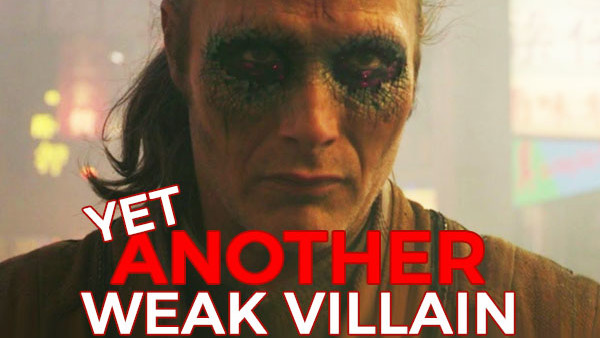
Doctor Strange’s Kaecilius is the latest member of the group that includes the aforementioned whip-wielder, Ant-Man’s Yellowjacket, Guardians Of The Galaxy’s Ronan and The Incredible Hulk’s Abomination, among others. There's nothing wrong with the characters - all have been well-serviced on the page - but their big-screen counterparts are generally given nothing to do or very generic things to do, often reduced to simply being an obstacle for the hero as opposed to a fully-formed character.
Marvel usually excel when it comes to providing a solid arc for the protagonist, but they regularly struggle to balance said arc with everything else surrounding it. A memorable villain is an integral part of the traditional superhero story, but most MCU movies are disjointed, leaning heavily toward the hero. Not only is it a problem that Doctor Strange doesn't fix, it's Marvel's most prolific problem that severely impacts the effectiveness of their stories.
Do you agree with any of these problems? What did you think of Doctor Strange? Leave your thoughts in the comments below!