8 Recent Films About The Dark Side Of Fame

It's not all red carpets and caviar...

Fame is something that fascinates people all over the world. There has to be a reason that people are willing to debase themselves on national television via reality shows like Big Brother. They want to be famous. They want a taste of the high life, with fast cars, big houses and all of the glamour of being a certified member of the glitterati. However, recent months have shown that cinema isn't interested in that kind of fame. With the possible exception of the heavily polished turd that was the Entourage movie, the films of the last few years have been more inclined to explore the darker and more sinister side of celebrity culture. Once the flashbulbs have stopped and the red carpet has been rolled away, there is a lot more to being in the public eye than the media suggests. Given cinema's desire to turn the camera back on itself, it's inevitable that the exploration of fame is a major theme. This year, especially, the issue of fame's inherent darkness has been a major factor in a number of big movies. In everything from hard-hitting documentaries to gruesome indie horror films, via Oscar-winning dramas, the flipside of the celebrity gloss has dominated the big screen.


8. Cobain: Montage Of Heck

The movie industry is fascinated with Kurt Cobain. The Nirvana frontman, who committed suicide in 1994, has been the subject of countless documentaries over the years, including Nick Broomfield's controversial Kurt & Courtney, which investigated claims that Cobain may have been murdered. Cobain: Montage of Heck was the latest film to explore the singer's life and the first to made with the cooperation of his family and widow. Directed by The Kid Stays in the Picture's Brett Morgen, the film premiered at Sundance in January and premiered in the US on HBO in May, after a limited worldwide theatrical run. Montage of Heck is less an exploration of Cobain's rise to the top of the music industry than it is a portrait of a mind in flux, unable to cope with the pressures of being the biggest musician on the planet. Nowhere is this clearer than in the regular animated sequences, based on Cobain's own drawings and writing, that paint the picture of a man conflicted over wanting to share his art with the world, but resenting the spectacle of showbusiness. Morgen's film is a little over-indulgent and runs way too long, but it does delve deeply into the complex persona of its flawed subject. For Cobain, fame was an unfortunate side effect of his desire to express himself and it ultimately drew him into a world of drugs and darkness.

7. Love & Mercy

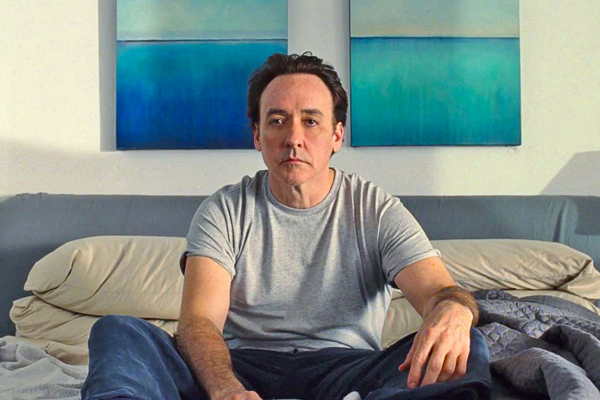
Love & Mercy, which follows Beach Boys frontman Brian Wilson at two separate points in his life, was released with very little fanfare earlier this year. However, now that awards season is almost upon us, it's worth looking back at the film and its complex protagonist €“ using music as a coping mechanism to deal with the voices in his head. Played as a man at the height of his musical powers by Paul Dano and by John Cusack in his later life under the thrall of Paul Giamatti's corrupt therapist, Wilson is shown to be a musical genius pushed too far by the pressures of the industry. Dano's portrayal of Wilson, in particular, throws the spotlight on the cult of celebrity for exacerbating his mental illness. Wilson is depicted as being a consistent creative voice, stifled by the demands of the industry and a family telling him to keep producing the same material he has always delivered. The fallout from Pet Sounds, a commercial disappointment on release before its eventual reevaluation as a classic album, only makes Wilson's problems worse. By the time the story meets Wilson as played by Cusack, he has become a hollowed-out wreck, completely under Giamatti's control. The film is a scathing indictment of fame and how the pressures of celebrity and showbiz can stifle the creativity of otherwise great minds.

6. Danny Collins

On its original release earlier this year, Danny Collins was roundly dismissed as a sentimental Al Pacino vehicle, targeting the "grey pound" market that has been frequently targeted by Hollywood since The Best Exotic Marigold Hotel hit it big. However, the film was considerably more sophisticated than that and proved to be yet another look at the ways that the music business can corrupt and destroy creativity. Pacino's title character is the epitome of a creative human being turned into simply a tool for record company profit, churning out the same, inoffensive tunes in vintage Cliff Richard style. The plot centres on Danny Collins' desire to regain his creative impetus after discovering a letter written to him by John Lennon decades earlier, urging him to stick to his musical guns. On the surface, the story is lightweight and fluffy, but as it expands to include Collins' sadness at being estranged from his son (Bobby Cannavale), it becomes a deeply emotional exploration of the difficult decision between pursuing fame and focusing on family. Danny Collins chose the constructed reality of fame rather than family life and only realised his mistake when it was too late. Throughout the film, Collins is given the option to get out of that world, but the inexorable pull of the crowd always drags him back into it. Danny Collins paints fame as a destructive addiction that refuses to let go of someone once it has them in its grip.

5. Starry Eyes

Starry Eyes is the film on this list that is perhaps most damning towards fame, casting the upper echelons of Hollywood as a literal cult and painting the hunt for fame as a body-decaying disease in gleefully Cronenbergian fashion. Under the guise of a body horror story, the film is a brutal, visceral dissection of the modern obsession with celebrity and the sacrifices necessary in order to gain fame. The film follows Alexandra Essoe as Sarah, who is an aspiring actress living alongside other wannabe performers in Los Angeles. She is offered the chance to audition for a new horror film and eventually meets the producer, who makes an indecent proposal as a "gateway" for her entry into the world of showbusiness. When Sarah accepts his proposal, her body begins to literally fall apart and she begins to ruthlessly murder the people who were previously her friends, as if to remove obstructions on her path to glory. As the film ends in a cult-like initiation, Sarah is reborn as a glamorous star ready for Hollywood. Starry Eyes is a smart movie that has plenty to say about the brutality of the Hollywood world and the lengths to which people must abandon their former selves to get ahead in the film industry.

4. Maps To The Stars

From Cronenberg-influenced horror to the oeuvre of the man himself. Maps to the Stars, Cronenberg's latest cinematic outing, follows a disparate ensemble of characters in Los Angeles as they jockey for position in the showbiz landscape. The film is less a commentary on fame itself, but focuses heavily on the makeup of Hollywood culture as an incestuous world which is all but impenetrable to most people, regardless of their talent. The film's central character, Agatha, is someone who has been cast out of the LA world by her parents. As the story unfolds, the literal and figurative incest and nepotism of the Hollywood world is revealed in grotesque detail. It seems that everyone is either related to someone in the business, having sex with them, or both in a handful of horrifying cases. Cronenberg is a filmmaker who has always defied the Hollywood system, working mostly in Canada. However, Bruce Wagner's script enticed him to shoot for the first time in LA, in order to accurately convey the world of Hollywood. There are twists of both horror and absurdist comedy to the film, altogether creating a sophisticated takedown of the film industry.

3. Birdman

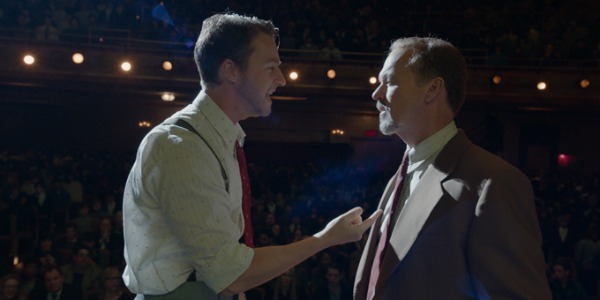
If there's one thing that the Academy loves, it's stories about Hollywood and the film industry itself. It's perhaps that quality which led Birdman to win big at the Oscars earlier this year, scooping four gongs, including Best Picture and Best Director for Alejandro G. Iñárritu. Focusing on a washed-up actor attempting to gain crediblity in the world of theatre, it casts a critical eye over the world of entertainment, criticism and the fickle typecasting of actors. Michael Keaton stars as Riggan Thomson, who has faded in the eyes of the movie world after initially becoming famous for playing the eponymous superhero. In an attempt to win back credibility, he mounts an ambitious theatre production of a Carver short story, for which he is writer, director and star. The play slowly drives Riggan insane, as he is forced to take part in frivolous interviews and is haunted regularly by the sharp-tongued embodiment of his most famous role. Birdman portrays the life of a famous actor as a constant battle to repeat their previous successes. It shows Riggan being driven mad by a desire to be taken seriously after the frivolous role that made him famous. Like so many of the subjects of the films on this list, Riggan is a man struggling to reconcile the art he wants to create with the celebrity that comes as a side effect of that.

2. Amy

Asif Kapadia made waves as an emerging documentary filmmaker when he took on the career of iconic Formula 1 driver Ayrton Senna for 2010 feature Senna. His next subject was controversial pop star Amy WInehouse, who died in tragic circumstances in 2011 at the age of 27. Amy is a complex portrait of an incredibly complex human being. Most notably, it's a discussion of the effects that fame can have on someone who isn't prepared for life in the public eye. Utilising interviews with an eclectic array of figures from Winehouse's life, Kapadia puts together a uniquely elaborate and contradictory timeline of a life lived in the public eye. The director is an impartial observer, largely allowing those in the midst of the story to tell in their own way, before bringing in counterpoints from others. With such an approach, it's perhaps unsurprising that Amy has been criticised since its release by the likes of Winehouse's father Mitch, who felt he was portrayed as a villain. The film certainly doesn't pull any punches in the way it depicts Winehouse's years as the centrepiece of celebrity culture. Throughout, the flashbulbs of the dogged paparazzi who followed the singer's every move are portrayed as an aggressive cacophony, literally and figuratively drowning out Winehouse as both a person and a performer. Early on, Winehouse is shown telling a journalist that she isn't ready for fame and wouldn't be able to take it. The film then goes on to prove just how right she was about that, showing the audience a bright, sunny human being slowly change into a tragic tabloid caricature.

1. Whiplash

Still perhaps the best film released in the UK in 2015, Whiplash is a lean, exquisitely performed take on one young man's desire to succeed in the world of jazz drumming. Written and directed by young filmmaker Damien Chazelle, the film showcases the desperate lengths to which its protagonist is willing to go in order to impress his tyrannical instructor and cement himself as a true creative voice. Miles Teller plays Andrew, who has one of his drum practice sessions interrupted by JK Simmons' Fletcher. Fletcher invites Andrew into his prestigious jazz band and promptly shocks him with his aggressive methods for getting the best out of his band. Desperate to earn the approval of Fletcher, who is like Simon Cowell meets Hartman from Full Metal Jacket, Andrew repeatedly pushes himself to the brink of insanity in order to perfect his drumming ability. Whiplash is a damning portrait of how the desire for greatness and renown can destroy a young, raw talent. By the time Andrew performs his final masterpiece at the film's climax, he has cut ties with just about every human being in his life and has sacrificed every other aspect of his existence in order to be an excellent drummer. Andrew seems content at the climax of the film, having achieved his professional goals, but the desire for fame and success has eroded his humanity to the extent that all he can see is his drumstick.

Contributor
Contributor

Freelance film journalist and fan of professional wrestling. Usually found in a darkened screening room looking for an aisle seat and telling people to put away their mobile phones. Also known to do a bit of stand-up comedy, so I'm used to the occasional heckle.