8 Recent Movies That Grossly Over-Estimated What Their CGI Could Do

Film technology has improved in leaps and bounds, but the suspension of disbelief remains constantly questioned.

It€™s hard to believe it€™s been over twenty years since Jurassic Park hit. That€™s not a wistful musing pretending the natural passage of time is somehow shocking, but a comment on the state of CGI in movies. The technology has improved in leaps and bounds, but the suspension of disbelief remains constantly questioned. While there€™s always going to be films with terrible CGI (although studios sometimes forget it, animating and rendering all those shots takes a lot of time and money), what€™s more perplexing is when a director forgets Jurassic Park€™s mantra; know your limitations. Spielberg€™s dino-fun-ride still stands up today because rather than having perfected computer-generated imagery, he knew when not to use it. The T-Rex wouldn€™t be intimidating if it was digital in every shot, so he used models as a supplement. Some modern filmmakers seem to think that we can now produce completely photo-realistic shots. While we are certainly capable of creating realistic-looking images, there€™s still a way to go before you can sit down and watch a film without being able to tell the difference between real and fake. We have an innate ability that tells us when something doesn't look quite right and in a generalised version of what is commonly known as the uncanny valley (where a CGI human looks so almost-real, yet utterly fake), as things improve we only noticed it more. It's unsettling rather than glaring, and in the long run that's worse. Even Spielberg himself messed up with the fourth Indiana Jones movie, giving us an endless stream of clearly computerised action. 3D has only made matters worse. For films shot with stereoscopy in mind (or set in a mostly computer-generated world), there is often a lack of focus on the 2D version (now back as the format the majority of releases are watched). A hangover from 3D€™s multiple points of focus, it looks like nothing the naked eye would pick up and therefore comes off as fake. To prove the point, here are eight recent films that have undisputedly good effects, but push them too far.

8. TRON: Legacy

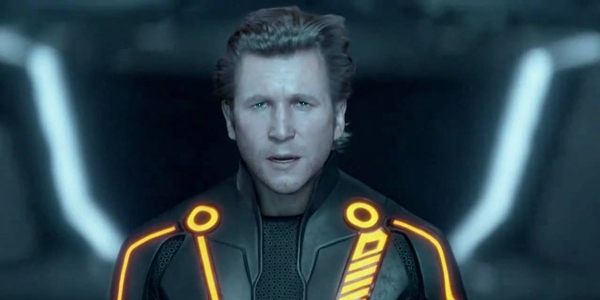
The first TRON had effects that place it inescapably in the early eighties, but sticks close to its key concept it doesn€™t mar viewings thirty years on. Set in computers of the time, obviously everything would be in stark colours and built out of vector graphics; it€™s a sound internal logic. This can on a first look be applied to the belated sequel, TRON: Legacy, which likewise has much of the action set in a computer realm. The vehicle design is an updated version of the first film€™s and everything feels it's on the same plane of realism. The problem is Clu. A digital clone of a young Jeff Bridges, he never once looks real and for some of the movie you suspect that could be the point; he€™s a computerised version, not the actor himself. That logic falters a bit when all other inhabitants of this digitised realm all look realistically human, but, hey, might as well go with it. Except we see young, non-evil computer Jeff Bridges a few times and he looks equally unrealistic. So it€™s just incredibly flat de-aging animation; great.. Suddenly the other effect€™s simplicity doesn€™t seem as purposeful.

7. Oz The Great And Powerful

The Wizard Of Oz has such vibrant colour scheme that any rudimentary effects can be ignored to this day; it still feels incredibly magical. Oz The Great And Powerful replicates the vibrant colour scheme, but in creating the world almost entirely with CGI things are far from the original's mysticism. Some parts of the CGI work well. And so they should; there€™s less of an impetus to make things photo-realistic, so characters like Finley the winged monkey hit the desired mark and the simplistic designs that have worked against other films (think The Lovely Bones€™ in-between) are right on here. Some parts inexplicably don€™t; there's plenty of moments where the actors may not be correctly integrated in the scene or the background just feels flat. Now you could argue that these moments, particularly the latter, are intentional, but if it is then Sam Raimi has woefully misunderstood the original€™s charm. Yes, in the original you can tell where the set ends and the matte painting begins, but that€™s not a stylistic decision by director Victor Fleming like the sepia toned opening or plastic plants, but a limitation of the time. I€™m inclined, given the big commercial prospects of the film, to say it was more influenced by lack of time near the end of post-production. Like Alice In Wonderland, this was a Disney produced reimagining of a classic story, only here there's a real variation in the levels of polish to suggest it wasn€™t going all out for the skewed style of Burton€™s film.

6. Life Of Pi

Yann Martel€™s novel Life Of Pi is an incredibly vibrant book, its visuals playing a large part in the book being labelled as €˜unfilmable€™ (a phrase that€™s slowly losing meaning with every contradiction); you simply couldn€™t do the film without use of CGI. But in making last year€™s successful adaptation, Ang Lee, no stranger to poor CGI after Hulk, severely over-egged the pudding. Simple sequences - an Indian street, a French swimming pool - are fully realised in a computer to keep the location budget down, feature some shaky models reminiscent of Titanic's whole ship shot, ultimately leaving us with a €˜real world€™ sharing much of its style with the fantastical stuff to come. But the real overestimation is the animals. While they€™re certainly impressive in design with some incredible detail, they still end up on the cartoon side of the uncanny valley; that innate ability discussed earlier gets a real work out in Life Of Pi, going off in every scene (and entering overload when we meet the meerkats). Darren Aronofsky is following this route with his high concept Noah in a couple of months and from the trailer things haven€™t improved.

5. Star Wars Episode VI: Return Of The Jedi (Blu-Ray Edition)

OK, so A New Hope has the reinserted Jabba scene which is pretty bad, but at least that was adding something new to the films. The Star Wars Special Editions did a lot of good. They may be eternally lambasted by fans, but as well as the big €˜childhood-ruining€™ changes there€™s an awful lot of useful tinkering, with many mistakes in the sevnties visual effects corrected. The 2006 re-release of the untampered films highlights this, showing how shoddy the films actually look without a digital clean up. But alongside these brush ups, there was a CGI overhaul of some scenes. Intended to improve the puppets, it€™s proven to be a temporary solution, with those replacement effects now as dated as what they replaced. This is most prominent in Return Of The Jedi, where the Jabba€™s Palace band sequence was reimagined. The impact on the film is negligible (the scene is silly no matter what version you watch) but that doesn€™t avoid that the computer-generated singers (and their incredibly detailed throats) appear to be straight out of the Clone Wars TV series. And even though the Blu-Ray added some more emotive and digital changes, these still remain unchecked, suggest Lucas still views them as 'OK'

4. Avatar

Avatar is remarkable in many aspects (and not just that $2.7 billion box office). It€™s set in a mostly CGI world that is meant to look real, and (unlike some more recent examples) pulls it off. This is primarily thanks to the Navi. Initially ridiculed for just being big cats, they€™ve clearly been designed to bridge the computer world and the live-action interiors, bolstered by incredibly accurate motion capture they feel at home in every location. Watching the film it€™s clear a lot of time has gone into many sections to ensure the animation and rendering are up to scratch. Although it is only sections and not the entire film. Focusing so heavily on the aliens means that some of the human tech hasn€™t been properly integrated. It€™s evident in pretty much every appearance from the mech suit, but doesn€™t become a problem until the finale. You see, the CGI world in Avatar is great because the cross-over it has with the live action elements is limited, so the usual contrast between it and filmed elements is less prominent. Thanks to thirty-five years of Star Wars cockpit shots, elements on two separate planes are covered, but when the Quaritch starts rampaging through the Avatar lab at the film€™s climax it€™s direct contact, which as you can see above didn€™t work out too well. Still, it is worth reminding ourselves it€™s impressive this is as far as Avatar could successfully push the envelope.

3. The Hobbit: The Desolation Of Smaug

The most recent effects showcase, the second Hobbit film presents some state-of-the-art effects, along with questionable realisation. Now I want to make clear right now that I€™m in no way implicating Smaug in this. Aided by an incredibly detailed character design and wonderful reference in the form of Benedict Cumberbatch, Weta have made a stunning beast that stands as one of the best CGI creatures ever put on screen. Sadly, the dragon is made all the more impressive because he€™s surrounded by effects of a lower quality. Chief among these is the molten gold statue. Ridiculous in concept, the execution is even worse. Instead of looking free-flowing and gloopy, it just ends up undefined and stilted. The effect is only made worse by its poor interaction with the live action elements. And lets not get started on Thorin riding the boiling hot liquid. Then there€™s de-aged Legolas, the surroundings of Lake Town, the elven forest; they all look detailed (well, not Legolas), but something about them isn€™t quite right. There's no point of focus. Look at the above image; it looks very good, but it looks too clean and too perfect to be real. The added strain on Weta, with the project gaining an extra film in post-production, could easily be the source of this; rather get things looking good enough than lose that coveted release spot.

2. X-Men Origins: Wolverine

This isn€™t really the effects as a whole (although the film does make many similar mistakes to other films), but a very particular example. In the fourth X-Men film (and the first not in the main chronology) Wolverine€™s claws suddenly became unbelievably fake. Effects that had been convincing to the point you didn€™t even consider their presence in the previous films suddenly seemed to have taken a massive jump back. It never once looks like the adamantium is coming out of Wolverine€™s knuckles, with the claws are just floating on his fists. If I didn€™t know the claws in the above image were like that in the film I€™d swear that was a still that had been doctored as a joke. A big issue with them here appears to be lighting. Most notable in the daytime scenes where there€™s only one light source from a consistent angle, but noticeable in most instances, the claws look they€™ve been done in an amateur photoshop rush job; quick, make them silver and it€™ll all be OK. And rush job just about sums up Wolverine.

1. Green Lantern

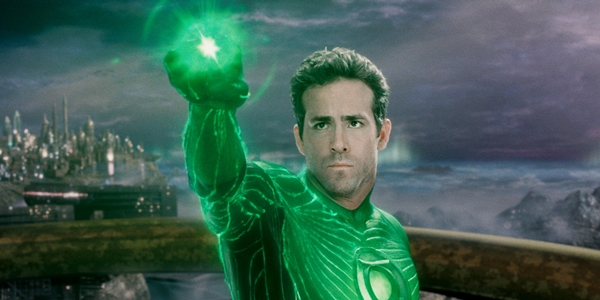
A key factor of superheroes only recently gaining a sense of legitimacy in cinema is the costumes. Often tight-fitting deals that look silly (or can easily be turned that way with the addition of bat nipples), it takes a strong double act of fashion designer and cinematographer to make sure any adaptation doesn€™t look corny on the big screen. Green Lantern made a bold decision to do away with spandex all together, having Hal Jordan€™s costume in the film be entirely computer-generated. A bold, forward-thinking move from DC that could have marked a key visual effects milestone. Nope, it looked awful. The driving force behind this decision seems to be that as there€™s plenty of CGI generated Green Lanterns in the movie, it€™s easier to bring Ryan Reynolds over the their style. It€™s surprisingly sound logic, but only goes to highlight how big an over-estimation this was. Reynold€™s head floats on his body reminiscent of Wolverine's claws and the suit€™s always-on glowing function means you never forget how it fake it is all the time it€™s on screen. But don't let that make you think it's an all-out bad effect. The film's visuals aren't astounding, they're just decidedly average. And you can't be middle of the pack when you're trying to be ground-breaking. Which big budget movies do you think reached too far? And which ones had the film ruin it for you? Let us know in the comments.

Contributor
Contributor

Film Editor (2014-2016). Loves The Usual Suspects. Hates Transformers 2. Everything else lies somewhere in the middle. Once met the Chuckle Brothers.