8 Ridiculous Behind-The-Scenes Struggles Over Movie Rights
Just be glad it's not your job to deal in the headache-inducing business of movie rights. Sigh.

8. The 1966 Animated Version of The Hobbit That Ends With Bilbo's Wedding
http://www.youtube.com/watch?v=UBnVL1Y2src So years ago you purchased the movie rights to a little-known children's novel at a cheap price, but they are about to expire in a few short months. Then a wildly popular sequel to that novel is released, making those movie rights very valuable. Animation producer William L. Snyder found himself in this position in 1966 because he purchased the movie rights to J.R.R. Tolkien's The Hobbit for a few thousand dollars several years before, but they were about to expire if he did not utilize them. The contract specified that Snyder would lose the rights if he did not "produce a full-color motion picture version" of The Hobbit by June 30, 1966. Considering that around this time The Hobbit's sequel The Lord of the Rings became a worldwide bestseller, Snyder's rights were extremely valuable and he didn't want them to revert back to Tolkien. Snyder asked animator Gene Deitch to create an animated short that he could screen in order to maintain the film rights. This is because, as Deitch later wrote on his website: "Please note: did not say it had to be an animated movie, and it not say how long the film had to be!" In one month Deitch whipped up a 12 minute animated adaptation of The Hobbit, which was screened in a single theater in Manhattan on the exact day Snyder's rights were set to expire. As a result, Snyder's maintained ownership of the movie rights. Though it is "animated," the short is made up of still drawings and the story and dialogue are all done by a single narrator. If you're wary of Peter Jackson's extensive changes to The Hobbit for his current film series, you ought to know that this short completely changes most of the storyline (including renaming Smaug to Slag and adding a princess as a love interest for Bilbo). Still, it's a remarkably charming short that features some amusing artwork, especially considering the low budget. In 2012, Snyder's son Adam posted the short to YouTube, so you can see it for yourself. According to Deitch, Snyder later sold the rights for $100,000 (of which Deitch saw nothing), which eventually resulted in the feature-length 1977 animated version by Rankin/Bass and, decades later, the current live-action series.7. Universal Sues Nintendo Over Donkey Kong, But Doesn't Actually Own The Rights To King Kong

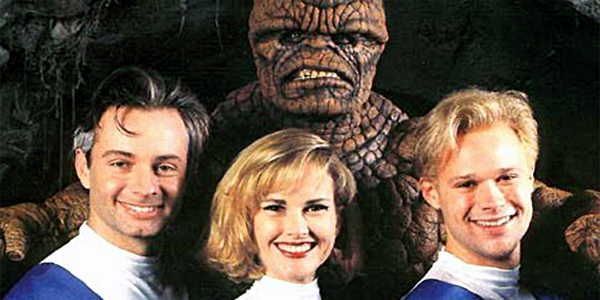
6. Making A Fantastic Four Movie On A $1 Million Budget
5. Why The It's A Wonderful Life Sequel Nobody Wants To See Can't Actually Be Made

4. The Hellraiser Sequel That Wasn't Even From The Creator's "Butt-Hole"
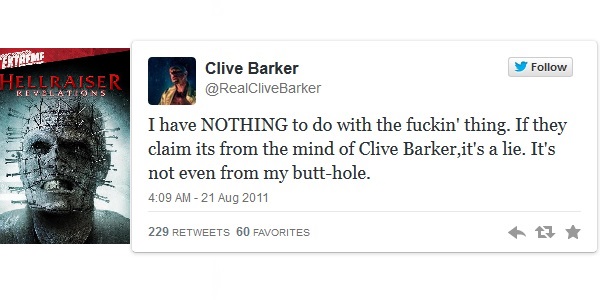
Dimension Films began releasing sequels in the popular Hellraiser franchise starting with 1992's Hellraiser III: Hell on Earth. However, Hellraiser creator Clive Barker ceased to be involved with the films after the next sequel, 1996's Hellraiser: Bloodline, which was also the last of the series to be released to theaters.
Four more direct-to-DVD sequels followed: Hellraiser: Inferno (2000), Hellraiser: Hellseeker (2002), Hellraiser: Deader (2005), and Hellraiser: Hellworld (2005), most of which originated as non-Hellraiser horror scripts that were bought by Dimension to save time on writing original screenplays. However, because Dimension stopped making sequels the company's rights were in danger of expiring.
To prevent this, in late 2010 Dimension rushed a ninth Hellraiser film into production titled Hellraiser: Revelations. The film was shot in three weeks on a $300,000 budget with a small cast and crew, released in a single theater in California on March 18, 2011, and then released on DVD in October 18, 2011 to overwhelmingly negative reviews. Douglas Bradley, who portrayed the series' signature character Pinhead since the original film, declined to participate because of the poor script and low budget. Barker objected to promotional materials using the phrase "from the mind of Clive Barker" when he had nothing to do with the project. On his Twitter he remarked that it was not only not from his mind, but it was not even from his "butt-hole." Dimension and Barker must have patched things up because Barker announced in October 2013 that he would write and direct a reboot starring Bradley as Pinhead. If nothing else, it has to be better than the low-budget butt-ugliness of Hellraiser: Revelations.3. Low-Budget Producer Decides He Can Make An Evil Dead Sequel Because Sam Raimi Says He Doesn't Want To

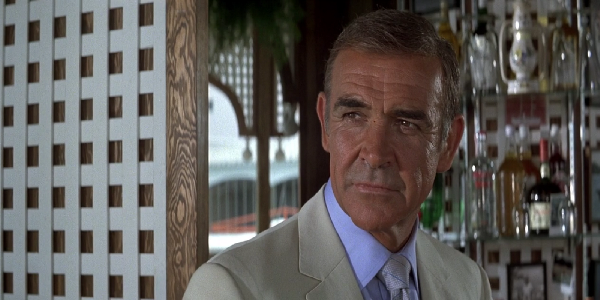
2. Thunderball Co-Writer Remakes It in 1983 (And Attempts To Do It Again In The 1990s)
1. Warren Beatty Wins Legal Battle Over Dick Tracy Rights by Wearing a Yellow Hat
