8 Ridiculous Film Theories That Completely Miss The Point

Do these people even know what the film is actually about?
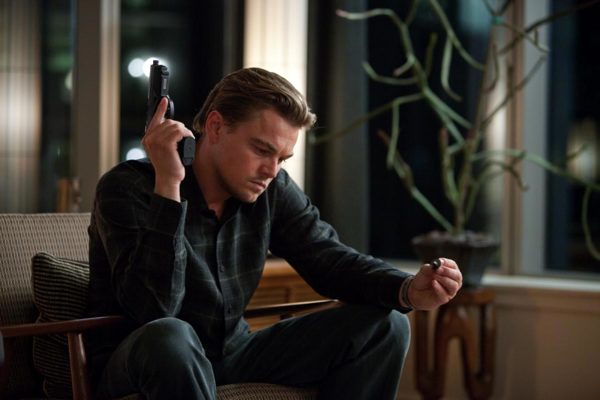
If there's one thing that film fans love doing, it's coming up with theories. And, most of the time, these can be a very rewarding experience, adding a layer of fan interpretation and viewing certain details from a completely new perspective. Arguably the worst thing to happen to film theory culture, however, is the internet. Yes, it has facilitated the birth of some legitimately great theories, but it has also given life to ones that not only make absolutely no sense, but detract from the film rather than add to it. As well as that, people actually champion these theories. They spread them around smugly as if they're concrete, when in reality they miss the the point of what the film is trying to do entirely. Sharing a "mind-blowing" film theory may seem like a way of appearing profoundly cine-literate, but in actual fact it detracts from independent analysis. At their worst, nonsensical film theories stifle genuine critical thought, which is why the worst offenders need to be exposed. These are the dumbest film theories out there and how they completely and utterly miss the point...

8. Supreme Leader Snoke Is Darth Vader Reincarnated

Star Wars: The Force Awakens has prompted a huge number of fan theories and speculation in an incredibly short period of time. Which is great, because it shows that fans actually like the material enough to engage with it (as opposed to the prequel trilogy, which many fans desperately attempt to forget). One of the most prominent theories that's been doing the rounds online is that Supreme Leader Snoke is actually Darth Vader reborn. One picture in particular is used as irrefutable evidence, showing Darth Vader without his helmet and an image of Snoke that has been slightly brightened. And, in fairness, the two bear a striking similarity €“ from the shape of their skull to the sunken cheeks and even down to the facial scarring. There are differences, of course, too €“ but differences don't make for rabid speculation. The theory goes that Snoke is Vader resurrected, or is a Force projection without physical form. The only caveat is that the theory completely misses the point of not only the original trilogy, but the prequel trilogy, too. Forget all that stuff about Vader being cremated (if he's merely a Force ghost that wouldn't matter). What's significant is that such a plot would nullify Vader's character arc during Return Of The Jedi €“ nay, the entire saga. When it comes down to it, Star Wars is a redemption story. It seems like many fan are forgetting the fact that Vader doesn't remain evil at the end of Jedi, or that that he saves Luke Skywalker's life by sacrificing his own. It makes absolutely no sense that Darth Vader would be evil again.

7. The Aliens In Signs Are Actually Demons

You know things are grim when you're forced to come out in defence of an M. Night Shyamalan film (okay, so Signs was released before that ship had entirely sailed, but you know what I mean). Signs €“ released in 2002 €“ tells the story of an Episcopal priest named Graham Hess (played by Mel Gibson), who loses his faith and gives up his priesthood after the death of his wife Colleen (played by Patricia Kalember), only to regain it when aliens invade his small town. One particular theory tries to put forward that the film doesn't feature aliens at all, but demons, because demons coming to earth ties in much more strongly with the faith-based nature of the plot. But the entire point of the film is exploring what it's like to lose faith in a much more general sense, and whether or not Hess's loss of faith is logical. There's one throwaway detail in the film that many theorists cling to, namely that the aliens are injured by water at the end. The suggestion is that the aliens don't fear normal water, but holy water, and are thus demons. Yet we're told that the alien ships don't land near the sea. This would basically imply that many of the earth's oceans have been secretly pre-blessed by priests in the case of this very event, which is totally as stupid as it sounds. Inconsistencies aside, this theory completely disregards Hess's internal struggle and his attempt to deal with the loss of his wife in order to crowbar in something a bit more biblical.

6. The Innumerable Theories About The Pulp Fiction Briefcase

What's in the briefcase in Pulp Fiction? Nobody knows. Yet the film is still brilliant and fulfilling without this key bit of information, and that's pretty much the exact point. A MacGuffin is a plot device that appears in the form of a desired object (or goal) and acts as motivation for the protagonist's actions. In general, there is very little or no narrative explanation for the importance or significance of this object or goal, its motivational qualities are intrinsic. The briefcase in Pulp Fiction is the perfect example of a MacGuffin. But more importantly, it's knowingly that. When it comes to tropes, structure and film history, nobody in Hollywood is as proudly referential as Quentin Tarantino. The whole point of the (literally) glaringly obvious MacGuffin is exaggeration €“ which is exactly what Tarantino does best. On top of that, it allows viewers to make up their own mind as to what's in the briefcase. Spending so much time trying to figure out €œwhat's inside€ (fans have gone so far as to suggest it's Marsellus Wallace's soul which was extracted from the back of his head) completely misses the point of the briefcase's function, which is to smile knowingly €“ as Tarantino always does €“ at a beloved trope, exaggerating it to extreme levels.

5. It Was All In Patrick Bateman's Head

Towards the end of Mary Harron's American Psycho, Patrick Bateman has a total breakdown and a lot of really weird stuff starts to happen (like an ATM asking Bateman to feed it a cat). There are bunch of widely circulated theories out there that suggest the whole thing was completely imagined by Bateman, and that he didn't actually kill anyone. According to theorists, this breakdown scene is proof that none of it is actually real. Aside from the fact that the one thing that would lead to a mental breakdown is torturing and murdering a bunch of people, this theory disregards the entire societal criticism that the film hinges on. The whole reason that Bateman gets away with so many murders is because of how narcissistic and internalised Bateman's society is, and how interchangeable its characters are. This is also the reason why nobody listens to Bateman when he tries to confess €“ nobody gives a crap about anybody but themselves. It's got nothing to do with Bateman never killing anybody and everything to do with the entire theme of the film: criticising yuppie culture. Without the murders, there is no criticism, just a film about a mentally unstable businessman.

4. James Bond Is A Code Name, Not An Actual Person
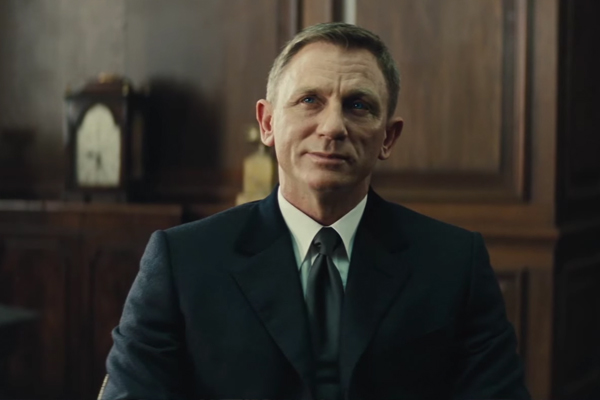
This theory is one of those theories that gets too caught up in reality for its own good. James Bond films have been around for over fifty years. Bond has lived through the Cold War. So how can the Bond in Casino Royale or Skyfall be the same person as in Dr. No? Surely the name Bond is simply a code name like 007, given to certain agents who carry a license to kill. It's a nice theory, but it makes no sense. Bond as a singular character is very much one of the focal points of the franchise, and there's a massive amount of proof to back this up. For a start, Roger Moore visits the grave site of George Lazenby's Bond's wife Tracy. Lazenby still has some of the exact gadgets used by Sean Connery. Pierce Brosnan references the death of his wife. And Roger Moore is recognized as €œJames Bond€ by a friend from many, many years prior. Let's forget all that proof for a second, though. The whole point of Bond as a character is that continuity really doesn't matter. He's an archetype that adapts to whatever time period he exists in, whether that's during the Cold War or battling against the NSA-esque Spectre. Bond is a reflection of whatever social and political world he lives in, which is more often than not a reflection of our own. Getting bogged down in whether or not Bond is a codename not only creates more questions than it answers, it fundamentally misunderstands Bond as an archetypal hero.

3. Sandy From Grease Is Actually Dead

Though I'm referring to a particular theory in this instance, this type of theory is completely ridiculous. It's a sort of off-shoot from the €œthey were dead all along€ fan theory, which needlessly kills off entire casts of characters before the events of their films even take place. Pointing out the inanity of this specific example pretty much applies to every other related example. The theory spawns from an inexplicable detail at the end of 1978's Grease, which sees John Travolta's Danny and Olivia Newton-John's Sandy take off in a flying car. It's a profoundly cheesy moment in a profoundly cheesy film, but €œfans€ have since taken to the internet in order to try and explain the moment rationally. Surely a flying car can't be a metaphor. Surely it means that Sandy actually dies at the beginning of the movie during the beach scene flashback, the scene that depicts Sandy and Danny's summer fling. €œI saved her life €“ she nearly drowned€ is the song lyric this particular theory hinges on, apparent proof that the character is actually dead, hence the ascension to musical heaven at the very end. Oh, and that's why everyone is singing, too. Forget the fact that musical theatre has been around for over a thousand years and is just a form of dramatic expression...the whole point of the film is to depict the complexity of high-school relationships, and to tell a tale of love overcoming staggering odds (all through foot-tapping songs). The same goes for all €œthey're actually dead€ fan theories: there's just no point. There's no point in Grease if Sandy has been dead the whole time, there's no point to the plot or themes or the commentary on high-school relationships. It might be different if the theory aligned with the actual point of the film, but that's just never the case.

2. Doc Brown Was Suicidal At The Beginning Of Back To The Future

€œWhen this baby hits eighty-eight miles per hour... I'm finally going to be freed from this cruel, unrelenting world€.
According to some theorists, this is pretty much what Doc Brown means when he says "serious sh*t" at the beginning of Back To The Future when he positions himself in front of the DeLorean in order to prove that he's finally conquered time travel. The theory states that Doc has become suicidal due to the repeated failure of his inventions, and his inability to master time travel. Apparently Emmet has poured his last remaining strength into this final test, and decides that if it doesn't work, he's taking himself out once and for all. It's a theory that's been floating around the internet for quite some time now, and even has videos dedicated to its legitimacy. But once again it misses the entire point. For a start, it doesn't account for Doc Brown's genuine fondness of and friendship with Marty; it implies that Doc's suicidal tendencies somehow extend to wanting to kill one of his closest friends. Yeah, sure. One of the focal points of this theory is that Doc couldn't have known the time machine was going to work. Yet the very opening scene of the movie sees dozens of clocks go off at the same time, exactly twenty-five minutes slow. Doc Brown even tells Marty on the phone that his "experiment worked". It's clear he's been playing with time before he decides to drive a car at himself and Marty.

1. Cobb's Wedding Ring Is His Totem In Inception
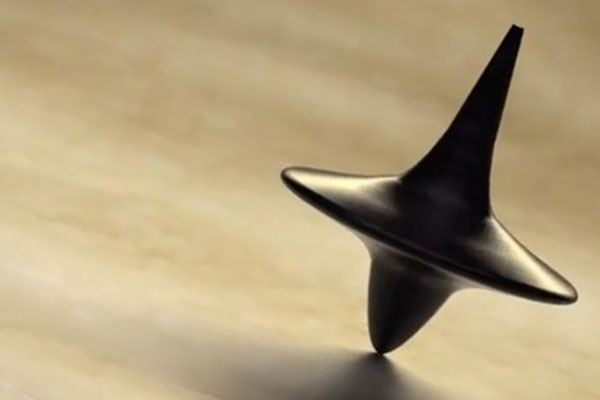
For such a widely-circulated, celebrated film theory, this particular Inception theory really does miss the point of the entire movie. The theory states that Cobb's totem isn't the spinning top, but is actually his wedding ring. Forget the fact that the spinning top is completely consistent with everything we know about totems €“ that's all clearly Nolan's clever misdirection. You see, in every scene in which Cobb's hand is visible in the dream world, his wedding ring is clearly visible. But at the end, during the ambiguous scene with the spinning totem, it's not there €“ so it's not a dream, right? It would be a fairly convincing theory if it didn't completely disregard what the film is actually about. Which is primarily two things: Cobb's attempt to get over his dead wife and his desire to be reunited with his children. The whole reason Cobb accepts the job from Ken Watanabe is in order to clear his name of murder so he can go back to his kids. Cobb is actually wearing his wedding ring in the dream sequences because that's where his wife Mal still looms large. In the dream, she's not dead, so they're still married. The ring not being there at the very end doesn't prove it's reality; it follows the dream scene in which Cobb chooses to let go of Mal, so regardless of dream or not, the ring would be gone. The most important thing, however, is that the reality of the ending doesn't even matter. We don't see whether or not the totem falls because Cobb is reunited with his kids regardless. That's all he ever wanted, that's all that matters and that's the narrative victory. Which other film theories totally miss the point? Share any more down in the comments.

Contributor
Contributor

Commonly found reading, sitting firmly in a seat at the cinema (bottle of water and a Freddo bar, please) or listening to the Mountain Goats.