8 Scrapped Movie Plots That Turned Up In Other Films
Wait, how did that go from there to there?
One phenomenon that actually happens with major filmmaking is sometimes ideas that get rejected from one film might actually turn up in another later on.
Sometimes it’s something that couldn’t be used in a film, but was picked back up for a sequel. Or sometimes it may be something a studio already spent money on, so they repurpose it for another film.
Sometimes it could even be the mysterious phenomenon of “parallel thinking”: when an idea in the atmosphere floats from one creative mind over to another, who then snatches it up and puts it to use. Okay, that’s pretty lofty. Usually it’s just somebody ringing somebody else up saying, “Hey, I need an idea for this movie I’m making. You got anything you’re not using?”
8. Back To The Future Almost Nuked The Fridge

In 2008 audiences felt pretty letdown when the opening action sequence of Indiana Jones and the Kingdom of the Crystal Skull climaxed with Dr. Jones surviving an atomic bomb blast by shutting himself into a refrigerator. The crash alone would’ve killed the 60-something-year-old man.
The oddest thing about that scene is that the idea came from another film Steven Spielberg was involved with many years before. Spielberg was a producer on Back to Future, which nearly used the exact notion of using a refrigerator as shelter against a nuclear blast.
In early drafts of the screenplay, instead of the now-famous DeLorean that Doc Brown and Marty McFly used to travel through time, the time machine was a device that shot a “time ray” that could be shot into specifically designed “time chambers.” They scrapped the time-ray-and-chamber idea for the DeLorean deciding that a time machine would be better if it could move around. Also it’s just way cooler.
In the original draft, to get back to 1985, Marty was going to have to get into a refrigerator in the back of a truck that barreled into a nuclear bomb test site in the middle of the Nevada desert—just like Indy ended up doing in that movie about alien skulls. The explosion would give the time ray its power to transport Marty through time.
Oddly it was Spielberg who shot down the idea, voicing concern that children would recreate the scene in their homes and get trapped inside refrigerators. Which is odd because 25 years later he went on and had Indy do it.
7. Cyclops Finally Gets His Backstory... 16 Years Later
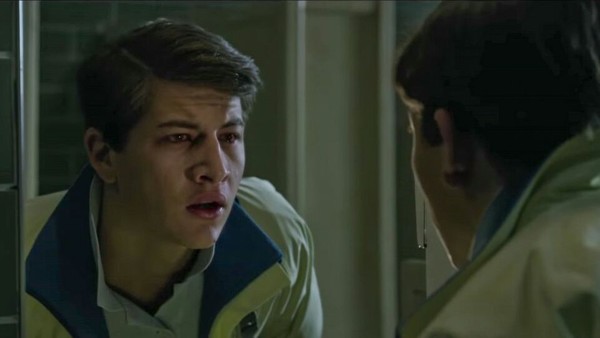
X-Men leader Scott Summers aka Cyclops got a dirty run in the Bryan films, didn’t he? Just a little touch of backstory could have been enough to give the stoic leader just a little more sympathetic realness. As it turns out, Cyclops was going to get an origin scene in the very first X-Men.
After the film’s opening, when we saw Magneto’s origin at the Auschwitz concentration camp, we were then going to fast-forward to a more modern setting and see Scott Summers at his high school prom experiencing his first accidental burst of his optic blasts inside the boys restroom. The scene was not shot, but a set of a boys room was built, and then repurposed for the sequel when Mystique drugged Magneto’s prison guard.
The scene was always considered pivotal in building Cyclops’ character. From what’s been leaked about the first and second film’s productions, poor laser-eyes’ character kept getting the shaft to make room for other characters to come to the forefront. Finally, when director Bryan Singer returned to the series for X-Men: Apocalypse, the Cyclops origin scene was given its time to shine.
6. Spider-Man’s Organic Web-Shooters Pre-Dated Raimi’s Films

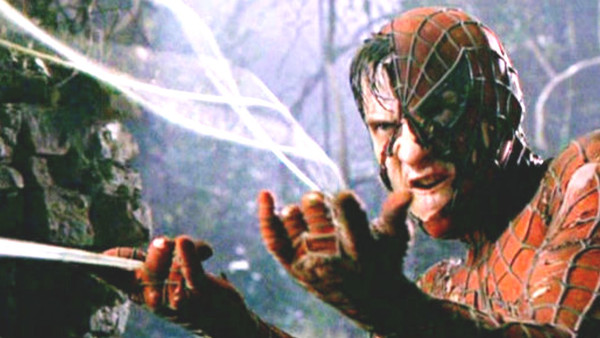
2002’s Spider-Man got a lot of things right about the webslinger...except for the literal web-slinging ability. In the Sam Raimi Spider-Man trilogy, Peter Parker does not have to rely on web-shooters (and therefore web fluid), but instead he is able to shoot his own organic webs from his wrists as just another perk of being bitten by a genetically modified spider.
While many people pointed blame on screenwriter David Koepp for implementing the organic web-shooters, this was actually a holdover from the screenplay originally written by Avatar, Terminator, Aliens, and Titanic filmmaker, James Cameron. Cameron, along with a handful of his writing buddies, planned for Spidey to have organic web-slinging abilities.

When interviewed, Raimi explained this decision because he thought it would distance the audience from Peter Parker too much if he was such a science wiz that he could design his own mechanical web-shooters and webbing. This decision went back to the Cameron script, plus that it would just be too much more to lump into the origin story that Parker would have to tinker around with designing the gadgets.
Cameron’s script wasn’t even the first. Even the earliest, pre-Cameron script featured organic webs.
5. Tomb Raider 2 Used An Un-Filmed Scene From Temple Of Doom
The Tomb Raider video games are steeped in references to Indiana Jones. One might even say all they did was swap Indy out for the teenage-boy-pleasing vision of Lara Croft’s perky bum. The films that followed are not much different.
Indiana Jones and the Temple of Doom opens in Shanghai. The gangster Lao Che and his men chase Indy, Short Round, and Willie Scott around the city of Shanghai until the heroes escape to an airplane that takes then into the Himalayas. The screenplay, however, called for the chase between Lao Che’s men and Indy to go across the Great Wall of China, and on motorcycles no less (where Willie and Short Round were going to be during this, nobody knows). The Chinese government, however, would not allow them to film on the historical landmark. Apparently in 1983, Spielberg and George Lucas didn’t have quite the clout they have today.
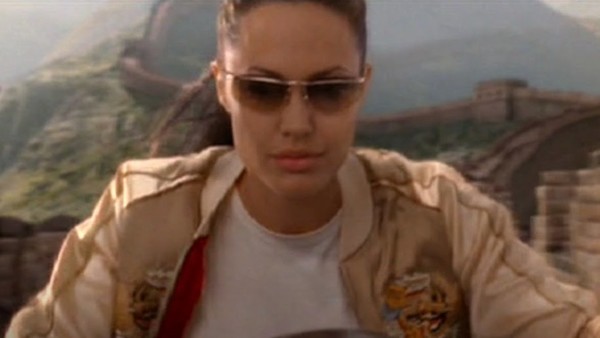
In the second Tomb Raider film, Lara Croft: Tomb Raider – The Cradle of Life, Angelina Jolie rides a motorcycle a short distance on the Great Wall, and ramps off of it to meet Gerard Butler on the road alongside of it. This a double-nod: one going to the second Tomb Raider game, which features a race along the Great Wall in its first level; then also a nod to the character’s Indiana Jones influence. Unfortunately the sequence was created in green screen, meaning not even Angelina Jolie has enough clout to film on the actual Great Wall.
4. Starkiller Base Got Its Name From...

Did you know that George Lucas originally planned for Luke Skywalker to be named Luke Starkiller? Mark Hamill himself has explained that well into production, the character’s name was Starkiller. Members of the film’s production were quite haunted by the name, though, and somebody must have told George Lucas (thickheaded as he is) what they were all thinking: that it was perhaps in reference to Charles Manson, whose followers murdered rising star Sharon Tate and her friends just 7 years before Star Wars began filming. Lucas apparently hadn’t really thought of it that way, but he saw their point, so he changed the name to Skywalker, which you gotta admit, is just better-fitting to the character.
Skip forward nearly 40 years to The Force Awakens, and what do we see, but a Death Star-like weapon that gets its firepower by sucking all the energy from nearby stars, thereby killing them: Starkiller Base. Much more appropriate naming. But is it an homage or a big planet-sized middle finger from Disney to George Lucas? You be the judge!
3. The Missing Link Between Sabertooths
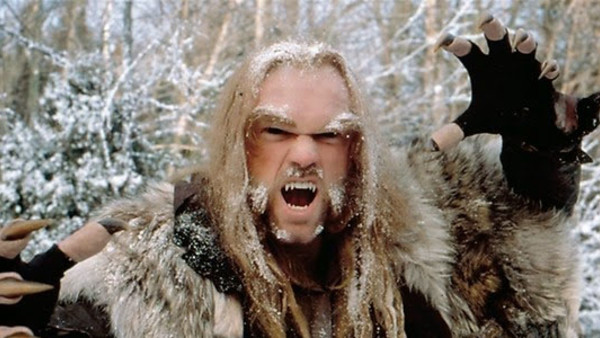
Remember the ambiguous fate of Sabertooth in the first X-Men? After a blast from Cyclops, he fell off the Statue of Liberty and landed on a boat. Sabertooth could surely survive that, right? So how come he never showed up in any of the other X-Men films, save for the prequel, X-Men Origins: Wolverine? Well, as it turns out, in early drafts of X2: X-Men United, Sabertooth was going to rematch against arch-nemesis Wolvie, in a way you might not have expected.
Originally the villain of X2, Colonel Stryker, would have had Sabertooth as his personal assistant/bodyguard, not Deathstrike. But going even further, we would have discovered that Stryker had cloned Sabertooth several times, and that the one we saw in X1, who was much more primal, was one of the clones who Magneto was, like, renting from Stryker or something. The Sabertooth meant to appear in X2 would be the real Sabertooth, who had been around for as long as Logan, and therefore was much more experienced and refined. In other words, this Sabertooth would have given Wolverine a better run for his money in X2.
As the script developed the filmmakers ditched this idea to instead dig up another villain from Wolverine’s rogues gallery and we got Deathstrike, which turned out to be one of the standouts of that film.
The idea of the more matured Sabertooth was then brought forward again and utilized in the first standalone Wolverine film. So if you ever wondered why those two versions of the character were so radically different, there’s your answer.
2. Robin Was Planned To Appear Before Batman Forever

When Tim Burton’s Batman premiered in 1989, a lot of people were asking: Where’s Robin? Burton didn’t exactly have the same distaste for the character that Christopher Nolan would later when he made his Batman films. The character of Dick Grayson was not intended to show up until the sequel so that Batman could be given a proper introduction.
In early drafts of the Batman Returns script, Grayson was going to be a leader of a street gang who came to earn Batman’s respect, and who would eventually be taken under his wing. That idea was scrapped (although the street gang appeared in Batman Forever and Batman and Robin), and instead Dick Grayson was written as a young garage mechanic who would help Batman repair the Batmobile – we’re guessing after the Penguin trashed it. The role was going to be small, maybe just one or two scenes to introduce the character, who would then take on the role of Robin in the next film.
A young Marlon Wayans was cast in the role, and even signed on for a sequel. On a guest appearance on The Tonight Show with Jimmy Fallon in 2018, Wayans discussed his being let go from the film. The decision came down to the film already having too many characters to juggle. Wayans was paid a hefty amount despite being cut, and when the series took a different course after Joel Schumaker took over directing duties for the third film, the role was recast with Chris O’Donnell and his introduction was much different.
1. The Original Idea For E.T. Evolved Into What???
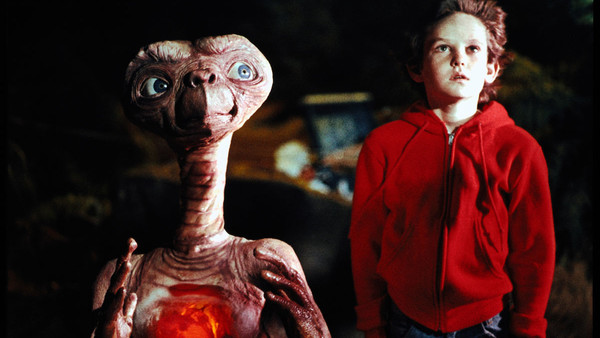
Now chew on this one: After the success of Close Encounters of the Third Kind, Columbia Pictures were hot on Steven Spielberg to make a sequel. His work calendar being pretty full, particularly with the filming of Raiders of the Lost Ark, Spielberg commissioned John Sayles (a director now in his own right) to pen a script.
The script Spielberg envisioned was a dark follow-up to Close Encounters (Going back to his childhood, Spielberg had always wanted to make a War of the Worlds-type invasion flick, which he eventually would). Sayles called his script Night Skies. It was much darker but also blended bits of humor. Creature effects artist Rick Baker was even allotted $70,000 to begin creating mockups for the evil little aliens envisioned by Sayles’ script.
When Spielberg read a draft, he noted that the best parts of the script were between a friendly alien and a little boy. Harrison Ford’s girlfriend at the time, Melissa Mathison, took the script and gave it an overhaul. Mathison took the family friendly portions of Sayles’s script and produced what we came to know and love as E.T.: The Extraterrestrial.
But what of that Sayles script, eh? Well the premise was a group of short little aliens who come to Earth and begin terrorizing it by being annoying little, murderous, miscreants. One of them becomes friends with a young boy, and helps him fight against the evil ones. Does any of that ring a bell? Well that’s because it became Gremlins.
Spielberg executive produced Gremlins, and so much of Dark Skies made it into the film that the director, Joe Dante, even inserted Easter Eggs tipping its hat to its inspiration: a film marquee has the title Watch the Skies, which was the name of the first draft of Dark Skies. The infamous scene of the old lady being taken out by the gremlins is reminiscent of a similar scene in Dark Skies; and the main villain of Gremlins, Spike, was a reworking of the bad alien, Scar.
But wait, there’s more. Aspects of the Dark Skies script also ended up in Poltergeist, Critters, Signs, and Spielberg’s own War of the Worlds. That could go down as being the biggest impact ever by a script that didn’t get made.