8 Things Everybody Missed In Star Wars: The Force Awakens

There's still some mysteries of Episode VII to be discovered.
$2 billion at the box office, a RottenTomatoes rating in the nineties and merchandise profits that must eclipse those from cinemas: it's fair to say Star Wars: The Force Awakens is the massive hit everybody expected. Its biggest success can't be quantified with simple numbers though. After the prequels left lifelong fans feeling empty and George Lucas' subsequent work on the series saw it become a cynical parody of itself, The Force Awakens made everyone excited about Star Wars again; spin-off prequel Rogue One is one of 2016's most anticipated movies and people are already developing complex theories for how Episode VIII and beyond will go down. And, of course, while we wait for more to come, fans have intently analysed the new film, dissecting every scene and looking deep into J.J. Abrams' mystery box for Easter eggs, references and in-jokes. Since release so many of the film's big secrets have been revealed - it took mere hours for people to spot Daniel Craig's hilarious stormtrooper cameo and since then there's be an endless stream of exciting behind-the-scenes and contextual information, from Alec Guinness and Ewan McGregor's shared Obi-Wan appearance to the backstory of bizarre fan favourite TR-8R (who Lucasfilm have unsuccessfully tried to get people to call "Nines"). But despite all that trivia surfacing, there's still some pretty major hidden details that haven't been picked up on; interesting references missed and big clues towards the franchise's future forgotten. Here are the eight biggest things from Star Wars: The Force Awakens everyone needs to be talking about.

8. The Hidden Use Of Imperial March

John Williams' score for The Force Awakens was chock full of callbacks to his other films, bringing back classical leitmotifs (most prominently The Force Theme) to strengthen the ongoing story. Interestingly though, the most famous Star Wars track outside of the opening theme was mostly absent from the film. That's right; Imperial March only explicitly appeared once, for a brief moment during the scene where Kylo Ren confronts Darth Vader's charred helmet. However, there is actually another, more subtle usage of the theme; in The Jedi Steps, the final piece of the score that plays over Rey finding Luke, when we finally get to see the Jedi Master a couple of familiar beats from the March play under the main score. The notion of the Force being a grey sliding scale plays heavily in The Force Awakens - with Kylo fearing the glimmer of Light within him, Rey feeling the pull of the Dark and various crew describing Luke as acutely aware of how susceptible he could be - so having the film's final piece of music, which is ostensibly hopeful, underscored by the original villain theme helps to reinforce that. Williams has done this before, with The Phantom Menace's final track, Augie's Great Municipal Band, being a sped-up, upbeat take on Return Of The Jedi's Emperor's Theme. Given how in that case it was subtle foreshadowing of Palpatine's true nature, could Imperial March here be pointing towards some key element of the sequel trilogy?

7. The Obscure Cantina Alien Reference After The First Scene
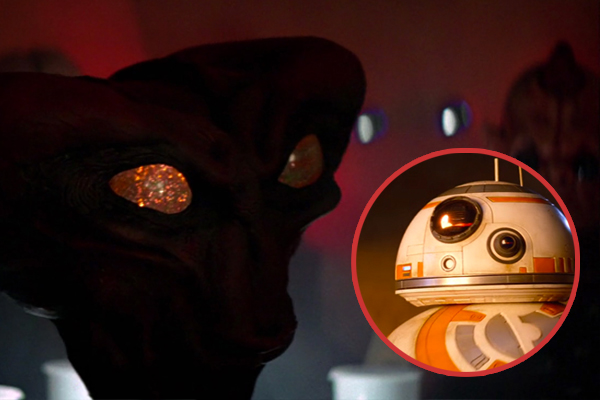
It would have been incredibly tempting (and easy) for The Force Awakens to have doubled-down on overt fan service and referenced just about every single element of the Star Wars universe: Han bursting into a room and shooting a bunch of bad guys as they fumbled for their blasters before gruffly proclaiming "I always shoot first"; Maz Kanata trying to explain the Force with midi-chlorians and giving up because it was needlessly complicated; Finn revealing there's no target practice in the First Order. But thankfully, even if some people found the recurring story elements a bit too much (although as George Lucas said, the movies are "like poetry, they rhyme"), for the most part the little nods to the old films were pitched just right, never pulling you out of the action. In fact, some were so subtle you may not have even realised they were there. The one that seems to have passed most people by is the little alien who pops up out of the sand when BB-8's rolling away from the First Order at the start of the movie. It could be assumed to to be a reference to the creatures outside of Jabba's Palace at sunset or a general show of the film's practical effects, but is in fact a nod to Hem Dazon, the grey-alien-esque creature who's the first monster to appear in the Mos Eisley Cantina; along with the similar shaped head, the pop-up and head tilt are exactly the same. Given that Dazon was played by makeup legend Rick Baker, it's likely doubling as a little tribute to him too.

6. There's A Lot Of Trailer Moments Missing

With teasers now released over a year in advance, we've become accustomed to trailers featuring footage that isn't in the finished films; Marvel in particular constantly have unfinished effects and alternate takes littering their early teasers. And the same is actually true of The Force Awakens. By now everyone knows that Maz Kanata's character was changed pretty seismically late on in production, with the sage, Yoda-esque Force user given a much lower midi-chlorian count and turned into a extravagant barmaid, and the trailers are full of evidence of this; there's the shot of her handing Leia the lightsaber in the Resistance base (she was originally meant to travel there on the Falcon after her castle's destruction) from the second teaser and pretty much every line of mystical voiceover is either absent from the movie proper or delivered in a much more kooky tone. But that's just the start of it. Most of that first teaser that got everyone giddy back in November 2014 isn't in the movie (by the look of it, those shots were just showreel takes) and even moments from the "Final" trailer in October were later cut (including most of the set-up dialogue).

5. Kylo Ren References The Movie's Original Plot
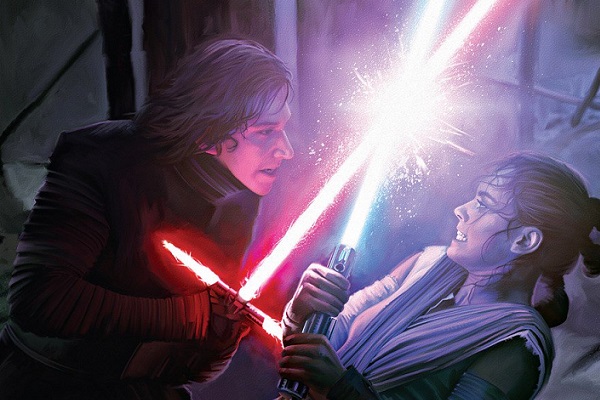
"That lightsaber belongs to me," rasps Kylo Ren to Rey before their climactic confrontation, keen to add another Darth Vader artefact to his collection (he is such a metaphor for Star Wars fanboys it hurts). Now, because we know he's super-obsessed with his grandfather and has already been embarrassed by the emergent Jedi, the line works fine by itself, but it's also actually an accidental reference to the original plan for the movie. In the years building up to The Force Awakens' release, one of the biggest, most persistent rumours was that the film's MacGuffin was going to be Anakin/Luke's old lightsaber; the film was to open on the weapon flying through space and Lor San Tekka would give that to Poe Dameron on Jakku. Although we've no official confirmation of this, the rumours are so prevalent it seems to be the original plan, which explains the rather vague nature of the map piece BB-8 carries in the finished film and the lightsaber's incredibly odd introduction at Maz's castle (along with the flippant explanation of where it came from). Why the change happened hasn't been revealed (wait for The Making Of... book), but I'd bet it'll be down in part to a muted fan reaction to the rumours and general confusion over how it can work as a plot device when it was lost on a gas giant (something the finished movie dealt with in a reduced capacity). Regardless, the decision led to most parts referencing the saber altered to discuss the map instead (including all those Maz Kanata changes), but this line in the final battle was too important to delete and thus stands as a little remnant of the original plot.

4. The Opening Actually Endorses The Prequels
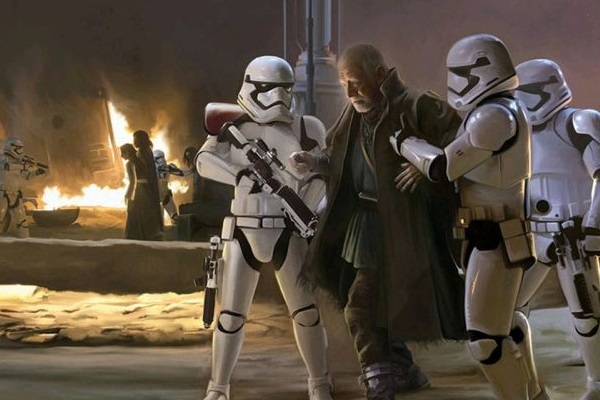
Many have taken the first line of The Force Awakens, "This will begin to make things right", as a little bit of a meta jab at the prequels; The Force Awakens is not just continuing the Star Wars story, but trying to win back an entire generation disenfranchised with Episodes I-III, and this allegedly shows the films directly acknowledging that. There has been a distinct lack of prequel focus on Disney's part since their acquisition of Lucasfilm (even going as far as cancelling The Clone Wars and replacing it with the original trilogy-era Rebels), so it is hard to believe this isn't a purposeful attempt to distance the franchise from the much reviled entries. However, getting hung up on that first part of the line misses the importance of what Tekka says next: "Without the Jedi there can be no balance in the Force." Now, it may not be bringing midi-chlorians back, but that's accepting a key part of the prequels mythology as integral to the ongoing story; those movies were dictated by the prophecy of the "Chosen One" who would "bring balance to the Force", which this is clearly alluding to. How that balance plays into the sequel trilogy isn't explored much in Episode VII, but you can bet the follow-up movies will lean more into it.

3. The Bowcaster Is More Than Just A Running Joke
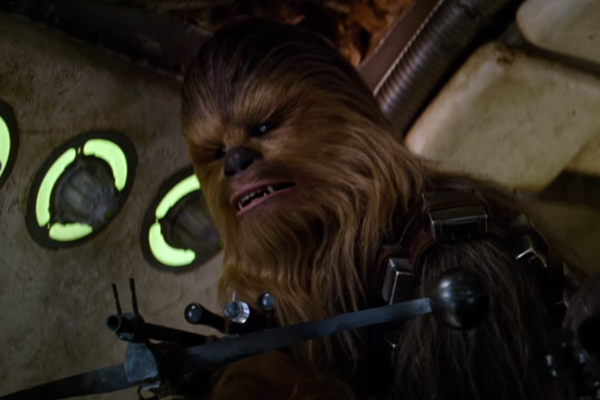
Die-hard Star Wars fans will have known for a long time that Chewbacca's bowcaster was more than just a standard blaster; appearing in countless games as a specialist weapon, it was always a powerful, disruptive piece of kit. This was something the movie's finally reflected in The Force Awakens, with a little running joke seeing Han amazed by how powerful his partner's weapon of choice really was, sending enemies flying with a single blast. However, that wasn't just there to give Han and Chewie the opportunity for a plot-free back-and-forth and dispatch TR-8R; it was all humorous set-up for a very important part in the climax. After Han's been speared by Kylo Ren, Chewie goes berserk, killing stormtroopers and shooting Kylo in the side. The film makes clear this injures him, evidenced later by the blood in the snow and his beating coping mechanism, but in having built up the weapon as a one-shot killer we know just how extreme the agony he's in is. Much has been made of how bumbling Finn held his own against Kylo and Rey actually bested him despite the Knight of Ren having more training in swordfighting and the Force, but when you consider he's dealing with that intense physical pain, such imbalance makes much more sense.

2. Why R2-D2 Woke Up

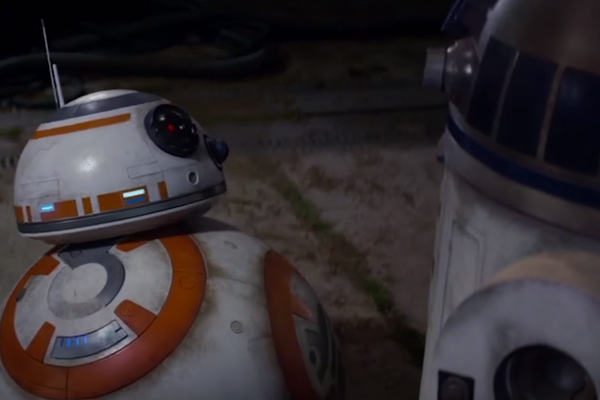
One of the most confusing parts of The Force Awakens was R2-D2's essential-yet-undernourished role in the plot; he's got part of the map to Luke somehow, but shut down when his master left and has been comatose in a corner of the Resistance base ever since. Then, as if by the magic of narrative convenience, he suddenly woke up just in time to give Rey the info she needed. How does this work? What woke him up? It's the happiest coincidence in a movie that was built around happy coincidences, surely? Well, not quite. There is actually a pretty clear answer to all this that most people have missed; Rey. Artoo shut down when Luke left and reboots when Rey arrives, and that's no coincidence. If it was Luke's absence that affected the astromech, the arrival of a strong Force user (so much so that some would like to call her a Mary Sue, even if few actually understand what that term means) who all signs point to being the new generation's Luke parallel (maybe even his daughter) is the logical explanation for his awakening. After all, the only thing that's changed at the Resistance base between when BB-8 first tried to wake him and the end is the arrival of Rey.

1. Rey's Had Visions Of Luke's Exile

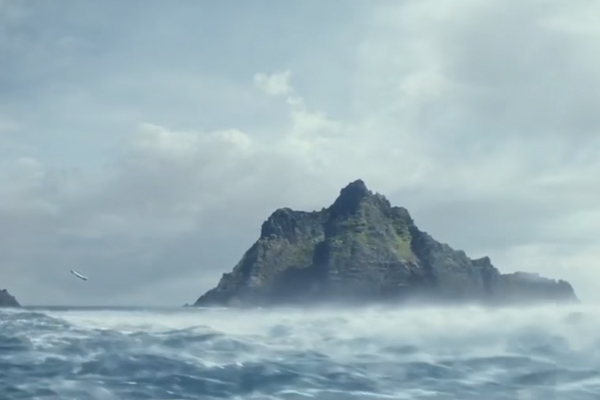
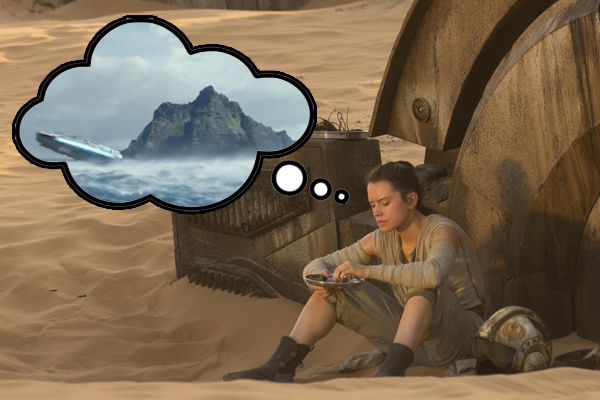
The biggest mystery from The Force Awakens is Rey's identity; who were her parents and why was she left alone on Jakku? As it stands, the only feasible options appear to be that she's Luke's kid or her parents are new characters completely unrelated to the Skywalker lineage; they're the only major solutions that don't require major narrative smudging to make work (like explaining Han and Leia completely ignoring her or Obi-Wan having to break his vow of chastity). With such a key (and, given that many thought Episode VII would reveal this plot thread, unexpected) mystery left hanging, so much has been read into any possible clues. Naturally everyone's broken down Rey's vision in Maz Kanata's castle (even though it's a really simple thing to follow) and every interaction she has with an existing character has been dissected for subtle clues, yet through all the fevered speculation one important key line of dialogue has been all but ignored. When Kylo Ren tries to interrogate Rey, he reads her mind. Along with discovering her wish Han Solo was her father ("He would disappoint you"), he sees she repeatedly dreams of "an endless ocean... I see it, I see the island"; she is dreaming of Luke's exile. What this means is unclear - it could be anything, from a vision of the future, with the Force showing her how she'll eventually find a surrogate family, to evidence she's been the planet before, or even proof Luke is indeed her father - but it's probably the most important clue to where the new trilogy is heading. What other things did everyone miss in Star Wars: The Force Awakens? Shout out any more down in the comments.

Contributor
Contributor

Film Editor (2014-2016). Loves The Usual Suspects. Hates Transformers 2. Everything else lies somewhere in the middle. Once met the Chuckle Brothers.